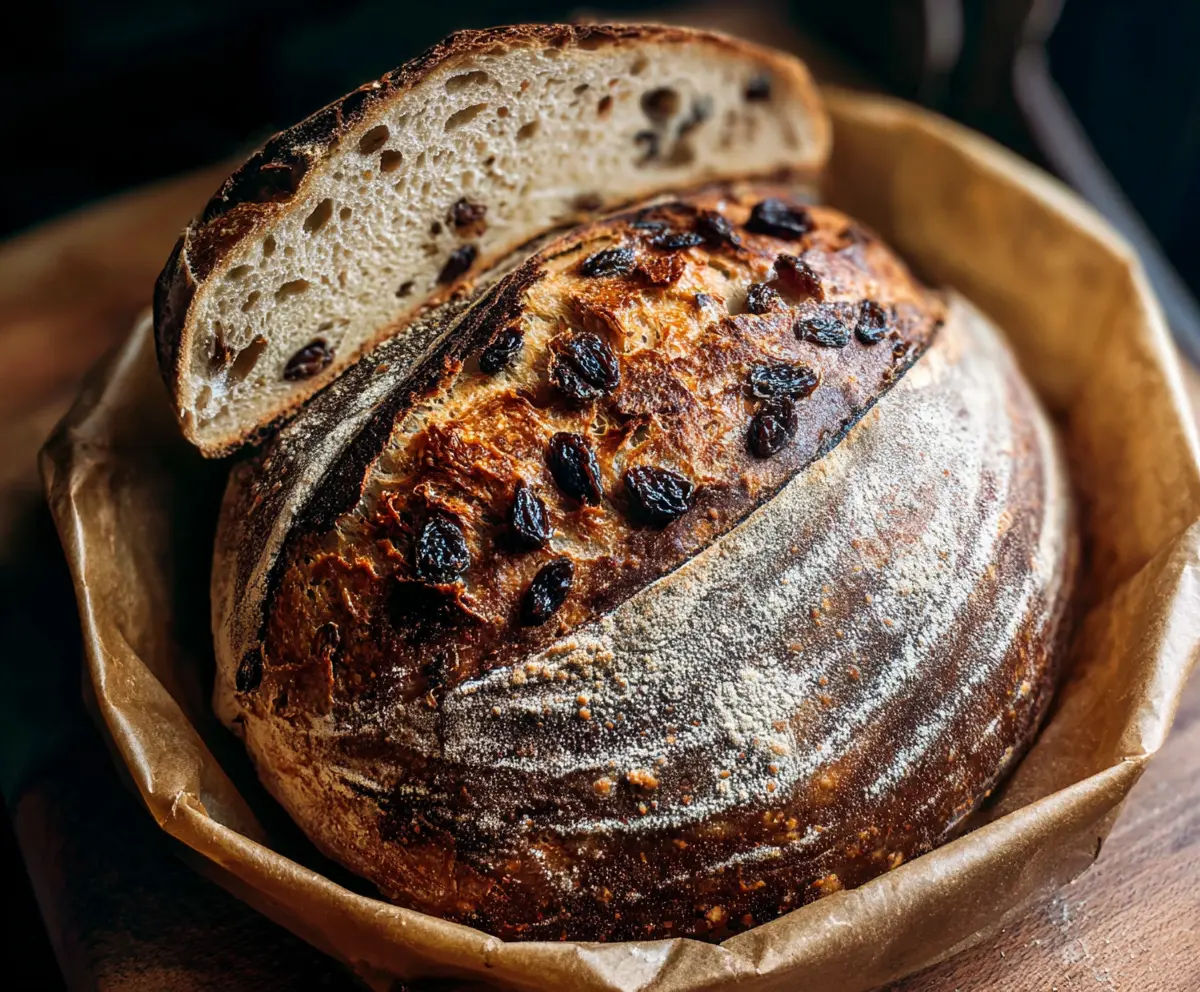
This cinnamon raisin sourdough bread is a warm, cozy treat! With sweet raisin pieces and a swirl of aromatic cinnamon, each bite is a hug for your taste buds.
I love to toast it and spread a little butter on top—it’s the perfect breakfast or snack. Honestly, it smells so good while baking, you might forget to share! 😄
Key Ingredients & Substitutions
Bread Flour: This is your foundation—bread flour has a higher protein content than all-purpose flour, making for a great structure. If you don’t have it, you could use all-purpose flour, but the texture won’t be quite the same. Adding vital wheat gluten can help mimic the strength.
Sourdough Starter: An active sourdough starter gives the bread its rise and unique tangy flavor. If you don’t have a starter, you can try using yogurt or buttermilk, but that won’t give you the authentic sourdough taste.
Raisins: These add sweetness and texture to the bread. If you’re not a fan, you can swap for chopped dried figs, cranberries, or even chocolate chips. Just ensure they’re similar in moisture for the best results.
Cinnamon: Ground cinnamon is key for flavor. If you prefer a different spice mix, try using a pinch of nutmeg or an allspice blend for variation.
What’s the Best Way to Handle Sourdough Dough?
Handling sourdough can be tricky, but here’s how to get it right! After the autolyse, mixing in the salt, cinnamon, and any sweeteners comes next. Your dough is quite wet—this is normal.
- For better gluten development, do stretch and folds instead of kneading. Every 30 minutes for about 2 hours, gently pull one side of the dough and fold over, turning the bowl as you go. This builds strength without deflating the dough.
- After folding in the raisins, let it rise until it’s about 50% larger. The poke test is simple—when you gently poke it, the dough should spring back slowly but leave a slight indent.
- When shaping, be gentle to maintain some of that lovely air. A tight round shape helps in getting a good rise when you bake.
Following these steps will help you create that wonderful airy crumb and nice crust we all love.
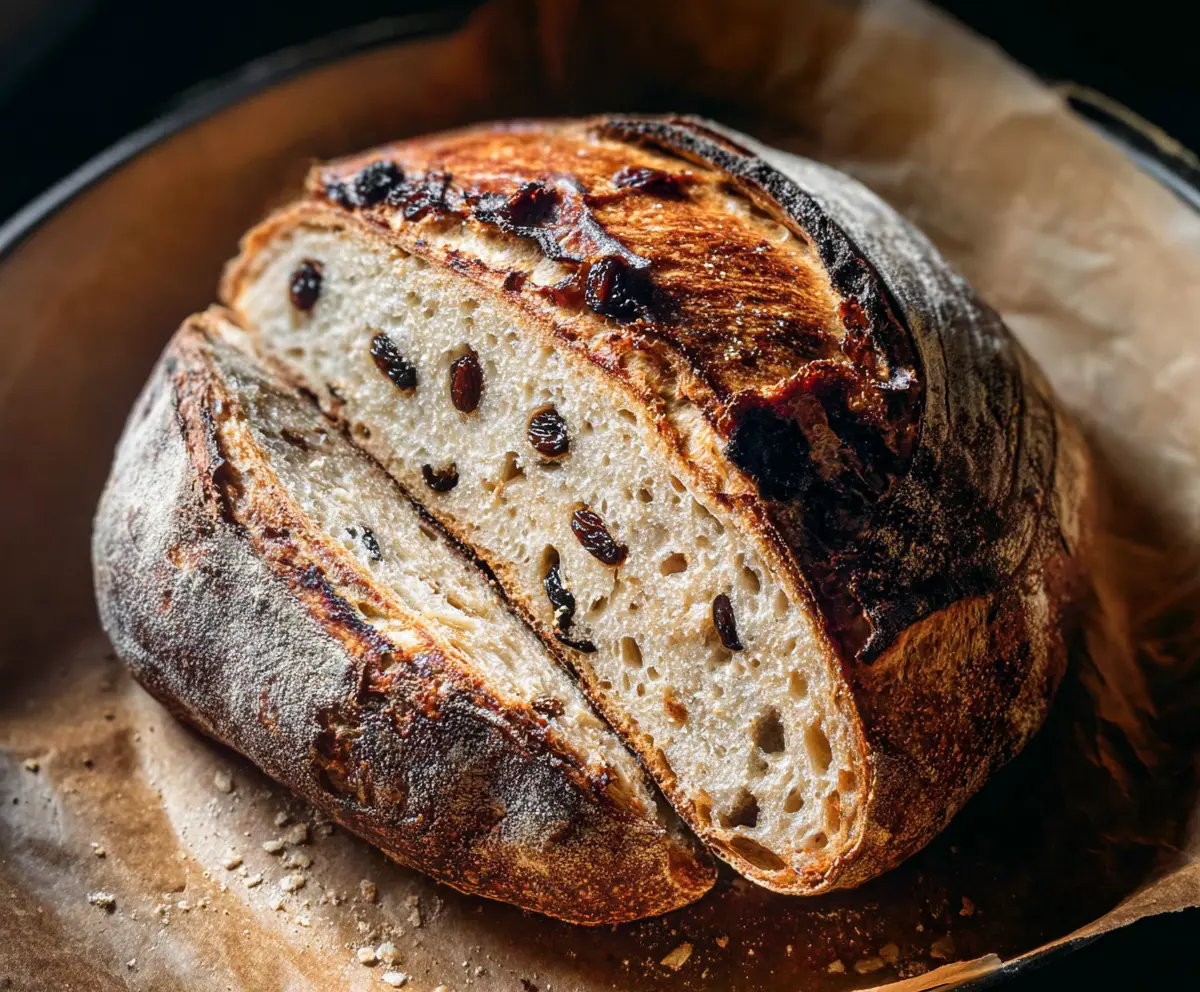
How to Make Cinnamon Raisin Sourdough Bread?
Ingredients You’ll Need:
For the Bread:
- 500 g bread flour (about 4 cups)
- 350 g water (about 1 1/2 cups), lukewarm
- 100 g active sourdough starter (100% hydration)
- 10 g salt (about 2 tsp)
- 2 tbsp ground cinnamon
- 150 g raisins (about 1 cup), soaked in warm water for 15 minutes and drained
- Optional: 1 tbsp sugar or honey (to enhance sweetness, optional)
How Much Time Will You Need?
This recipe will take you about 15-20 minutes of hands-on preparation time, followed by 3-6 hours of fermentation, and then an overnight proofing time of 8-12 hours in the fridge. Finally, baking takes about 40-45 minutes. So, it’s a bit of a wait, but the results are worth it!
Step-by-Step Instructions:
1. Mixing the Dough:
In a large mixing bowl, combine the bread flour, lukewarm water, and sourdough starter. Mix everything together until all the flour is well-hydrated, creating a shaggy dough. This is called the autolyse stage. Cover the bowl and let it rest for about 30 to 60 minutes. This helps develop gluten in your dough.
2. Adding Ingredients:
After the rest, it’s time to add flavor! Sprinkle in the salt, ground cinnamon, and if you’d like, sugar or honey. Mix thoroughly until everything is evenly combined. Your dough may feel a little sticky; that’s perfectly fine!
3. Stretch and Fold:
Now we need to build strength in the dough! Perform a series of stretch and folds every 30 minutes for about 2 hours. To do this, gently pull one side of the dough up and fold it over itself. Turn the bowl a quarter turn and repeat this until you’ve gone around the bowl about 4-6 times per session.
4. Incorporating Raisins:
After completing the stretch and fold, gently fold in the drained raisins. Be careful to distribute them evenly without squashing your dough too much—we want to keep that wonderful airy texture!
5. Bulk Fermentation:
Cover the dough and let it ferment at room temperature (ideally between 70-75°F / 21-24°C) until it has risen by about 50% and passes the poke test (when you poke it, it should spring back slowly but leave a slight indentation). This should take about 3-5 hours, depending on your kitchen environment.
6. Shaping the Loaf:
Once your dough is nice and puffy, turn it out onto a lightly floured surface. Shape it into a tight round loaf, being careful not to press out too much air. Use your hands to gently coax it into shape.
7. Final Proof:
Place your shaped loaf into a well-floured banneton or a bowl lined with a floured kitchen towel. Cover it and let it proof in the refrigerator overnight for 8-12 hours. This slow fermentation enhances flavor and makes it easier to handle.
8. Preheat the Oven:
When you’re ready to bake, preheat your oven to 450°F (230°C). Place your Dutch oven or heavy lidded pot inside to preheat as well. This ensures a lovely crust!
9. Preparing for Baking:
After the oven is preheated, carefully turn your dough out onto a piece of parchment paper. Use a sharp blade to score the top—this allows the bread to expand and creates a beautiful pattern.
10. Baking the Bread:
Place the dough (on the parchment) into the hot Dutch oven. Cover it with the lid and bake for 20 minutes. Then, remove the lid and continue to bake for another 20-25 minutes or until your bread is deeply browned and crusty.
11. Cooling and Serving:
Once baked, carefully remove the bread from the Dutch oven and let it cool completely on a wire rack before slicing. This allows the interior to set properly. Enjoy this delightful cinnamon raisin sourdough bread toasted with butter or just as it is!
Happy baking! 🍞✨
Can I Use All-Purpose Flour Instead of Bread Flour?
Yes, you can use all-purpose flour, but keep in mind that bread flour has a higher protein content, which contributes to the dough’s structure and chewiness. If using all-purpose flour, the texture may be slightly different.
What If My Dough Isn’t Rising?
If your dough isn’t rising, it could be due to a few factors like an inactive sourdough starter or cooler kitchen temperatures. Make sure your starter is bubbly and active. For better results, consider placing your dough in a warmer spot, like near a warm oven or in a turned-off microwave.
Can I Substitute Another Type of Dried Fruit for Raisins?
Absolutely! You can use dried cranberries, chopped dried apricots, or even chocolate chips for variation. Just ensure that the moisture content is similar so the dough’s consistency remains balanced.
How Should I Store Leftover Bread?
To store leftover bread, wrap it in plastic wrap or foil and keep it at room temperature for up to 2-3 days. For longer storage, slice the bread and freeze it in a plastic bag. Just pop it in the toaster or let it thaw at room temperature when you’re ready to enjoy!