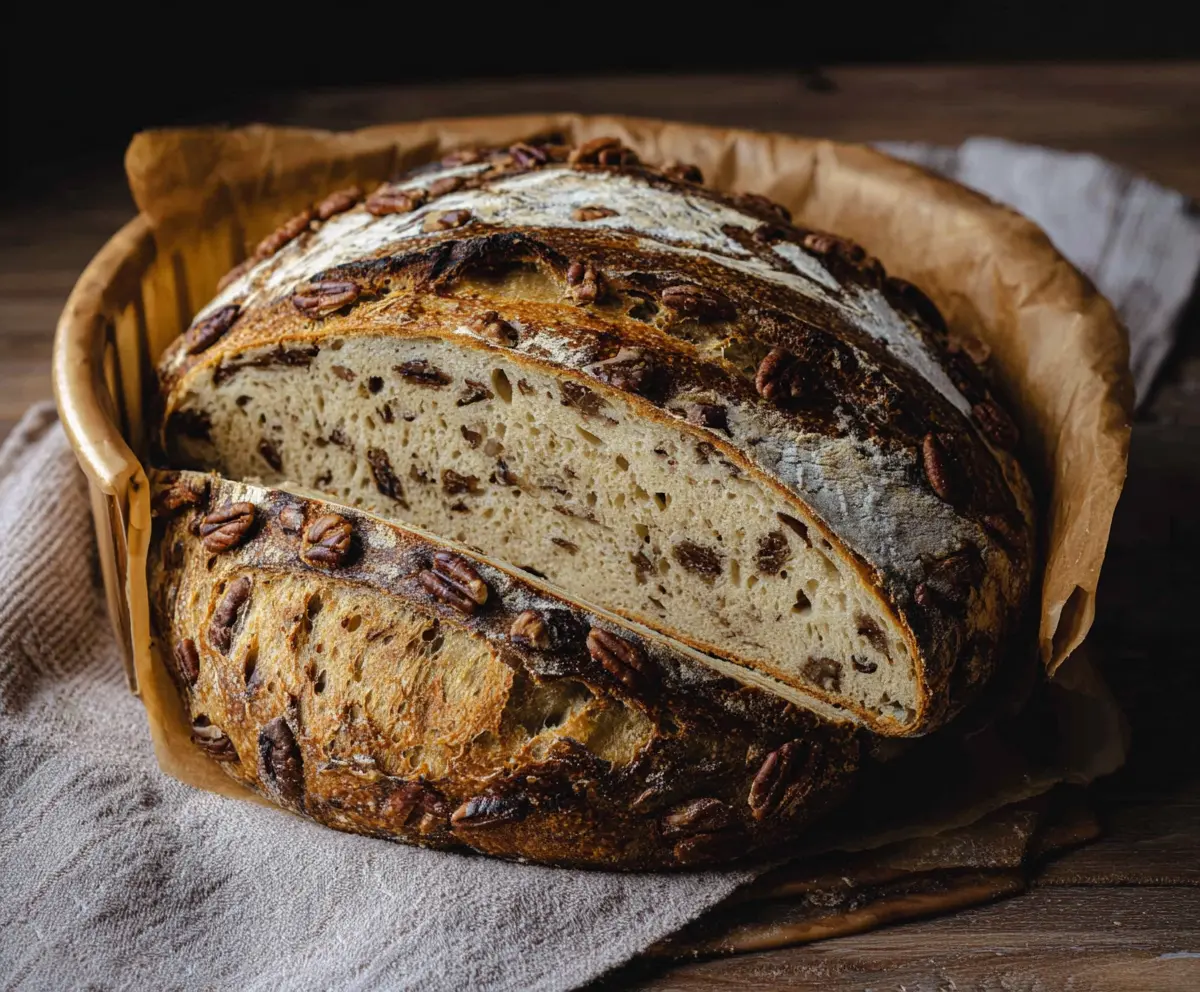
This Maple Pecan Sourdough Bread has a lovely mix of sweet maple flavor and crunchy pecans. It’s perfect for breakfast or a cozy snack anytime!
Honestly, the smell of this bread baking is heavenly! I like to toast a slice and spread on a little butter—so yummy! You’ll want to make this again and again!
Key Ingredients & Substitutions
Bread Flour: Choose a strong bread flour for the best structure. If you don’t have any, all-purpose flour will work, but the texture may not be as chewy.
Pecans: Toasting enhances their flavor. If you’re not a fan of pecans, walnuts or chopped almonds can be a great alternative.
Maple Syrup: Pure maple syrup gives a unique sweetness. If you need a substitute, honey or agave syrup will work but will slightly change the flavor.
Sourdough Starter: An active starter is crucial. If you don’t have one, you could use store-bought yeast (about 2g for dry yeast) but follow a different method for fermentation.
How Do I Develop Gluten for the Best Texture?
Building gluten is key for a great rise and chewy texture. It’s all about gentle handling. After the first 30 minutes, do stretch and folds. Here’s how:
- With wet hands, grab one edge of the dough and stretch it upward, then fold it over to the opposite side.
- Turn the bowl slightly, and repeat until you’ve stretched and folded all edges.
- Doing this every 30 minutes for the first 2 hours helps create those lovely gluten strands!
This technique helps the dough hold its shape and results in a light, airy crumb. So don’t rush it; take your time and enjoy the process!
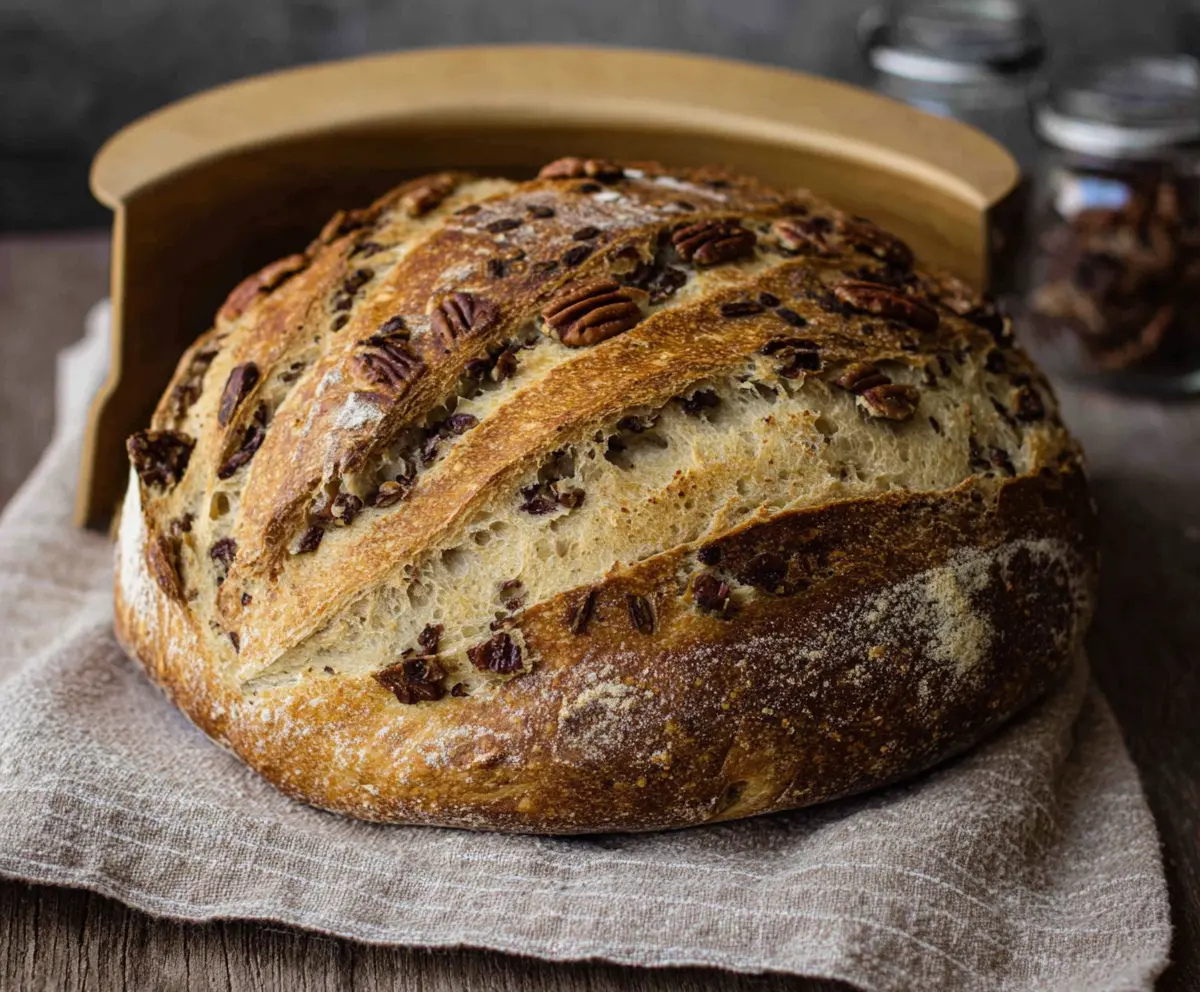
Maple Pecan Sourdough Bread
Ingredients You’ll Need:
- 500g bread flour
- 350g water (lukewarm)
- 100g active sourdough starter (100% hydration)
- 10g salt
- 60g pecan halves (toasted and roughly chopped)
- 2 tbsp pure maple syrup
- Extra pecan halves for topping
- Flour for dusting
How Much Time Will You Need?
This recipe takes about 30 minutes of active prep time and then you’ll need 4-6 hours for bulk fermentation, plus 8-12 hours for the final cold proof. Total, plan for around 12-16 hours due to resting and proofing times, so starting the night before is a good strategy. It’ll be worth the wait!
Step-by-Step Instructions:
1. Prepare Pecans:
Begin by toasting the pecans. Put them in a dry pan over medium heat and toast until they smell fragrant, about 5-7 minutes. Once toasted, set them aside to cool, then chop 60g roughly while leaving some whole pecan halves for a pretty topping later.
2. Mix Dough:
In a large mixing bowl, combine the bread flour, lukewarm water, and your active sourdough starter. Use a spoon or your hands to mix until everything is just combined, without dry flour. Cover the bowl with a clean towel and let it rest for 30 minutes—this is called the autolyse process and it helps the flour hydrate.
3. Add Salt and Maple Syrup:
After the dough has rested, sprinkle the salt and drizzle the maple syrup over the mixture. Use your hands to gently fold and stretch the dough until the salt and syrup are well incorporated.
4. Add Pecans:
Gently fold in the chopped pecans, making sure they are evenly distributed throughout the dough.
5. Bulk Fermentation:
Cover the bowl with a lid or a damp cloth and let it ferment at room temperature for about 4 to 6 hours. During the first 2 hours, perform a series of stretch and folds every 30 minutes to develop the gluten. Just reach under the dough, pull it up, and fold it over itself.
6. Shape the Dough:
After the bulk fermentation is complete, turn the dough onto a lightly floured surface. Shape it into a tight round boule by folding the edges into the center. Shape it gently while creating surface tension by tucking the edges underneath.
7. Final Proof:
Place the shaped dough seam-side up in a well-floured banneton (or a bowl lined with a floured towel). Press some whole pecan halves on top for decoration. Cover and allow to proof in the refrigerator overnight (8-12 hours).
8. Preheat Oven:
The next day, about 30 minutes before baking, preheat your oven to 250°C (475°F). Place a Dutch oven or a heavy oven-safe pot with a lid inside to preheat, too. This is important for a great crust!
9. Score and Bake:
When ready to bake, carefully turn the dough out onto a sheet of parchment paper. Score the top with a sharp blade or lame in whatever pattern you like—this allows the bread to expand nicely in the oven. With the parchment paper, lift the dough into your hot Dutch oven, cover with the lid, and bake for 20 minutes.
10. Finish Baking:
After 20 minutes, take the lid off the pot and lower the oven temperature to 230°C (450°F). Bake for an additional 20-25 minutes, or until the crust is golden brown and sounds hollow when tapped.
11. Cool:
Once baked, carefully remove the bread from the oven and place it on a cooling rack. Let it cool completely before slicing to ensure the best texture. Patience is key!
This beautiful bread has a crunchy crust and a delightful sweet flavor from the maple syrup, combined perfectly with crunchy pecans. It’s delicious warm or toasted, with a spread of butter or on its own. Enjoy your baking!
Can I Use Whole Wheat Flour Instead of Bread Flour?
Yes, you can substitute whole wheat flour, but keep in mind it may change the texture. The bread might be denser, so you might want to combine it with some bread flour for a lighter result (e.g., 50% whole wheat and 50% bread flour).
What If My Sourdough Starter Isn’t Active?
For the best results, ensure your sourdough starter is active and bubbly. If it’s not ready, feed it 4-8 hours before using it to ensure it’s at its peak. If you don’t have a mature starter, you could use instant yeast (about 2g), but it will alter the traditional sourdough flavor.
How Can I Store Leftover Bread?
Wrap the bread in a clean kitchen towel and store it at room temperature for up to 3 days. For longer storage, slice the bread and place it in a resealable bag in the freezer. Just toast or warm slices straight from the freezer for a quick snack!
What Should I Do If the Dough is Too Sticky?
If your dough feels too sticky, you can sprinkle a little more flour during the mixing and shaping phases. However, be cautious not to add too much, as it can alter the bread’s texture. It’s best to wet your hands instead of adding flour when handling sticky dough!