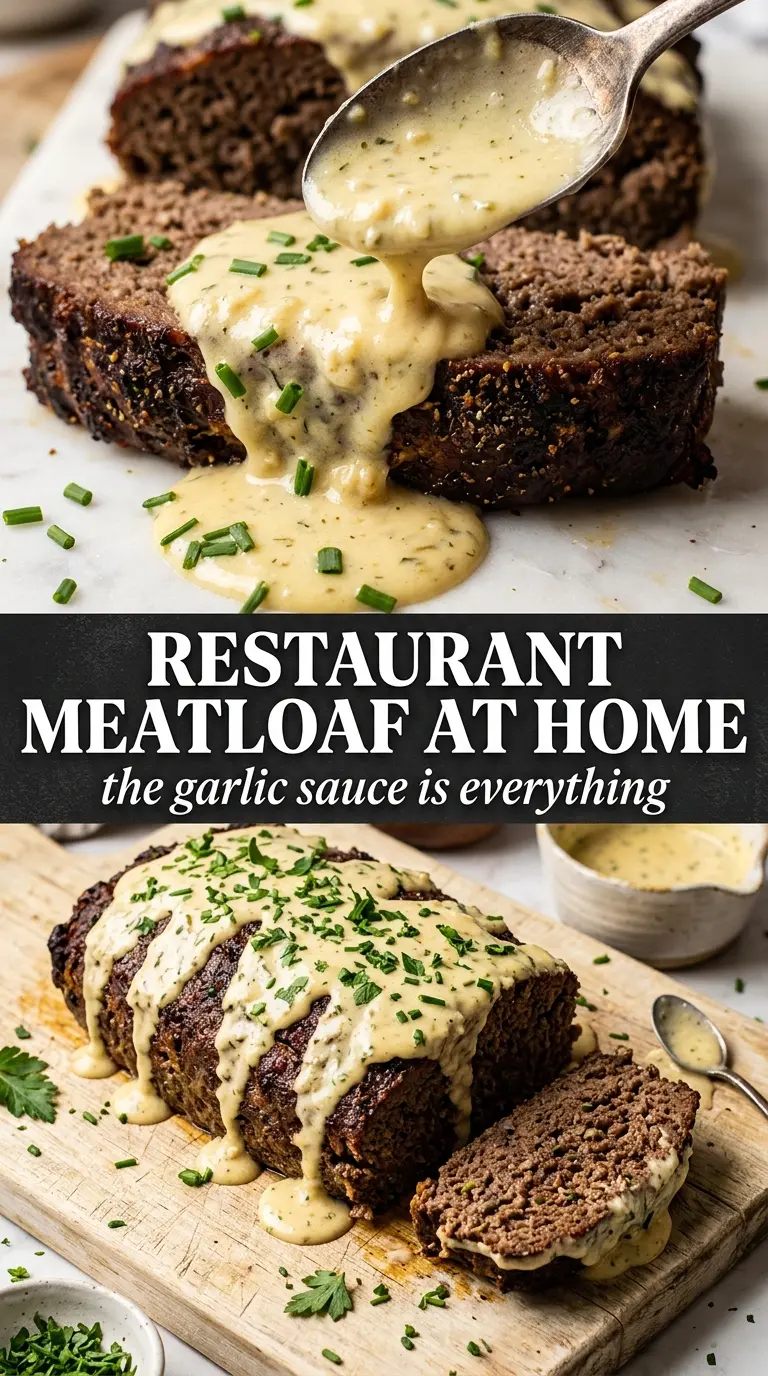
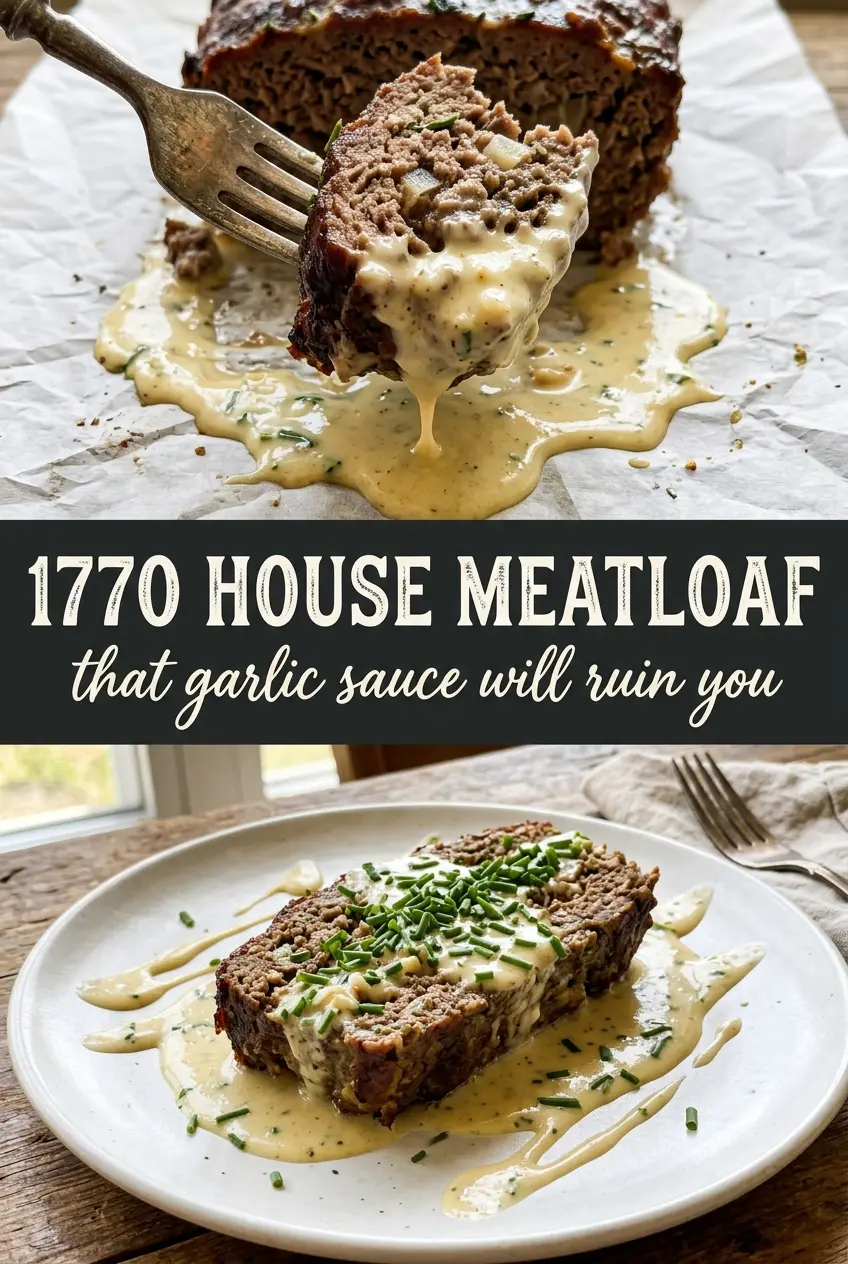
Deeply browned on the outside and tender in the center, this 1770 House Meatloaf with Garlic Sauce earns its place by turning a humble dinner into something that feels carefully made. The loaf holds together cleanly when sliced, but it’s never dry or tight. What you get instead is a rich, herb-scented crumb with enough depth from the beef, pork, and garlic sauce to make each bite taste complete.
The difference here comes from a few small decisions that matter. Soaked breadcrumbs keep the meatloaf soft without turning it mushy, while sautéed onion adds sweetness without leaving raw bits behind. Baking it free-form on a sheet tray gives the exterior more caramelized edges than a loaf pan ever could, and that browned surface is exactly what makes the final slices taste restaurant-worthy.
Below, I’ve included the details that make the sauce stay smooth, the loaf stay juicy, and the whole thing slice neatly after resting. If you’ve had meatloaf go dense or bland before, this version fixes both problems.
The meatloaf stayed moist all the way through, and the roasted garlic sauce was smooth and mellow instead of sharp. I baked it on a sheet pan like suggested, and the edges turned out beautifully browned.
Love the caramelized crust and roasted garlic sauce in this 1770 House Meatloaf? Save it to Pinterest for the nights when you want a classic dinner that eats like a special occasion.
The Reason This Meatloaf Slices Cleanly Instead of Falling Apart
The most common meatloaf problem is overworking the mixture. Once ground meat gets packed too tightly, it bakes up dense and dry instead of tender. Here, the soaked breadcrumbs and eggs do the binding, so you only need to mix until everything is evenly combined and no streaks of seasoning remain.
The other thing that changes the outcome is shape. A free-form loaf on a parchment-lined sheet tray gives the fat a place to render away, which helps the outside brown instead of steaming in its own juices. That browning is what gives the slices their deep savory edge. If the loaf is packed into a pan, you lose that texture and end up with a softer, paler crust.
- Breadcrumbs soaked in milk — This is your built-in insurance against a dry loaf. Let them sit the full 5 minutes so they soften all the way through, then squeeze out only the loose excess milk. They should be damp, not dripping.
- Ground beef and pork — The beef brings structure and flavor; the pork brings richness and a softer texture. You can use all beef in a pinch, but the loaf will taste leaner and less plush.
- Sautéed onion — Raw onion can leave the meatloaf tasting sharp and can leak extra moisture as it bakes. Cooking it first takes off the bite and gives the loaf a sweeter, more even flavor.
- Roasted garlic for the sauce — Fresh garlic would be harsh in a cream sauce. Roasted garlic turns mellow and almost buttery, which is why the sauce tastes rounded instead of aggressive.
What Each Ingredient Is Actually Doing in This Meatloaf or Meatballs
- Ground meat (the protein foundation) — Use 80/20 so it stays moist. Handle gently to keep texture tender instead of dense.
- Breadcrumbs or fillers (the binder) — These hold the meat together without making it dense. Soak in milk first so they add moisture.
- Egg (the structural binding agent) — This holds everything together during cooking. One egg per pound of meat is the right ratio.
- Onion and aromatics (the base flavor) — Mince finely so they distribute evenly. Raw onion softens as it cooks and becomes part of the texture.
- Seasonings (salt, pepper, Worcestershire, spices) — Build flavor boldly. The meat mixture carries the entire flavor profile.
- Milk or liquid (the moisture keeper) — This keeps the meatloaf tender instead of dense and dry. Don’t skip this step.
- Glaze or sauce (ketchup-based or other) — This adds sweetness, moisture, and flavor to the exterior. Apply strategically so it caramelizes.
- Resting time (the final step) — Let the meatloaf rest 10 minutes so it sets and slices cleanly. Cutting too soon makes it fall apart.
Building the Loaf and Finishing the Garlic Sauce
Softening the Breadcrumb Base
Start by soaking the breadcrumbs in milk until they look swollen and pasty. That mixture should hold together when pressed, not slosh around in the bowl. If there’s too much milk left loose, the loaf can turn loose and greasy, so squeeze off the excess before it goes into the meat. This step keeps the final texture tender without making it fall apart.
Mixing Just Enough
Add the beef, pork, onion, garlic, Worcestershire, Dijon, thyme, salt, and pepper, then mix with your hands only until everything is evenly distributed. Stop as soon as the color looks uniform. If you keep working it, the proteins tighten and the loaf bakes up compact. The mixture should feel cohesive but still a little loose, not pasty.
Shaping for Browning
Form the meat into a free-form oval or loaf on a parchment-lined baking sheet. Keep it even in thickness so the center cooks at the same rate as the ends. A slightly domed top is fine, but don’t compress it into a brick. That air space around the loaf helps the outside caramelize and keeps the bottom from steaming.
Baking to the Right Temperature
Bake until the center reaches 160°F, which usually takes 60 to 70 minutes. The surface should be deeply browned and the juices should run clear near the thickest part. If the top is browning too quickly, tent it loosely with foil, but don’t lower the oven temperature unless you have to. Pulling it too early leaves the middle loose and under-set.
Turning Roasted Garlic Into Sauce
Squeeze the soft garlic cloves into a saucepan with the broth and cream, then simmer gently for about 5 minutes. The heat should stay low enough that the cream barely bubbles at the edges. Stir in the butter and blend until smooth. If the sauce looks broken or grainy, it usually means the heat was too high; take it off the burner, blend, and it will usually come back together.
How to Adapt This Meatloaf for a Different Table
Make it gluten-free
Swap the breadcrumbs for a gluten-free breadcrumb blend in the same amount. Use one that’s fairly fine so it softens evenly in the milk. The texture stays close to the original, though the loaf may slice a little more delicately.
Use all beef instead of beef and pork
If you only have beef, use 2.5 pounds total and keep the 80/20 ratio if possible. You’ll lose a little richness, but the meatloaf will still work. Add an extra tablespoon of Worcestershire if you want to replace some of the depth the pork would have brought.
Make the sauce dairy-free
Use full-fat canned coconut milk in place of the cream and a dairy-free butter substitute at the end. The sauce will be a little less rich and the flavor will lean sweeter, but roasted garlic still carries it nicely. Blend it well so the texture stays silky.
Make it ahead for easier dinner service
Shape the loaf and refrigerate it, uncovered or lightly covered, for up to 24 hours before baking. The chill helps it hold its shape and can improve browning. You can also make the sauce a day ahead, then rewarm it slowly and whisk in a splash of broth if it thickens too much.
Storage and Reheating
- Refrigerator: Store leftovers in an airtight container for up to 4 days. The sauce may thicken as it chills, and that’s normal.
- Freezer: The meatloaf freezes well for up to 2 months, sliced or whole. Freeze the sauce separately if you can, because cream sauces are more likely to change texture after thawing.
- Reheating: Warm slices covered in a 325°F oven with a splash of broth or extra sauce until heated through. The biggest mistake is blasting it in the microwave, which tightens the meat and dries out the edges before the center warms.
Answers to the Questions Worth Asking
1770 House Meatloaf with Garlic Sauce
Ingredients
Equipment
Method
- Preheat oven to 325°F. Make sure the rack is positioned so the loaf can bake evenly.
- Soak breadcrumbs in whole milk for 5 minutes, then squeeze out excess milk. The crumbs should look evenly hydrated but not wet.
- Sauté diced large onion until softened, then set it aside to cool slightly. Aim for a translucent, lightly golden look.
- Combine ground beef, ground pork, soaked breadcrumbs, eggs, sautéed onion, minced garlic, Worcestershire sauce, Dijon mustard, fresh thyme, and salt and pepper. Mix just until combined with a dense, cohesive texture.
- Shape the mixture into a free-form loaf on a parchment-lined sheet pan. Flatten slightly so the exterior caramelizes deeply as it bakes.
- Bake at 325°F for 60–70 minutes until the internal temperature reaches 160°F. Look for a deeply caramelized exterior and juices that run clear when tested.
- Rest the meatloaf for 10 minutes before slicing. The loaf should hold its shape and feel set in the center.
- Squeeze roasted whole head garlic into a saucepan with chicken broth and heavy cream. The sauce base should look creamy and fragrant.
- Simmer for 5 minutes. Keep it at a gentle bubble so the flavors meld without reducing too aggressively.
- Stir in butter, then blend until smooth. The sauce should turn silky with no garlic bits visible.
- Season with salt and pepper, then serve the sauce poured over sliced meatloaf. The sauce should flow alongside the slices and lightly coat the surface.