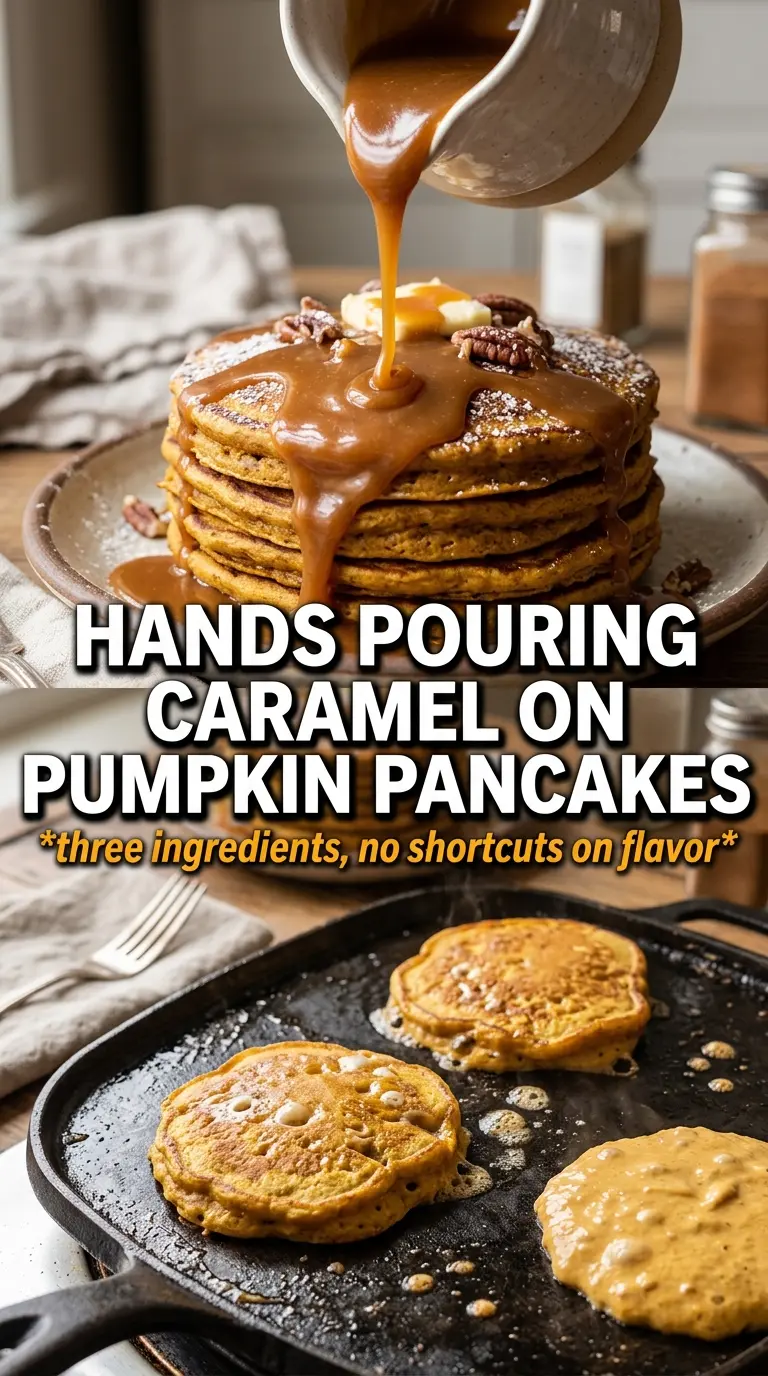
These pumpkin pancakes come out tender, thick, and lightly spiced, with just enough structure to hold a generous pour of caramel sauce without turning soggy. The pumpkin keeps them moist and soft in the middle, while the pancake mix gives you the lift and ease of a shortcut batter that still tastes homemade. The result is a stack that feels special, but doesn’t ask much from you on a sleepy morning.
The trick is keeping the batter thicker than a standard pancake batter and cooking these a little lower and slower than you might expect. Pumpkin puree brings a lot of moisture and density, so medium-low heat gives the center time to set before the outside goes too dark. A quick whisk is enough here; overmixing can make the pancakes tougher than they should be. Warm caramel on top finishes the whole thing with a glossy, buttery edge that tastes like you worked a lot harder than you did.
Below, you’ll find the small details that matter most: how to keep the pancakes fluffy, which caramel option tastes best, and what to do if your batter seems thicker than you expected.
The batter was thick like you said, and the pancakes stayed fluffy instead of spreading out flat. I used the homemade caramel and it set into that perfect drizzle after about a minute off the heat.
Save these pumpkin pancakes with warm caramel drizzle for a fast breakfast that tastes like a bakery stack.
The Reason These Pancakes Stay Thick Instead of Turning Gummy
Pumpkin puree is the ingredient that changes everything here. It adds moisture and body, which is great for flavor and tenderness, but it also makes pancakes prone to heaviness if the batter gets overworked or the heat is too high. That’s why the batter should look thick and scoopable, almost like soft cake batter rather than something pourable.
The other thing that matters is the heat. Pancake mix usually forgives a little rushing, but pumpkin batter doesn’t. If the pan is too hot, the outside browns before the middle sets, and you end up with a raw center under a dark crust. Medium-low heat gives you a deeper golden color and a pancake that cooks all the way through without losing its soft middle.
What Each Ingredient Is Actually Doing in the Stack
- Complete pancake mix — This is the shortcut that gives the pancakes lift, salt, and a built-in structure. A plain flour mixture won’t behave the same way unless you add baking powder, salt, and the right liquid balance. If you use a different mix, choose one that already includes leavening.
- Pumpkin puree — Use canned puree, not pumpkin pie filling. Pie filling already has sugar and spices mixed in, which throws off both texture and flavor. The puree adds moisture, color, and that earthy pumpkin taste without making the pancakes overly sweet.
- Eggs — The eggs bind the batter and help it set into fluffy, sturdy pancakes instead of fragile ones. Two eggs is the sweet spot here; less and the pancakes can feel loose, more and they start tasting eggy.
- Pumpkin pie spice — Optional, but it gives the pancakes that warm bakery flavor people expect from pumpkin breakfast recipes. If you don’t have it, use cinnamon with a pinch of nutmeg and cloves. The pancakes still work without it, but the spice makes the caramel sauce taste even better.
- Caramel sauce — Store-bought caramel is the easiest path and works fine as long as you warm it first so it drizzles smoothly. The homemade version brings a deeper, buttery flavor and thickens slightly as it cools. Either way, the sauce should be pourable, not stiff.
Getting the Batter, Pan, and Caramel All in Sync
Whisking the Batter Without Overdoing It
Combine the pancake mix, pumpkin puree, eggs, and spice just until the batter looks smooth. A few tiny lumps are fine. What you want to avoid is beating air into it like cake batter, because that can make the pancakes puff and then collapse. The batter should hold its shape when scooped; if it spreads quickly in the bowl, it’s too thin and the pancakes will cook up flat.
Cooking Over Lower Heat Than You Think
Heat a lightly greased skillet over medium-low, not medium. Drop small 2-tablespoon rounds so the centers have a chance to cook before the bottoms over-brown. Wait for bubbles to show on the surface and for the edges to look set and a little dry. If you flip too soon, the pancakes can tear in the middle; if the pan is too hot, the bottoms will go dark before the texture turns fluffy.
Warming the Caramel for the Finish
Warm the caramel sauce until it pours easily, then drizzle it over the stack while the pancakes are still hot. That contrast is what makes the sauce cling instead of sliding straight off the plate. If you’re using the homemade version, let it simmer just three minutes so it thickens enough to coat a spoon without turning candy-hard. The sauce should stay glossy and spoonable.
How to Adapt These Pumpkin Pancakes When You Need a Different Route
Make Them Dairy-Free With Store-Bought Caramel
The pancakes themselves are already dairy-free as written if your pancake mix doesn’t contain milk powder. Use the store-bought caramel sauce instead of the butter-and-cream version, and check the label if you’re cooking for someone with an allergy. The flavor stays rich, but the sauce will be a little lighter and less buttery than the homemade one.
Use Gluten-Free Pancake Mix
A good gluten-free complete mix works here with almost no adjustment, but the batter may need a minute to sit before cooking so the starches hydrate. If it looks too loose after resting, add a spoonful more mix. The pancakes will be a touch more delicate, so flip with a thin spatula and keep the rounds small.
Swap in Maple Syrup When You Don’t Want Caramel
Maple syrup gives you a cleaner, lighter finish and skips the extra butter note from caramel. It won’t coat the pancakes as thickly, so the stack will taste less dessert-like and more breakfast-forward. Warm the syrup before serving so it doesn’t cool the pancakes down.
Make the Homemade Caramel If You Want a Deeper Finish
The butter, brown sugar, and cream version gives you a thicker, richer sauce with a slightly toffee-like flavor. Simmer it for the full three minutes so the sugar dissolves and the sauce turns smooth instead of grainy. If it looks split, it usually means the heat was too high; pull it off the burner and whisk until it comes back together.
Storage and Reheating
- Refrigerator: Store the pancakes in an airtight container for up to 3 days. They firm up a little in the fridge, but they hold their flavor well.
- Freezer: Freeze the cooked pancakes in a single layer, then transfer them to a freezer bag for up to 2 months. Put parchment between layers if you stack them so they don’t stick together.
- Reheating: Warm them in a toaster oven, skillet, or microwave until just heated through. Don’t blast them too long or they dry out fast; pumpkin batter is tender, and overcooking steals the soft middle.
Answers to the Questions Worth Asking
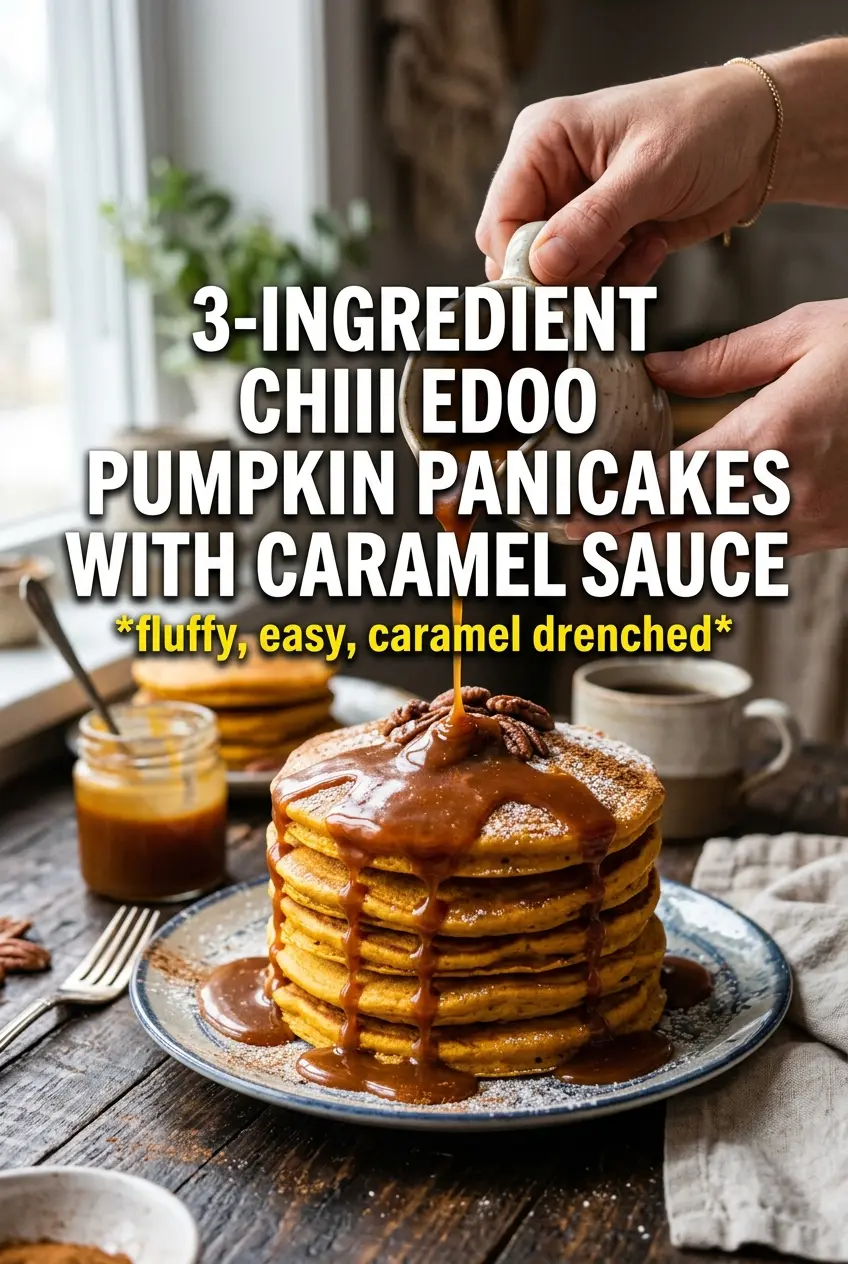
3-Ingredient Pumpkin Pancakes With Caramel Sauce
Ingredients
Equipment
Method
- Whisk pancake mix, pumpkin puree, eggs, and pumpkin pie spice (if using) until smooth and thick.
- Heat a lightly greased skillet over medium-low heat so the batter can set without burning.
- Drop 2-tablespoon rounds of batter and cook 2-3 minutes, until bubbles appear and edges look set.
- Flip gently and cook 1-2 minutes more, until both sides are golden and cooked through.
- Warm store-bought caramel sauce until pourable, or simmer butter, brown sugar, and heavy cream for 3 minutes to thicken, then drizzle over the stacked pancakes.