Glossy chicken and broccoli over rice hits that sweet spot between fast and satisfying, especially when the sauce clings to every bite instead of pooling at the bottom of the pan. The chicken stays juicy, the broccoli keeps a little bite, and the whole dish comes together with the kind of deep savory-sweet balance that usually makes people think you ordered takeout.
The trick here is treating the cornstarch twice: once on the chicken for a light crust and again in the sauce so it thickens quickly without turning pasty. High heat matters, too. You want the broccoli to stay bright and the garlic to stay fragrant, not scorch in the pan while you’re waiting for the sauce to catch up.
Below, I’m walking through the part that matters most — how to keep the sauce glossy and the vegetables crisp-tender — plus a few swaps that still keep this dinner on the table in 30 minutes flat.
The sauce thickened right up and coated every piece of chicken and broccoli without getting gluey. I used chicken thighs and it was still done in under 30 minutes.
Save this 30-Minute Chicken and Broccoli for the nights when you want that glossy soy-garlic sauce fast, with tender chicken and crisp broccoli over rice.
The Reason the Sauce Stays Glossy Instead of Turning Sloppy
Most chicken and broccoli stir-fries go wrong in one of two places: the chicken steams instead of browns, or the sauce gets thin and watery after the vegetables hit the pan. This version avoids both by cooking the chicken first, then using the same hot pan to build the sauce around the browned bits left behind. That flavor gets trapped in the glaze instead of disappearing.
The other detail that matters is the cornstarch. Coating the chicken lightly gives it a better surface for browning, and the cornstarch in the sauce helps it thicken fast enough to coat the broccoli before the vegetables overcook. If the pan isn’t hot enough, the chicken will leak liquid and the sauce won’t tighten the way it should.
- Chicken breasts — Cut them into even bite-size pieces so they cook at the same pace. Thin, uneven pieces dry out before the sauce finishes.
- Broccoli florets — Fresh broccoli gives the best crisp-tender bite. Frozen broccoli works in a pinch, but it releases more water and softens faster, so cook it straight from frozen and skip the extra liquid in the pan.
- Oyster sauce and hoisin sauce — These are doing more work than the soy sauce. Oyster sauce brings depth, while hoisin adds sweetness and body. If you need a substitute for oyster sauce, use a little extra soy sauce with a touch of brown sugar, but the sauce will taste flatter.
- Cornstarch — This is the difference between a sauce that clings and a sauce that runs off the plate. Whisk it into the sauce until it disappears completely before it hits the pan.
What Each Ingredient Is Actually Doing in This Recipe

- Primary ingredient (the star) — Quality matters most. Choose the best you can find.
- Cooking medium (oil, butter, or broth) — This carries flavors and prevents dryness.
- Seasonings (salt, pepper, spices, herbs) — Layer flavors so nothing overpowers. Build depth gradually.
- Aromatics (garlic, onion, herbs) — Cook with fat to bloom flavors. Become the foundation.
- Supporting ingredients — Complement the main ingredient without overpowering it.
- Sauce or liquid (if applicable) — Brings flavors together. Balance richness with acid.
- Acid (lemon, vinegar, wine, or other) — Brightens and prevents flat-tasting results.
- Final finish (garnish, glaze, or sauce) — Prevents one-dimensional taste and adds visual appeal.
Building the Stir-Fry So Nothing Overcooks
Coating the Chicken First
Toss the chicken with salt, pepper, and cornstarch until every piece looks lightly dusted. That thin coating gives you better browning and helps the sauce cling later. If you dump the chicken into the pan wet, it will steam and turn pale instead of getting those golden edges that make the dish taste finished.
Cooking the Chicken Hot and Fast
Heat the oil until it shimmers, then add the chicken in a single layer. Let it sit long enough to color before stirring, because constant movement steals the browning you want. Pull it from the pan once it’s cooked through; if it stays in while you cook the broccoli, it’ll overcook and lose the juicy texture that makes this dinner work.
Keeping the Broccoli Bright
The broccoli only needs a few minutes. You’re looking for bright green florets with browned edges in spots and a fork that slips in with a little resistance. If the pan starts looking dry, don’t add water unless you absolutely need to; that extra moisture pushes the broccoli toward steaming instead of stir-frying.
Finishing the Sauce in the Pan
Add the garlic and ginger for just 30 seconds, then pour in the whisked sauce and keep it moving. It should go from thin to glossy and lightly thickened in a minute or two. If it turns lumpy, the heat was too high or the cornstarch wasn’t fully dissolved; lower the heat and whisk until smooth before adding the chicken back in.
What to Change When You Need a Different Version of This Dinner
Use chicken thighs for a richer result
Boneless skinless thighs stay juicier and give the dish a slightly deeper flavor. They take about the same time, but they can handle an extra minute or two without drying out, which makes them a good choice if you like the chicken extra tender.
Make it gluten-free
Swap in tamari for the soy sauce and use a gluten-free oyster sauce if you can find one. Keep the hoisin only if your brand is gluten-free, because that’s the ingredient most likely to sneak in wheat.
Make it dairy-free without changing a thing
This recipe is naturally dairy-free, which is part of why it works so well for a fast weeknight dinner. Just check the label on your broth and sauces if you’re cooking for someone with a strict allergy, since bottled sauces vary more than people expect.
Stretch it with extra vegetables
Bell peppers, snap peas, or sliced carrots fit in well here. Add firmer vegetables before the broccoli so they get a head start, then finish with the broccoli to keep everything from turning soft at the same time.
Storage and Reheating
- Refrigerator: Store leftovers in an airtight container for up to 4 days. The broccoli softens a little, but the sauce holds up well.
- Freezer: It freezes decently, though the broccoli will come back softer. Freeze in portions for up to 2 months and thaw overnight in the fridge.
- Reheating: Reheat gently in a skillet over medium-low heat with a splash of water or broth. The common mistake is blasting it in the microwave until the sauce dries out and the chicken gets tough.
Answers to the Questions Worth Asking
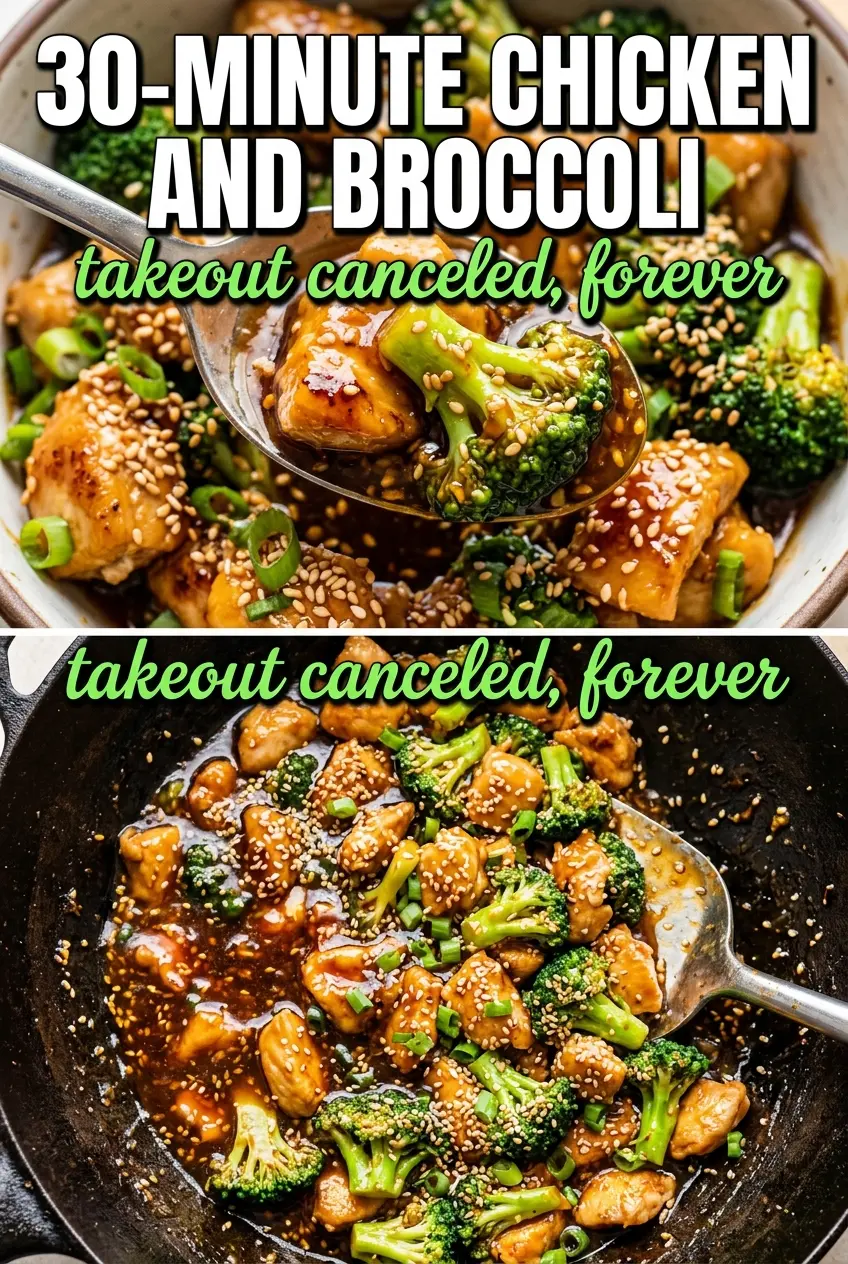
30-Minute Chicken and Broccoli
Ingredients
Equipment
Method
- Toss boneless skinless chicken breasts with salt and pepper and 1 tablespoon cornstarch until coated, with no dry spots visible.
- Set the coated chicken aside while you heat the pan.
- Heat 1 tablespoon vegetable oil in a large wok or skillet over high heat until shimmering.
- Cook the chicken for 5-6 minutes, turning as needed, until golden-brown and cooked through; remove to a plate.
- Add the remaining 1 tablespoon vegetable oil and stir-fry broccoli florets for 3-4 minutes until bright green and just tender-crisp.
- Add minced garlic and grated fresh ginger and stir-fry for 30 seconds until fragrant.
- Whisk soy sauce, oyster sauce, hoisin sauce, brown sugar, 1 tablespoon cornstarch, chicken broth, and sesame oil, then pour into the pan.
- Cook the sauce for 1-2 minutes until thickened and glossy.
- Return the cooked chicken to the pan and toss to coat so every piece looks glazed.
- Serve over rice with sesame seeds and green onions.