These almond flour pumpkin pancakes cook up tender in the middle with crisp, golden edges and a warm pumpkin spice finish that makes a plain breakfast feel a little more special. They’re thicker than standard pancakes, but that’s part of the charm: each one holds together well, stacks neatly, and soaks up maple syrup without turning soggy.
The trick is keeping the batter thick and the heat low. Almond flour browns faster than wheat flour, and pumpkin puree adds moisture without much structure, so medium-low heat gives the pancakes time to set before the outside gets too dark. A little apple cider vinegar also helps the baking soda do its job, which keeps the texture lighter than you’d expect from a grain-free batter.
Below, I’ve included the small adjustments that matter most — how to tell when it’s time to flip, what to do if the batter seems too loose, and the easiest swaps if you want to work with what’s already in the pantry.
The pancakes held together better than I expected, and the centers stayed soft without getting gummy. I used the lower heat like you said, and they browned evenly instead of burning before I could flip them.
Save these almond flour pumpkin pancakes for a grain-free breakfast that stays fluffy enough to stack and strong enough to flip.
The One Thing That Keeps Almond Flour Pancakes From Falling Apart
Almond flour behaves differently from all-purpose flour, and that’s where most pancake problems start. It doesn’t build the same kind of stretchy batter, so these pancakes need a little more care when you mix and cook them. If you stir hard or rush the heat, they can break when you flip them or turn dark before the center sets.
The answer is to treat the batter like a thick spoonable mixture, not a pourable one. Almond flour pancakes need time to absorb the liquid from the pumpkin and eggs, and they hold together better once they rest for a minute or two. Low heat gives you a more even cook, which matters more here than a fast golden crust.
- Thick batter is the goal — it should mound on the spoon and spread slowly in the pan. Thin batter makes fragile pancakes that brown too fast before the inside firms up.
- Lower heat beats speed — almond flour scorches faster than wheat flour, so medium-low heat keeps the outside from overbrowning while the center finishes cooking.
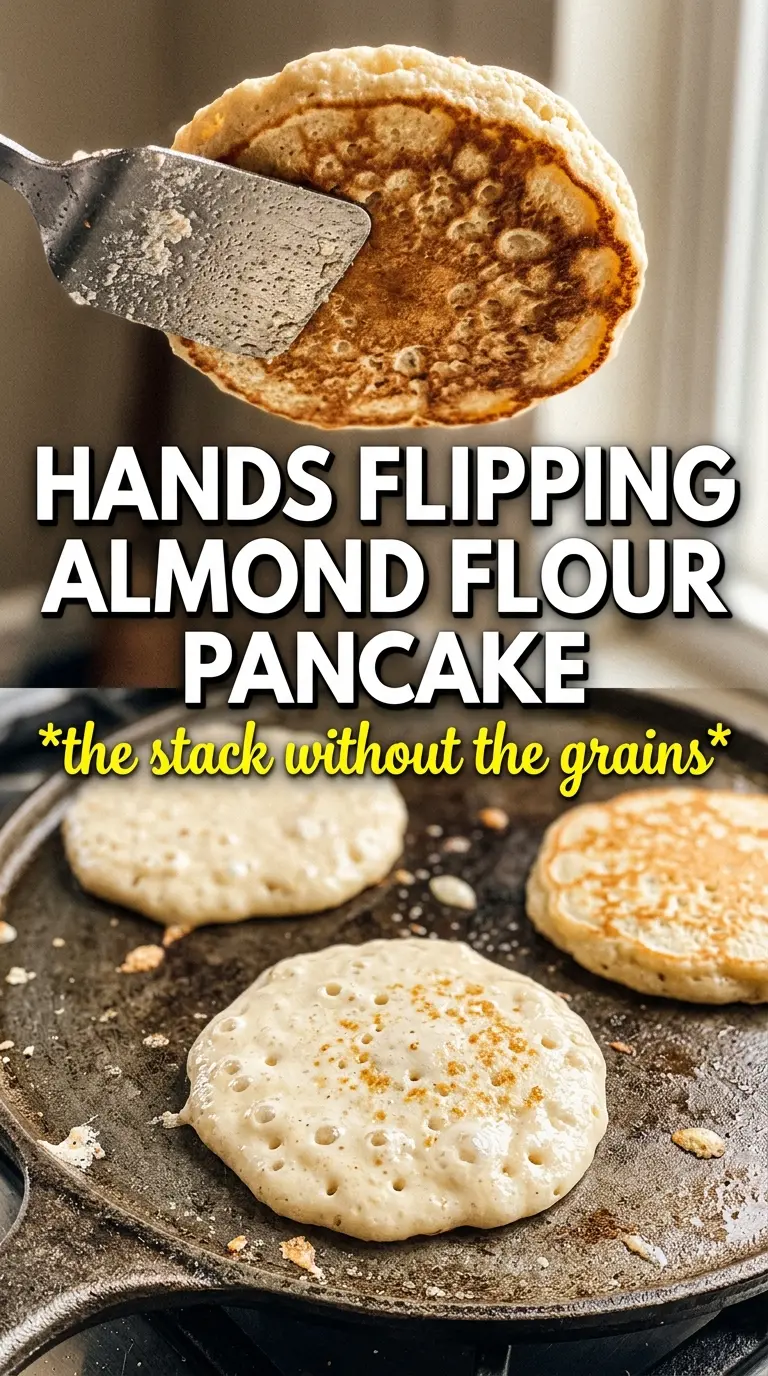
- Let the pancakes set before flipping — the edges should look dry and the top should lose its wet shine. If you flip too early, the middle can collapse.
- Use a thin, steady spatula — these are sturdier once cooked, but the first flip is the one that matters. Slide the spatula fully under the pancake and turn it in one clean motion.
What the Pumpkin, Eggs, and Almond Flour Are Doing Here
- Almond flour gives these pancakes their body and a lightly nutty flavor. Super-fine blanched almond flour works best because it makes a softer pancake; coarse almond meal can turn the texture gritty.
- Pumpkin puree adds moisture, color, and that earthy pumpkin flavor without making the batter sweet on its own. Use pure pumpkin, not pumpkin pie filling, or the pancakes will taste overly spiced and too sweet.
- Eggs are the structure here. Since there’s no gluten, they do the heavy lifting that keeps the pancakes together, so I wouldn’t swap them unless you’re using a tested egg-free pancake base.
- Apple cider vinegar works with the baking soda to add a little lift. It doesn’t make the pancakes taste tangy; it just helps them rise before they set in the pan.
- Maple syrup belongs in the batter, not just on top. It rounds out the pumpkin spice and helps the pancakes brown a little more evenly.
- Coconut oil is a good cooking fat here because it handles the gentle heat well and gives the edges a clean, slightly crisp finish. Butter can work, but it browns faster and needs a closer eye.
Getting the Batter and Pan to Work Together
Whisk the dry ingredients first
Start with the almond flour, baking soda, pumpkin pie spice, cinnamon, and salt in a bowl and whisk them until the spices are evenly distributed. That keeps you from getting one pancake with a pocket of cinnamon and another that tastes flat. Almond flour can clump a little, so breaking it up now helps the batter stay even later.
Mix the wet ingredients until smooth
Whisk the pumpkin puree, eggs, almond milk, maple syrup, vanilla, and apple cider vinegar until the mixture looks uniform and glossy. The pumpkin should be fully blended in; if it’s streaky, the pancakes can cook unevenly. Don’t worry if the mixture looks a little thick on its own — it’s supposed to.
Fold, then let the batter settle
Pour the wet mixture into the dry ingredients and fold just until the flour disappears. The batter will be thicker than standard pancake batter, almost scoopable, and that’s what you want. Give it a minute to sit so the almond flour can absorb some of the liquid; if it seems a touch loose right away, it often thickens on its own.
Cook low and slow
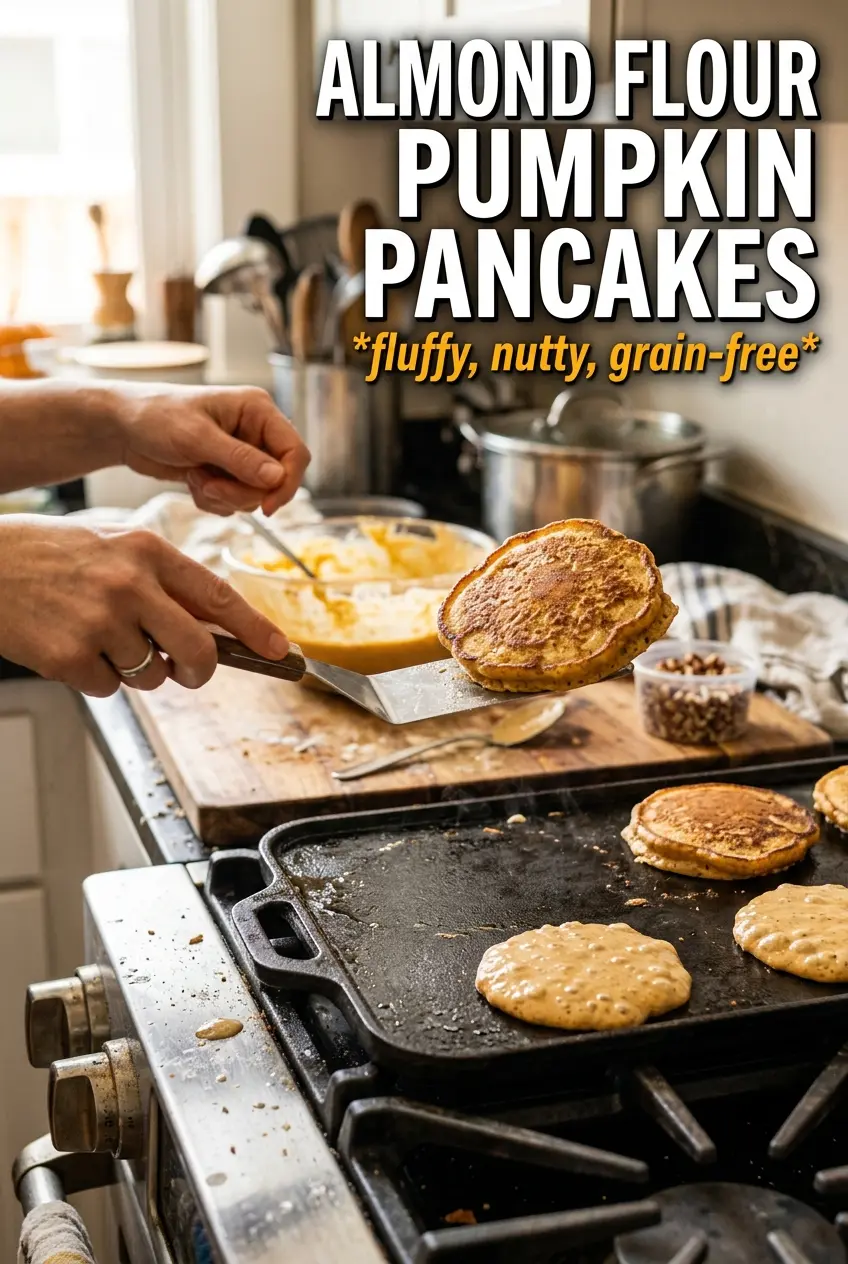
Warm a skillet over medium-low heat and coat it lightly with coconut oil. Drop 2 to 3 tablespoon portions onto the pan and nudge them into rounds with the back of a spoon. Cook until the edges look set and the underside is deep golden, then flip carefully and cook the second side until it springs back lightly when pressed. If the first side is browning before the center firms up, the heat is too high.
Make Them Dairy-Free Without Changing the Texture
These pancakes are already easy to keep dairy-free because the recipe uses almond milk or coconut milk and coconut oil. Stick with coconut milk if you want a slightly richer batter, or use unsweetened almond milk for a lighter finish. The texture stays the same as long as the batter still feels thick and spoonable.
Add Chocolate Chips Without Weighing the Batter Down
A handful of mini chocolate chips works better than big chips here because the pancakes are small and tender. Fold them in at the very end so they don’t streak the batter, and keep the heat low so the chocolate doesn’t scorch before the centers cook through.
Make Them More Protein-Heavy
If you want a more filling breakfast, serve them with Greek yogurt or nut butter instead of adding extra protein powder to the batter. Protein powder can dry out almond flour pancakes fast and make them crumbly, while a topping keeps the texture soft and the flavor clean.
Storage and Reheating
- Refrigerator: Store in an airtight container for up to 4 days. They stay soft, though the edges lose a little of their fresh-from-the-pan crispness.
- Freezer: These freeze well. Layer cooled pancakes between parchment, seal them in a freezer bag, and freeze for up to 2 months.
- Reheating: Warm them in a toaster oven, skillet, or 300°F oven until heated through. The biggest mistake is microwaving too long, which makes almond flour pancakes rubbery instead of tender.
Questions I Get Asked About This Recipe
Almond Flour Pumpkin Pancakes
Ingredients
Method
- Whisk almond flour, baking soda, pumpkin pie spice, cinnamon, and salt in a bowl until evenly combined; the mixture should look uniformly speckled with spices.
- Whisk pumpkin puree, eggs, almond milk (or coconut milk), maple syrup, vanilla extract, and apple cider vinegar until smooth and glossy.
- Fold the wet mixture into the dry mixture until no dry streaks remain; the batter will be thicker and denser than traditional pancake batter.
- Heat a skillet over medium-low heat and grease with coconut oil, using a thin film so the pancakes brown without sticking.
- Drop 2-3 tablespoon rounds of batter and flatten slightly with the back of the spoon; keep rounds close but not touching.
- Cook 3-4 minutes until the edges are set and the bottom is golden, using longer lower heat since almond flour pancakes need extra time to cook through.
- Flip carefully and cook 2-3 minutes more until browned on the second side and cooked in the center.
- Serve warm with maple syrup and fresh berries, letting syrup lightly pool on top and around the edges.