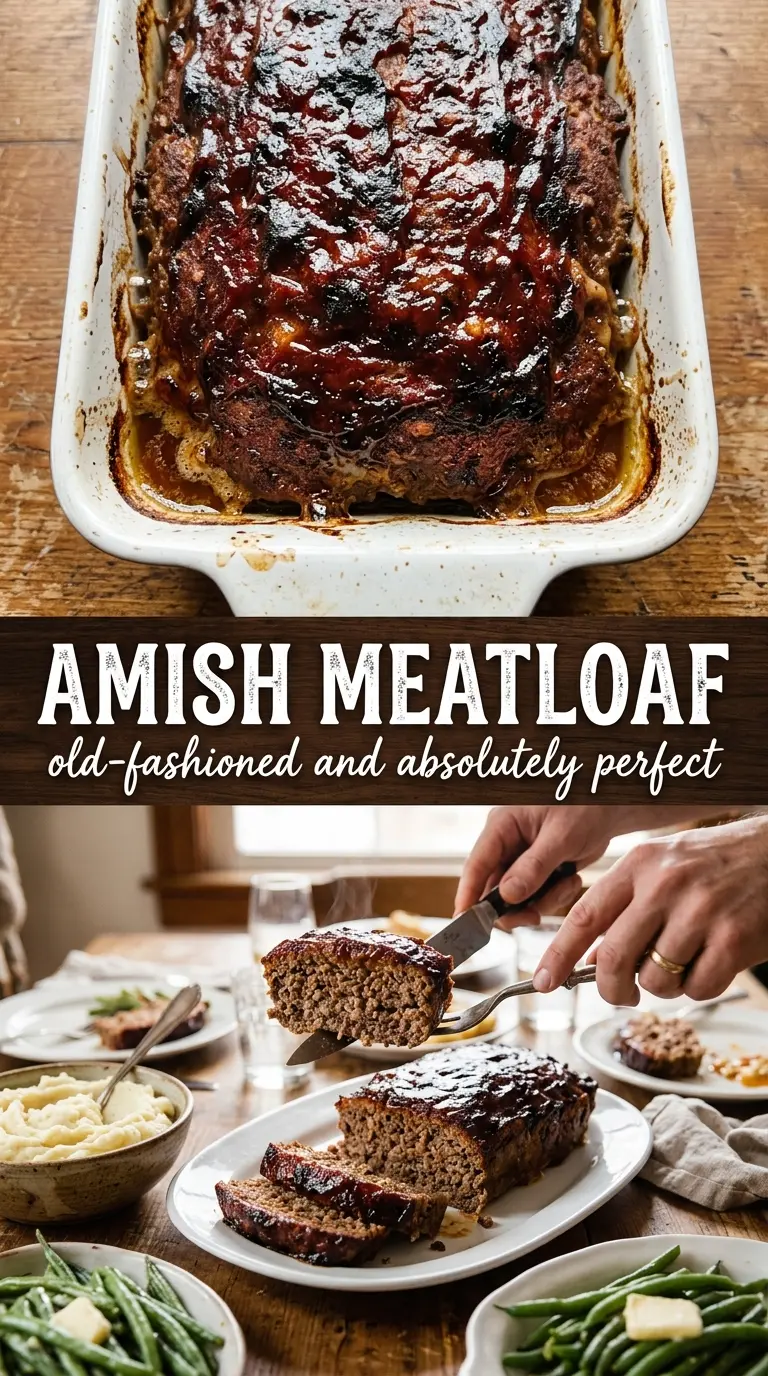
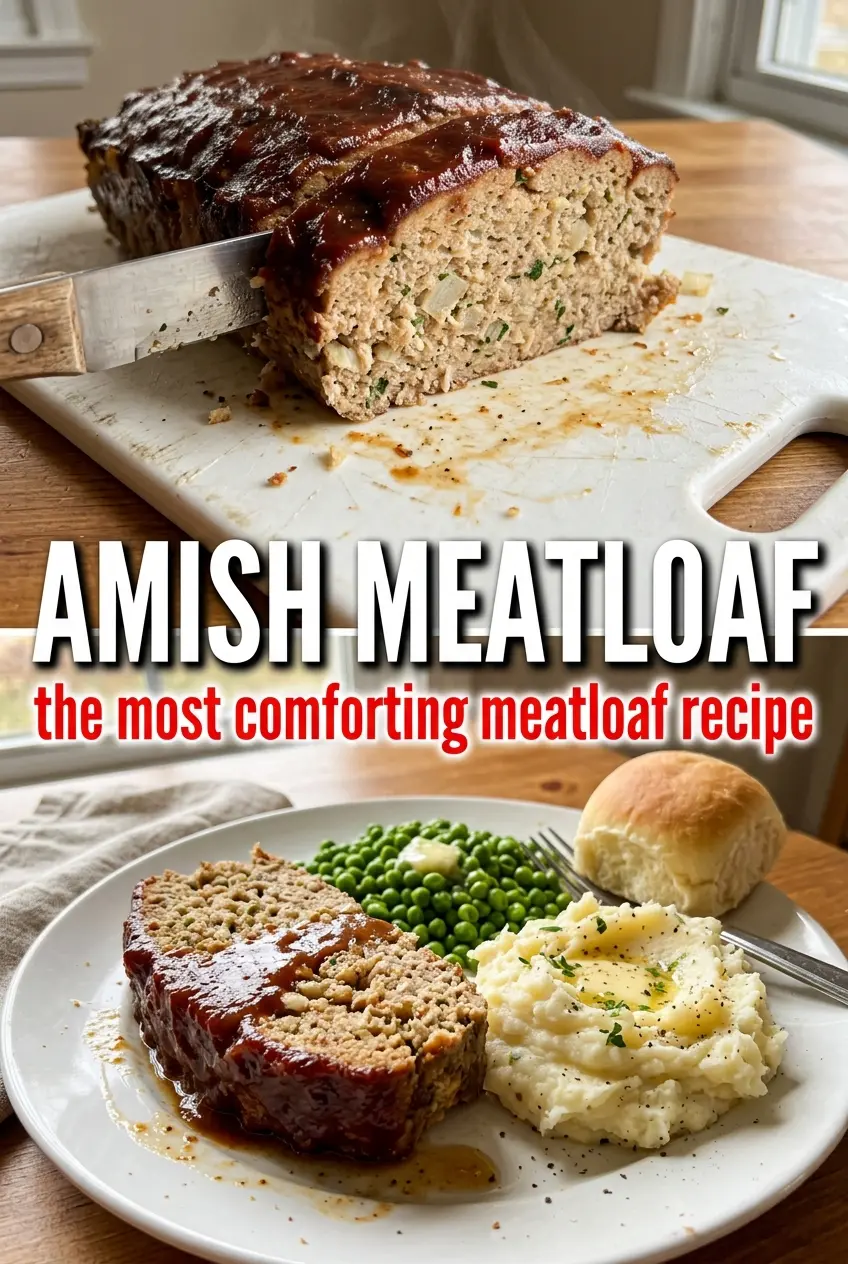
Amish meatloaf lands on the plate with the kind of old-fashioned comfort that doesn’t need dressing up. It slices thick and sturdy, holds together cleanly, and gives you that rich, savory bite followed by a tangy ketchup glaze that caramelizes just enough in the oven. This is the kind of meatloaf people remember from family dinners, not the crumbly, dry version that ends up needing extra sauce just to stay interesting.
The texture comes from a few smart choices: saltine crackers for a fine, tender crumb, grated onion so the flavor melts into the meat instead of staying in sharp pieces, and milk plus eggs to keep everything cohesive without turning dense in a heavy way. Using beef and pork gives the loaf a deeper, rounder flavor than beef alone, and the glaze is simple on purpose so it bakes into a shiny, slightly sticky finish instead of overpowering the loaf.
Below, I’ll walk through the part that matters most: how to mix this meatloaf so it stays tender but still slices neatly. I’ve also included a few practical swaps and the storage details you’ll want if you’re planning leftovers.
The loaf held together beautifully and the glaze turned sticky and caramelized on top without making the bottom soggy. I used the exact bake time and the center came out juicy, not greasy.
Like this Amish meatloaf? Save it to Pinterest for the nights when you want a hearty, sliceable loaf with a caramelized ketchup glaze.
The Mixing Step That Keeps Amish Meatloaf from Turning Dense
Most meatloaf problems start before the pan ever goes into the oven. If you pack the mixture like bread dough or stir it until it looks perfectly smooth, the finished loaf turns tight and chewy instead of tender and sliceable. The goal here is a mixture that holds together when pressed, not a paste.
The grated onion matters more than it looks like it should. It disappears into the meat and adds moisture without leaving raw chunks behind, which helps the loaf stay cohesive and keeps each slice tasting seasoned all the way through. The crackers do the same job as breadcrumbs, but they give this version that classic, old-fashioned texture that feels right for Amish-style meatloaf.
- Ground beef — Use an 80/20 blend if you can. Leaner beef can work, but it dries out faster and needs the pork and milk to carry more of the moisture.
- Ground pork — This softens the texture and adds fat, which keeps the loaf juicy. If you only have beef, the result will still work, but it will taste less rounded.
- Saltine crackers — They break down into a fine binder that gives the loaf its classic texture. Plain breadcrumbs can replace them, but the crumb will be a little less tender and a little less old-fashioned.
- Whole milk and eggs — These hold everything together and keep the loaf from baking up dry. Skim milk works in a pinch, but whole milk gives the better finish.
What Each Ingredient Is Actually Doing in This Recipe
- Primary ingredient (the star) — Quality matters most. Choose the best you can find.
- Cooking medium (oil, butter, or broth) — This carries flavors and prevents dryness.
- Seasonings (salt, pepper, spices, herbs) — Layer flavors so nothing overpowers. Build depth gradually.
- Aromatics (garlic, onion, herbs) — Cook with fat to bloom flavors. Become the foundation.
- Supporting ingredients — Complement the main ingredient without overpowering it.
- Sauce or liquid (if applicable) — Brings flavors together. Balance richness with acid.
- Acid (lemon, vinegar, wine, or other) — Brightens and prevents flat-tasting results.
- Final finish (garnish, glaze, or sauce) — Prevents one-dimensional taste and adds visual appeal.
Building the Loaf and Glaze So They Bake Together Cleanly
Mixing the Meat Without Overworking It
Combine everything in a large bowl and stop as soon as the ingredients are evenly distributed. You should still see the mixture as a loose mass, not a polished paste. If the bowl starts to feel sticky and the meat clings in a tight ball, you’ve gone too far. Wet your hands lightly if needed, then press the mixture into the loaf pan with enough pressure to remove big air pockets without compacting it.
Spreading the First Layer of Glaze
Mix the ketchup, brown sugar, and vinegar until the sugar dissolves into a glossy sauce. Spread about half over the loaf before baking so it can set into the surface instead of sitting on top as a loose topping. If you dump all of it on at the start, the glaze tends to slide and the sugars can darken too quickly before the meat is fully cooked.
Finishing the Bake at the Right Moment
Bake until the loaf is nearly done, then add the rest of the glaze so it finishes with a sticky, shiny top. An internal temperature of 160°F in the center is the mark to watch, but the loaf also needs that 10-minute rest so the juices settle and the slices don’t collapse. If you cut it immediately, the fat and moisture run out onto the board instead of staying in the meat where they belong.
Make It Without Pork
Use 3 pounds of ground beef instead of the beef-and-pork mix. The loaf will still slice well, but it will be a little less rich and a little firmer, so don’t overbake it. A slightly fattier beef blend helps replace what the pork would normally contribute.
Gluten-Free Amish Meatloaf
Swap the saltine crackers for gluten-free crackers or gluten-free breadcrumbs in the same amount. The texture stays close to the original as long as the crumbs are fine. Avoid large, coarse crumbs or the loaf can break apart a little more easily when sliced.
A Little More Tang in the Glaze
Add an extra teaspoon of apple cider vinegar if you like a sharper glaze that cuts through the richness of the meat. It won’t make the loaf taste sour; it just brightens the top layer and keeps the sweetness from feeling heavy.
Make-Ahead Option for Busy Nights
Shape the loaf in the pan, cover it tightly, and refrigerate it up to 24 hours before baking. Let it sit on the counter while the oven preheats so the center isn’t ice-cold. If you bake it straight from the fridge, the outside will set before the center has time to catch up.
Storage and Reheating
- Refrigerator: Store sliced meatloaf in an airtight container for up to 4 days. The texture tightens a little, but the flavor deepens by the next day.
- Freezer: It freezes well. Wrap individual slices or the whole cooled loaf tightly, then freeze for up to 3 months. Thaw overnight in the refrigerator before reheating.
- Reheating: Warm slices covered in the oven at 325°F with a spoonful of water or extra glaze to keep them moist. The common mistake is blasting meatloaf in the microwave until the edges turn rubbery and the center dries out.
Answers to the Questions Worth Asking
Amish Meatloaf
Ingredients
Equipment
Method
- Preheat the oven to 350°F and grease a 9x5 loaf pan, keeping the pan ready so the meat mixture goes in immediately. (Visual cue: pan looks lightly coated, not wet.)
- Combine ground beef, ground pork, crushed saltine crackers, eggs, whole milk, grated onion, Worcestershire sauce, prepared mustard, dried parsley, salt, and black pepper in a bowl until evenly mixed. (Visual cue: mixture looks cohesive with no dry cracker pockets.)
- Press the mixture firmly into the loaf pan and smooth the top so it bakes evenly. (Visual cue: top is flat and tightly packed.)
- Mix the ketchup, brown sugar, and apple cider vinegar for the glaze, then spread half over the top of the loaf. (Visual cue: glaze forms an even coating.)
- Bake at 350°F for 55 minutes, until the glaze is set and the loaf is starting to color. (Visual cue: glaze darkens slightly at the edges.)
- Spread the remaining glaze over the top and bake for 15 more minutes until the internal temperature reaches 160°F. (Visual cue: thermometer reads 160°F in the center.)
- Rest the meatloaf for 10 minutes before slicing, so juices settle and the texture stays dense. (Visual cue: loaf firms up and slices hold their shape.)
- Slice and serve with traditional sides. (Visual cue: thick slices show a compact interior.)