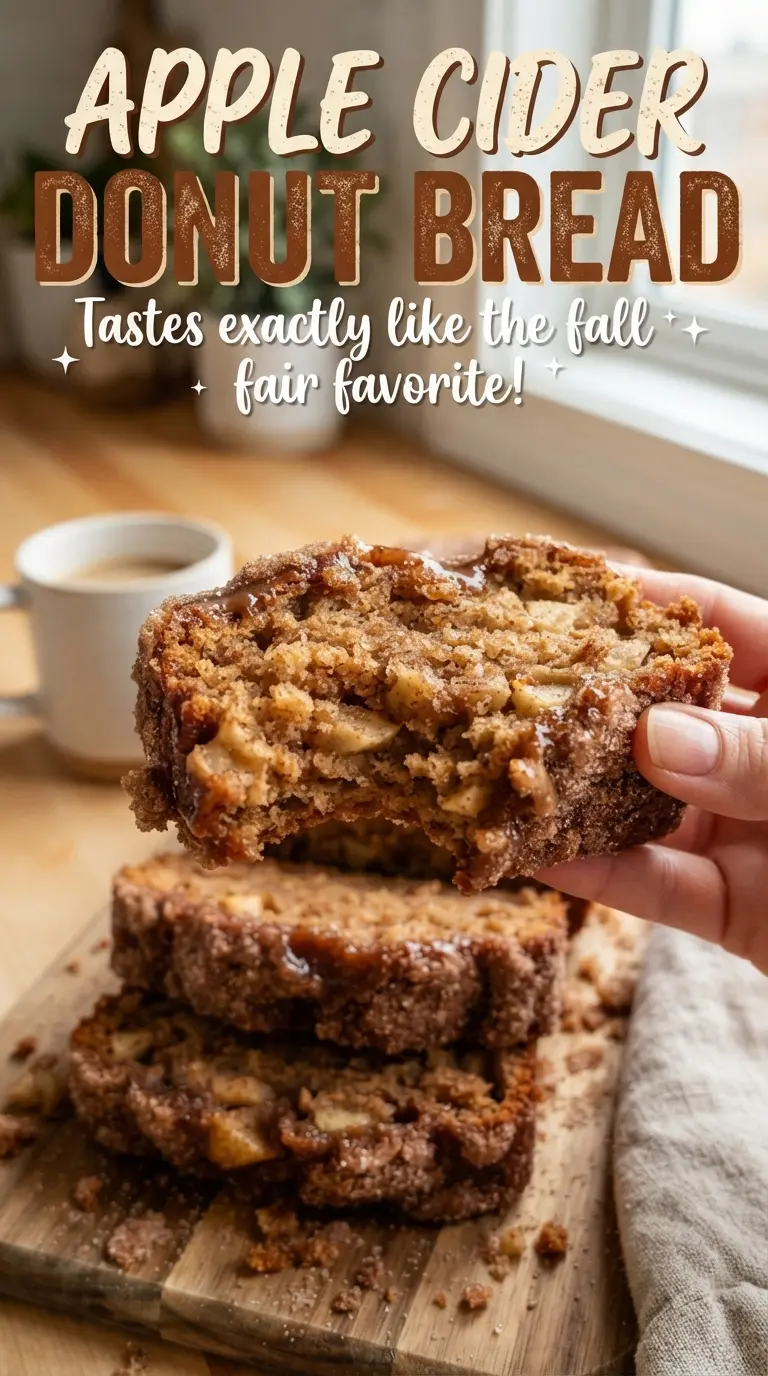
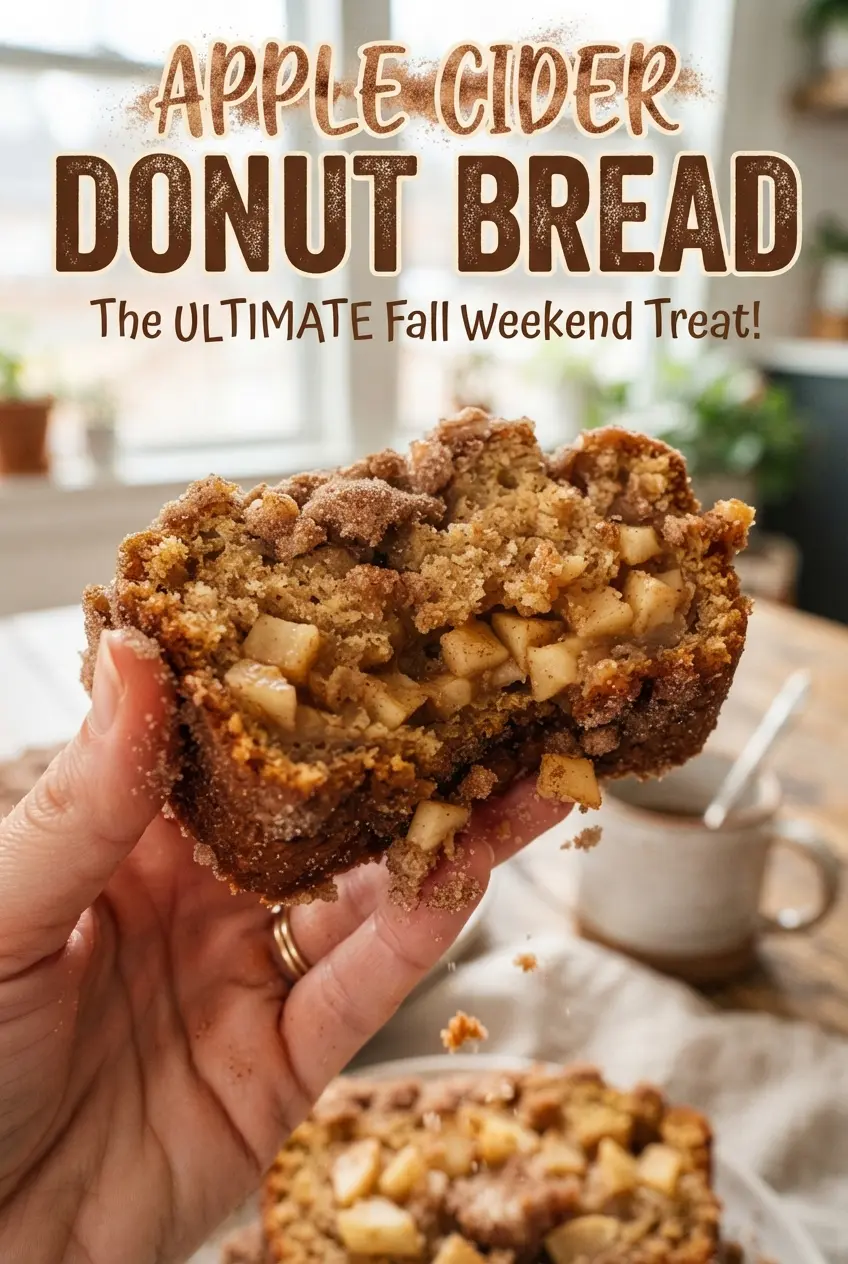
Apple Cider Donut Bread has that same bakery-style pull as a fresh apple cider donut: a tender, spiced crumb under a thick cinnamon-sugar crust that cracks a little when you slice into it. It smells like warm cider, brown sugar, and butter the moment it comes out of the oven, and the topping gives it the kind of finish that makes people come back for a second piece before the pan is cool.
The part that makes this loaf work is the reduced cider. Simmering it down concentrates the apple flavor instead of watering the batter down, so every bite tastes like cider instead of just sweet spice. Sour cream keeps the crumb soft and rich, and the butter-brush plus cinnamon sugar on top gives you that donut-like finish without needing a fryer.
Below, I’ll walk through the one step that matters most for flavor, the ingredient choices that give this loaf its bakery texture, and the best way to keep that crunchy coating intact after baking.
The cider flavor came through beautifully, and the cinnamon sugar crust stayed crunchy even the next day. I followed the reduction step exactly and the loaf baked up with a moist, tender crumb.
Save this Apple Cider Donut Bread for the day you want a buttery loaf with a crunchy cinnamon sugar crust and real cider flavor.
The Step That Keeps the Cider Flavor from Disappearing
Most apple cider breads taste faint because the cider gets mixed in at full strength and baked into the background. Reducing it first changes everything. You’re concentrating the apple notes before they ever hit the batter, and that means the loaf tastes like cider, not just cinnamon bread with a vague fruit hint.
The other place people go wrong is overmixing after the flour goes in. Once the dry ingredients hit the bowl, stir only until the streaks disappear. If you keep going, the loaf turns tight and a little rubbery instead of tender and cakey the way a donut bread should be.
- Reducing the cider — This is the flavor engine of the loaf. Start with 1 1/2 cups and simmer until you have 1/2 cup left; if you skip this, the cider taste gets lost in the batter.
- Sour cream — This keeps the crumb plush and moist without making the loaf heavy. Plain full-fat yogurt works in a pinch, but sour cream gives a rounder, richer texture.
- Brown sugar — It brings molasses depth that plain white sugar can’t replicate. That extra moisture also helps the loaf stay soft for a couple of days.
- Butter topping — Brush it on while the loaf is still warm so the cinnamon sugar clings instead of sliding off. Melted butter is what gives the crust that donut-shop finish.
Building the Loaf So the Crumb Stays Tender
- Apple cider — Reduce it on the stove until it measures 1/2 cup, then cool it before mixing. If it goes in hot, it can loosen the butter mixture and make the batter greasy.
- All-purpose flour — This gives the loaf enough structure to slice cleanly without turning bready. Bread flour would make it chewier than you want here.
- Baking powder and baking soda — The two leaveners work together for lift and a soft crumb. The baking soda also reacts with the sour cream for better rise and a finer texture.
- Cinnamon and nutmeg — They should support the cider, not bury it. Fresh cinnamon makes a noticeable difference here because the topping is simple and the spice has to carry its weight.
How to Mix, Bake, and Finish It Like a True Donut Loaf
Reducing the Cider First
Pour the cider into a small saucepan and simmer until it’s down to 1/2 cup, stirring every so often so it doesn’t scorch on the bottom. It should smell stronger and taste almost syrupy when it’s ready. Let it cool before you add it to the batter, or it can soften the butter mixture too soon and throw off the texture.
Making the Batter Without Toughening It
Beat the butter and brown sugar until the mixture looks pale and fluffy, then add the eggs, sour cream, vanilla, and cooled cider. The batter may look a little loose at that point, and that’s fine. Once the dry ingredients go in, switch to a gentle hand and stop the second the flour disappears. Dry pockets in the corners are better than overmixed batter.
Baking for a Clean Slice
Scrape the batter into a greased and lined 9×5-inch loaf pan and smooth the top so it bakes evenly. The loaf is done when a toothpick inserted in the center comes out clean or with just a few moist crumbs, and the top springs back lightly when you press it. If the top is browning too fast before the center sets, tent it loosely with foil for the last 10 to 15 minutes.
Turning the Loaf Into a Donut Finish
Let the bread cool for about 10 minutes, then brush it all over with melted butter while it’s still warm. Press the cinnamon sugar on in a generous layer so it sticks into the crust instead of falling off later. Work quickly here; if the loaf cools too much, the butter won’t grip the topping and you’ll lose that classic donut-style shell.
Three Ways to Keep the Apple Cider Donut Bread Working for You
Dairy-Free Version
Use a plant-based butter for both the batter and the topping, and swap the sour cream for an unsweetened dairy-free yogurt with a thick texture. The loaf will still be tender, but the crumb won’t have quite the same rich tang you get from sour cream.
Gluten-Free Loaf
Use a 1:1 gluten-free baking blend that already includes xanthan gum. The loaf will still bake up nicely, but it may be a little more delicate when warm, so let it cool fully before slicing.
Extra-Strong Cinnamon Sugar Crust
If you want the topping to feel more like a true cider donut, add the cinnamon sugar while the loaf is still slightly warm and press gently with clean hands. You’ll get a thicker, more crunchy shell, but it’s at its best the day it’s baked.
Storage and Reheating
- Refrigerator: Store tightly wrapped for up to 4 days. The crust softens a little, but the crumb stays moist.
- Freezer: Freeze the loaf, whole or sliced, wrapped well in plastic and foil for up to 2 months. Freeze before adding the cinnamon sugar if you want the best texture on the topping.
- Reheating: Warm slices briefly in the microwave or toaster oven, then add a light brush of melted butter if the topping needs waking up. Don’t overheat it or the crumb will dry out fast.
Answers to the Questions Worth Asking
Apple Cider Donut Bread
Ingredients
Equipment
Method
- Simmer apple cider for 15-20 minutes until reduced to 1/2 cup, then cool completely.
- Preheat the oven to 350F, then grease and line a 9x5-inch loaf pan.
- Whisk all-purpose flour, baking powder, baking soda, salt, ground cinnamon, and nutmeg until evenly combined.
- Beat softened butter and packed brown sugar until fluffy.
- Beat in eggs, sour cream, vanilla extract, and the reduced apple cider until smooth and glossy.
- Fold the dry ingredients into the wet just until combined, then spread the thick batter into the loaf pan.
- Bake for 50-55 minutes, until a toothpick comes out clean and the top looks set and lightly golden.
- Cool the loaf for 10 minutes, then brush all over with melted butter while warm.
- Press the cinnamon sugar topping (sugar mixed with ground cinnamon) onto the buttered loaf for a thick, crunchy coat.