Apple cranberry pecan salad lands on the table with the kind of crunch and sweet-tart balance that makes people reach for a second helping before they’ve finished the first. The apples stay crisp, the candied pecans bring a deep toasted sweetness, and the blue cheese or feta gives the whole bowl a sharp edge that keeps it from tasting one-note. It’s the kind of salad that eats like something you planned, even when it comes together in minutes.
The dressing matters here. A little Dijon helps the oil and vinegar stay together long enough to coat the greens, while honey softens the vinegar and ties the fruit, cheese, and nuts together. I also like using baby spinach or spring mix because the tender leaves carry the dressing without getting weighed down, and the salad still feels fresh instead of soggy.
Below I’ve included the timing that keeps the apples crisp, the one swap that works if you want to skip the blue cheese, and a few smart variations for making this salad fit what’s in your fridge.
The dressing clung to every leaf without making the spinach wilt, and the combo of apples, cranberries, and pecans gave it that sweet-salty crunch I was hoping for.
Save this apple cranberry pecan salad for the days when you want crisp apples, tangy cheese, and a poppy seed dressing that ties everything together.
The Dressing Needs Enough Body to Coat the Greens
Most fruit-and-nut salads fall flat because the dressing tastes sharp on its own, then disappears once it hits the greens. Here, the honey and Dijon do more than add flavor. They give the vinaigrette enough structure to cling to the spinach instead of slipping to the bottom of the bowl.
The other thing that matters is timing. If you dress the salad too early, the apples start losing their snap and the greens slump. Dress it right before serving, toss just enough to gloss the leaves, and stop as soon as everything looks lightly coated.
What Each Ingredient Is Actually Doing in This Salad
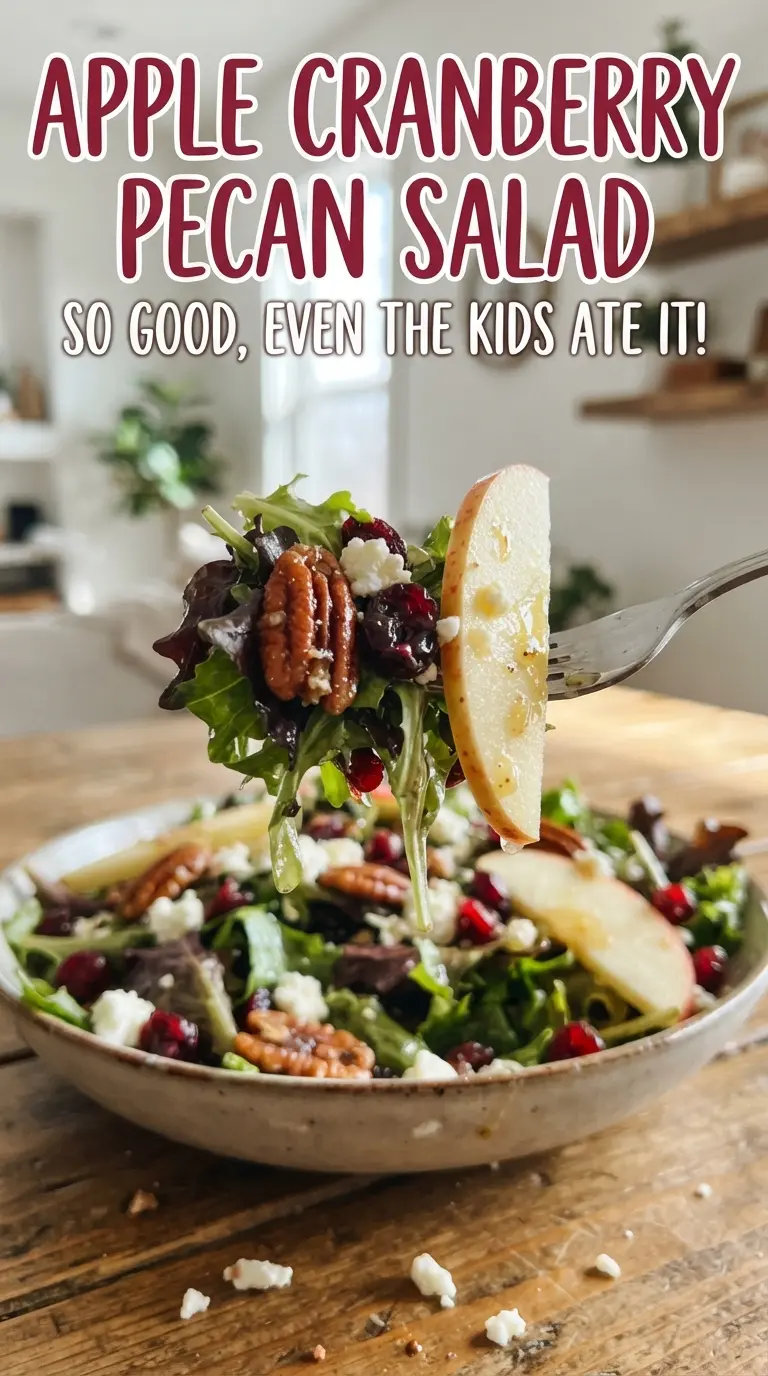
- Baby spinach or spring mix — These greens are tender enough to stay pleasant under the dressing but sturdy enough to hold the toppings. Arugula works if you want a peppery edge, but it changes the salad’s balance fast.
- Apples — Use a crisp, sweet-tart variety like Honeycrisp, Pink Lady, or Fuji. Soft apples get muddy in the bowl, so slice them thin and add them at the end if you’re prepping ahead.
- Candied pecans — These bring crunch and a caramel note that plain toasted pecans can’t match. If you only have regular pecans, toast them first in a dry skillet for a few minutes so they still taste rich.
- Blue cheese or feta — Blue cheese gives the strongest contrast and makes the salad taste more composed; feta is milder and saltier. Either one works, but skip pre-crumbled cheese if you can and crumble it yourself for better texture.
- Poppy seeds — They don’t just look nice. They add tiny bursts of texture and give the dressing that classic deli-salad feel.
Building the Salad So Nothing Gets Soggy
Whisking the Dressing First
Start by whisking the olive oil, red wine vinegar, honey, poppy seeds, Dijon, and salt until the dressing looks glossy and lightly thickened. If the honey sits in a streak at the bottom, keep whisking; it needs to dissolve fully or the dressing won’t coat evenly. The Dijon helps emulsify the dressing, so don’t skip it unless you’re planning to shake everything in a jar for a full minute.
Layering the Bowl With Intention
Put the greens in first, then scatter the apples, cranberries, pecans, cheese, and onion over the top. That order keeps the delicate leaves from getting crushed while you build the salad. Thin onion slices matter here because thick ones can overpower every bite and make the whole bowl taste harsh.
Finishing With the Lightest Toss
Drizzle on just enough dressing to coat, not drown, then toss gently with clean hands or salad servers. If the bowl looks wet at the bottom, you’ve added too much dressing for this amount of greens. Stop while the leaves are still perky and the apples still look bright; that’s the point where the salad tastes fresh instead of heavy.
How to Adapt This Salad for Different Tables
Make It Dairy-Free
Leave out the cheese and add a little extra crunch with more pecans or a handful of sunflower seeds. You’ll lose the salty creaminess that blue cheese or feta brings, so the salad tastes a bit brighter and cleaner, which pairs nicely with the apples.
Swap the Blue Cheese for Feta
Feta makes the salad milder and a little less assertive, which works well if you’re serving people who don’t love strong cheese. The tradeoff is that you lose some of the bold bite that makes the sweet apples and cranberries pop.
Use Pears Instead of Apples
Pears work if you want a softer, more delicate salad, but they bruise faster and bring less crunch. Choose a firm pear and slice it just before serving so the bowl stays fresh-looking.
Storage and Reheating
- Refrigerator: Store the greens, toppings, and dressing separately for up to 2 days. Once dressed, the salad loses its crunch fast, especially the apples.
- Freezer: This salad doesn’t freeze well. The greens and fruit turn watery after thawing, and the cheese loses its texture.
- Reheating: Reheating isn’t needed. If the dressing has been chilled, let it sit at room temperature for a few minutes and whisk again before using.
Questions I Get Asked About This Salad
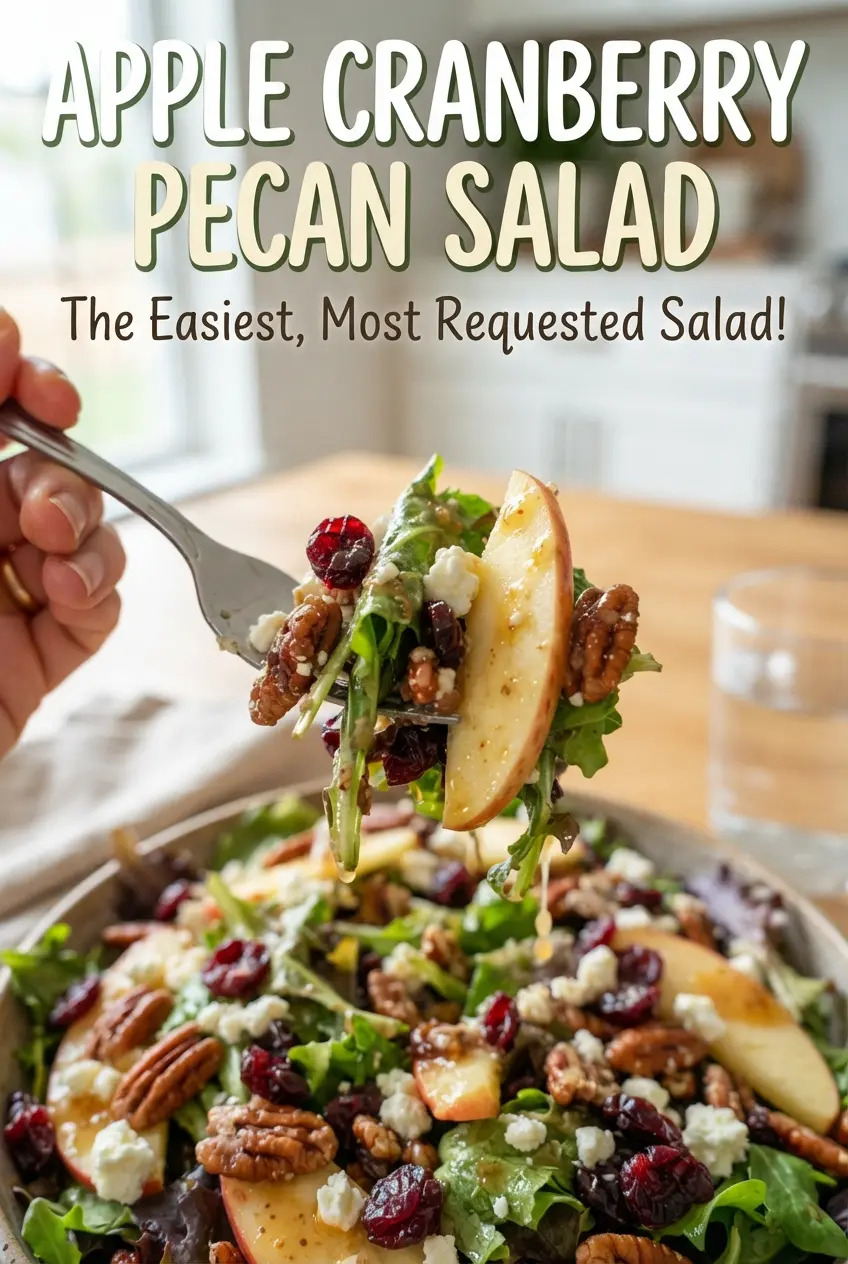
Apple Cranberry Pecan Salad
Ingredients
Method
- Whisk olive oil, red wine vinegar, honey, poppy seeds, Dijon mustard, and salt until evenly combined.
- Set the dressing aside while you assemble the salad.
- Place baby spinach or spring mix in a large bowl.
- Top with thinly sliced apples, dried cranberries, candied pecans, crumbled blue cheese or feta, and thinly sliced red onion.
- Drizzle the dressing over the salad just before serving (aim for an even coating).
- Toss gently until the greens are lightly coated, then serve right away.