Golden puff pastry wrapped around warm brie is one of those appetizers that disappears faster than anything else on the table. The crust bakes up crisp and deeply browned while the cheese inside turns spoon-soft and molten, with just enough jam to cut through the richness. When it comes out right, the first cut sends a little wave of melted brie onto the board, and that moment never gets old.
This version keeps the balance in check. Raspberry or fig jam brings sweetness without making the filling heavy, chopped pecans add crunch, and a little brown sugar helps the top caramelize as the pastry bakes. The egg wash matters here, too — it gives the pastry that lacquered, bakery-style finish instead of a pale, dry shell.
Below, I’ll walk through the small details that keep the brie from bursting out too soon, how to fold the pastry so it seals neatly, and a few easy variations if you want to change the jam or skip the nuts.
The pastry went out deep golden and the cheese was perfectly gooey after the 10-minute rest. I loved that the jam stayed tucked inside instead of running everywhere.
Love the crisp puff pastry and molten brie center? Save this baked brie for the next time you need an appetizer that slices cleanly and oozes perfectly.
The Trick to Keeping the Brie Inside the Pastry
The biggest failure with baked brie is cutting into it too soon or wrapping it too loosely. The cheese needs a little structure from the pastry to hold it in place, and the pastry needs a tight seal so melted brie doesn’t leak out before the crust is fully set. If the seams are open, the filling will escape at the first hot spot in the oven.
The other place people get into trouble is with overfilling. Jam sounds harmless, but too much turns into a boil-over situation once the brie softens. A thin layer gives you sweetness and shine without flooding the pastry, and the rest of the work belongs to the oven.
What Each Ingredient Is Doing in This Baked Brie
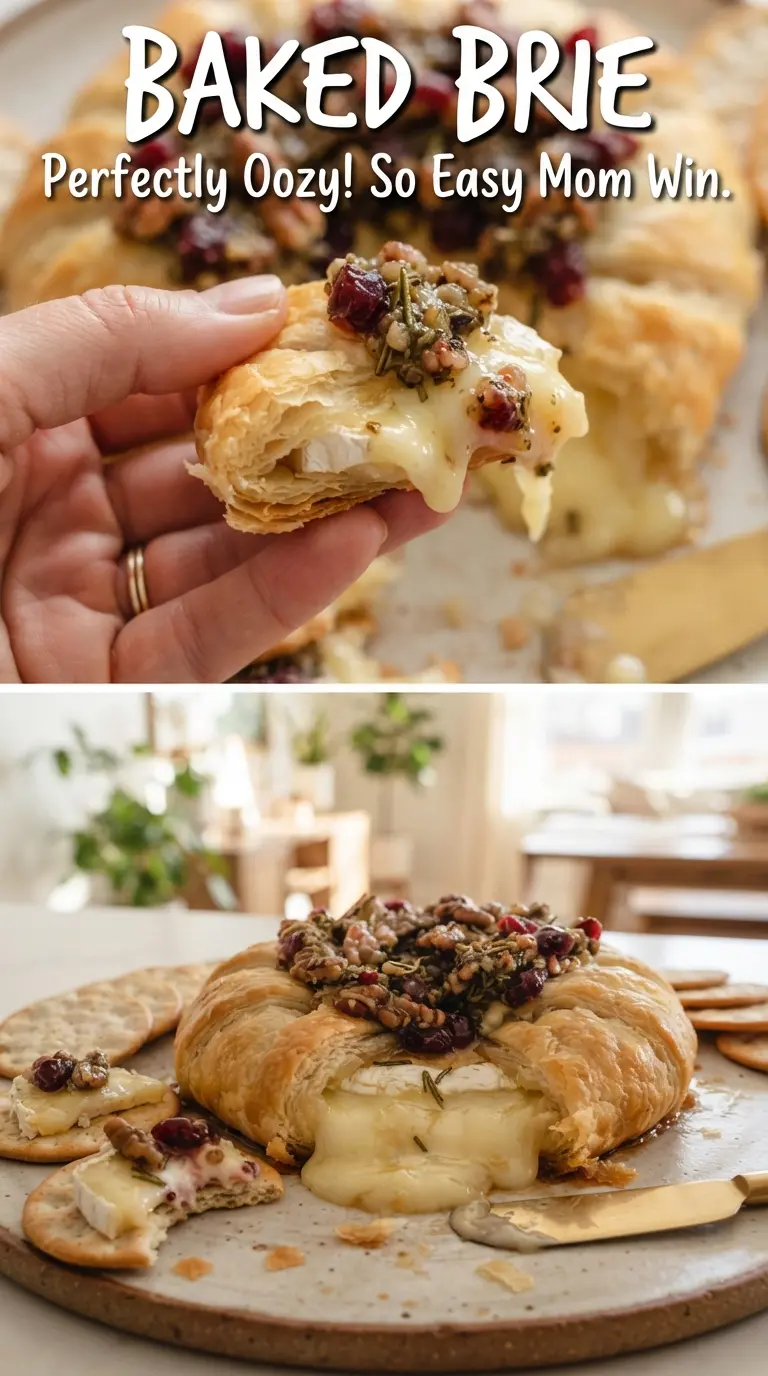
- Puff pastry — This is the shell that gives you the crisp, shattering contrast against the soft cheese. Let it thaw until pliable but still cool; if it gets warm and sticky, it won’t puff as well. Store-bought works beautifully here.
- Brie — A standard 8-ounce wheel is the right size for one sheet of puff pastry. A ripe brie turns creamy in the oven, but don’t use one that’s already runny at room temperature or it can leak too early.
- Raspberry or fig jam — This is the sweet-tart layer that keeps the brie from tasting flat. Fig jam gives a deeper, more savory edge, while raspberry is brighter. Either one works; choose a thick jam rather than a loose preserve.
- Pecans and brown sugar — The pecans bring crunch, and the brown sugar helps the top caramelize under the pastry. If you skip the sugar, the brie still works, but the filling tastes less rounded.
- Egg wash — This gives the pastry that glossy, burnished finish. Water alone won’t brown the same way. Beat it well so it brushes on in an even layer.
How to Wrap and Bake Baked Brie Without Leaks
Building the Filling
Set the brie in the center of the rolled pastry and spoon the jam right on top, keeping it mostly on the cheese instead of letting it run to the edges. Sprinkle the pecans and brown sugar over the jam so they stay tucked into the filling instead of scattering across the pan. If the jam is very loose, stir it first so it spreads in a thicker layer.
Sealing the Pastry
Fold the pastry up and over the brie, trimming away any bulky overlap if needed. Press the seams together firmly so the package holds, then flip it seam-side down onto the parchment-lined baking sheet. If the pastry tears, pinch it back together right away; small holes can let melted cheese escape before the crust browns.
Baking to a Deep Golden Finish
Brush the whole outside with egg wash, then bake at 400°F until the pastry is deeply golden and the bottom feels crisp, about 22 to 25 minutes. Pale pastry usually means the brie will be underwrapped and soft in the middle, so don’t pull it early. When it comes out, rest it for 10 minutes before slicing, because the cheese firms just enough to cut without flooding the board.
Swap the Jam for Apricot or Cherry
Apricot gives a brighter, lighter sweetness, while cherry brings a deeper fruit note that leans more dessert-like. Keep the amount the same and use a thick jam so the filling doesn’t spill. The pastry and brie handle both well.
Skip the Nuts for a Smooth, Nut-Free Version
Leave out the pecans and the baked brie still slices beautifully. You lose the crunch, but the filling stays cleaner and a little softer. This is the easiest adjustment if you’re serving guests with nut allergies.
Use Gluten-Free Crackers or Sliced Apples
The baked brie itself is naturally gluten-free, so the only change needed is the dippers. Apples add freshness and a little crunch, while gluten-free crackers keep the appetizer easy for everyone at the table.
Storage and Reheating
- Refrigerator: Store leftovers in an airtight container for up to 3 days. The pastry softens, but the flavor stays good.
- Freezer: Freeze before baking for the best result. Wrap the assembled brie tightly and freeze for up to 1 month; bake from frozen with a few extra minutes in the oven.
- Reheating: Warm leftovers in a 325°F oven until the pastry crisps back up and the center is heated through. The microwave makes the crust soggy and the cheese uneven, so skip it.
Answers to the Questions Worth Asking

Baked Brie
Ingredients
Equipment
Method
- Preheat the oven to 400°F and line a sheet pan with parchment for easy release.
- Roll the puff pastry slightly, then place the brie in the center.
- Spread the raspberry or fig jam over the brie, then sprinkle with the chopped pecans and brown sugar.
- Fold the pastry up over the brie, trim any excess, and press the seams to seal.
- Flip the brie seam-side down onto the baking sheet, then brush the pastry with the egg wash.
- Bake at 400°F for 22-25 minutes until the puff pastry is deep golden brown.
- Rest the baked brie for 10 minutes so the cheese sets slightly.
- Garnish with fresh rosemary, then serve with crackers and apple slices.