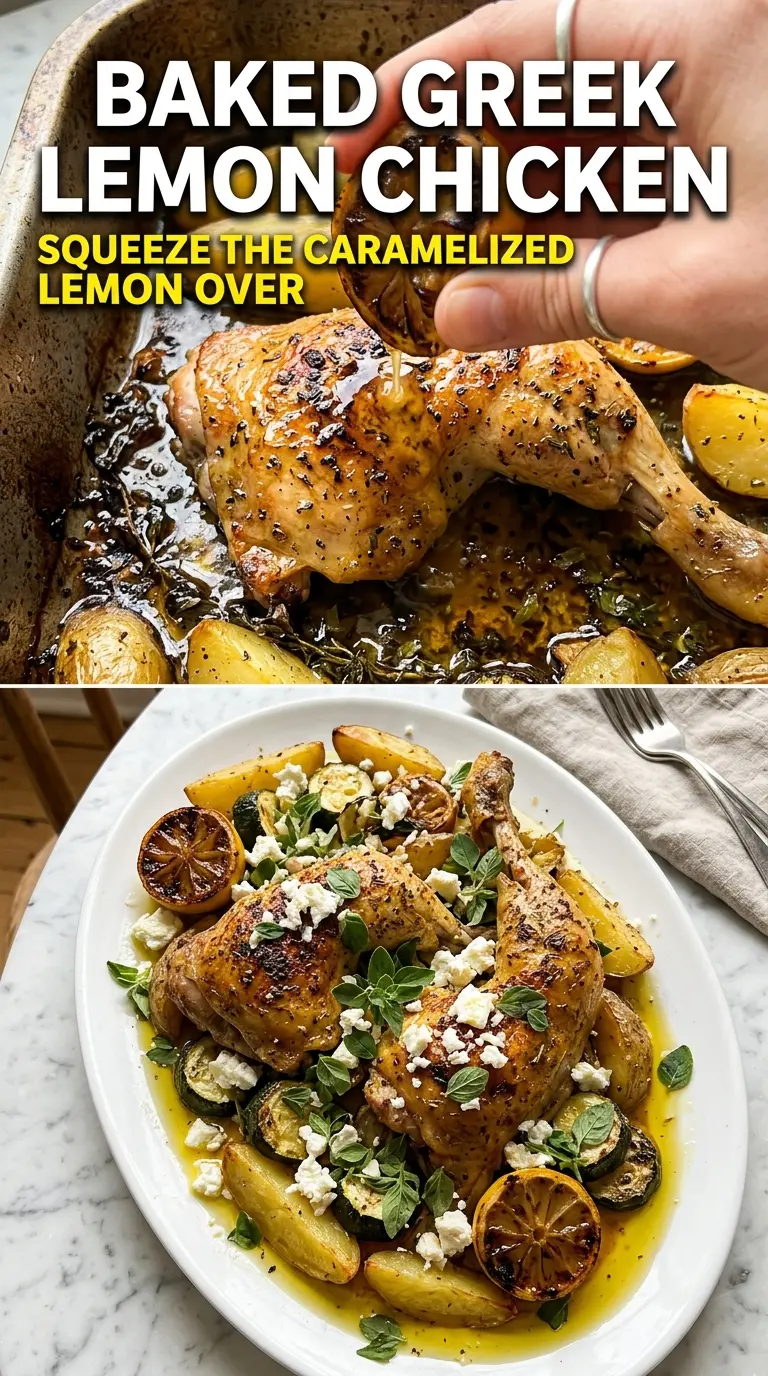
Golden baked Greek lemon chicken lands on the table with crisp, bronzed skin and pan juices that taste bright, garlicky, and a little rich from the roasted drippings. The chicken cooks in a hot oven, so the skin has a chance to tighten and color while the lemon, oregano, and garlic turn into a savory glaze instead of fading into something flat.
The trick here is balance. Enough olive oil keeps the marinade from tasting sharp, while fresh lemon juice and zest bring real citrus punch without thinning the flavor. Roasting the chicken skin-side up and adding broth to the pan gives you steady heat, juicy meat, and those caramelized edges around the lemon slices that make this dish taste like more than just chicken with seasoning.
You’ll find a few details below that matter more than they look on paper: when to marinate, why the broth goes in the pan, and how to keep the skin from steaming. The little things are what turn a basic roast into the kind of dinner people ask for again.
The chicken stayed juicy and the lemon slices turned jammy and caramelized in the pan. I basted once like the instructions said, and the skin came out deeply golden without getting soggy.
Pin this baked Greek lemon chicken for juicy roasted chicken with caramelized lemons and garlicky pan drippings.
The Reason the Chicken Stays Juicy Instead of Drying Out
High heat does the heavy lifting here, but the real protection comes from the marinade and the way the pan is set up. Lemon juice seasons the meat from the outside in, olive oil helps the surface brown instead of scorch, and the broth at the bottom of the pan keeps the drippings from cooking away before the chicken finishes. If the chicken turns dry, it usually means the oven was too low, the pieces were crowded, or it stayed in the oven past 165°F.
Roasting chicken skin-side up matters more than people think. The skin has to face the heat so it can render and crisp while the juices drip down into the pan and flavor the lemon slices below. Basting once gives the top extra sheen, but basting too often cools the oven and softens the skin.
- Bone-in chicken pieces — These roast evenly and stay juicier than boneless chicken. A whole cut-up chicken works best because the mixed pieces give you both darker meat and breasts without overcomplicating the timing.
- Fresh lemon juice and zest — Juice gives the sharp tang, but zest carries the lemon oil that makes the flavor smell and taste alive after roasting. Bottled juice won’t give the same lift.
- Chicken broth — This is what turns the pan juices into something spoonable instead of sticky and burnt. Use a regular broth, not low-flavor water, because the broth becomes part of the sauce.
What Each Ingredient Is Actually Doing in This Recipe
- Primary ingredient (the star) — Quality matters most. Choose the best you can find.
- Cooking medium (oil, butter, or broth) — This carries flavors and prevents dryness.
- Seasonings (salt, pepper, spices, herbs) — Layer flavors so nothing overpowers. Build depth gradually.
- Aromatics (garlic, onion, herbs) — Cook with fat to bloom flavors. Become the foundation.
- Supporting ingredients — Complement the main ingredient without overpowering it.
- Sauce or liquid (if applicable) — Brings flavors together. Balance richness with acid.
- Acid (lemon, vinegar, wine, or other) — Brightens and prevents flat-tasting results.
- Final finish (garnish, glaze, or sauce) — Prevents one-dimensional taste and adds visual appeal.
What the Marinade Is Doing Before the Chicken Even Hits the Oven
The marinade is not just about flavor on the surface. Salt, lemon, and garlic start pulling seasoning into the outer layer of the chicken during the 30-minute rest, and the oil helps the herbs spread evenly so they don’t clump or burn in one spot. Thirty minutes is enough to make a difference here; much longer and the lemon can start to tighten the texture of the meat.
Dried oregano gives the dish its Greek backbone, while thyme adds a quieter herbal note that keeps the flavor from tasting one-dimensional. Smoked paprika is subtle, but it helps the chicken pick up a deeper color in the oven. Fresh oregano goes on at the end for a brighter finish that survives the heat.
Roasting the Chicken So the Lemon Slices Caramelize Too
Building the Marinade
Whisk the olive oil, lemon juice, zest, garlic, oregano, thyme, paprika, salt, and pepper until the mixture looks slightly cloudy and emulsified. That helps the garlic and herbs cling to the chicken instead of sliding off. If the marinade looks separated, whisk it again right before it goes over the chicken.
Letting It Rest Long Enough
Coat the chicken well and let it sit for at least 30 minutes. This brief rest is enough to season the surface and soften the garlic’s sharp edge without turning the meat stringy. If you skip the rest entirely, the chicken still works, but it tastes flatter and the herbs don’t settle in as well.
Roasting at a Hot Oven Temperature
Arrange the chicken skin-side up in a roasting pan or baking dish, then pour the broth around it and tuck the lemon slices underneath and between the pieces. Roast at 425°F until the skin is deep golden and the thickest part of the chicken reaches 165°F. If the top is browning too fast, move the pan one rack lower; if it looks pale at the end, give it a few more minutes and watch the temperature, not the clock.
Finishing with the Pan Drippings
Spoon the caramelized juices over the chicken right before serving. That final step matters because the drippings are where the garlic, lemon, and roasted chicken flavor concentrate most. The skin should stay crisp if you stop there; if you let the chicken sit in the liquid too long, the bottom will soften.
Three Ways to Make This Baked Greek Lemon Chicken Work for Your Table
Make it dairy-free without changing a thing
This recipe is naturally dairy-free, so nothing needs to be swapped. The olive oil carries the flavor and gives the chicken a glossy finish, which is exactly what you want here.
Use boneless thighs when you need a faster dinner
Boneless thighs cook faster and stay tender, but they won’t give you the same crackly skin or the same depth in the pan drippings. Start checking them early, since they can go from juicy to dry if they stay in the oven too long.
Swap dried oregano for fresh when you have it
Fresh oregano tastes greener and a little softer than dried, so use about three times as much if you want to replace the dried herb in the marinade. Keep some fresh leaves for the garnish either way, because that last hit of oregano wakes up the whole pan.
Stretch it for a bigger crowd
Double everything and use two pans instead of cramming the chicken into one dish. If the pieces sit on top of each other, they steam and the skin goes soft, which is the fastest way to lose the best part of the recipe.
Storage and Reheating
- Refrigerator: Store leftovers for up to 4 days. The skin softens, but the flavor gets even more pronounced as it sits.
- Freezer: Freeze the cooked chicken and juices for up to 2 months. Wrap tightly and thaw in the refrigerator so the meat doesn’t dry out.
- Reheating: Reheat covered in a 325°F oven with a spoonful of the pan juices or broth until hot. The microwave works in a pinch, but it turns the skin rubbery and dulls the lemon flavor.
Answers to the Questions Worth Asking

Baked Greek Lemon Chicken
Ingredients
Equipment
Method
- Whisk olive oil, lemon juice, lemon zest, garlic, oregano, thyme, smoked paprika, salt, and cracked black pepper in a bowl until combined.
- Add the chicken pieces and turn to coat; marinate for at least 30 minutes so the meat absorbs the lemon-herb flavor.
- Preheat the oven to 425°F.
- Arrange the marinated chicken skin-side up in a large roasting pan or baking dish in a single layer.
- Pour chicken broth around the chicken, then tuck lemon slices around and under the pieces.
- Roast for 40-45 minutes, basting with pan juices once halfway through, until the skin is deeply golden and an instant-read thermometer reads 165°F.
- Spoon the caramelized pan drippings over the chicken right before serving for a glossy finish.
- Garnish with fresh oregano and serve hot.