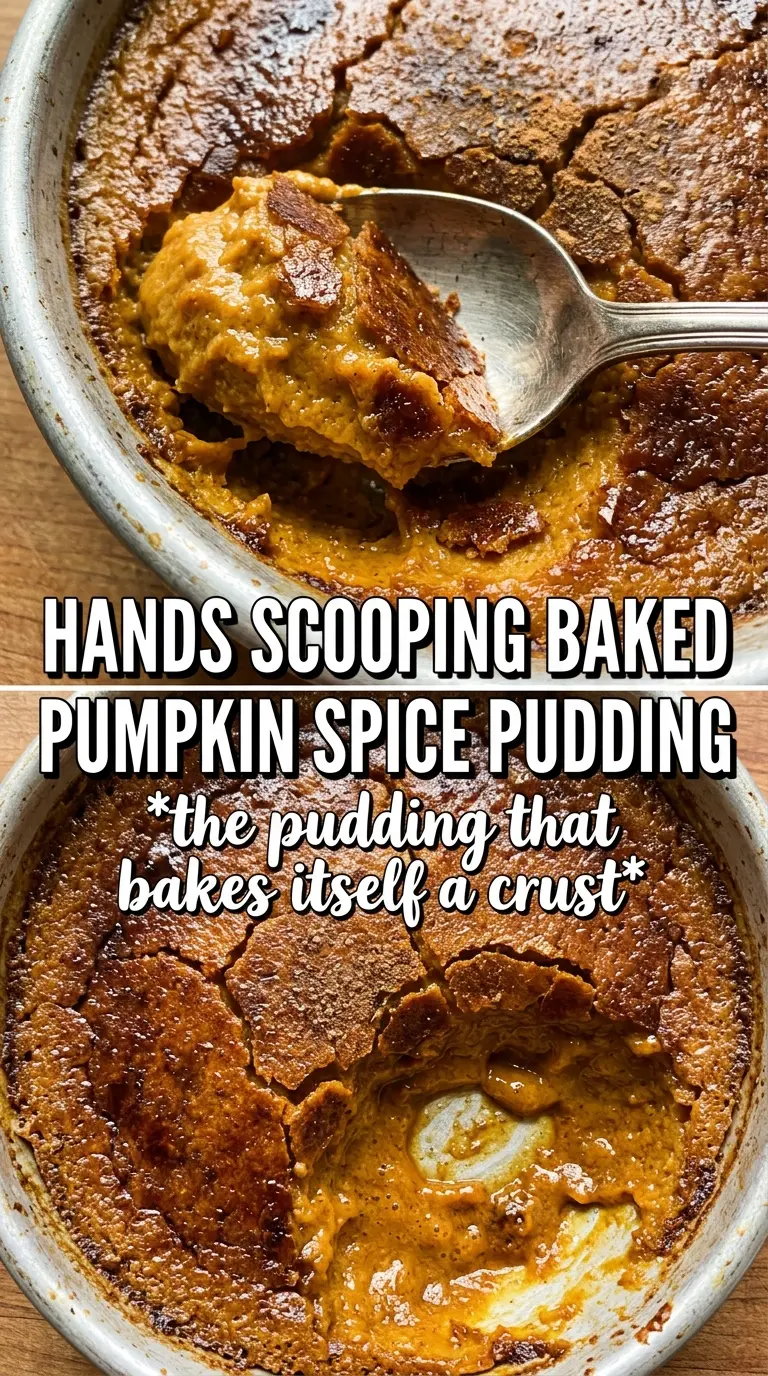
Silky pumpkin custard with a soft set center and a lightly caramelized top is the kind of dessert that disappears fast once the spoon goes in. This baked pumpkin spice pudding lands somewhere between pie filling and spoon pudding: rich enough to feel special, but simple enough to pull together on a weeknight when you want something warm and familiar without making a crust.
The key is balancing moisture and structure. Pumpkin puree brings body, milk and cream keep the texture soft, and cornstarch helps the custard hold together without turning rubbery. The eggs do the actual setting, so the batter gets whisked until completely smooth and baked just until the center still moves a little. Overbaking is what turns a custard like this grainy and dry, so the pull from the oven matters.
Below, I’m covering the exact visual cue I watch for at the 45-minute mark, plus the ingredient swaps that still keep the pudding creamy and spoonable. If you’ve ever had pumpkin desserts turn dense or watery, the notes here will help you avoid both.
The pudding set up with a silky center and that little caramelized skin on top was perfect. I served it warm and the whipped cream melted right into the middle, just like the recipe said.
Love the silky-set center and caramelized top on this baked pumpkin spice pudding? Save it to Pinterest for an easy fall dessert that serves warm or chilled.
The Trick to Keeping This Pumpkin Pudding Creamy Instead of Grainy
Custard desserts fail when they get overheated, and pumpkin puddings are no exception. The eggs need enough heat to set the mixture, but not so much that they seize and give you a curdled texture. That’s why the batter goes into a buttered dish and bakes just until the edges are firm while the center still has a slight wobble when you nudge the pan.
The other important move is the cornstarch. It adds just enough insurance so the pudding slices and spoons neatly after cooling, but it doesn’t replace the eggs. If you try to skip it, the center can bake up loose and watery; if you add too much, the pudding turns pasty instead of silky. The balance here gives you that soft, spoonable texture without needing a crust or a water bath.
- Pumpkin puree — Use pure pumpkin, not pumpkin pie filling. Pie filling already has sugar and spices mixed in, which throws off the structure and makes the pudding cloying.
- Whole milk and heavy cream — This combination keeps the custard rich without being overly dense. You can swap in half-and-half for both, but the pudding will taste a little less plush.
- Cornstarch — This is what helps the pudding hold its shape after it cools. Whisk it in thoroughly so you don’t get little starchy pockets in the finished dessert.
- Eggs — They set the pudding. Use large eggs at room temperature if you can, because cold eggs take longer to blend smoothly and can leave streaks in the batter.
What Each Ingredient Is Actually Doing in This Recipe
- Primary ingredient (the star) — Quality matters most. Choose the best you can find.
- Cooking medium (oil, butter, or broth) — This carries flavors and prevents dryness.
- Seasonings (salt, pepper, spices, herbs) — Layer flavors so nothing overpowers. Build depth gradually.
- Aromatics (garlic, onion, herbs) — Cook with fat to bloom flavors. Become the foundation.
- Supporting ingredients — Complement the main ingredient without overpowering it.
- Sauce or liquid (if applicable) — Brings flavors together. Balance richness with acid.
- Acid (lemon, vinegar, wine, or other) — Brightens and prevents flat-tasting results.
- Final finish (garnish, glaze, or sauce) — Prevents one-dimensional taste and adds visual appeal.
Building the Pudding Base Without Beating Too Much Air Into It
Whisking the Custard Smooth
Start by whisking the pumpkin, dairy, eggs, sugars, cornstarch, spices, salt, and vanilla until the mixture looks completely uniform and glossy. You shouldn’t see any streaks of egg white or little lumps of cornstarch. If the batter looks foamy, you’ve whisked too aggressively, and extra air can make the texture a little more souffle-like than pudding-like.
Dotting With Butter Before Baking
Once the mixture is in the dish, scatter the butter over the top in small pieces. As it melts, it gives the surface a richer flavor and helps the top take on that thin, lightly browned skin. Don’t stir it in after pouring; you want those little pockets of fat to melt gradually on the surface.
Watching for the Set
Bake until the edges are firm and the center still moves just slightly when you gently shake the pan. That wobble is your cue to stop. If the center is completely still in the oven, it’s already on its way to overbaking, and the pudding will firm up too much as it cools.
What to Change When You Want a Different Finish
Dairy-Free Version
Use full-fat coconut milk in place of the milk and cream. The pudding will still set, but it picks up a faint coconut note and tastes a little softer on the palate. I wouldn’t use thin plant milks here; they don’t give enough richness for the custard to taste complete.
Less Sweet, More Spice
Cut the granulated sugar back to 1/2 cup and keep the brown sugar as written. The pudding will taste a little more grown-up and the pumpkin comes through more clearly, but the texture stays the same because the sugar reduction isn’t large enough to affect the custard structure.
Gluten-Free Dessert for a Crowd
This recipe is already gluten-free as written, which makes it an easy dessert for mixed gatherings. Just serve it with a gluten-free whipped cream or a simple dusting of cinnamon if you want to avoid any toppings that may have hidden additives.
Storage and Reheating
- Refrigerator: Keep covered for up to 4 days. The texture tightens a little as it chills, but it stays smooth.
- Freezer: I don’t recommend freezing it. Custards made with eggs and dairy often separate after thawing, and the texture turns a little grainy.
- Reheating: Warm individual portions gently in the microwave in short bursts, or set the baking dish in a low oven until just warm. High heat is what turns the edges rubbery before the center is heated through.
Questions I Get Asked About This Recipe

Baked Pumpkin Spice Pudding
Ingredients
Equipment
Method
- Preheat the oven to 350F, then butter a 9x9 baking dish so the pudding releases cleanly.
- Whisk pumpkin puree, whole milk, heavy cream, eggs, granulated sugar, brown sugar, cornstarch, pumpkin pie spice, cinnamon, ginger, nutmeg, salt, and vanilla extract until completely smooth, with no visible lumps.
- Pour the custard into the prepared dish and dot with unsalted butter for rich browning.
- Bake at 350F for 40-45 minutes, until the edges are set and the center is just slightly wobbly like soft custard.
- Cool the pudding for 20 minutes, so the center finishes setting slightly.
- Serve warm or chilled with whipped cream for serving, spooning through the caramelized top.