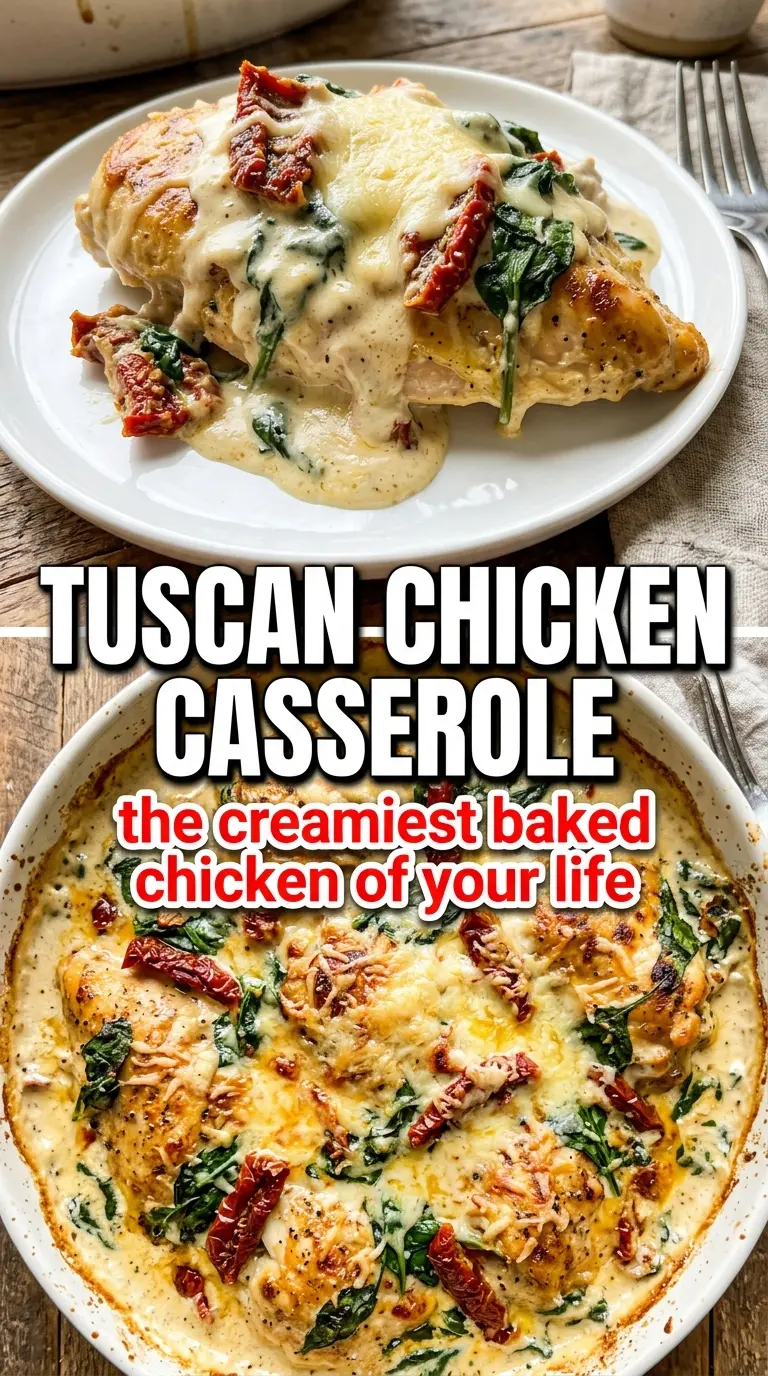
Golden chicken thighs, a silky Parmesan cream sauce, and little bursts of sun-dried tomato make this baked Tuscan chicken casserole the kind of dinner people start asking for again before the pan is even empty. The skin stays crisp where it peeks above the sauce, while the chicken underneath turns tender enough to pull apart with a fork. It feels like a restaurant-style skillet meal, but it lands on the table with one pan and a lot less fuss.
The key is building flavor in stages instead of dumping everything in at once. Searing the chicken first gives you the browning you need for a deeper sauce, and cooking the garlic and sun-dried tomatoes in the same pan keeps all that flavor in play. The cream goes in after the broth is deglazed, so the sauce turns glossy instead of greasy, and the spinach gets folded in at the end so it stays green and just wilted.
Below, I’ve included the spots where this casserole can go sideways, plus the swaps that still keep it rich and balanced. If you’ve ever had a chicken bake turn watery or bland, the details here will help you avoid both.
The sauce turned out silky and thick, not watery at all, and the chicken skin stayed crisp even after baking. I served it with crusty bread and my husband went back for seconds before I sat down.
Save this baked Tuscan chicken casserole for the nights when you want crispy chicken, a creamy sun-dried tomato sauce, and one pan to wash.
The Reason the Sauce Stays Silky Instead of Breaking
The biggest mistake with a creamy chicken bake is rushing the dairy into a pan that’s too hot. That’s how you get a sauce that looks oily around the edges or turns grainy before it even hits the oven. Here, the broth goes in first to loosen the browned bits, then the cream and Parmesan go in over steady heat so the sauce emulsifies instead of seizing up.
Bone-in, skin-on thighs help too. They give you more forgiveness in the oven than breasts, and the rendered chicken fat adds body to the sauce while the skin bakes above it. If you’ve ever had a casserole taste flat, it usually needed that extra layer of browned flavor from the sear.
- Chicken thighs — Bone-in, skin-on thighs stay juicy through the bake and help flavor the sauce. Chicken breasts work in a pinch, but they need less oven time and won’t give you the same rich result.
- Sun-dried tomatoes in oil — The oil-packed kind brings a deeper, sweeter tomato flavor than dry-packed tomatoes. Drain them well, then slice them so they distribute through the sauce instead of sitting in one spot.
- Heavy cream — This is what gives the sauce its body. Half-and-half can split more easily and won’t thicken the same way, so I only use it if I’m okay with a thinner sauce.
- Parmesan — Freshly grated Parmesan melts more smoothly than the shelf-stable kind. Pre-shredded cheese often leaves the sauce a little gritty because of the anti-caking agents.
What Each Ingredient Is Actually Doing in This Chicken Dish
- Chicken (cut into uniform pieces or whole) — Pat dry so it browns. Even thickness ensures uniform cooking.
- Oil or butter (the browning medium) — High-heat oil essential for proper searing. Creates pan flavor.
- Seasonings (salt, pepper, spices) — Don’t hold back. Chicken carries the entire flavor profile.
- Aromatics (garlic, onion, herbs) — Cook with fat to bloom flavors. Become the foundation of the dish.
- Sauce or braising liquid (cream, broth, or tomato) — This keeps chicken moist. Balance richness with acid.
- Vegetables (if using) — Layer by cooking time so everything finishes together.
- Acid (lemon, vinegar, or wine) — This brightens and prevents one-dimensional flavor.
- Proper doneness (165°F internal temperature) — Use a thermometer for accuracy. Overcooked is dry.
Building the Skillet in the Right Order
Searing the Chicken Skin First
Set the chicken thighs skin-side down in hot olive oil and leave them alone until the skin is deep golden and releases easily from the pan. If you move them too soon, the skin tears and the browning stays patchy. You want rendered fat in the pan, because that’s what carries the garlic and tomato flavor into the sauce later. Flip them for just a short second sear, then pull them out while they finish building flavor in the oven.
Cooking the Aromatics Without Burning Them
Garlic and sun-dried tomatoes only need about a minute in the skillet before the broth goes in. The pan is already hot from the sear, so if you leave them longer, the garlic can turn bitter fast. Stir just until the garlic smells fragrant and the tomatoes look slick and darkened, then deglaze right away. That keeps all the browned bits from the chicken where they belong: in the sauce.
Finishing the Sauce and Baking Through
Once the broth loosens the pan, stir in the cream, Parmesan, Italian seasoning, and red pepper flakes. The sauce should look loose at this stage; it thickens in the oven as the chicken juices mingle with it. Return the chicken skin-side up so the top stays above the liquid, then bake until the thighs reach 165°F and the sauce bubbles around the edges. Fold in the spinach at the end so it wilts without turning dull or overcooked.
How to Adapt This When You Need a Different Shortcut
Use Chicken Breasts for a Leaner Bake
Boneless chicken breasts work if that’s what you have, but cut the oven time back and start checking early. They won’t baste the sauce with as much fat, so the finished dish will taste a little lighter and less rich. Pull them as soon as they hit 165°F to keep them from drying out.
Make It Dairy-Free Without Losing the Shape of the Dish
Use full-fat coconut cream or an unsweetened dairy-free cooking cream and swap in a dairy-free Parmesan-style cheese. The sauce won’t taste exactly the same, but you’ll still get a creamy base that clings to the chicken instead of pooling thinly in the pan.
Make It Gluten-Free Without Changing the Method
This casserole is naturally gluten-free as written, as long as your broth and Parmesan are certified gluten-free. The method stays exactly the same, which is useful here because the texture comes from reduction and cheese, not flour.
Turn It into a Broader One-Pan Dinner
Stir in sautéed mushrooms or serve it over pasta, polenta, or mashed potatoes if you want to stretch it into more servings. The sauce is thick enough to coat starches well, and the extra vegetables don’t fight the tomato-Parmesan base.
Storage and Reheating
- Refrigerator: Store leftovers in an airtight container for up to 4 days. The sauce will thicken as it chills, which is normal.
- Freezer: Freeze only if you don’t mind a slightly changed texture. Cream sauces can separate a bit after thawing, but it still reheats well if you stir it gently.
- Reheating: Warm it covered in a 325°F oven or over low heat on the stove with a splash of broth or cream. The common mistake is blasting it on high heat, which tightens the chicken and can split the sauce.
Answers to the Questions Worth Asking
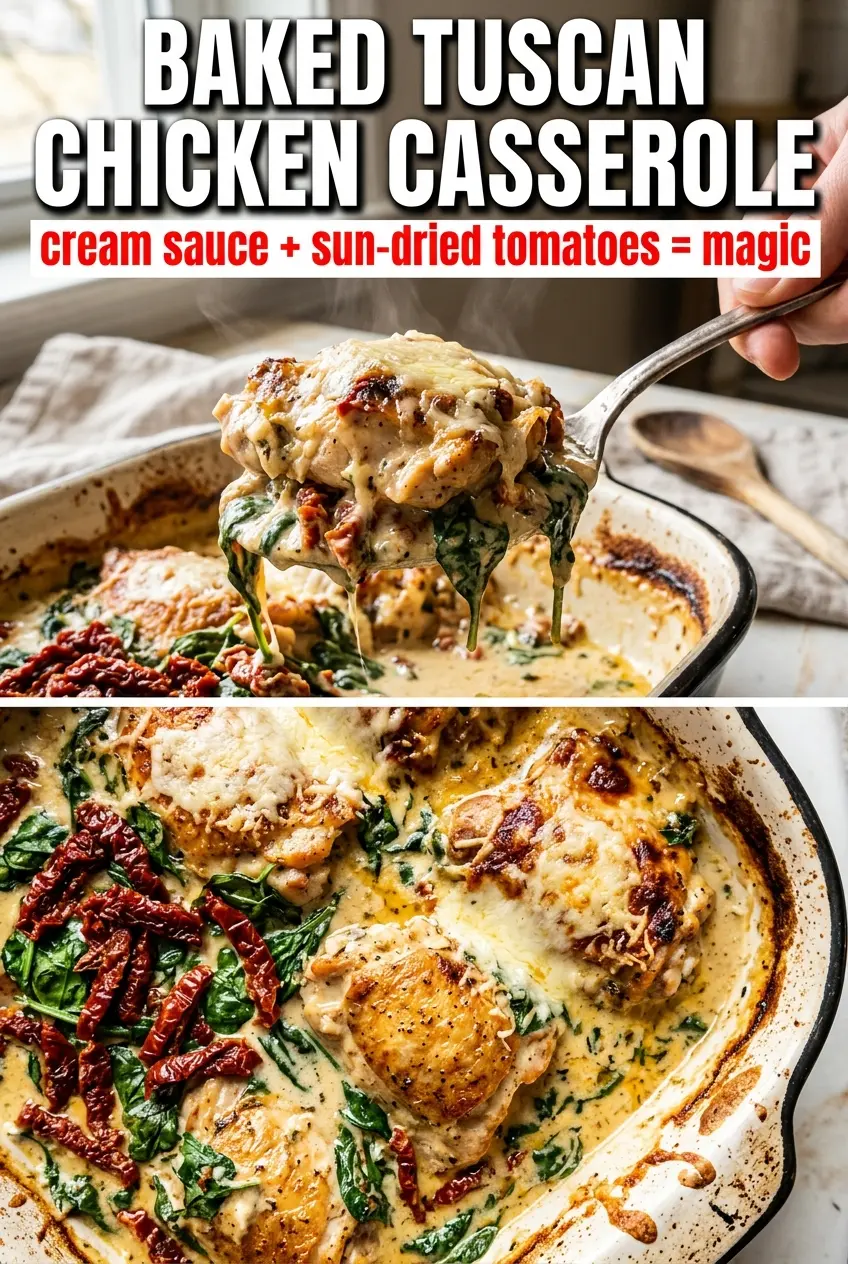
Baked Tuscan Chicken Casserole
Ingredients
Equipment
Method
- Preheat your oven to 400°F and bring the oven rack to the middle position. Season the chicken thighs with salt, pepper, garlic powder, Italian seasoning, and smoked paprika.
- Heat the olive oil in a large oven-safe skillet or braiser over medium-high heat. Sear chicken skin-side down for 6-7 minutes until deeply golden.
- Flip the chicken and sear for 3 more minutes until the second side is browned. Remove the chicken to a plate.
- In the same pan, cook the minced garlic and sliced sun-dried tomatoes for 1 minute. Stir to coat with the pan drippings.
- Pour in the chicken broth and deglaze, scraping up the browned bits from the bottom of the pan. Stir until the sauce looks cohesive.
- Stir in the heavy cream, Parmesan, Italian seasoning, and red pepper flakes. Keep stirring until the mixture begins to thicken slightly and looks smooth.
- Return the chicken to the pan, skin-side up, and spoon some sauce around the chicken. Transfer to the oven uncovered and bake for 20-22 minutes, until the chicken reaches 165°F and the casserole bubbles at the edges.
- Stir the baby spinach into the hot sauce until wilted. Let it settle in a visible green layer.
- Garnish with fresh basil and serve. The top should look golden with browned Parmesan at the edges and spinach-tomato specks in the cream sauce.