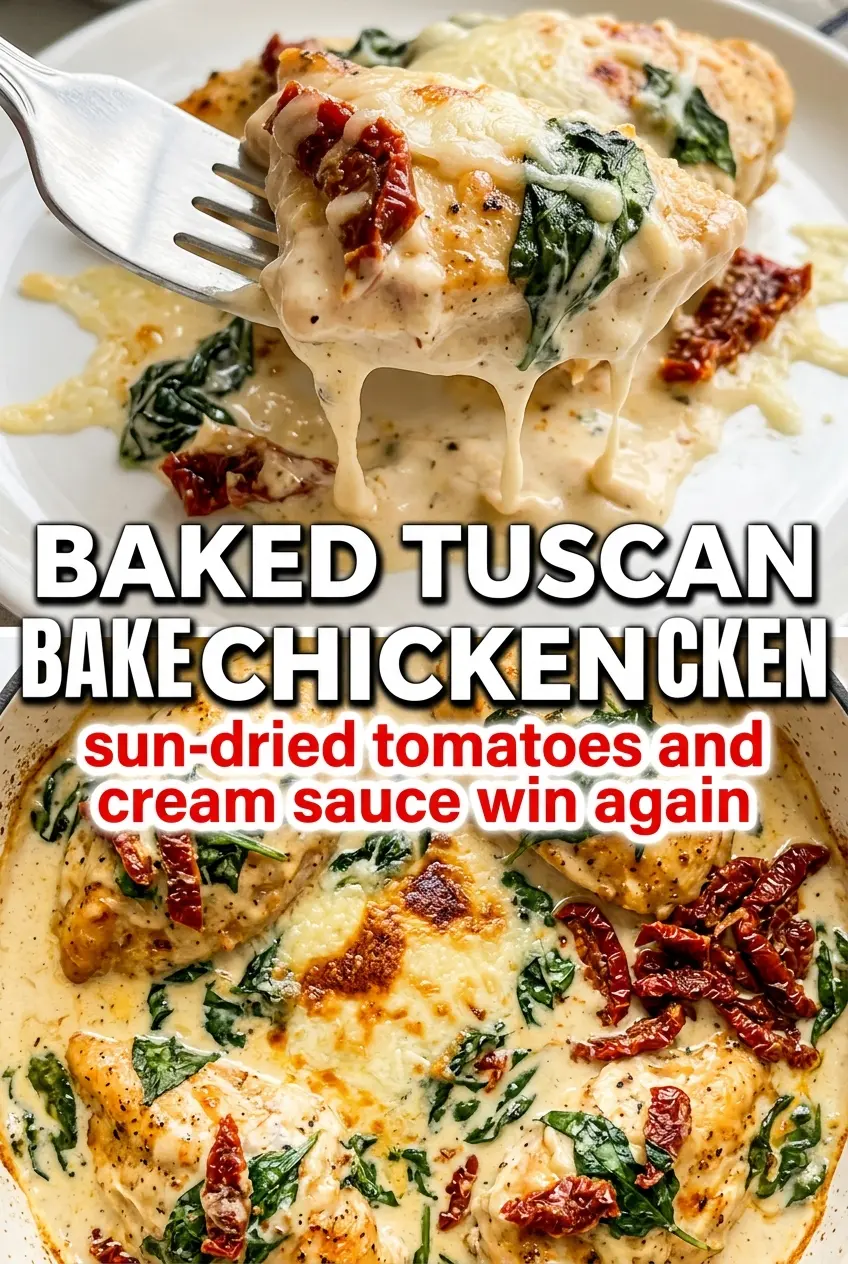
Golden chicken thighs tucked into a sun-dried tomato cream sauce are the kind of dinner that disappears fast, but the reason this one earns repeat status is the contrast. The skin stays crisp enough to give you a real bite at the top, while the sauce underneath turns silky, savory, and just sharp enough from Parmesan and tomatoes to keep every forkful moving. It feels rich without tasting heavy.
The trick is building the sauce in the same pan after the chicken sears. Those browned bits on the bottom are where the flavor lives, and a quick deglaze with broth keeps them from burning while loosening them into the cream. The chicken goes back in skin-side up so it finishes above the sauce instead of steaming in it, which is what keeps that top layer intact.
Below, I’ve included the small details that matter most here: how to keep the sauce smooth, when the spinach should go in, and what to change if you need a lighter version or want to use what you already have on hand.
The chicken skin stayed crisp on top and the sauce thickened up beautifully in the oven. I served it over pasta and my husband went back for seconds before I even sat down.
Save this baked Tuscan chicken for the nights when you want crispy chicken thighs and a creamy sun-dried tomato sauce in one pan.
The Part That Keeps the Chicken Skin Crispy Instead of Soggy
The biggest mistake with baked chicken in a cream sauce is putting the chicken straight into the liquid and hoping the oven sorts it out. It won’t. Skin needs direct heat first, and it needs to finish exposed to the air in the oven, not buried under sauce. That first sear is what gives you the crackly top and a deeper, roasted flavor before anything else happens.
Don’t rush the sear. If the skin sticks when you try to flip it, give it another minute; it will release when it’s ready. The same rule applies to the sauce: let it simmer only briefly before the chicken goes back in. You want it thick enough to coat a spoon, not reduced so far that it turns oily once the cheese melts in.
What Each Ingredient Is Doing in the Pan
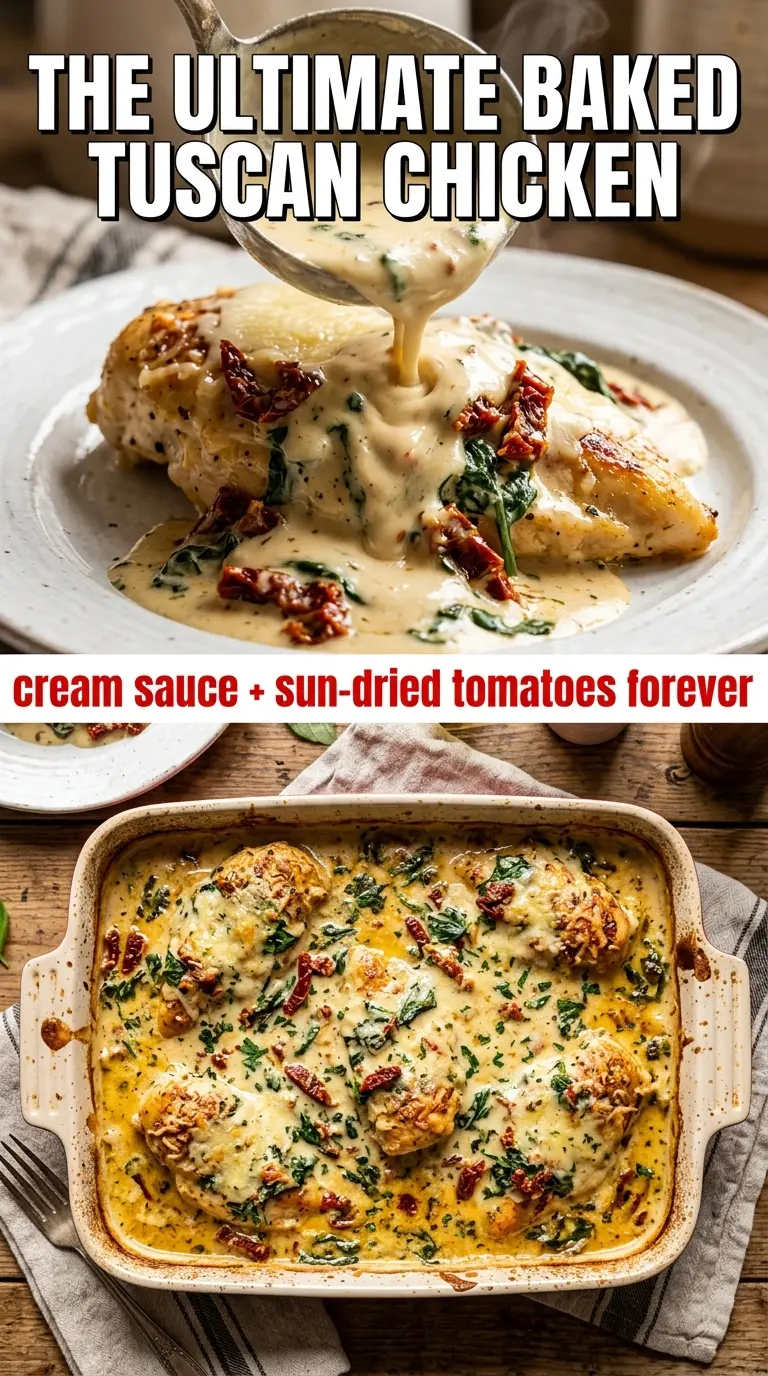
- Bone-in, skin-on chicken thighs — These stay juicy in the oven and give you the best chance at a crisp top. Boneless thighs work in a pinch, but they won’t bring the same texture or stay as forgiving if the bake runs long.
- Sun-dried tomatoes in oil — The oil-packed kind bring a softer chew and a richer tomato flavor than the dry jars. Drain them before slicing, but don’t rinse them; a little of that oil helps carry flavor into the pan.
- Heavy cream — This gives the sauce its body and helps it bake without splitting. Half-and-half will work if that’s what you have, but the sauce will be thinner and a little more delicate.
- Parmesan — Use finely grated Parmesan, not the dusty shelf-stable stuff if you can help it. Freshly grated cheese melts smoother and helps the sauce thicken without turning grainy.
- Fresh spinach — It looks like a lot at the start, then collapses down fast in the heat. Add it right before the chicken goes back in so it wilts into the sauce instead of overcooking into dark threads.
- Garlic and Italian seasoning — These are what make the sauce taste like something cooked on purpose instead of just cream with add-ins. If your seasoning blend is salt-heavy, hold back a little on the chicken at the start.
Building the Sauce After the Sear
Seasoning and Searing the Chicken
Pat the chicken thighs dry before they hit the pan, then season them generously on both sides. Moisture on the skin is the enemy of browning, and dry skin is what gives you that deep golden crust. Put them skin-side down in hot oil and leave them alone until the skin is deeply colored and pulls away easily. If the pan isn’t hot enough, the chicken will leak and braise instead of sear.
Pulling Flavor from the Pan
After the chicken comes out, lower the heat and add the garlic for just a few seconds. Garlic burns fast, especially in the oil left behind from the thighs, so the aroma should turn fragrant before the edges color. Add the sun-dried tomatoes next and stir them through the pan so they pick up some of that fat and garlic. Then pour in the broth and scrape up every browned bit; that’s what keeps the sauce from tasting flat.
Finishing the Cream Sauce
Stir in the cream, Parmesan, Italian seasoning, and red pepper flakes, then let the sauce simmer gently. If it boils hard, the cream can separate and the cheese can turn a little gritty. You’re looking for a sauce that lightly bubbles and thickens enough to coat the back of a spoon. Once the spinach goes in, it should wilt in under a minute, and the sauce should still look loose enough to bubble around the chicken in the oven.
Baking Until the Chicken Is Just Done
Set the chicken back into the skillet skin-side up, then bake uncovered so the top stays exposed. The goal is 165°F in the thickest part of the thigh, but I pull it right as it gets there because carryover heat will finish the job. If the sauce looks a little thin when it comes out, give it five minutes to settle before serving. It will tighten as it cools.
How to Adapt This Baked Tuscan Chicken Without Losing What Makes It Good
Make It Gluten-Free Without Changing the Method
This recipe is naturally gluten-free as written, so there’s nothing to replace. Just check that your chicken broth and Parmesan aren’t hiding any thickeners or additives if you’re cooking for someone with a strict allergy.
Swap in Boneless Chicken Thighs or Breasts
Boneless thighs still stay tender, but they’ll need less time in the oven and won’t give you that same crisp skin. Chicken breasts work too, but they dry out faster, so use them only if you’re willing to watch the internal temperature closely and pull them the moment they’re done.
Lighten the Sauce a Little
You can replace part of the heavy cream with half-and-half, but don’t use all milk here. The sauce needs enough fat to stay smooth in the oven, and a low-fat swap will make it thinner and more likely to separate around the cheese.
Add Pasta or Rice Without Reworking the Recipe
This sauce is excellent over pasta, rice, or mashed potatoes. If you’re serving it that way, spoon the sauce over the starch at the table instead of baking the starch in the skillet, which would soak up too much liquid and mute the creamy finish.
Storage and Reheating
- Refrigerator: Store leftovers in an airtight container for up to 3 days. The sauce will thicken as it chills, and the chicken skin will soften a bit.
- Freezer: It freezes, but the cream sauce can lose some of its smoothness after thawing. If you freeze it, expect the texture to be a little less silky, then stir gently while reheating.
- Reheating: Warm it covered in a 325°F oven until heated through, or reheat gently on the stovetop over low heat with a splash of broth. High heat is what breaks the sauce and dries out the chicken.