Juicy chicken breasts with a glossy balsamic glaze and melted mozzarella are the kind of dinner that gets scraped clean fast. The chicken stays tender because it gets a short marinade, a quick sear, and just enough oven time to finish without drying out. Then the mozzarella softens into the sauce, the cherry tomatoes blister at the edges, and the basil gives the whole pan that fresh caprese lift.
What makes this version work is the balance. The balsamic, honey, and Dijon build a sauce that’s tangy, lightly sweet, and sharp enough to cut through the richness of the cheese. Searing the chicken first gives you color and flavor before it goes into the oven, and reserving part of the marinade means there’s enough sauce left to coat the pan without relying on a separate glaze.
Below, I’ll walk you through the part that matters most: keeping the chicken juicy while still getting real browning, plus a few smart swaps if you need to work with what’s already in your kitchen.
The chicken stayed juicy, and the balsamic sauce thickened around the edges just enough to coat everything without turning sticky. I liked that the mozzarella melted on top instead of disappearing into the pan.
Save this balsamic baked chicken breast with mozzarella for a fast caprese-style dinner with a caramelized glaze and melty cheese.
The Trick to Keeping Balsamic Chicken Juicy Without Losing the Sear
The mistake most people make with baked chicken breasts is treating the oven like it can do all the work. It can’t. Chicken breast needs a little surface browning first, or the outside stays pale and the meat has to sit in the oven long enough to dry out before the center is done.
This recipe solves that by building flavor in layers. The marinade gives the chicken seasoning all the way through, the sear creates a deep golden crust, and the final bake finishes the center gently. The reserved marinade also keeps the pan from drying out, but it should be handled carefully if your chicken hasn’t already been cooked partway through; once the chicken goes into the oven, the heat is what turns those drippings into the sauce.
- Marinade time — Twenty minutes is enough here. Longer won’t hurt much, but balsamic is acidic, and too much time can tighten the outside of the chicken instead of helping it stay tender.
- High-heat sear — Those three minutes per side build the color you can’t get from baking alone. If the pan isn’t hot enough, the chicken will steam and you’ll lose that browned edge.
- Final oven temp — A 400°F oven finishes the meat quickly, which matters with breasts. Lower heat means a longer bake and a higher chance of dry chicken.
What the Balsamic, Dijon, and Fresh Mozzarella Each Bring to the Pan
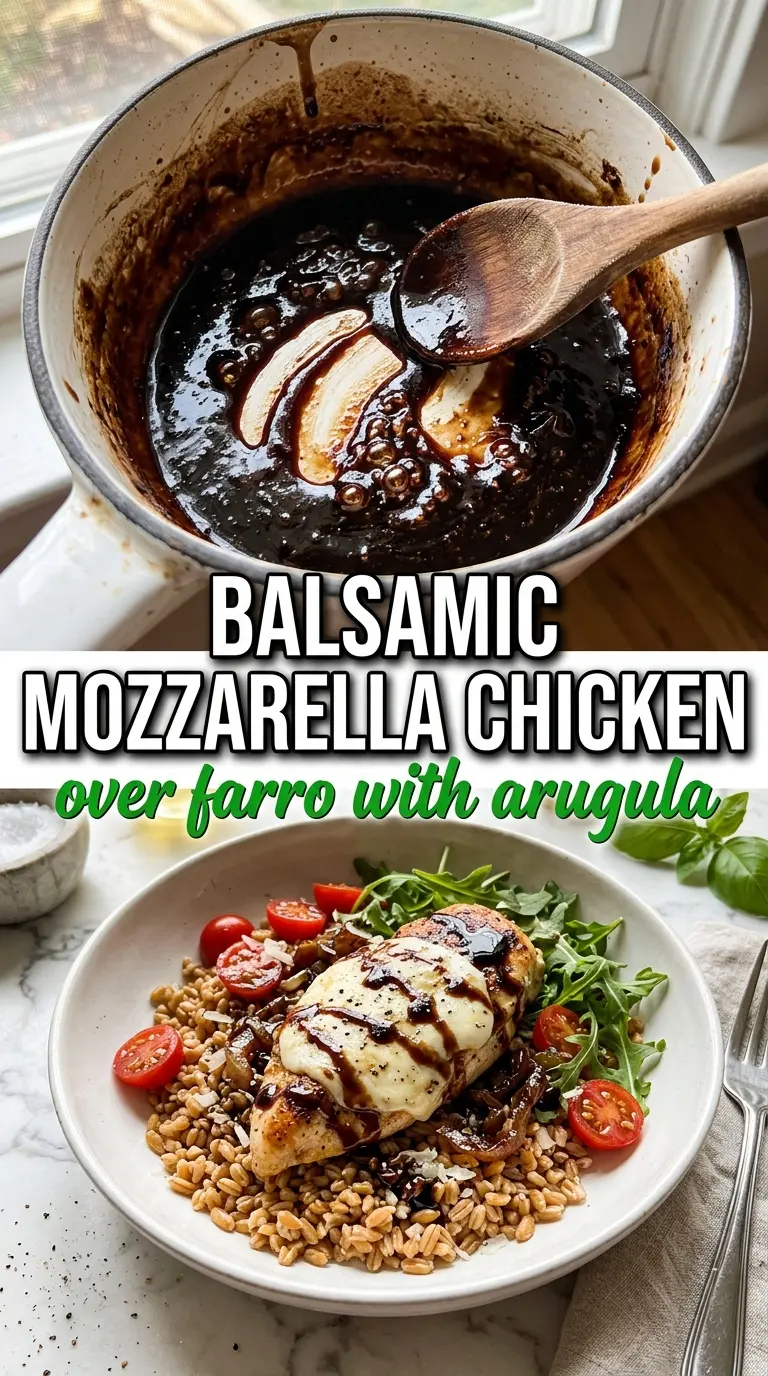
The balsamic vinegar is doing more than adding tang. It reduces into a glossy, slightly sweet sauce that clings to the chicken, especially once the honey starts to caramelize. Use a decent balsamic here; you don’t need the most expensive bottle on the shelf, but a harsh, thin vinegar will taste sharp instead of rounded.
Dijon works quietly in the background. It helps the marinade emulsify so the oil and vinegar don’t separate immediately, and it adds a little savory depth that keeps the sauce from tasting flat. Fresh mozzarella matters more than shredded mozzarella for this dish because it melts into soft, milky pockets instead of disappearing into strings and oil.
- Chicken breasts — Try to use pieces that are close in size so they finish at the same time. If one side is much thicker, pound the thicker end slightly so the whole breast cooks evenly.
- Fresh mozzarella — Slice it thick enough to melt slowly on top instead of vanishing into the sauce. Low-moisture mozzarella will work in a pinch, but the finish won’t be as soft and creamy.
- Cherry tomatoes — Halved tomatoes roast just enough to burst and release juice into the pan. Larger tomato chunks can overwhelm the chicken and turn watery.
- Balsamic glaze — Drizzle it at the end, not before baking. If it goes in too early, the sugars can darken too fast and the sauce can turn sticky or bitter.
From Marinade to Melted Cheese: The Part Where This Dinner Comes Together
Mixing the Marinade
Whisk the balsamic vinegar, olive oil, honey, garlic, and Dijon until the mixture looks glossy and slightly thickened. It should cling to the chicken instead of pooling like plain vinegar. Season the chicken well before it goes in, because the marinade seasons the surface but it won’t fully replace a proper coating of salt, pepper, garlic powder, and Italian seasoning.
Getting Color on the Chicken
Heat the oven-safe skillet until it’s properly hot, then sear the chicken for about three minutes per side. You’re looking for a golden brown crust, not a pale blush of color. If the chicken sticks when you try to turn it, give it another minute; it will release once the crust forms. Crowding the pan is the fastest way to ruin this stage, because the chicken will steam instead of sear.
Finishing in the Oven
Once the chicken goes into the oven with the remaining marinade, bake just until the thickest part reaches 165°F. Pull it at temperature, not after it has sat around and climbed another ten degrees, or the breast meat will go from juicy to chalky. If the marinade looks a little thin in the pan, that’s normal; it will reduce as the chicken finishes.
Melting the Mozzarella and Tomatoes
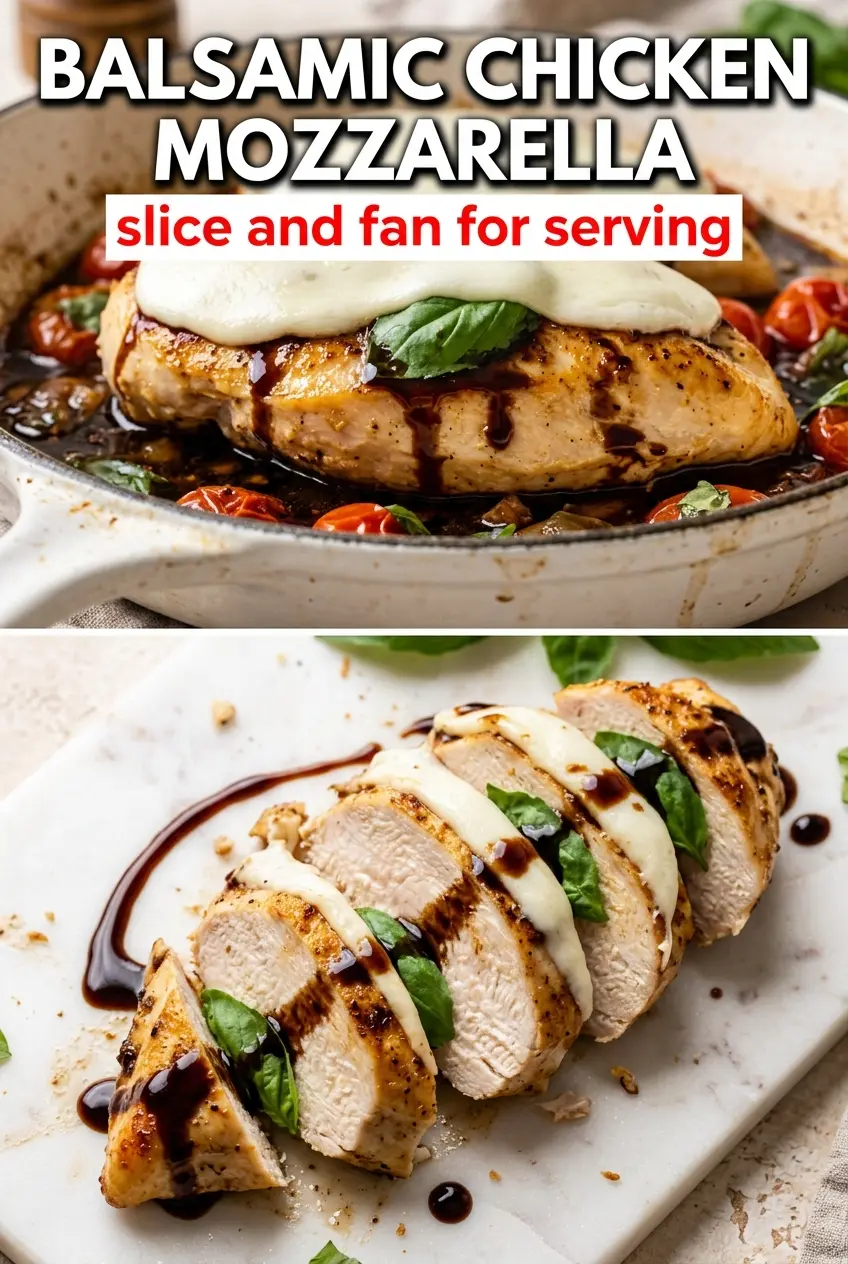
Top the chicken with mozzarella slices and cherry tomatoes, then return the skillet to the oven only long enough for the cheese to melt. You want soft, pooled edges and a few browned spots, not a fully browned cheese cap. Add the basil after baking so it stays bright and fragrant instead of wilting into the hot pan.
How to Adapt This Chicken When You Need a Different Finish
Make It Dairy-Free
Skip the mozzarella and finish with extra cherry tomatoes and basil instead. You’ll lose the creamy caprese topping, but the balsamic glaze still gives the chicken a full, layered finish. A spoonful of olive oil drizzled over the top just before serving helps replace some of the richness.
Use Chicken Thighs Instead
Boneless, skinless thighs work well if you want a richer, more forgiving cut. They need a few extra minutes in the oven, and they won’t dry out as quickly as breasts, but they also won’t slice with the same clean, lean texture. Keep the sear, because thighs still benefit from the browned base.
Swap in Provolone or Fontina
If you want a cheese that melts more evenly than fresh mozzarella, provolone or fontina are strong choices. The flavor turns a little more savory and less milky, which works well if you want the balsamic to stand out more. Use sliced cheese, not shredded, so it melts in a smooth layer.
Storage and Reheating
- Refrigerator: Store leftovers in an airtight container for up to 3 days. The mozzarella will firm up, but the chicken stays flavorful.
- Freezer: Freeze the chicken without the fresh basil for up to 2 months. The cheese texture changes after thawing, so expect a softer, less clean melt when reheated.
- Reheating: Warm in a covered oven-safe dish at 325°F until heated through. Microwaving works in a pinch, but it can make the chicken rubbery and the cheese oily.
Questions I Get Asked About This Recipe
Balsamic Baked Chicken Breast with Mozzarella
Ingredients
Equipment
Method
- In a bowl, whisk together balsamic vinegar, olive oil, honey, garlic, and Dijon mustard, then season to taste with salt, pepper, garlic powder, and Italian seasoning. Place chicken in the mixture and marinate for 20 minutes in the refrigerator, reserving some marinade for later.
- Preheat oven to 400°F. Heat an oven-safe skillet over medium-high heat and sear the marinated chicken for 3 minutes per side until golden.
- Transfer the skillet to the oven with the remaining marinade. Bake for 18-20 minutes until the internal temperature reaches 165°F.
- Remove the skillet from the oven and top each breast with sliced fresh mozzarella and halved cherry tomatoes. Return to the oven for 4-5 minutes until the cheese is melted and slightly golden.
- Finish by drizzling with balsamic glaze and garnishing with fresh basil leaves, letting the flavors settle for a moment before serving.