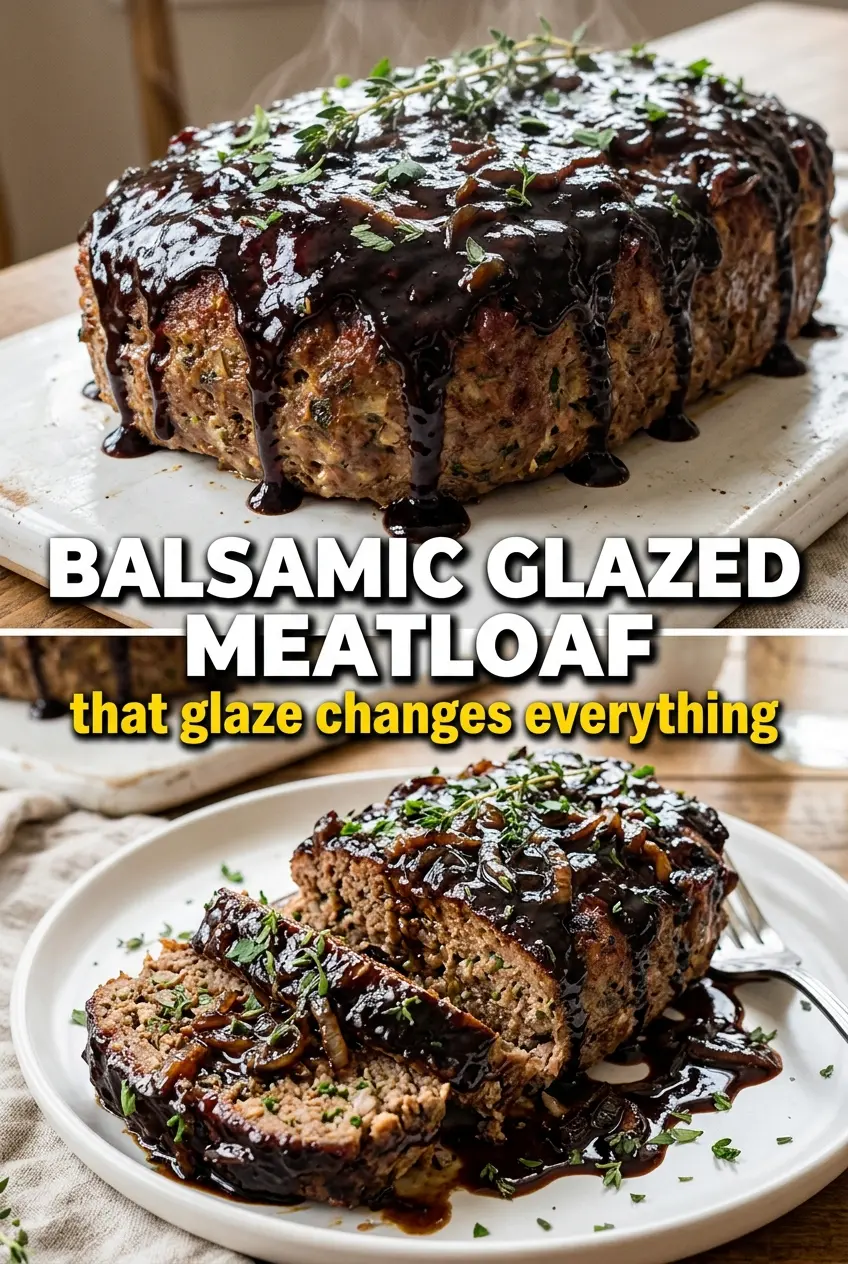
Deep mahogany glaze, a tender slice that holds together cleanly, and edges that caramelize just enough to give each bite a little chew — that’s what makes this balsamic glazed meatloaf worth putting on repeat. The vinegar cuts through the richness of the beef and pork, while the brown sugar and Dijon turn the top into something glossy, sticky, and a little tangy in the best way.
The texture comes from a simple balance: enough breadcrumbs and milk to keep the loaf soft, but not so much that it turns mushy. Grating the onion matters more than chopping it here, because it melts into the meat and seasons it without leaving harsh bits behind. The glaze also gets a quick simmer before it goes on, which helps it cling instead of sliding off into the pan.
Below, I’ll walk through the one place people usually go wrong with meatloaf, plus the small tweaks that make this version slice beautifully and taste like it came from a much fancier dinner table.
The glaze thickened just enough in the pan and baked into this shiny, caramelized top instead of soaking in. My husband kept sneaking slices before dinner.
Save this balsamic glazed meatloaf for the nights when you want a caramelized, tangy-sweet dinner that slices cleanly and feels a little special.
The Glaze Needs a Head Start, Not a Rescue
Most meatloaf glazes go wrong because they’re brushed on too late, too thin, or straight from the bottle. A balsamic glaze needs a quick simmer first so it loses that sharp, raw edge and turns syrupy enough to coat the loaf instead of running off the sides. If it still looks watery in the pan, it won’t magically thicken in the oven. It needs to hit the meat already on its way to glossy.
The other mistake is overhandling the meat mixture. Once the beef, pork, and soaked breadcrumbs come together, stop mixing as soon as everything looks even. If you knead it like bread, the loaf turns dense and tight instead of tender and sliceable.
- Free-form loaf — Shaping it on a baking sheet gives the glaze room to caramelize on the sides. A loaf pan traps the juices and softens the crust.
- Grated onion — This melts into the meat and adds moisture without chunks that break up the slice.
- Ground pork — Pork brings richness and a softer texture that lean beef alone can’t match.
- Worcestershire sauce — It gives the meat a deeper savory note that keeps the glaze from tasting one-dimensional.
What the Beef, Pork, and Glaze Are Each Doing Here
- Ground beef — This is the backbone of the loaf. Use 80/20 if you can; too lean and the finished slices dry out before the glaze even has a chance to shine.
- Ground pork — It softens the texture and adds a little sweetness. If you skip it, the meatloaf will still work, but it loses some of that rich, old-school comfort.
- Breadcrumbs and milk — This is the panade, and it keeps the loaf tender. Plain breadcrumbs are fine; panko works too, but crush it a little so the texture stays even.
- Balsamic vinegar, brown sugar, ketchup, and Dijon — Together they make the glaze thick, tangy, and balanced. The ketchup gives body, the Dijon sharpens it, and the sugar helps it caramelize into that deep lacquer on top.
Building the Loaf So It Stays Tender and Slices Cleanly
Mix the Meat Just Until It Comes Together
Combine the beef, pork, breadcrumbs, eggs, milk, onion, garlic, Worcestershire, thyme, salt, and pepper in one bowl and mix with your hands or a fork only until the ingredients are evenly distributed. The mixture should feel cohesive but not pasty. If it starts to look compact and sticky before you shape it, you’ve gone a little too far. Stop there and move on.
Shape It Loosely on the Baking Sheet
Form the mixture into a free-form loaf about the size of a standard dinner loaf, leaving a little space around the edges for hot air to circulate. Don’t press it into a tight brick. A looser shape bakes more evenly and gives you more of that glazed exterior. The loaf should hold together without looking packed.
Cook the Glaze Separately Before It Goes On
Simmer the balsamic vinegar, brown sugar, ketchup, and Dijon in a small saucepan for 3 to 4 minutes until it looks slightly syrupy. It doesn’t need to become a full reduction; it just needs to coat a spoon and cling to the meat. Brush on half before baking, then the rest near the end so the glaze cooks down without burning.
Check for Doneness, Then Let It Rest
Bake until the internal temperature reaches 160°F and the top looks glossy with dark caramelized spots. If the glaze is browning too quickly before the center is done, lay a loose piece of foil over the top for the last part of baking. Let the meatloaf rest for 10 minutes before slicing so the juices settle instead of running across the board.
Three Ways to Make This Work for Different Tables
Dairy-Free Meatloaf That Still Stays Tender
Swap the milk for an unsweetened plain oat milk or almond milk. You still get the moisture you need for the breadcrumb mixture, but the loaf will be a touch less rich than the original. Don’t use a strongly flavored milk, or it will fight the balsamic glaze.
Gluten-Free Without a Dry Center
Use gluten-free breadcrumbs in the same amount. If they seem especially coarse, let them sit in the milk for a minute longer before mixing so they soften properly. The texture stays close to the original as long as the loaf isn’t overmixed.
Leaner, Less Rich Version
If you want to cut back on richness, replace the pork with more beef, but add 1 to 2 tablespoons of olive oil or a splash more milk to keep the loaf from drying out. You’ll lose a little tenderness and depth, but the glaze still carries the dish.
Storage and Reheating
- Refrigerator: Store sliced meatloaf in an airtight container for up to 4 days. The glaze stays flavorful, though the top softens a little after chilling.
- Freezer: Freeze individual slices wrapped tightly and packed in a freezer-safe container for up to 3 months. Thaw overnight in the fridge for the best texture.
- Reheating: Warm slices covered in a 300°F oven with a splash of water or beef broth for 10 to 15 minutes. The biggest mistake is microwaving too long, which makes the edges tough before the center is hot.
Questions I Get Asked About This Recipe
Balsamic Glazed Meatloaf
Ingredients
Equipment
Method
- Preheat the oven to 350°F and line a baking sheet with foil so the loaf doesn’t stick and browns evenly.
- In a large mixing area, combine ground beef, ground pork, breadcrumbs, eggs, whole milk, grated onion, minced garlic, Worcestershire sauce, fresh thyme, and salt and pepper until just evenly incorporated.
- Shape the mixture into a free-form loaf on the lined baking sheet, with a smooth top so the glaze sets cleanly.
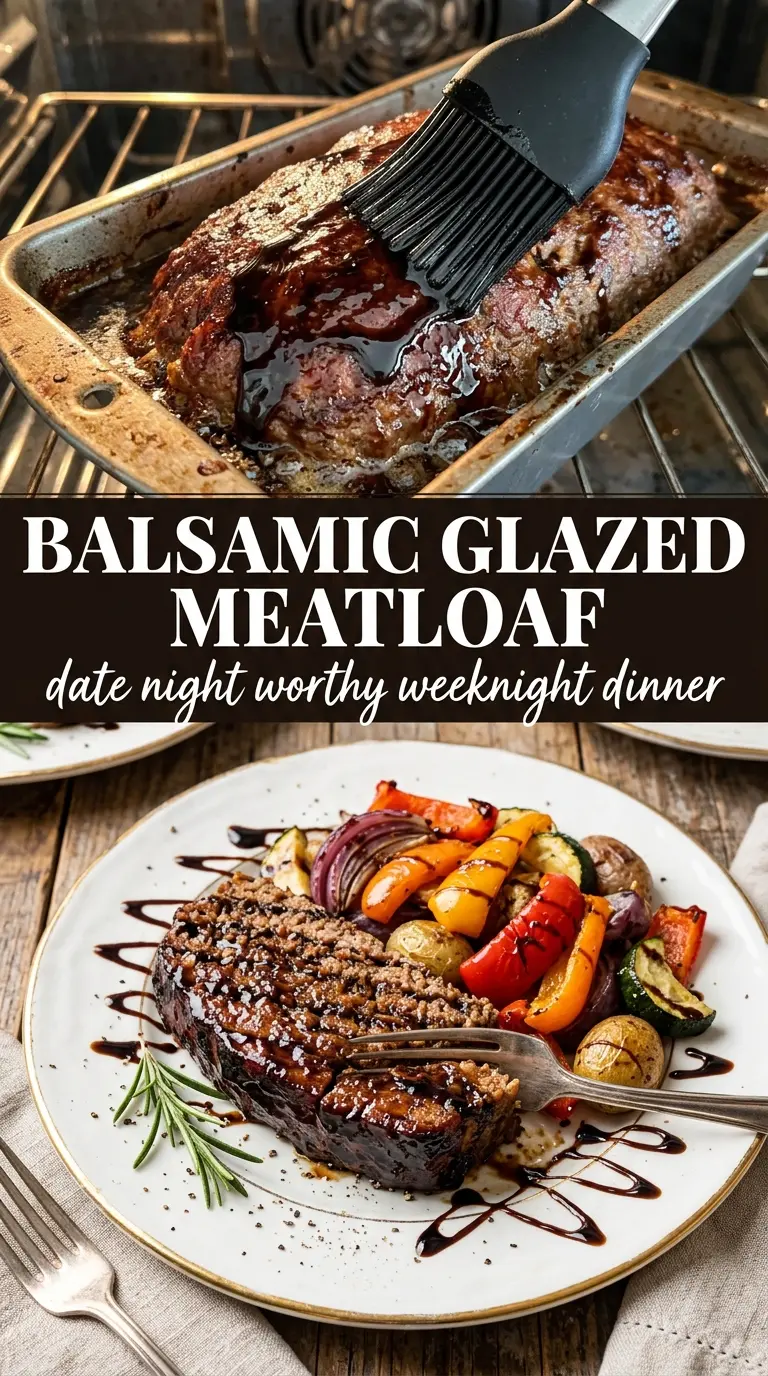
- Simmer balsamic vinegar, brown sugar, ketchup, and Dijon mustard in a small saucepan for 3–4 minutes until slightly syrupy, then brush about half over the loaf.
- Bake at 350°F for 55 minutes, then brush the remaining glaze over the top.
- Bake 15 more minutes at 350°F until the internal temperature reaches 160°F and the glaze is caramelized, bubbling, and glossy.
- Rest the meatloaf for 10 minutes before slicing so the juices settle and the slices hold together.