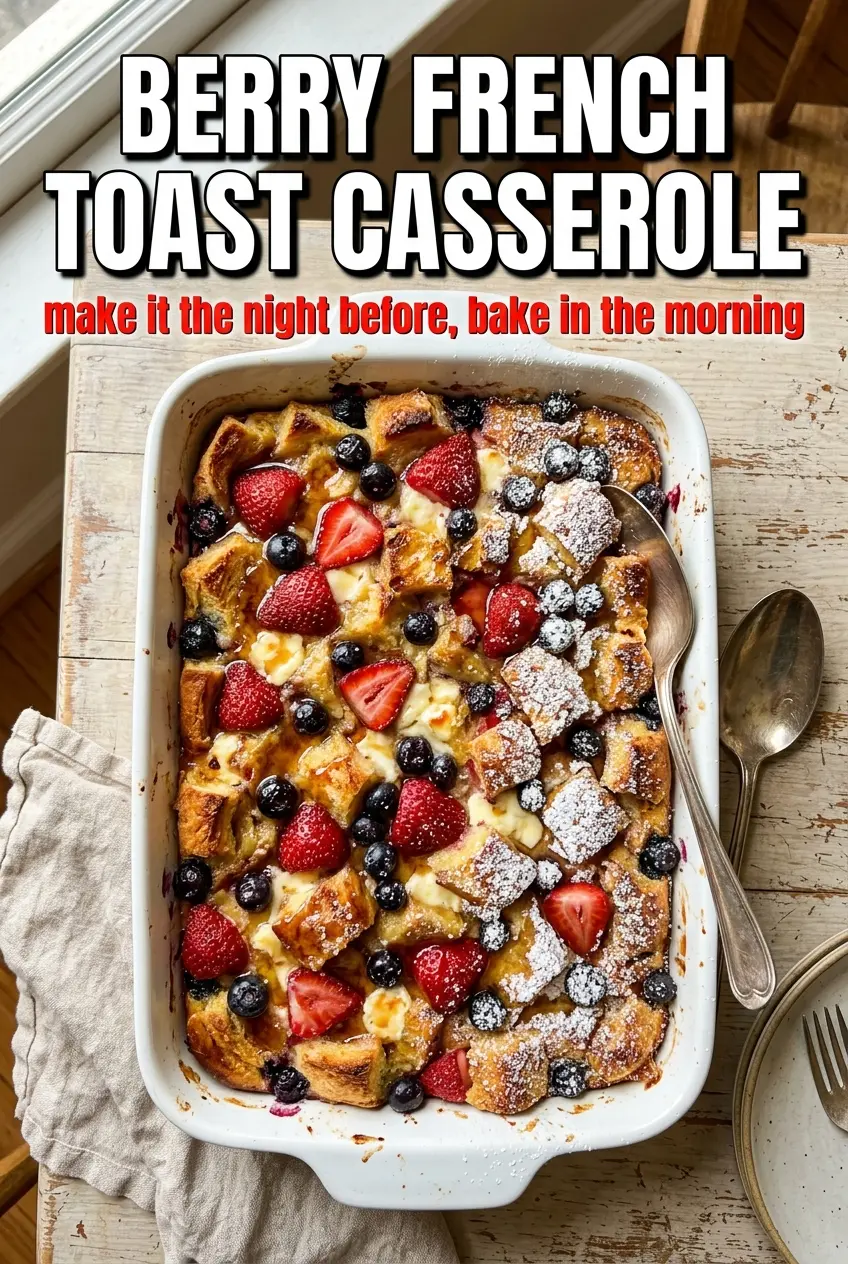
Golden custard-soaked bread and bright berries bake into the kind of breakfast that lands on the table looking special without asking for much from you. The top turns lightly crisp while the center stays soft and tender, with little pockets of juicy fruit in every slice. It’s the sort of dish that disappears fast, whether you set it out for brunch or pull it from the oven on a quiet morning.
What makes this version work is the balance: enough custard to soak the bread without turning it soggy, enough berries to keep every bite fresh, and just enough cinnamon and vanilla to give it that classic French toast flavor. The bread cubes hold their shape best when they’re a day or two stale, which means the casserole bakes up plush instead of dense. If your bread is soft and fresh, it still works — it just needs a little extra time in the oven to set in the middle.
Below, I’ve included the small details that keep the custard from pooling at the bottom, plus a few easy swaps if you want to change up the fruit or make it dairy-free.
The custard soaked in beautifully and the berries stayed bright instead of sinking to the bottom. I let it sit a few minutes before baking, and it came out with a soft center and those crisp buttery edges I was hoping for.
Save this berry French toast casserole for the mornings when you want a custardy center, crisp buttery edges, and a bright berry finish without standing over the stove.
The Part Most French Toast Casseroles Get Wrong: The Bread Needs Structure
The biggest mistake with French toast casserole is using bread that collapses before it ever gets to the oven. If the cubes are too soft, the custard turns the whole dish mushy instead of plush. Sturdier bread gives you those distinct layers — a tender custard inside and a lightly browned top that holds its shape when you scoop it.
Let the custard soak in long enough to coat every piece, but don’t flood the dish all at once and walk away. Pressing the bread gently helps it absorb evenly, which keeps dry patches from showing up in the finished casserole. The berries go between the bread layers and on top so they stay distributed instead of sinking straight to the bottom.
What Each Ingredient Is Actually Doing in This Berry French Toast Casserole
- Bread — This is the backbone of the dish. Day-old bread or slightly dried cubes are best because they soak up the custard without dissolving. Brioche, challah, or a sturdy country loaf all work; just avoid very soft sandwich bread unless that’s all you have.
- Mixed berries — Fresh berries hold their shape well and give the casserole bright bursts of flavor. Frozen berries can work in a pinch, but don’t thaw them first or they’ll bleed too much juice into the custard. Tossing them straight from frozen into the dish keeps the color cleaner.
- Eggs and milk — These create the custard that sets the bread. Whole milk gives the best texture here because it bakes up rich without feeling heavy. Lower-fat milk works, but the center won’t taste as velvety.
- Vanilla, cinnamon, and sugar — These are what turn basic soaked bread into French toast. The vanilla rounds out the custard, cinnamon gives warmth, and sugar helps the top brown. If you want a deeper flavor, use a little brown sugar instead of half the granulated sugar.
- Melted butter — Drizzling it over the top encourages browning and adds those crisp edges everyone reaches for first. Don’t skip it if you want a true casserole finish instead of a soft baked pudding texture.
Building the Custard So the Center Sets Cleanly
Layer the Bread for Even Soaking
Grease the baking dish well, then layer in half the bread and half the berries before adding the rest. That structure helps the custard move through the casserole instead of pooling in one corner. If you dump everything in a loose pile, the bottom can go soggy while the top stays dry.
Whisk the Custard Until It Looks Uniform
Beat the eggs, milk, sugar, vanilla, cinnamon, and salt until the mixture looks completely smooth and slightly foamy. You don’t want streaks of egg white floating around, because those can bake into little rubbery bits. Pour the custard over the bread slowly so it has time to spread between the cubes.
Bake Until the Edges Are Set and the Middle Still Has a Little Give
When it goes into the oven, the top should look glossy at first, then turn lightly golden around the edges. Pull it when the center is set but still slightly tender; if you wait until it looks completely firm in the middle, it usually bakes a little dry by the time it cools. A knife inserted near the center should come out mostly clean, with just a touch of moisture.
Finish With Powdered Sugar Right Before Serving
Dust the casserole after it comes out of the oven so the sugar stays visible and doesn’t melt away. Serve it warm with maple syrup or whipped cream if you want something extra on the side. The contrast between the warm custard and the fresh berries is what makes the first bite taste alive.
How to Adapt This for Different Mornings
Make it dairy-free
Use an unsweetened, full-bodied non-dairy milk like oat milk or almond milk and swap the butter for melted coconut oil or a plant-based butter. Oat milk gives the closest texture to whole milk; thinner milks can make the custard taste lighter and less rich.
Use frozen berries without turning the casserole watery
Frozen berries work well if you add them straight from the freezer. Don’t thaw them first, or they’ll bleed too much juice and stain the custard. Expect a little more color in the finished dish, which is normal and still tastes great.
Make it a little more dessert-like
Add a pinch of nutmeg or a little orange zest to the custard for a brighter finish, then serve with whipped cream instead of syrup. That pushes the casserole closer to a brunch centerpiece without changing the basic method.
Scale it up for a crowd
Double the recipe in two baking dishes instead of one oversized pan so the center bakes evenly. A deeper pan can leave you with a browned top and an underdone middle, which is the fastest way to lose the texture this casserole is supposed to have.
Storage and Reheating
- Refrigerator: Store covered for up to 3 days. The bread softens a bit more as it sits, but the flavor stays good.
- Freezer: Freeze baked portions tightly wrapped for up to 2 months. Thaw overnight in the fridge before reheating for the best texture.
- Reheating: Warm in a 325°F oven until heated through. The microwave works for a quick portion, but it softens the top and can make the berries turn jammy.
Answers to the Questions Worth Asking
Berry French Toast Casserole
Ingredients
Equipment
Method
- Grease a 9x13 baking dish. Layer half the bread cubes in the dish and scatter half the mixed fresh berries over them.
- Add the remaining bread cubes and top with the remaining mixed fresh berries. Spread the berries so they are visible throughout the casserole.
- Whisk together the large eggs, whole milk, granulated sugar, vanilla extract, cinnamon, and salt until well combined. Make sure the sugar and spices are fully dissolved.
- Pour the custard evenly over the bread, pressing gently so the bread absorbs the mixture. Leave the casserole level so it bakes evenly.
- Drizzle melted butter over the top. Aim for an even coating so the casserole turns golden as it bakes.
- Bake at 350°F for 35 minutes until golden and set. You should be able to gently jiggle the dish and see the center hold its shape.
- Dust with powdered sugar and serve warm. Pair with maple syrup or whipped cream to taste.