Sticky, glossy Bourbon Maple BBQ Chicken Skewers hit that sweet spot between smoky grill flavor and a lacquered glaze that clings to every bite. The chicken comes off the grill juicy inside with caramelized edges outside, and the bourbon-maple sauce gives it a dark, glossy finish that tastes like it took a lot more effort than it did.
What makes this version work is the balance in the marinade. BBQ sauce brings body, bourbon adds depth, maple syrup gives you that burnished sweetness, and a little cider vinegar keeps the glaze from tasting flat. Dijon doesn’t stand out on its own, but it sharpens everything underneath the sweetness and helps the sauce cling to the chicken as it cooks.
Below, I’ll show you the one thing that keeps the chicken from drying out on the grill, plus a few ways to adjust the skewers for different diets and make-ahead timing.
The glaze went on thick and sticky, and the chicken stayed juicy even with the basting. I used the reserved sauce at the end like you said and it caramelized instead of burning.
Save these bourbon maple BBQ chicken skewers for the next grill night when you want glossy, caramelized chicken with a sweet-smoky finish.
The trick is keeping the glaze from burning before the chicken cooks through
The biggest mistake with sticky skewers is treating the sauce like a finisher and a marinade at the same time without any separation. Once bourbon, maple syrup, and BBQ sauce hit direct heat, the sugars darken fast, which is great for flavor but terrible if you start basting too early or too often over high flames. This recipe avoids that by reserving part of the sauce for the last stretch, when the chicken is nearly cooked and the glaze can tighten up instead of scorching.
Cutting the chicken into even cubes matters more than people think. Uneven pieces lead to some chunks drying out while others are still catching up, and that gap gets bigger on skewers because the thinner pieces sit closer to the heat. If your grill runs hot, keep the lid open and move the skewers around often so the glaze turns sticky and dark rather than bitter.
What the bourbon, maple, and vinegar each bring to the pan
- BBQ sauce — This gives the glaze its backbone and thickness. A smoky, tomato-based sauce works best because it already has body; a thin, vinegar-heavy sauce won’t cling as well. Use a good bottle if you want a deeper finish, because the sauce reduction happens fast on the grill.
- Bourbon — This adds warmth and a little edge that keeps the glaze from tasting one-note sweet. You don’t need an expensive bottle here, but skip anything harsh enough that you wouldn’t sip. If you want to leave it out, a splash of apple juice or chicken stock will loosen the sauce, but you’ll lose the depth bourbon brings.
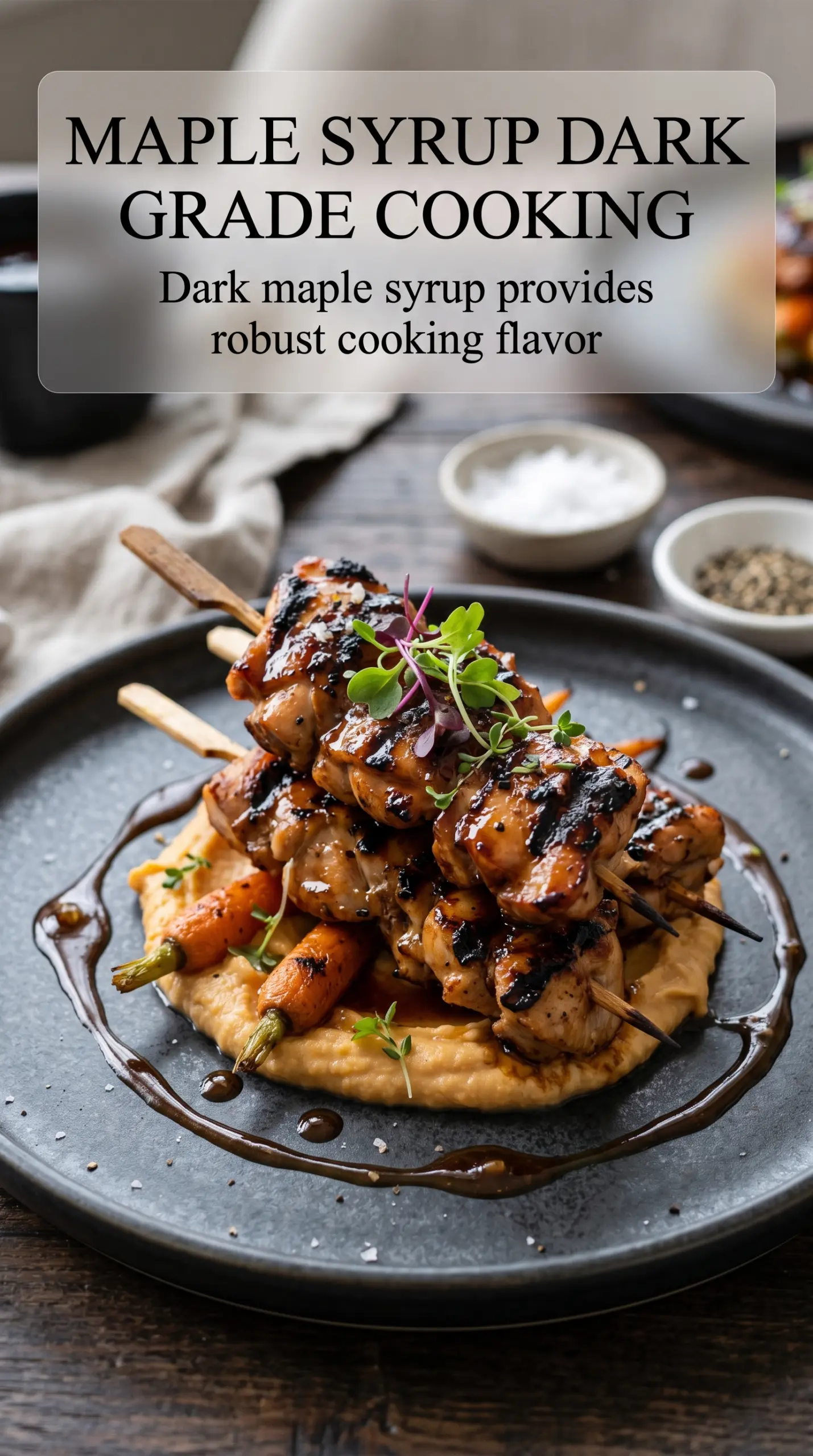
- Maple syrup — Real maple syrup gives the glaze that shiny, sticky finish. Pancake syrup won’t caramelize the same way and can taste flatter once it hits heat. If you only have dark maple, use it; it brings a slightly deeper, almost toasty note.
- Apple cider vinegar — This keeps the glaze from turning cloying and helps the chicken taste seasoned all the way through. White vinegar can work in a pinch, but cider vinegar is rounder and fits the sweetness better. The acid also helps the marinade penetrate the surface of the chicken before grilling.
- Dijon mustard — Dijon quietly pulls the sauce together and helps it emulsify so the glaze coats the chicken instead of sliding off. Yellow mustard will taste sharper and less refined. If you’re out of Dijon, use a small spoonful of whole grain mustard for similar structure.
Building the skewers so the glaze sticks and the chicken stays juicy
Mixing the marinade
Stir the BBQ sauce, bourbon, maple syrup, vinegar, and Dijon until the mixture looks smooth and glossy. It should smell sweet, sharp, and a little boozy, with no streaks of mustard left behind. Reserve part of it before the chicken goes in, because the marinade that touches raw chicken should never be brushed back on at the end.
Marinating the chicken
Coat the cubed chicken in the remaining sauce and let it sit for 1 to 4 hours. An hour gives you good surface flavor, while the longer end of that window gives the glaze more time to season the chicken deeply. Don’t go much longer than that or the vinegar can start to soften the texture too much.
Threading and grilling
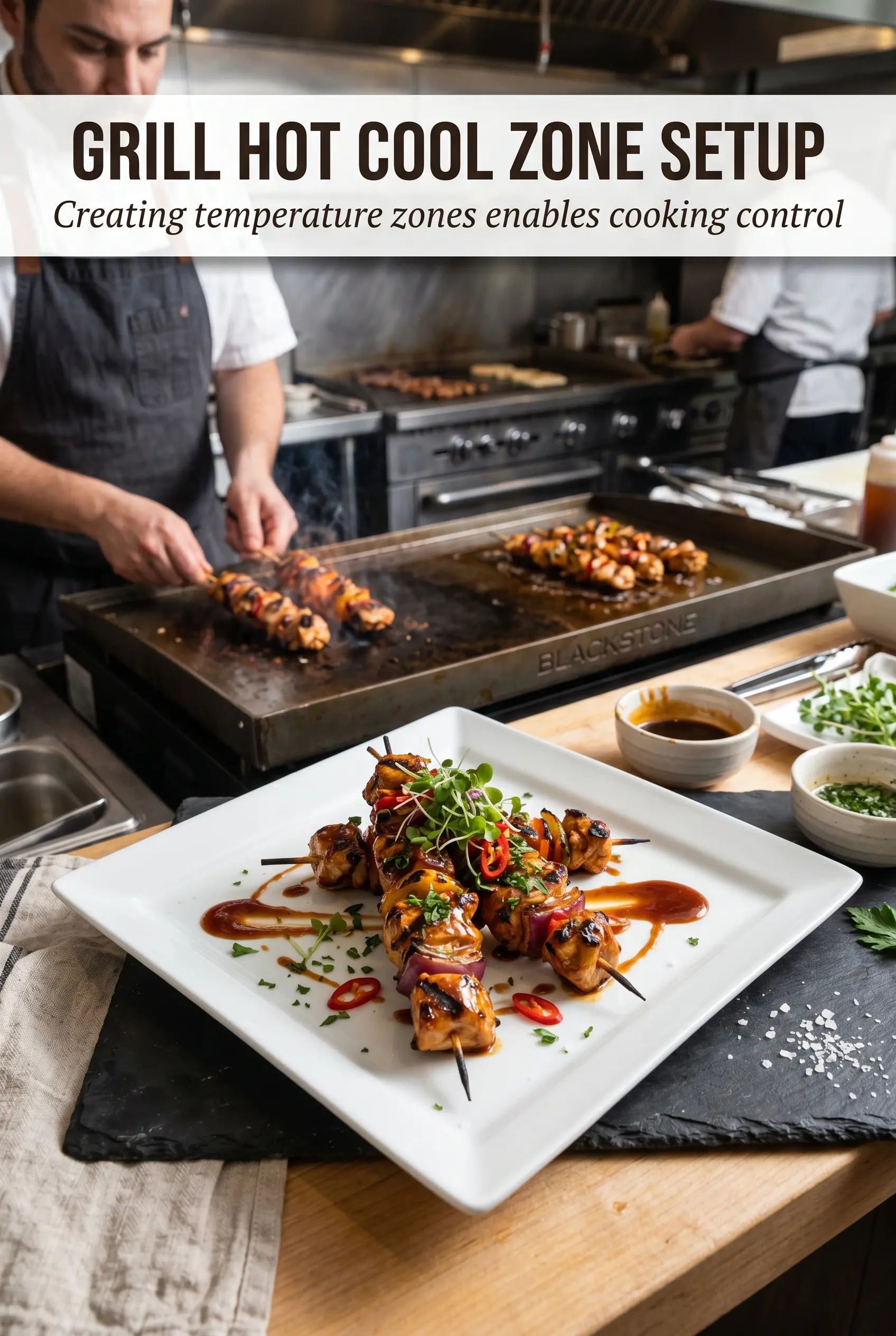
Thread the chicken onto soaked skewers with a little space between pieces so the heat can move around them. Grill over medium heat for 5 to 6 minutes per side, turning and basting as the chicken starts to firm up and the edges darken. If the flames jump or the glaze starts to blacken too fast, shift the skewers to a cooler spot on the grill and keep going there.
Finishing to the right temperature
Keep grilling until the chicken reaches 165°F and the glaze looks sticky and lacquered. The sauce should cling in a thick sheen, not look wet or runny. Let the skewers rest for a couple of minutes before serving so the juices settle and the glaze stays on the meat instead of running to the plate.
How to adapt these skewers for different grills and diets
Dairy-free and naturally gluten-free
This recipe already fits both without any special swaps as long as your BBQ sauce is gluten-free. Check the label on the sauce, because that’s where hidden wheat usually shows up. The finished skewers stay every bit as sticky and caramelized without dairy.
No bourbon
Use apple juice or chicken broth in the same amount. You’ll lose the warm oaky note, but the glaze still reduces nicely and stays balanced if you keep the vinegar and Dijon in place. If the sauce tastes too sweet without bourbon, add a small splash more vinegar.
Oven broiler method
If grilling isn’t an option, broil the skewers on a lined sheet pan close to the heat source, turning once and basting in the last few minutes. Broilers brown fast, so watch closely; the sugars in the maple and BBQ sauce can go from sticky to burnt in a minute. A little char is good, blackened spots are not.
Chicken thighs instead of breasts
Boneless thighs work well here and stay juicier on the grill, especially if your heat runs uneven. They may need a minute or two longer than breast meat, but they’re more forgiving if you get distracted. The final flavor is a little richer because the darker meat handles the sweet glaze nicely.
Storage and Reheating
- Refrigerator: Store leftovers in an airtight container for up to 3 days. The glaze will thicken as it chills, but the chicken still reheats well.
- Freezer: Freeze cooked skewers without the sticks if you want the best texture. Wrap tightly and freeze for up to 2 months; the glaze may soften a bit after thawing, but it still tastes good.
- Reheating: Warm gently in a 300°F oven, covered loosely with foil, until heated through. High heat dries out the chicken and burns the sugar in the glaze before the center warms up.
Answers to the questions worth asking
Bourbon Maple BBQ Chicken Skewers
Ingredients
Method
- In a bowl, whisk together BBQ sauce, bourbon, maple syrup, apple cider vinegar, and Dijon mustard until smooth.
- Reserve 1/4 cup of the sauce for basting and set it aside.
- Add the cubed chicken breasts to the remaining sauce and toss to coat evenly.
- Cover and marinate for 1-4 hours in the refrigerator.
- Thread the marinated chicken onto the soaked wooden skewers.
- Preheat the grill to medium heat (about 350°F to 400°F).
- Grill the skewers for 5-6 minutes per side, basting frequently with the reserved sauce.
- Cook until the chicken reaches 165°F and the glaze looks sticky and glossy with caramelized spots.