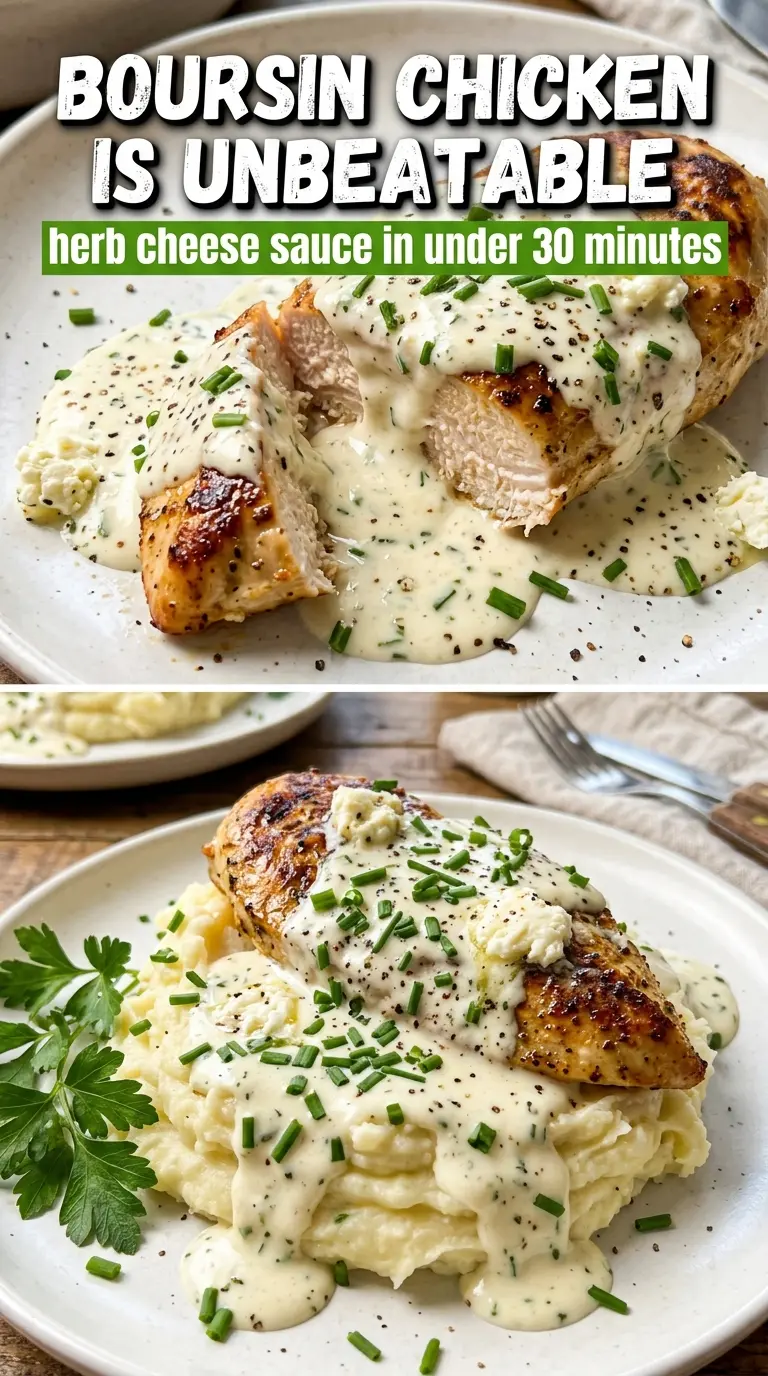
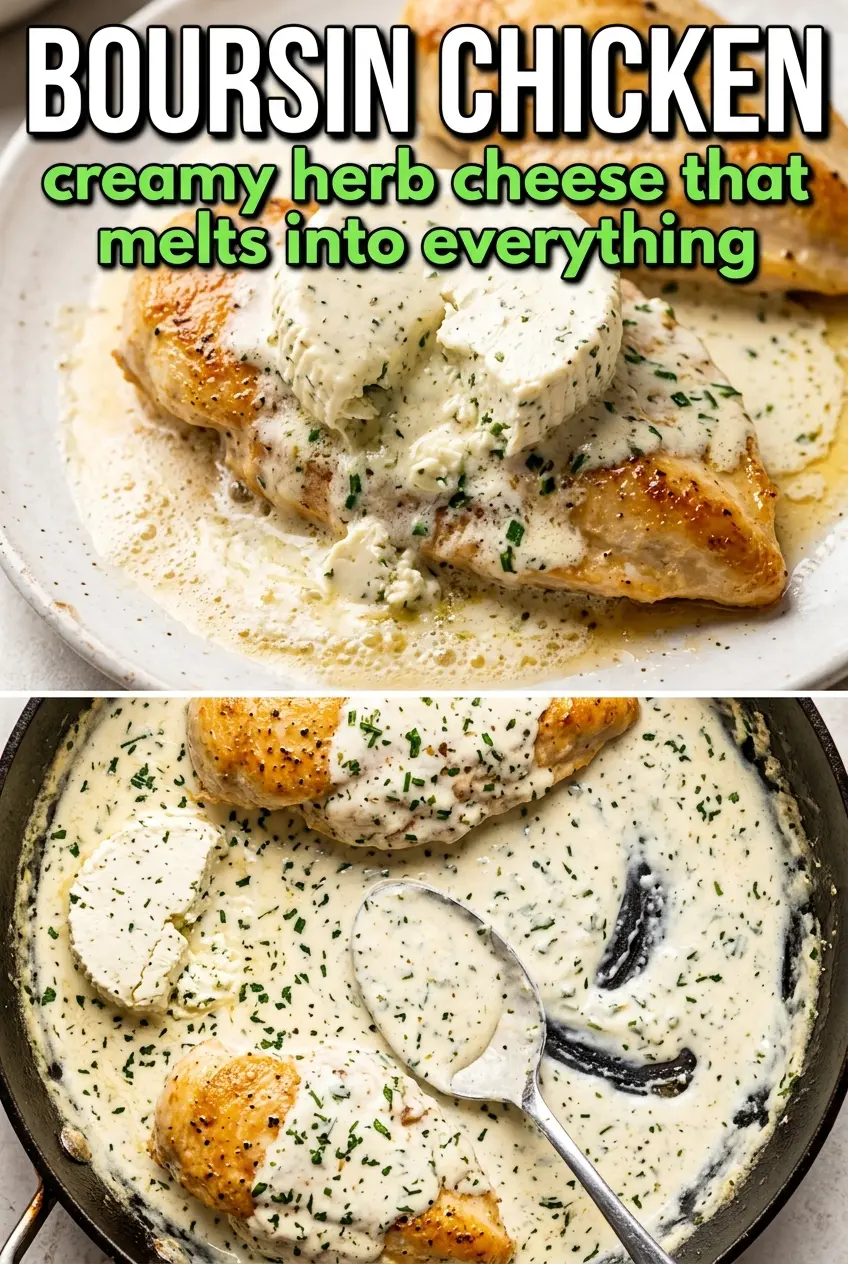
Golden seared chicken breasts in a creamy Boursin sauce turn into the kind of dinner that looks restaurant-worthy but lands on the table without much fuss. The sauce is glossy, herb-flecked, and rich enough to cling to every bite, but it still tastes bright from the garlic, thyme, and a splash of wine or broth. Once the chicken goes back into the pan, it soaks up just enough of that sauce to stay juicy instead of drying out.
What makes this version work is the way the sauce is built in stages. The chicken gets real color first, which gives the sauce a deeper base, and the garlic is cooked just long enough to soften without turning bitter. Boursin melts cleanly into warm broth, then the cream smooths everything out and gives it that spoon-coating finish. If you rush the sauce or boil it hard, it can turn greasy or grainy, so low, steady heat matters here.
Below, I’ve included the ingredient details that matter most, plus the one step that keeps the sauce silky. There are also a few variations if you want to swap the wine, make it a little lighter, or stretch it into a full pasta dinner.
The sauce turned out silky and thick without reducing forever, and the thyme with the Boursin gave it that cozy French bistro taste. I served it over mashed potatoes and my husband asked if I could put it on the weekly menu.
Save this Boursin Chicken for the nights when you want a creamy skillet dinner with a glossy herb sauce and almost no cleanup.
The Reason the Sauce Stays Creamy Instead of Breaking
The biggest mistake with a Boursin cream sauce is treating it like a quick boil-and-go pan sauce. Cheese sauces break when the heat is too high or the dairy gets rushed, and that’s how you end up with an oily layer instead of something smooth and velvety. This version stays stable because the broth loosens the cheese first, then the cream gets stirred in over a gentle simmer, not a hard boil.
Another key point is the chicken fond left in the pan after searing. Those browned bits are not a nuisance; they’re the backbone of the sauce. If the garlic starts browning too fast, pull the pan off the heat for a few seconds before adding the wine or broth. That short pause keeps the garlic sweet instead of sharp and burnt.
- Leave the fond in place — don’t wipe out the skillet after searing. The browned residue dissolves into the sauce and gives it much deeper flavor.
- Warm, not boiling liquid — add the broth and cream while the pan is at a steady simmer. Aggressive heat can make the cheese seize and separate.
- Cook the chicken to just done — once it hits 165°F, pull it out. It finishes gently in the sauce without drying out.
What Each Ingredient Is Actually Doing in This Skillet
- Boursin garlic and herb cheese — this is the core of the sauce. Nothing else gives the same fast-melting, seasoned creaminess with those little flecks of herbs already built in.
- Dry white wine or chicken broth — wine adds a brighter edge and helps loosen the fond; broth is the easiest swap if you don’t cook with wine. If you use broth only, the sauce tastes a little rounder and less sharp, which still works well.
- Heavy cream — this softens the cheese and gives the sauce a smoother finish. Half-and-half can work in a pinch, but the sauce will be thinner and a little more fragile.
- Fresh thyme — dried thyme can step in, but use less because it concentrates quickly. Fresh thyme keeps the sauce fragrant without tasting dusty.
- Chicken breasts — boneless, skinless breasts cook quickly and stay neat under the sauce. Pound them lightly if one side is much thicker so they cook evenly and don’t dry out while you wait for the other side to catch up.
Getting the Sear, the Sauce, and the Finish in the Right Order
Seasoning the Chicken Well
Pat the chicken dry before anything else, then season it generously with salt, pepper, and garlic powder. Moist chicken steams; dry chicken browns. If the breasts are uneven in thickness, give the thick end a few light taps so the whole piece cooks at the same pace.
Building Color in the Pan
Heat the olive oil until it shimmers, then lay the chicken in and leave it alone long enough to develop a deep golden crust. If you move it too early, it will stick and tear instead of releasing cleanly. Five to six minutes per side is the target, but color and internal temperature matter more than the clock.
Turning the Drippings Into Sauce
Once the chicken comes out, add the garlic and stir for about 30 seconds, just until it smells sweet. Pour in the wine or broth and scrape the bottom of the pan with a wooden spoon so the browned bits dissolve. Then add the chicken broth and Boursin, stirring until the cheese disappears into the liquid and the sauce looks smooth rather than speckled with lumps.
Finishing Without Overcooking
Stir in the cream and thyme, then let the sauce simmer gently until it lightly coats the spoon. Put the chicken back in only long enough to warm through and pick up some sauce. If you let it boil for several minutes at this stage, the chicken can tighten up and the dairy can start to separate.
How to Adapt This Boursin Chicken Without Losing the Point
Make it with chicken thighs
Boneless skinless thighs stay juicier and handle a little extra simmering better than breasts. They’ll need a few extra minutes in the pan, but the sauce and method stay the same.
Skip the wine and use broth only
Chicken broth gives you a milder sauce with no alcohol, and the Boursin still carries most of the flavor. The tradeoff is a slightly less sharp finish, so a squeeze of lemon at the end can help brighten it.
Make it gluten-free and still satisfying
The skillet itself is naturally gluten-free as written, so just check your broth and Boursin label if you’re cooking for someone sensitive. Serve it over mashed potatoes, rice, or gluten-free pasta and you won’t miss anything.
Stretch it into a pasta dinner
Slice the chicken and toss it with cooked pasta right in the sauce, then loosen with a splash of pasta water if needed. The sauce clings beautifully, but don’t drown the pasta or you’ll lose the creamy, glossy coating.
Storage and Reheating
- Refrigerator: Store leftovers in an airtight container for up to 3 days. The sauce will thicken as it chills.
- Freezer: It’s not my first choice for freezing because cream sauces can turn a little grainy after thawing, but it can be done. Freeze in a sealed container for up to 2 months and thaw overnight in the fridge.
- Reheating: Rewarm gently on the stove over low heat with a splash of broth or cream, stirring often. High heat is the fastest way to break the sauce and dry out the chicken.
Answers to the Questions Worth Asking
Boursin Chicken
Ingredients
Equipment
Method
- Season the boneless skinless chicken breasts with salt, pepper, and garlic powder to taste. Pat the surface evenly so it browns well.
- Heat olive oil in a large skillet over medium-high heat until hot. Sear the chicken breasts for 5-6 minutes per side until golden and reach an internal temperature of 165°F, then remove to a plate.
- Add minced garlic to the same pan and cook for 30 seconds, stirring to prevent browning. Immediately deglaze with dry white wine or chicken broth and cook for 2 minutes.
- Pour in chicken broth and bring to a simmer. Add Boursin garlic and herb cheese, stirring until completely melted and smooth.
- Stir in heavy cream and fresh thyme leaves. Simmer for 3-4 minutes until the sauce thickens slightly and looks glossy.
- Return the chicken breasts to the pan and spoon the Boursin sauce over each breast. Let the chicken sit briefly so the sauce coats the surface.
- Garnish with fresh thyme for garnish and serve over mashed potatoes or pasta. Spoon extra sauce on top as a glossy finishing layer.