Browned butter pumpkin pudding cookies bake up thick, chewy, and packed with that deep butterscotch note you only get when butter is taken past the melting point and brought back in under control. The centers stay soft and plush, the edges set just enough to give each bite structure, and the flaky salt on top keeps the sweetness from tipping over. They taste like the best parts of pumpkin cookies and bakery-style pudding cookies merged into one pan.
The trick is in the texture work. Browned butter adds nuttiness, but it has to cool and solidify before it’s creamed, or the dough turns greasy and spreads too much. Blotting the pumpkin matters too; pumpkin puree brings flavor and color, but too much moisture can make the cookies cakey instead of chewy. The dry pudding mix helps with that tender, almost stretchy crumb that holds up for days.
Below you’ll find the detail that matters most for these cookies: how to keep them thick instead of flat, plus the small handling steps that make the flavor taste baked-in rather than overworked.
The browned butter made these taste like caramel, and the cookies stayed thick instead of spreading out. I loved the little hit of flaky salt on top with the pumpkin spice.
Save these browned butter pumpkin pudding cookies for the thick, chewy cookie craving that calls for caramel notes, pumpkin spice, and flaky salt.
The Moisture Trap That Makes Pumpkin Cookies Spread Too Much
Pumpkin cookies go wrong when the dough carries too much water. Even a few extra spoonfuls of puree can push them from thick and chewy into puffy and cakey, then they collapse as they cool. That’s why blotting the pumpkin matters here. It doesn’t remove flavor; it removes the excess moisture that works against the texture you want.
The other place people lose control is the butter. Browned butter tastes amazing, but warm, liquid butter behaves like oil in cookie dough and encourages spread. Let it cool until solid again, then cream it with the sugars. That gives the dough the strength to hold its shape in the oven and bake into a cookie with edges that set before the center dries out.
What Each Ingredient Is Actually Doing in These Cookies
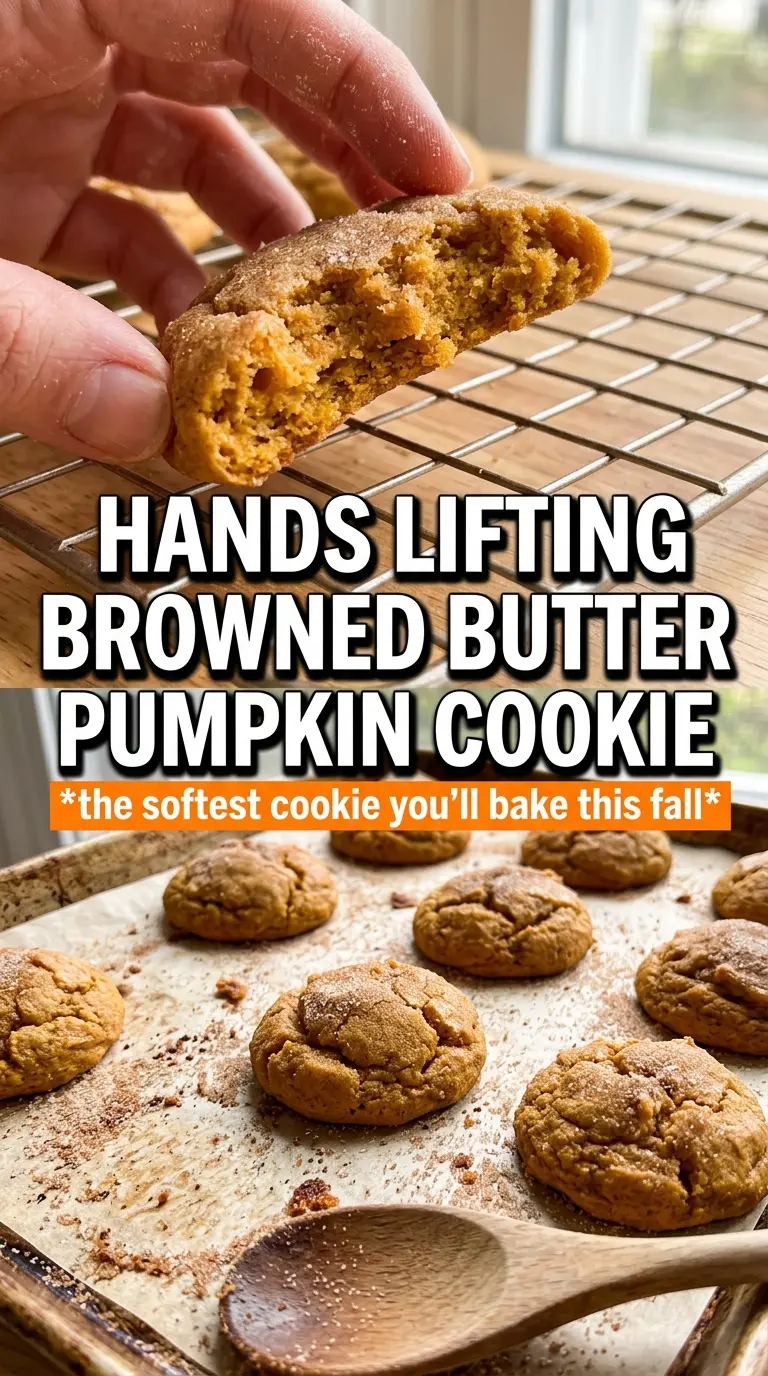
- Instant pudding mix — This is the ingredient that gives the cookies that soft, bakery-style chew. Use instant, not cook-and-serve; the formula matters here because it helps with structure and tenderness without making the dough wet.
- Browned butter — Butter that’s been browned and then re-solidified brings the nutty, caramel note that plain butter can’t fake. If you use it while it’s still liquid, the cookies spread more and the dough won’t cream properly.
- Pumpkin puree — The pumpkin adds color, warmth, and that unmistakable autumn-spice base, but it needs to be blotted dry. Canned puree is fine; just press it between paper towels until it looks less glossy and more pasty.
- Brown sugar — This does more than sweeten. It helps the cookies stay moist and chewy, and it deepens the butterscotch note from the browned butter.
- Flaky sea salt — Sprinkle it on right after baking so it sticks to the surface. That last little hit sharpens the spice and keeps the cookies from tasting flat.
How to Keep the Centers Thick and the Edges Just Set
Brown the butter and wait for it to firm back up
Cook the butter until the milk solids turn amber and smell nutty, then pour it into a bowl and chill it until solid. It needs to be cool enough to cream, not warm and sloshy. If the butter is still soft when you beat it with the sugars, the dough will loosen and the cookies will spread before the structure sets. This is the part that gives you that thick bakery-style cookie instead of a flat one.
Dry the pumpkin before it ever hits the bowl
Spoon the pumpkin puree onto paper towels and blot it until it’s noticeably less wet. You don’t need to remove every trace of moisture, just the excess that makes cookies bready. Once the dough comes together, it should feel soft but not sticky or slack. If it looks wet before baking, it will bake up puffier and less chewy.
Mix just until the flour disappears
Once the dry ingredients go in, fold only until no streaks of flour remain. Overmixing here builds toughness and can make the cookies dense in the wrong way. Scoop the dough into even mounds so they bake at the same rate, then bake just until the edges look set and the centers still look a little underdone. They finish on the pan as they cool, and that carryover heat is what keeps them soft.
Three Ways to Adapt These Cookies Without Losing the Texture
Gluten-Free Version
Use a cup-for-cup gluten-free flour blend in place of the all-purpose flour. Keep the pudding mix the same, and don’t add extra flour if the dough feels soft; gluten-free blends often need a little time to hydrate, and this dough firms up as it rests.
Dairy-Free Swap
Replace the butter with a plant-based butter that browns well, but expect a slightly less nutty flavor. Skip any margarine that stays too soft at room temperature; the dough needs a fat that firms up after chilling, or the cookies will spread too much.
Extra-Spiced Bakery Style
Add a pinch of cloves or nutmeg if you want the spice to read a little stronger. Keep the total amount modest so the browned butter still comes through; too much spice can cover the caramel note that makes these cookies special.
Storage and Reheating
- Refrigerator: Store in an airtight container for up to 5 days. The cookies stay chewy, and the spice actually deepens a little by day two.
- Freezer: Freeze baked cookies or dough balls for up to 2 months. For dough, freeze the scooped portions first, then bag them so they bake from frozen without sticking together.
- Reheating: Warm baked cookies in a 300F oven for 3 to 5 minutes. Skip the microwave if you want the edges to stay set instead of turning soft and gummy.
Questions I Get Asked About This Recipe
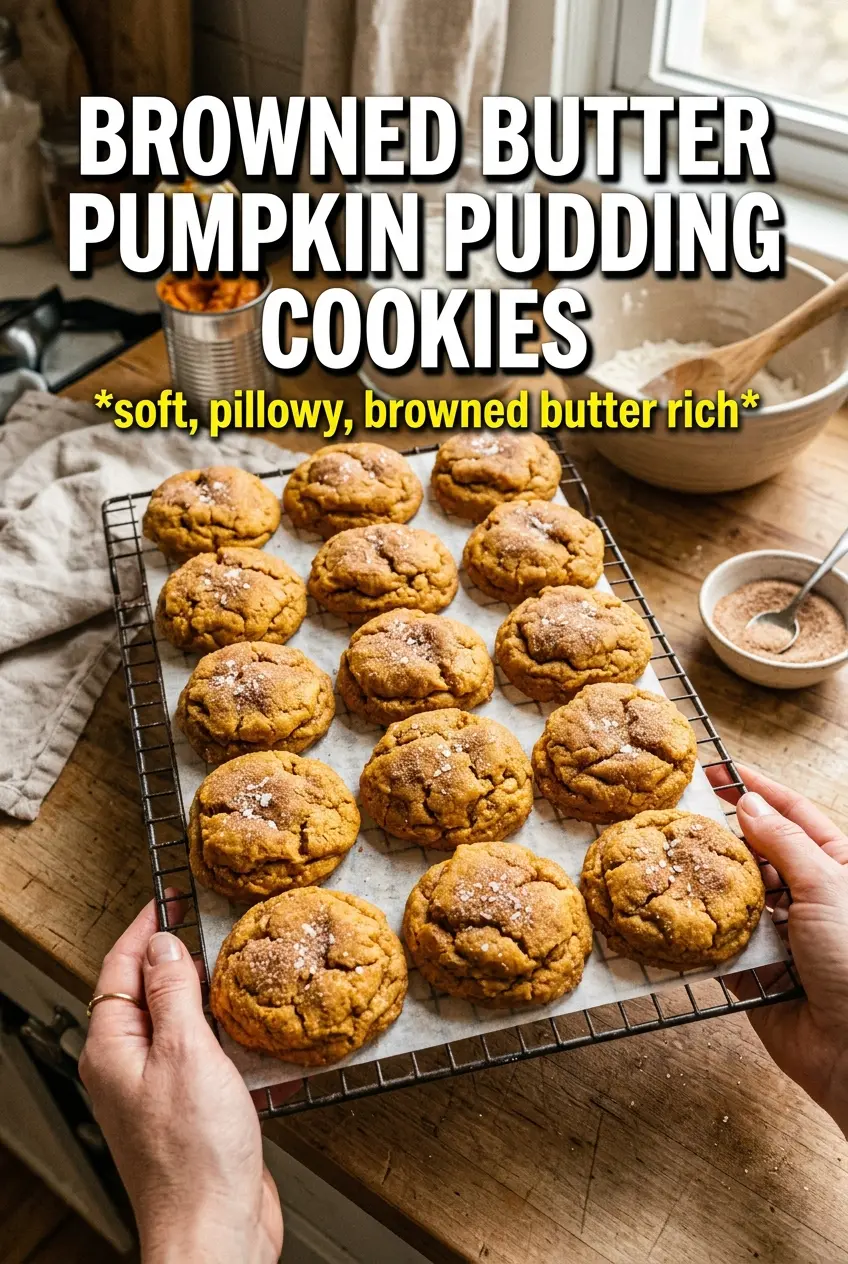
Browned Butter Pumpkin Pudding Cookies
Ingredients
Equipment
Method
- Brown the unsalted butter and let it cool until solid, then refrigerate until solidified, about 1 hour (brownbutter will look amber and smell nutty).
- Preheat the oven to 375F and line baking sheets so the cookies bake evenly right after portioning.
- Blot the pumpkin puree dry.
- Whisk together the all-purpose flour, instant butterscotch or vanilla pudding mix (dry), baking soda, pumpkin pie spice, cinnamon, and salt.
- Beat the solidified brown butter with the brown sugar, packed and granulated sugar until smooth.
- Add the blotted pumpkin puree (blotted dry), then beat in the eggs.
- Mix in the vanilla until the dough looks cohesive and thick.
- Fold in the flour mixture until no dry streaks remain (the dough should look thick and slightly speckled).
- Scoop 2-tablespoon rounds onto the lined baking sheets, spacing them out for spread.
- Bake at 375F for 10-12 minutes, until the edges are set and the centers still look soft.
- Sprinkle flaky sea salt immediately after baking while the tops are warm and slightly tacky.