Sliced meatloaf with brown gravy is the kind of dinner that lands on the plate looking plain for half a second, then wins everybody over the moment the gravy hits the hot edges. The loaf stays tender and sliceable, the gravy turns dark and savory, and the whole thing tastes like it came from a much longer, more old-school cooking session than it actually did.
What makes this version work is the balance inside the meatloaf and the way the gravy is built from the pan drippings. Grated onion melts into the beef instead of leaving crunchy bits behind, breadcrumbs and milk keep the texture soft, and the eggs hold everything together without making it dense. The gravy starts with a roux cooked just long enough to lose its raw flour taste, then gets sharpened with Worcestershire and enriched with any drippings left in the pan.
Below, I’ll walk through the small choices that keep the loaf tender and the gravy smooth. There’s a good reason for every step, especially if you’ve ever had meatloaf come out dry or gravy turn lumpy.
The gravy came out silky and thick, and the grated onion kept the meatloaf so moist it sliced cleanly without crumbling. My husband asked for seconds before I even sat down.
Save this brown gravy meatloaf for the nights when you want tender slices and a rich homemade gravy over mashed potatoes.
The Gravy Stays Smooth Because the Meatloaf Gets Its Rest First
The biggest mistake with meatloaf and gravy is rushing the slice. If you cut the loaf straight from the oven, the juices run out fast and the gravy gets watered down before it ever reaches the plate. Letting it rest gives the loaf time to settle, so the slices hold together and the drippings stay where they belong.
The other thing that matters is how the gravy base is cooked. Flour needs a minute or two in the butter before the broth goes in, or you end up tasting raw starch. Once the liquid hits, keep whisking until it turns glossy and thick enough to coat a spoon. If it looks thin at first, that’s normal; it tightens as it simmers.
- Ground beef — An 80/20 blend gives you enough fat for tenderness and flavor. Leaner beef can work, but the loaf will eat drier and the gravy won’t have as much richness to lean on.
- Breadcrumbs and milk — This combo is what keeps the meatloaf soft instead of packed tight. Fresh breadcrumbs or panko both work, but the milk needs time to soak in so the crumbs don’t turn gritty.
- Grated onion — Grating is better than chopping here because the onion disappears into the meat and releases moisture evenly. If you only have a food processor, pulse it fine and stop before it turns to puree.
- Worcestershire sauce — This is doing more than adding salt. It brings the savory depth that makes both the loaf and the gravy taste beefier without needing extra ingredients.
- Beef broth — Use a broth you’d actually sip, not a weak, watery one. The gravy is only as good as the liquid going into it, and this is where cheap broth shows.
What Each Ingredient Is Actually Doing in This Meatloaf or Meatballs
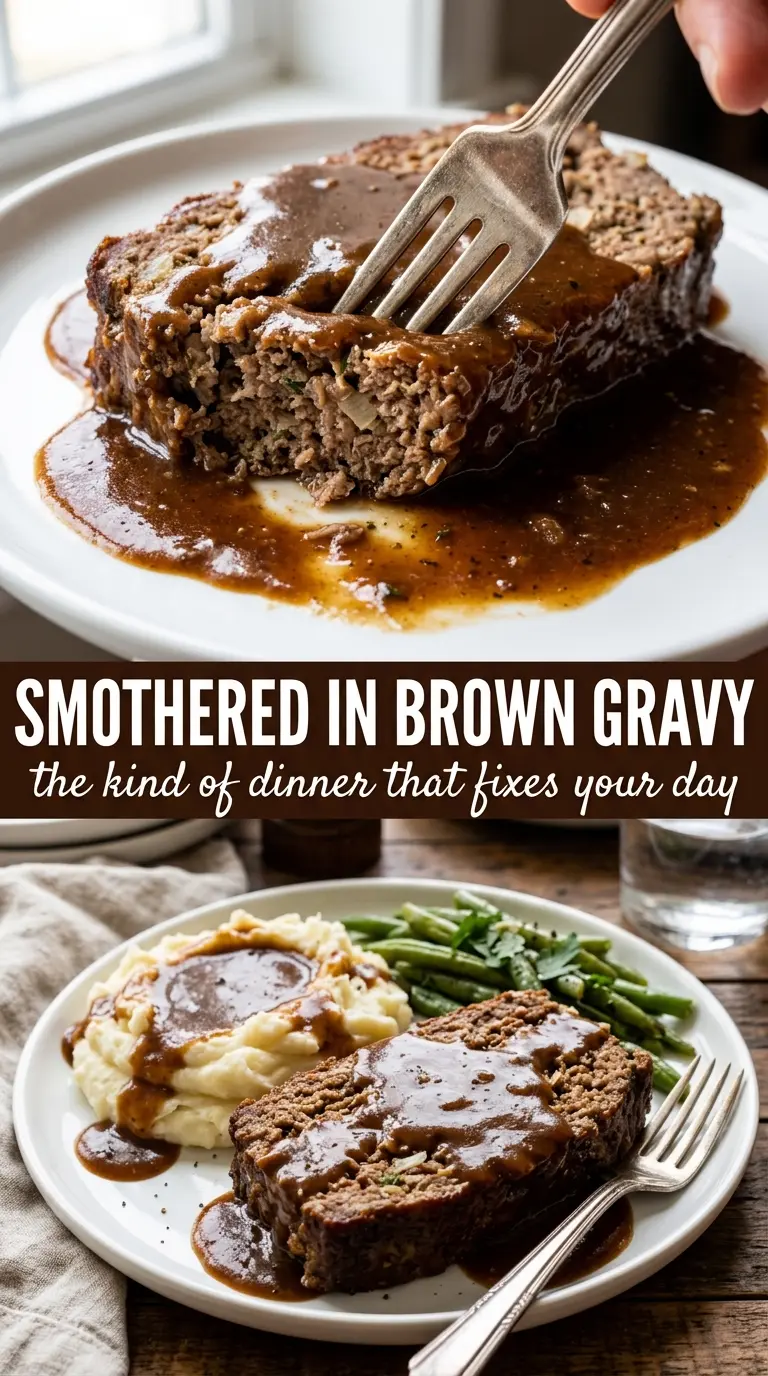
- Ground meat (the protein foundation) — Use 80/20 so it stays moist. Handle gently to keep texture tender instead of dense.
- Breadcrumbs or fillers (the binder) — These hold the meat together without making it dense. Soak in milk first so they add moisture.
- Egg (the structural binding agent) — This holds everything together during cooking. One egg per pound of meat is the right ratio.
- Onion and aromatics (the base flavor) — Mince finely so they distribute evenly. Raw onion softens as it cooks and becomes part of the texture.
- Seasonings (salt, pepper, Worcestershire, spices) — Build flavor boldly. The meat mixture carries the entire flavor profile.
- Milk or liquid (the moisture keeper) — This keeps the meatloaf tender instead of dense and dry. Don’t skip this step.
- Glaze or sauce (ketchup-based or other) — This adds sweetness, moisture, and flavor to the exterior. Apply strategically so it caramelizes.
- Resting time (the final step) — Let the meatloaf rest 10 minutes so it sets and slices cleanly. Cutting too soon makes it fall apart.
Building the Loaf Before You Start the Gravy
Mix Until Combined, Not Packed
Combine the beef, breadcrumbs, eggs, milk, onion, garlic, Worcestershire, salt, and pepper in a large bowl and mix just until everything looks evenly distributed. Overmixing compacts the meat and gives you a dense, springy loaf instead of a tender one. The mixture should hold together when pressed, but it shouldn’t look paste-like.
Shape It in the Pan
Press the mixture into a greased loaf pan and level the top so it bakes evenly. If the center is mounded too high, the middle stays undercooked while the edges dry out. A lightly packed pan is enough; don’t crush the mixture down hard.
Bake to Temperature, Not Just Time
Bake at 350°F for 60 to 70 minutes, then check the center with a thermometer. You want 160°F in the thickest part. If the top browns before the center is done, tent it loosely with foil for the last stretch instead of cranking up the heat.
Whisk the Gravy Until It Turns Glossy
While the loaf rests, melt the butter in a saucepan and whisk in the flour. Cook it until it smells a little nutty and turns pale gold, then slowly whisk in the broth, Worcestershire, garlic powder, and any reserved drippings. Keep the heat at a steady medium and whisk often; if you dump in the liquid too fast, you’ll chase lumps the whole time. Simmer until the gravy coats the back of a spoon and looks smooth and dark.
Make It a Mushroom Gravy Meatloaf
Sauté sliced mushrooms in the butter before adding the flour, then build the gravy as written. The mushrooms add a deeper, earthier flavor and make the sauce feel more like a diner-style pan gravy.
Gluten-Free Meatloaf and Gravy
Use gluten-free breadcrumbs in the loaf and swap the flour for a measure-for-measure gluten-free blend in the gravy. The texture stays close to the original, though the gravy may need an extra minute of simmering to thicken fully.
Dairy-Free Version
Swap the milk for unsweetened oat milk or another plain dairy-free milk, and use oil instead of butter for the gravy roux. You’ll lose a little richness, but the Worcestershire and drippings still keep the finished dish full-bodied.
Making It Ahead
Shape the loaf up to a day ahead and keep it covered in the refrigerator, then bake it straight from the fridge with a few extra minutes added to the cook time. The gravy can be made ahead too, but whisk in a splash of broth when reheating if it thickens more than you want.
Storage and Reheating
- Refrigerator: Store sliced meatloaf and gravy separately for up to 4 days. The loaf stays moist, and the gravy may thicken as it chills.
- Freezer: The meatloaf freezes well for up to 3 months; wrap slices tightly and freeze the gravy in a separate container. Thaw overnight in the fridge for the best texture.
- Reheating: Reheat slices covered in the oven at 325°F with a spoonful of gravy or broth over the top. Don’t blast it in the microwave uncovered, or the edges dry out before the center warms through.
Answers to the Questions Worth Asking
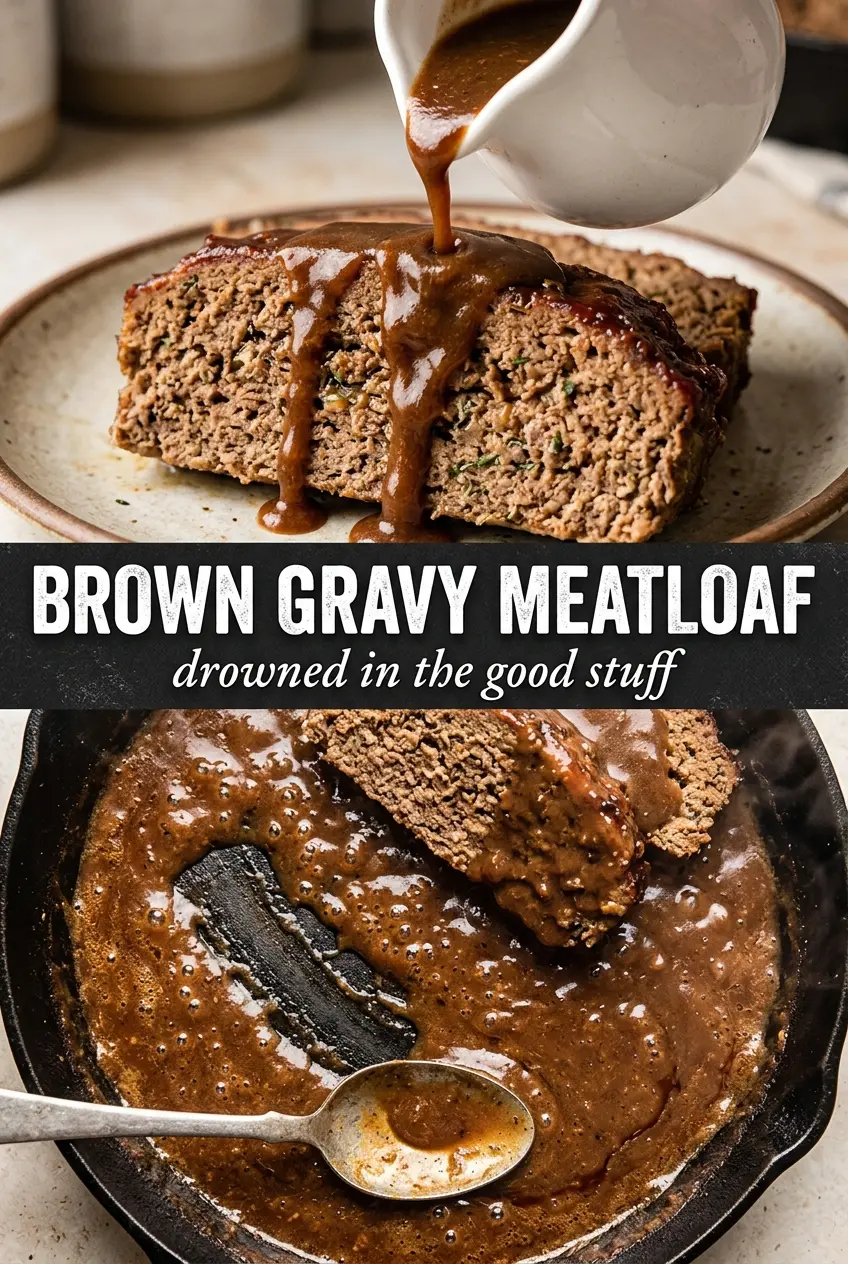
Brown Gravy Meatloaf
Ingredients
Equipment
Method
- Preheat oven to 350°F and grease a loaf pan with a light coating of grease.
- In a mixing bowl, combine ground beef, breadcrumbs, eggs, milk, grated small onion, minced garlic, Worcestershire, and salt and pepper until evenly incorporated.
- Press the meat mixture firmly into the greased loaf pan to form an even loaf.
- Bake at 350°F for 60–70 minutes, until the internal temperature reaches 160°F, with the loaf visible as browned on top.
- Remove the loaf from the oven and rest for 10 minutes, allowing juices to settle so the slices stay moist.
- Carefully reserve any pan drippings to use in the gravy, keeping them with a spoon so solids don’t overwhelm the sauce.
- In a saucepan over medium heat, melt butter and whisk in flour until combined and lightly golden, about 1–2 minutes.
- Whisk in beef broth, Worcestershire sauce, garlic powder, and reserved pan drippings until smooth.
- Simmer the gravy for 5 minutes, stirring occasionally, until thickened and glossy.
- Slice the meatloaf and serve each portion covered in brown gravy, pouring the thick sauce over the top so it clings to the surface.