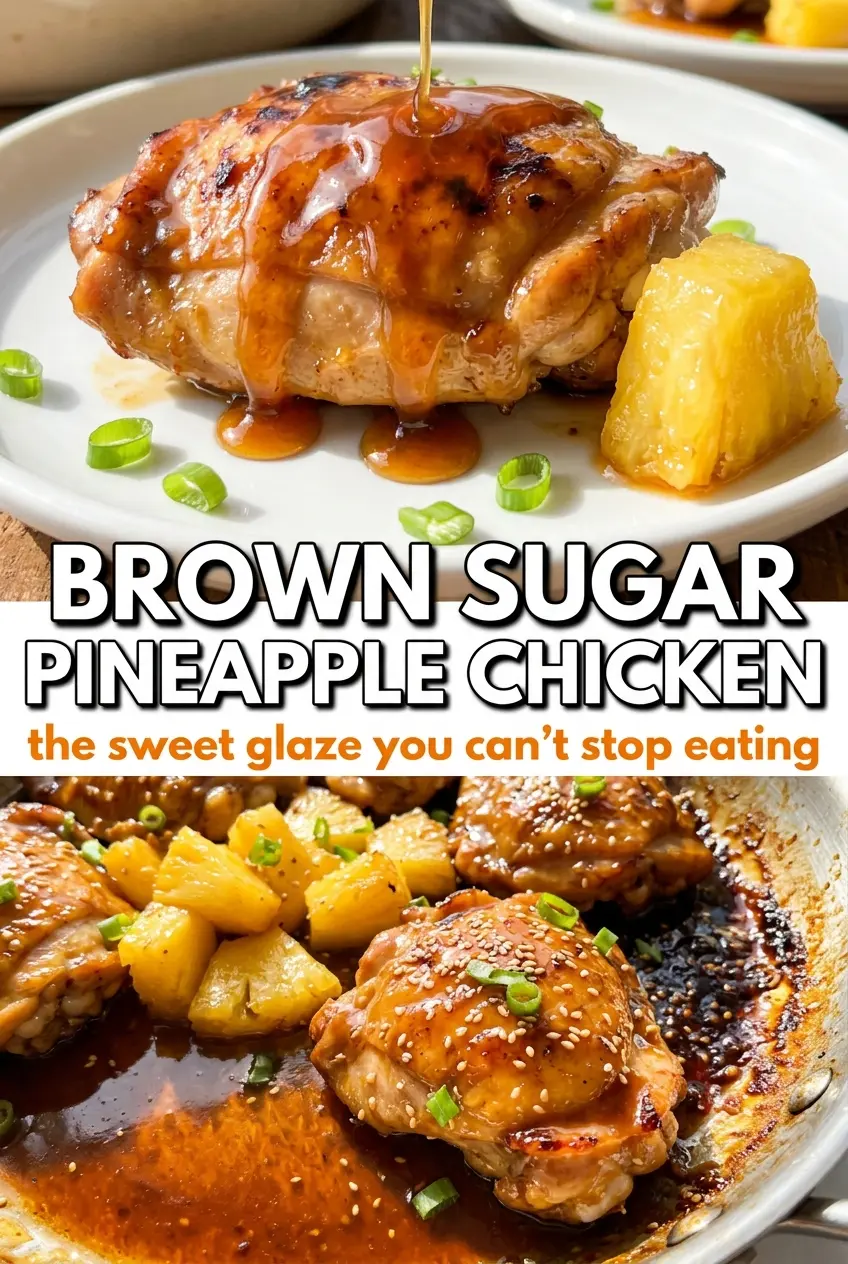
Sticky brown sugar pineapple chicken earns its spot fast: juicy chicken breasts, a glossy amber glaze, and pineapple pieces that caramelize right in the pan. The sauce clings to the chicken instead of pooling underneath it, so every bite gets that sweet-tangy hit with a little savory depth behind it.
What makes this version work is the balance. Pineapple juice brings the brightness, brown sugar gives the glaze its body, and soy sauce plus ketchup keep it from tasting one-note sweet. The chicken gets browned first, then finishes in the sauce, which keeps it tender while the glaze reduces enough to coat without turning watery.
Below, I’m walking through the small details that matter here: how to keep the glaze from going thin, when to add the pineapple chunks so they don’t disappear, and the easiest way to get that sticky skillet finish without overcooking the chicken.
The glaze thickened up exactly when you said it would, and the pineapple kept the sauce from getting cloying. I served it over rice and the skillet was scraped clean.
Save this brown sugar pineapple chicken for the nights when you want a sticky skillet glaze and dinner on the table fast.
The Trick to a Glaze That Clings Instead of Turning Soupy
The mistake with pineapple chicken is rushing the sauce before the pan has done enough work. If the chicken comes out pale and the sauce goes in too soon, you never get that deep, sticky finish; you just get thin sweet liquid around cooked chicken. Browning the chicken first leaves behind fond in the skillet, and that is what gives the glaze its savory edge.
The other thing that matters is the cornstarch slurry. Stir it in after the sauce has had a minute to simmer, not at the very beginning, or it can thicken unevenly and taste starchy. Once the glaze coats the back of a spoon and looks glossy instead of cloudy, it’s ready for the chicken to go back in.
What Each Ingredient Is Actually Doing in This Skillet

- Chicken breasts — They stay lean and slice cleanly, which makes them perfect for a thick glaze. If yours are large, pound them to an even thickness so the thicker ends don’t dry out before the center is done.
- Pineapple juice — This is the backbone of the sauce. Fresh or canned both work, but canned juice is often more consistent, and that matters when you’re reducing it into a glaze.
- Brown sugar — It adds sweetness and helps the sauce turn sticky instead of just saucy. Pack it firmly so the measurement is accurate, because too much makes the glaze candy-like fast.
- Soy sauce and ketchup — Soy sauce pulls the sweetness back into balance, while ketchup adds body, color, and a little tang. You can use low-sodium soy if that’s what you keep on hand.
- Cornstarch slurry — This is what turns the simmered liquid into a real glaze. Mix it with cold water first; if you dump cornstarch straight into the pan, it clumps and leaves little chalky spots.
- Pineapple chunks — Add them at the end so they warm through and caramelize slightly without collapsing. If you use very juicy fresh pineapple, expect the sauce to loosen a touch before it comes back together.
Building the Chicken and Finishing the Glaze in the Same Pan
Seasoning and Searing the Chicken
Pat the chicken dry before it hits the skillet, then season it well with salt, pepper, garlic powder, and smoked paprika. Dry chicken browns; wet chicken steams. Sear it in hot olive oil for 5 to 6 minutes per side until it’s golden and the center reaches 165°F. If the pan smokes hard, the heat is too high and the outside will overbrown before the middle cooks through.
Reducing the Pineapple Base
Use the same skillet and leave the browned bits where they are. Whisk in the pineapple juice, brown sugar, soy sauce, ketchup, garlic, and ginger, then bring it to a steady simmer over medium heat. You want the sauce bubbling around the edges, not violently boiling in the center. That slower simmer keeps the sugars from scorching before the glaze has a chance to thicken.
Thickening to a Sticky Finish
Stir in the cornstarch slurry and keep the sauce moving for 2 to 3 minutes. It should go from thin and glossy to visibly thicker, with a sheen that coats a spoon. Add the pineapple chunks once the glaze has started to thicken so they stay intact. If the sauce still looks loose, give it another minute; if it gets too thick, a splash of pineapple juice brings it back.
Coating the Chicken and Serving
Return the chicken to the pan and turn it in the glaze until every surface is lacquered. Let it cook for about 2 more minutes so the sauce grips the chicken and the pieces absorb a little of the glaze. Finish with sesame seeds and sliced green onions, then serve it right away over rice while the sauce is still shiny and fluid.
How to Adapt This for Different Diets and Busy Nights
Make it with chicken thighs
Boneless skinless thighs give you a juicier result and are a little more forgiving if you cook them a minute too long. They do take a touch longer to brown, but the glaze clings beautifully to the extra richness.
Make it gluten-free
Swap the soy sauce for tamari or a certified gluten-free soy sauce. The flavor stays savory and balanced, and the glaze thickens the same way because the cornstarch is doing the heavy lifting.
Make it lower sugar
Cut the brown sugar back to 2 tablespoons and let the pineapple juice do more of the work. The sauce will be a little brighter and less syrupy, which is a good trade if you want the pineapple to lead.
Storage and Reheating
- Refrigerator: Store leftovers in an airtight container for up to 4 days. The glaze will tighten as it chills, which is normal.
- Freezer: It freezes well for up to 2 months, though the pineapple pieces soften a bit after thawing. Freeze in portions with extra sauce to help keep the chicken moist.
- Reheating: Rewarm gently in a skillet over low heat with a splash of water or pineapple juice. High heat can scorch the sugars and make the sauce tacky in the wrong way before the chicken warms through.
Questions I Get Asked About This Recipe
Brown Sugar Pineapple Chicken
Ingredients
Equipment
Method
- Season the boneless skinless chicken breasts with salt, pepper, garlic powder, and smoked paprika. Refrigerate for 20 minutes to marinate, then pat off any excess moisture.
- Heat the olive oil in a large cast iron skillet over medium-high heat until shimmering. Sear the chicken breasts for 5-6 minutes per side until golden and cooked through to 165°F, then remove to a plate.
- Whisk together pineapple juice, packed brown sugar, soy sauce, ketchup, minced garlic, and grated fresh ginger in the same pan. Bring to a simmer over medium heat for 2 minutes, scraping up browned bits.
- Stir in the cornstarch slurry and cook for 2-3 minutes until the sauce thickens to a glossy glaze. Add the pineapple chunks and stir to coat.
- Return the chicken breasts to the pan and turn to coat in the thick pineapple glaze. Cook for 2 more minutes so the glaze clings to the edges.
- Garnish with sesame seeds and sliced green onions. Serve immediately over steamed rice.