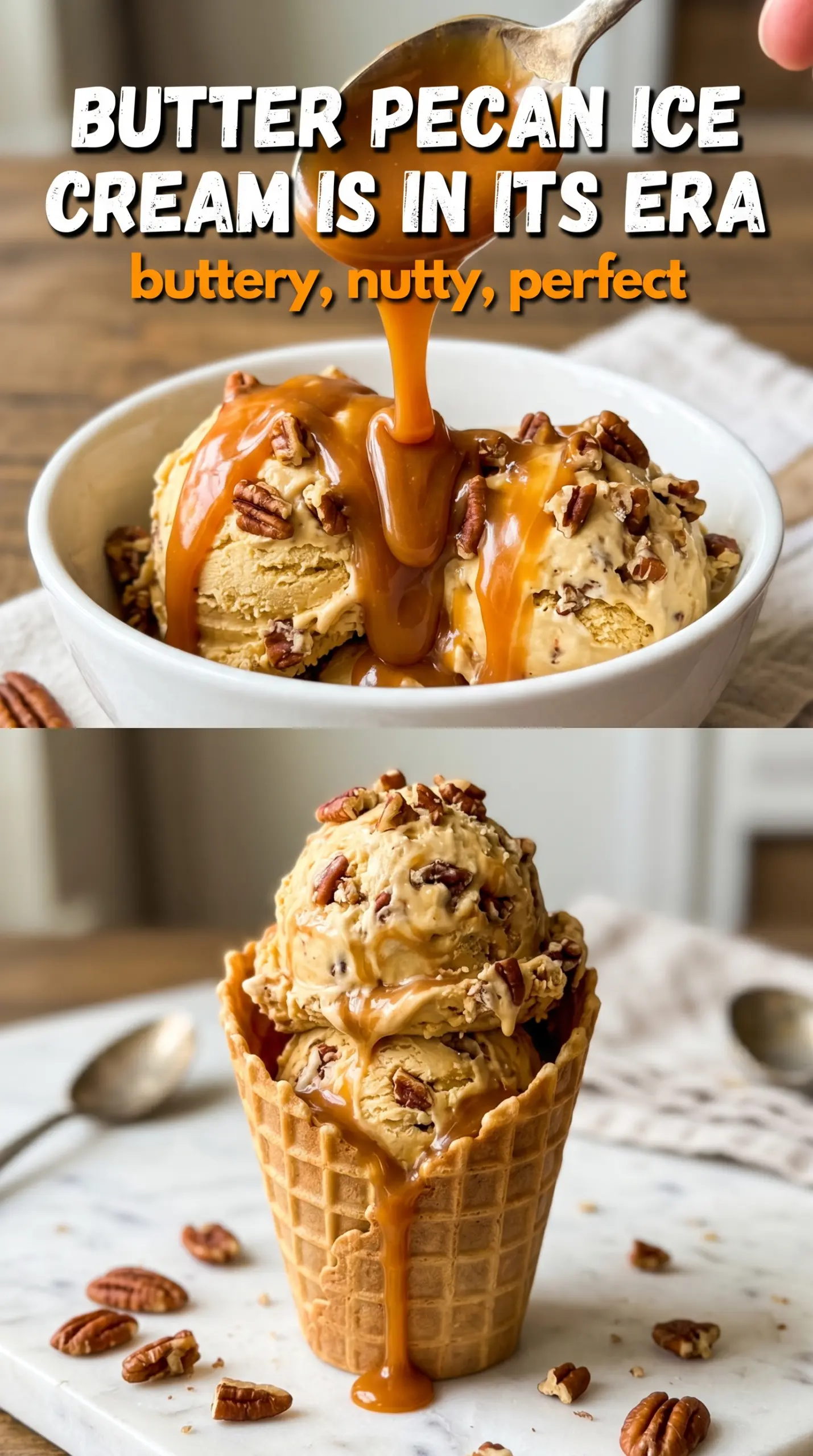
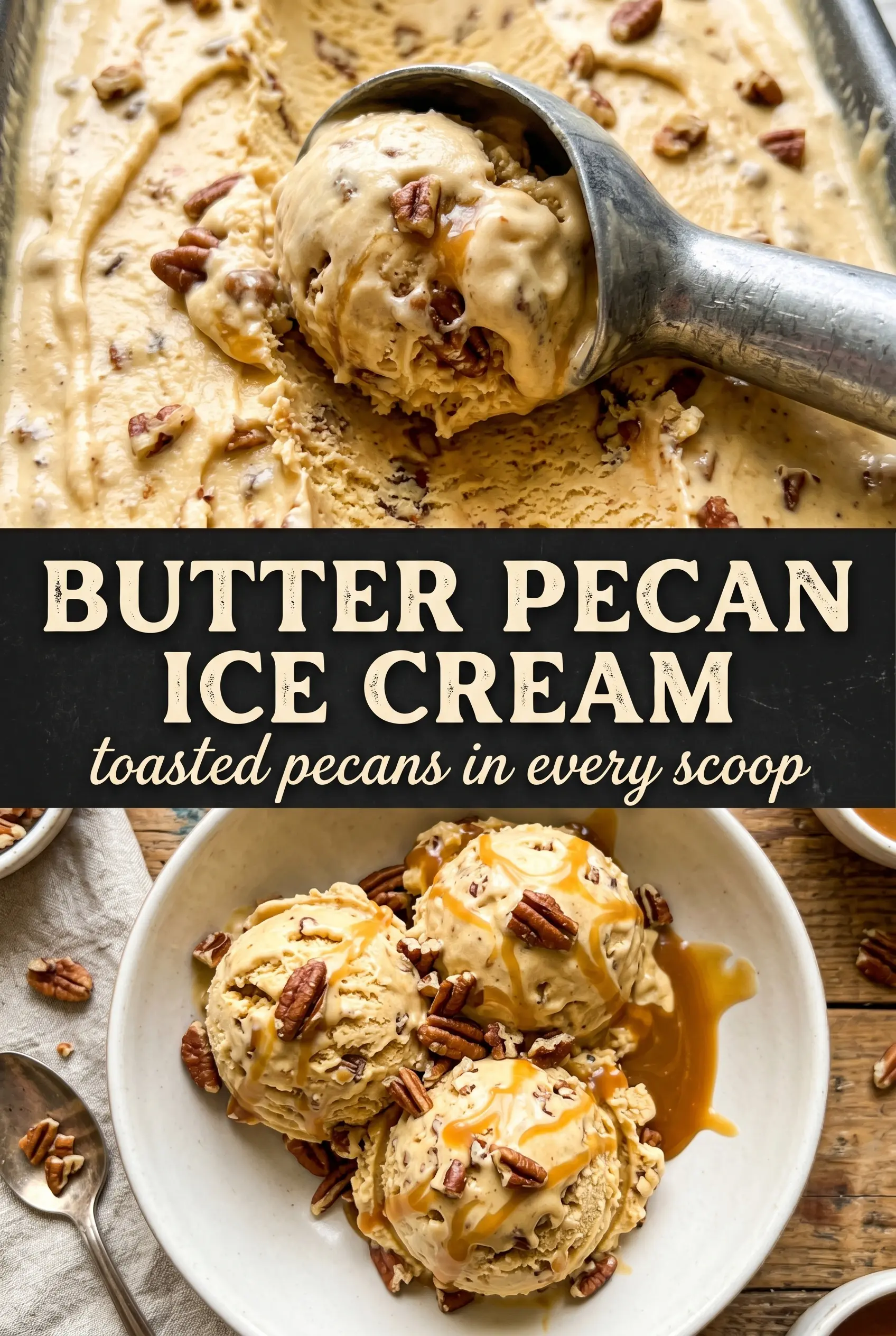
Butter pecan ice cream earns its place in the freezer because it hits three things at once: deep caramel sweetness, toasted nut flavor, and a custard base that stays creamy instead of icy. The buttered pecans do more than add crunch. They bring that warm, almost toffee-like note that makes this flavor taste richer than plain pecan ice cream ever could.
The key is treating each part with a little care. The pecans get toasted in butter first, which wakes up their flavor and coats them in a thin, salty glaze that clings through churning. The base cooks to a true custard temperature, which gives the ice cream body and keeps the texture smooth after freezing. If you rush either part, you still get ice cream, but you miss the thing that makes this one worth the effort.
Below, I’ll walk through the part that matters most: how to keep the custard silky, how to avoid burnt pecans, and which swaps work if you want a slightly lighter version or need a dairy-free adjustment.
The custard came out silky and the pecans stayed crisp even after a night in the freezer. Toasting them in butter first made the whole batch taste like caramel.
Save this butter pecan ice cream for the nights when you want a custard-style scoop with buttery pecans in every bite.
The Part That Keeps Butter Pecan Creamy Instead of Icy
Butter pecan lives or dies on the custard base. Eggs give it body, but they also make people nervous, which is usually when the heat goes too high and the texture turns grainy. The sweet spot is 175°F: hot enough to thicken, not hot enough to scramble the yolks. If the mixture coats the back of a spoon and leaves a clean line when you run a finger through it, you’re there.
The other trap is adding the hot dairy too fast. Slow whisking protects the yolks and keeps the base smooth. Once the custard is cooked, strain it. That one extra step catches any tiny bits of egg before they turn into little flecks in your finished ice cream.
- Egg yolks — These are what give the ice cream its dense, custardy body. Whole eggs can work in a pinch, but the texture won’t be as rich or as smooth.
- Brown sugar — This is part of the flavor, not just the sweetness. It pushes the base toward that caramel note that pairs with toasted pecans better than white sugar does.
- Heavy cream and whole milk — Cream brings the velvet texture, while whole milk keeps the custard from becoming heavy. Using all cream makes the scoop almost greasy; using low-fat milk makes it thin and more icy.
- Vanilla extract — Vanilla rounds out the brown sugar and butter. Skip imitation vanilla if you can; the flavor gets flat fast in a frozen dessert.
- Pecans — Fresh pecans matter here. If they taste stale raw, they’ll taste stale in the ice cream, even after toasting.
What Each Ingredient Is Actually Doing in This Ice Cream
- Base ingredient (cream, milk, or custard) — This provides the foundation and richness. Quality matters.
- Sweetener (sugar, honey, or condensed milk) — This sweetens and prevents ice crystals. The ratio is critical.
- Flavor element (vanilla, fruit, chocolate, coffee, or other) — This defines the ice cream personality. Use quality ingredients.
- Egg yolks (if making custard base) — These create richness and silky texture. Optional but elevates ice cream.
- Churning (if using ice cream maker) — This incorporates air and prevents ice crystals. Critical for smooth texture.
- Freezing temperature and time — Proper freezing prevents rock-hard texture. Store at 0°F or below.
- Mix-ins (chocolate, cookies, fruit, or swirls) — These add texture and prevent one-dimensional flavor. Add near end of churning.
- Serving temperature (slightly soft, not rock hard) — This provides creamy mouthfeel. Remove from freezer 5 minutes before serving.
How to Keep the Pecans Toasty After Churning
Start the pecans in butter over medium heat and watch for the smell, not the clock alone. They should turn deeply fragrant and a shade darker, with the butter foaming around them and then quieting down as the nuts absorb it. If they go in the freezer pale and soft, they’ll taste dull once mixed into the custard.
Let them cool completely before churning. Warm pecans melt the base and can make the finished ice cream churn up slushy. Adding them in the last few minutes keeps them from sinking to the bottom or getting chopped up too much by the dasher.
Toasting the Pecans in Butter
Melt the butter first, then add the pecans and salt. Stir often and keep the heat at medium, because butter can go from nutty to burnt fast once the milk solids start browning. The pecans are ready when the edges look glossy and the kitchen smells like toasted caramel. Spread them on parchment right away so they stop cooking and stay separate instead of clumping together.
Cooking the Custard Base
Heat the cream, milk, and brown sugar until the sugar dissolves and the mixture steams. When you add it to the yolks, pour in a thin stream while whisking constantly so the eggs warm gradually. Return everything to the pan and stir without stopping, scraping the bottom and corners, until it reaches 175°F. If you see steam but no thickening, keep going; if it starts to bubble, pull it off immediately and strain.
Chilling, Churning, and Freezing
Chill the base until it’s completely cold before it goes into the machine. A warm custard takes much longer to churn and tends to make softer ice cream with a looser set. Add the vanilla after cooking, then refrigerate the strained mixture for at least 4 hours, or overnight if you want the cleanest flavor and the firmest churn. Once it’s in the machine, add the pecans near the end so they stay chunky and evenly distributed.
Brown Sugar Caramel Butter Pecan
Swap 2 tablespoons of the brown sugar for dark brown sugar if you want a deeper molasses note. The ice cream will taste a little richer and darker, closer to classic Southern butter pecan.
Dairy-Free Version
Use full-fat canned coconut milk in place of the milk and cream, and expect a faint coconut note under the pecans. The texture will still be creamy, but it won’t have the same custard richness because the egg-and-dairy base is what gives the original its round, heavy mouthfeel.
No Ice Cream Maker
Freeze the cooled custard in a shallow pan and stir it every 30 minutes for the first 3 hours, then fold in the pecans during one of the middle stirs. The texture won’t be as smooth as churned ice cream, but it will still set up with a soft, scoopable body if you keep breaking up the ice crystals.
Extra Crunch With Salted Pecans
Add an extra pinch of flaky salt to the toasted pecans right before they cool. It sharpens the sweetness and keeps the flavor from reading flat after freezing, especially if you’re serving the ice cream plain instead of with caramel.
Storage and Reheating
- Refrigerator: The custard base can sit covered for up to 2 days before churning. After churned, the ice cream should stay in the freezer, not the fridge, or it will melt and refreeze with a grainy texture.
- Freezer: Store in an airtight container with parchment pressed on top of the surface for up to 2 weeks. After that, the pecans can lose some crunch and the base can pick up freezer flavor.
- Reheating: Let the container sit at room temperature for 5 to 10 minutes before scooping. Hard, straight-from-the-freezer ice cream is the easiest way to break a scoop or tear the surface into rough chunks.
Questions I Get Asked About This Recipe
Butter Pecan Ice Cream
Ingredients
Equipment
Method
- Melt the unsalted butter with the salt in a skillet over medium heat, then add pecan halves. Toast for 4-5 minutes until deeply golden and fragrant, then cool completely on a parchment-lined sheet.
- Combine the heavy cream, whole milk, and packed brown sugar in a saucepan over heat. Stir until the sugar dissolves and the mixture steams.
- Whisk the egg yolks until smooth in a bowl. Slowly whisk in the hot cream to temper, then pour back into the saucepan.
- Cook the custard over medium heat to 175F, stirring constantly to prevent curdling. Keep it at 175F until slightly thickened.
- Strain the custard into a clean container, then stir in vanilla extract and the remaining salt. Cool completely, then refrigerate at least 4 hours.
- Churn the chilled custard in an ice cream maker. Add the butter-toasted pecans in the last 5 minutes.
- Transfer the churned ice cream to a container and freeze until firm. Serve once scoopable and re-freeze any leftovers.