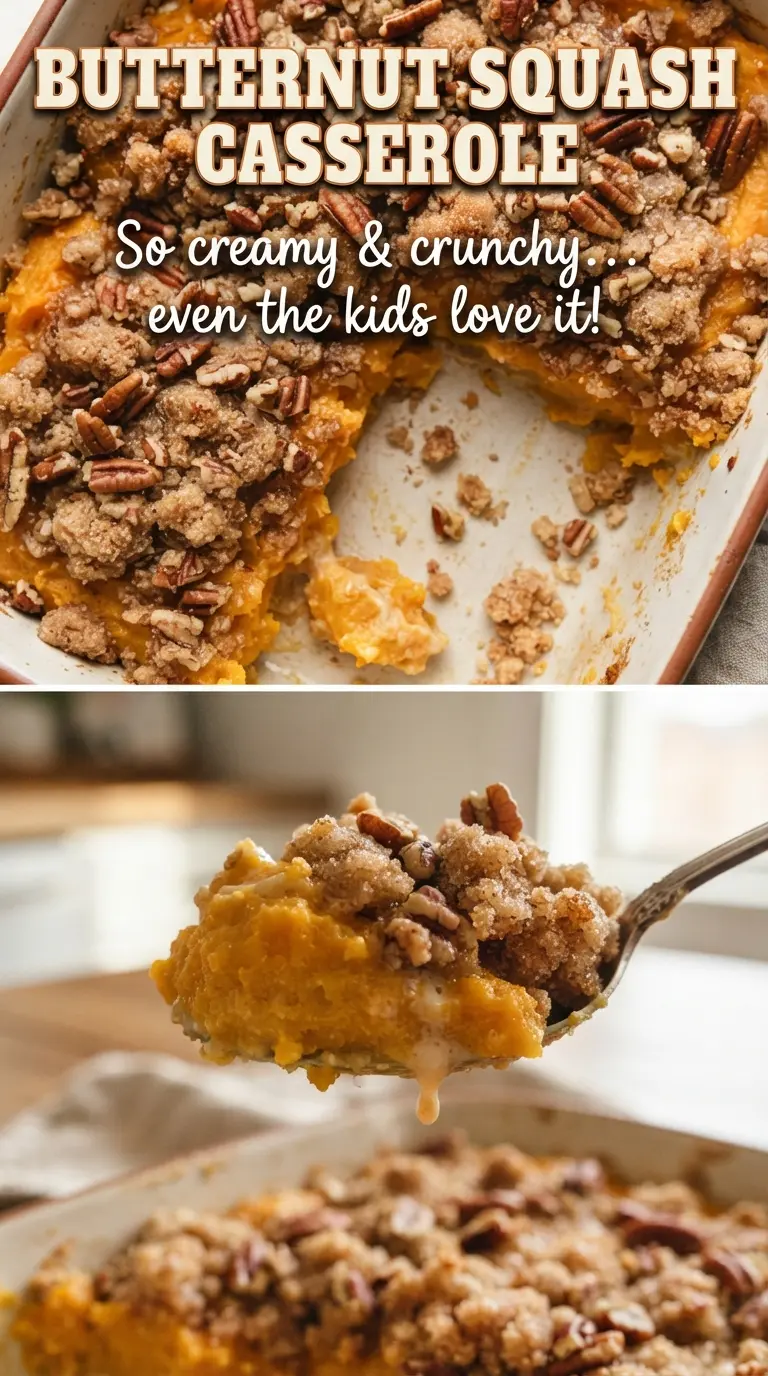
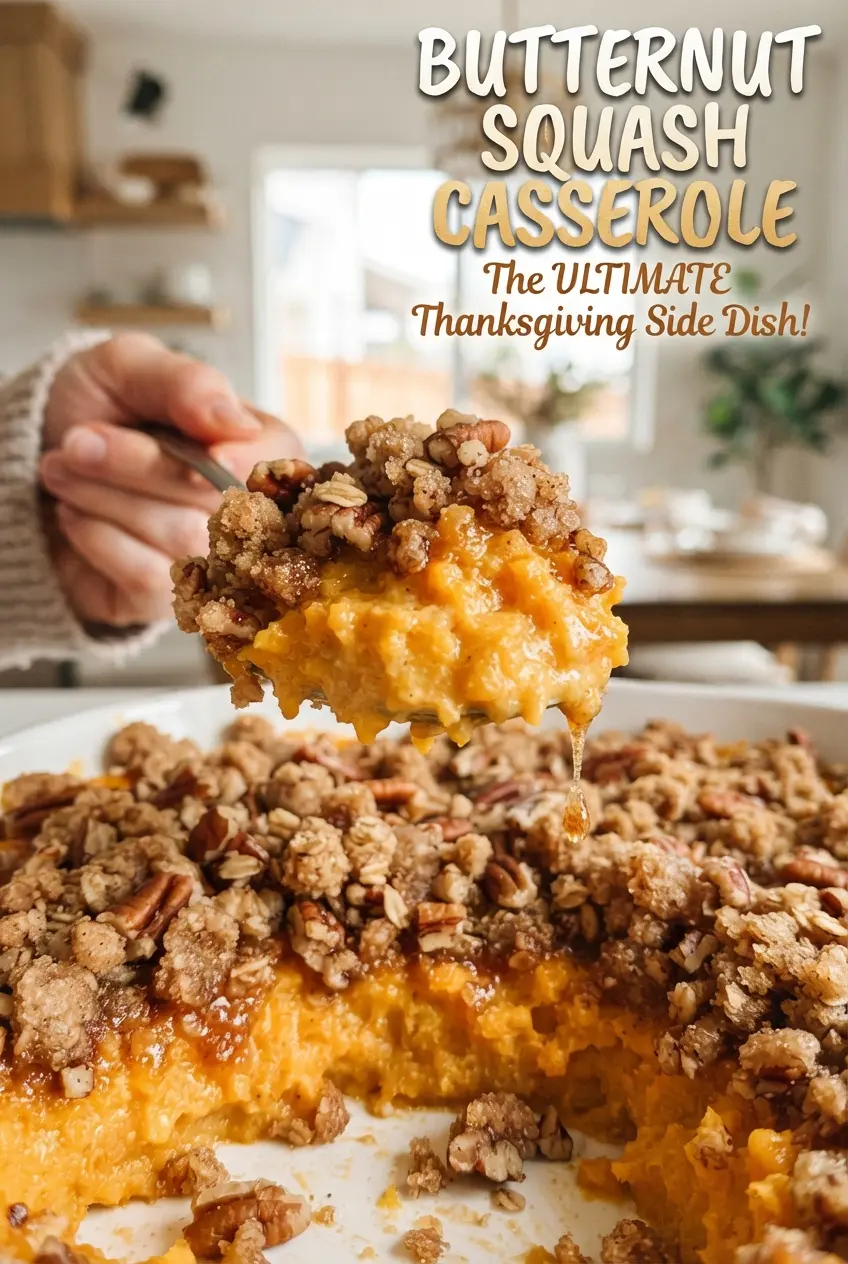
Butternut squash casserole lands on the table with that soft, spoonable center and a pecan topping that turns crisp and bronzed in the oven. The contrast is what keeps people going back for a second serving: creamy squash underneath, buttery crunch on top, and just enough brown sugar and cinnamon to make the whole dish feel rounded without tipping into dessert.
The trick is giving the squash enough time to get truly tender, then draining it well so the casserole bakes up rich instead of watery. Once the squash is mashed with butter, eggs, milk, and vanilla, it sets into a smooth, custardy base that holds together on the plate. The pecan streusel does the rest, and because the topping is mixed separately, it stays crumbly instead of sinking into the filling.
Below, I’ve added the small details that matter most: how to keep the squash from turning loose in the oven, which ingredient swaps work, and what to expect when you reheat leftovers the next day.
The squash baked up silky, not watery, and that pecan topping stayed crunchy all the way through dinner. I drained it really well like you said, and the casserole sliced cleanly instead of sliding around on the plate.
Love that creamy butternut squash casserole with the crunchy pecan streusel? Save it to Pinterest for the next holiday meal or Sunday supper.
The Reason This Casserole Stays Creamy Instead of Watery
Butternut squash carries more moisture than most people expect, and that is where a casserole like this can go wrong. If the squash goes into the oven wet, it loosens the filling and keeps the center from setting up with that smooth, spoonable texture you want. Draining after boiling is not optional here; it’s the difference between a rich casserole and one that turns sloshy on the plate.
The other piece that matters is the egg. It gives the mashed squash enough structure to bake into a soft custard without becoming dense. Brown sugar and vanilla push the squash toward a warmer, rounder finish, while the cinnamon stays in the background instead of taking over.
- Drain the squash hard. Let it sit in a colander for a few minutes after boiling, then give it a stir so the steam escapes. That extra minute pays off in the oven.
- Mash until smooth before baking. A few small lumps are fine, but big chunks make the casserole bake unevenly.
- Don’t overbake the center. The casserole should be set at the edges and just firm in the middle when you pull it out. It finishes tightening as it rests.
What Each Ingredient Is Doing in the Pan
- Butternut squash — This is the base of the dish, and its naturally sweet, velvety flesh gives the casserole its body. Roast would work in a pinch, but boiled squash mashes more evenly for this style of side dish.
- Butter — Butter carries the brown sugar and cinnamon through the filling and helps the topping brown. Use the real thing here; margarine won’t give the same flavor or the same crisp finish.
- Brown sugar — It softens the edges of the squash and deepens the sweetness without tasting sharp. Light brown sugar is fine, and dark brown sugar will make the casserole taste a little more molasses-forward.
- Eggs — Eggs are what let the casserole slice instead of spreading. If you skip them, the filling stays loose and pudding-like.
- Pecans — They bring the crunch that makes the whole dish worth serving. Chop them small enough that the topping holds together, but not so fine that they disappear into the flour.
- Flour — This is what turns the topping into a streusel. Almond flour won’t behave the same way here, but a gluten-free all-purpose blend can work if it measures cup-for-cup.
The Part Where the Casserole Goes From Smooth to Golden
Boiling the Squash Until It Collapses
Cook the squash until a fork slides through the cubes with no resistance at all, then drain it well before anything else goes into the bowl. If the squash still has a little bite, it won’t mash evenly and you’ll get hard bits in the finished casserole. The goal is soft enough that it breaks down easily with a spoon.
Building the Filling
Mash the hot squash with the melted butter, brown sugar, eggs, milk, vanilla, cinnamon, and salt until it looks smooth and glossy. The mixture should spread easily but still hold a little shape. If it looks soupy, the squash was not drained enough, and the casserole will need extra bake time to firm up.
Making the Pecan Streusel
Mix the flour, chopped pecans, remaining butter, and remaining brown sugar until the mixture forms damp crumbs. You want clumps, not paste, because those clumps bake into the golden top. If the topping seems wet, add a spoonful more flour; if it feels dusty, work in a touch more melted butter.
Baking Until the Edges Bubble
Spread the filling in a greased 9×13-inch dish and scatter the topping evenly over the surface. Bake until the top is deeply golden and the edges are bubbling, which tells you the filling underneath is hot and set. If the topping browns too quickly, lay a loose piece of foil over the dish for the last few minutes.
How to Adapt This for a Different Table
Gluten-Free Version
Swap the all-purpose flour in the topping for a 1:1 gluten-free baking blend. The streusel will still crisp up, though it may be a little more delicate when you scoop it.
Less Sweet, More Savory-leaning
Cut the brown sugar in the filling by a few tablespoons and add a little extra salt. You’ll still get the soft squash flavor, but the casserole will read more like a side dish and less like a dessert-adjacent bake.
Pecan-Free Topping
If pecans are off the table, use chopped walnuts or sunflower seeds. Walnuts bring a similar richness, while sunflower seeds give you crunch without the nut flavor.
Storage and Reheating
- Refrigerator: Store covered for up to 4 days. The topping softens a bit, but the flavor holds up well.
- Freezer: This freezes best after baking. Cool completely, wrap tightly, and freeze for up to 2 months. The topping won’t stay as crisp, but the casserole reheats nicely.
- Reheating: Warm covered at 325°F until heated through, then uncover for the last few minutes so the top can crisp again. Microwaving works in a hurry, but it softens the streusel fast.
Questions I Get Asked About This Casserole
Butternut Squash Casserole
Ingredients
Equipment
Method
- Boil the butternut squash for 15 minutes until very tender, then drain well.
- Preheat the oven to 350F and grease a 9x13-inch baking dish.
- Mash the butternut squash with 1/4 cup butter, 1/4 cup brown sugar, eggs, milk, vanilla, cinnamon, and salt until smooth.
- Spread the squash mixture into the greased baking dish.
- Mix the all-purpose flour, pecans, remaining butter, and remaining brown sugar into a crumbly topping, then sprinkle it over the squash.
- Bake at 350F for 35-40 minutes until the topping is golden and the edges bubble.