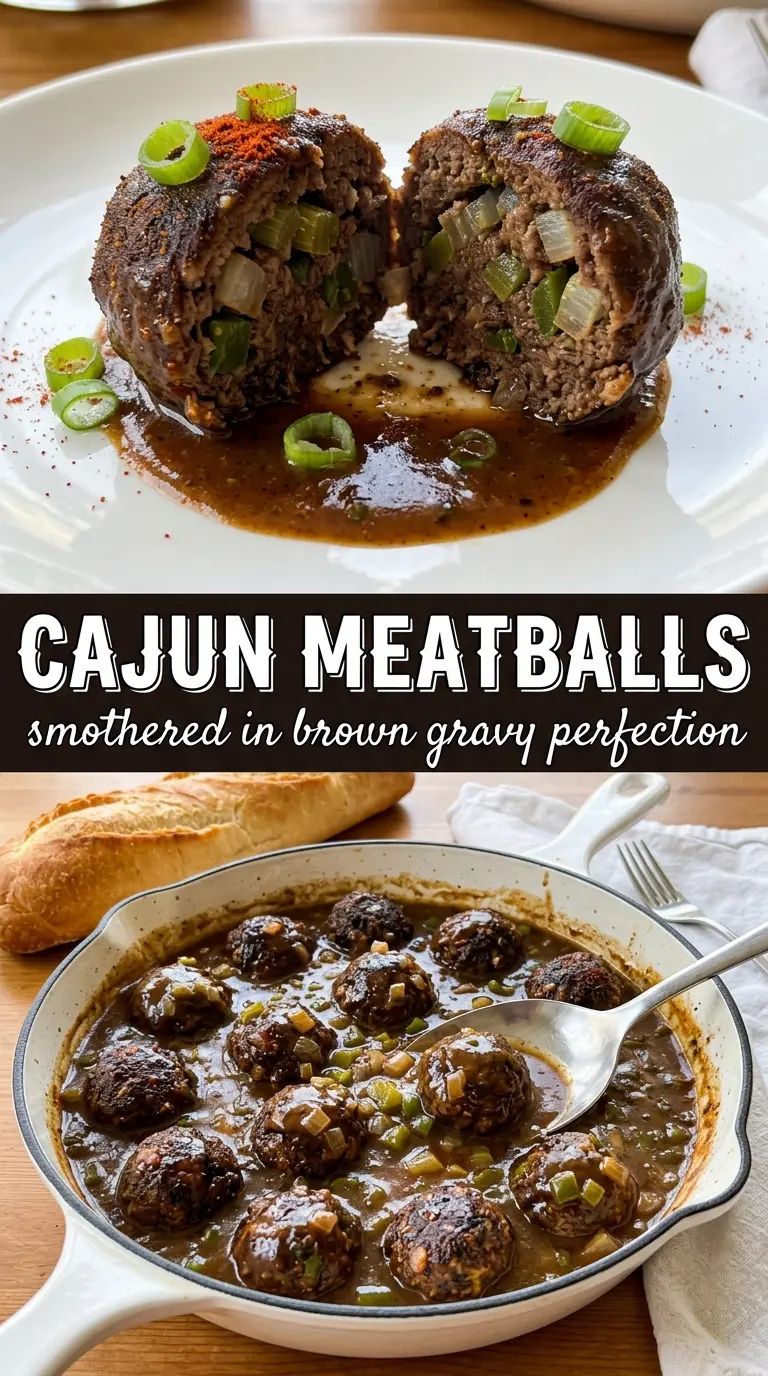
Spice-crusted Cajun meatballs tucked into a dark, glossy brown gravy hit that sweet spot between weeknight easy and restaurant-level comfort. The meatballs stay tender inside, the outside gets a proper sear, and the gravy picks up every browned bit from the pan, so nothing tastes flat or one-note. Served over rice, it turns into the kind of dinner people start hovering over before you’ve even set the skillet down.
What makes this version work is the order of the cooking. The meatballs get browned first, which builds flavor before they ever meet the gravy, and the holy trinity cooks in the same pan so the onions, celery, and bell pepper soak up all those browned drippings. The flour needs a full minute or two to toast, too. That step keeps the gravy from tasting raw and gives it that deep, savory color instead of a pale, pasty finish.
Below, I’ll walk through the parts that matter most: how to keep the meatballs from turning dense, how to get the gravy smooth and dark, and a few useful swaps if you want to adjust the heat or make it work with what’s already in your kitchen.
The gravy turned out dark and silky, and the meatballs stayed tender even after simmering. I served it over rice and my husband said the sauce tasted like it had been cooking all day.
Save these Cajun meatballs in brown gravy for the nights when you want a smoky skillet dinner over rice with almost no cleanup.
The Browning Step That Gives This Gravy Its Depth
If the meatballs go straight into the sauce without a good sear, the whole dish tastes lighter and flatter. Browning them first gives you the savory crust that carries through the gravy, and that crust is what keeps this from tasting like plain beef in sauce. You want a deep brown color on several sides, not a full cook-through at this stage. The center finishes later in the gravy, where it stays juicy instead of drying out in the pan.
The gravy has its own small trap: if the flour cooks too briefly, the sauce comes out pale and pasty instead of dark and nutty. Let it toast in the butter and vegetable mixture until it smells almost like browned toast. That little bit of extra color is what makes the sauce taste like it has real body.
What Each Ingredient Is Doing in the Skillet
- Ground beef — A blend with some fat keeps the meatballs tender and gives the gravy something rich to cling to. Very lean beef can work, but the meatballs will be firmer and the sauce won’t taste as full.
- Cajun seasoning — This is the backbone of the dish, so use one you already like the flavor of. Some blends are saltier than others, which is why the recipe says to season carefully at the end instead of dumping in extra salt too early.
- Breadcrumbs and egg — These hold the meatballs together without making them bouncy. If you use too much breadcrumb, the texture gets dry and crumbly; if you skip the egg, they’re harder to keep intact in the skillet.
- The holy trinity — Onion, celery, and green bell pepper build the base of the gravy and bring that unmistakable Cajun backbone. Don’t rush this part. Softened vegetables taste sweet and rounded, while undercooked ones stay sharp and raw.
- Beef broth — This is where the gravy gets its main savory note, so use a broth you’d actually want to sip. If you only have stock, that works too, but you may need a little extra seasoning at the end.
- Worcestershire sauce — A small amount adds depth and a little tang that makes the gravy taste cooked, not just thickened. There isn’t a great substitute for the same complexity, though a splash of soy sauce can help in a pinch.
Building the Gravy Around the Brown Bits
Mixing the Meatballs Without Packing Them Tight
Combine the beef, breadcrumbs, egg, Cajun seasoning, garlic, parsley, salt, and pepper just until everything looks evenly distributed. Overmixing makes the meatballs dense and springy, which is the opposite of what you want here. Roll them into 1.5-inch balls with light pressure; if you compress them hard, they’ll hold together, but they won’t stay tender.
Seared Meatballs First, Sauce Second
Lay the meatballs in a hot skillet with a little space between them and let the first side develop color before turning. If they stick a little at first, they’re not ready yet; once they’re browned, they’ll release more easily. Don’t cook them all the way through here. The center should still be underdone when they come out of the pan.
Cooking the Holy Trinity Until It Softens
Use the same skillet so the vegetables can pick up the meat drippings. Stir the onion, bell pepper, and celery until they soften and lose their raw edge, about 5 minutes. If the pan looks dry, the butter should loosen the browned bits on the bottom. Those bits are part of the flavor, so scrape them up as the vegetables cook.
Finishing the Gravy and Bringing Everything Together
After the garlic goes in for just 30 seconds, sprinkle the flour over the vegetables and stir until it turns dark golden. Whisk in the broth slowly so the gravy stays smooth, then add the Worcestershire and Cajun seasoning. When it thickens enough to coat a spoon, return the meatballs and simmer covered until they’re cooked through. If the sauce gets too thick, a splash of broth loosens it right back up.
How to Adjust the Heat, the Richness, and the Make-Ahead Plan
Milder Cajun Meatballs
Use a gentler Cajun seasoning and start with less of it in the gravy. You’ll keep the smoky, savory character, but the finished dish will read warmer than hot. If your blend is already salty, hold back on adding extra salt until the end.
Gluten-Free Version
Swap the breadcrumbs for a gluten-free breadcrumb or crushed gluten-free crackers, and use a gluten-free broth and Worcestershire sauce. The gravy thickens with flour, so use a good 1:1 gluten-free flour blend if needed. The texture stays close to the original when the meatballs are handled gently.
Dairy-Free by Default
This recipe already works without dairy if you use butter or a dairy-free butter substitute for the gravy base. The flavor stays rich because the browned meat, vegetables, and broth do the heavy lifting. If you use a plant-based butter, choose one meant for cooking so it doesn’t separate in the pan.
Make It Ahead for a Faster Dinner
You can form the meatballs earlier in the day and keep them covered in the fridge until dinnertime. You can also make the gravy ahead and rewarm it gently before adding the meatballs. Hold the final simmer until just before serving so the meatballs stay juicy and the sauce keeps its glossy texture.
Storage and Reheating
- Refrigerator: Store leftovers in an airtight container for up to 4 days. The gravy thickens as it chills, which is normal.
- Freezer: This freezes well for up to 2 months. Cool it completely first, then freeze the meatballs and gravy together in a sealed container.
- Reheating: Warm gently on the stove over low heat with a splash of broth or water. High heat can tighten the meatballs and make the gravy separate before it’s hot through.
Questions I Get Asked About This Recipe

Cajun Meatballs in Brown Gravy
Ingredients
Equipment
Method
- In a bowl, mix ground beef, breadcrumbs, egg, Cajun seasoning, garlic, minced, fresh parsley, chopped, salt, and pepper until evenly combined. Roll into 1.5-inch meatballs and set aside.
- Heat a cast iron skillet over medium-high heat. Sear the meatballs on all sides until browned, 6-8 minutes total, then remove and set aside.
- In the same pan, melt butter and cook onion, diced, green bell pepper, diced, and celery, diced for 5 minutes until softened. Keep scraping up the browned bits for more smoky flavor.
- Add garlic, minced and cook for 30 seconds, until fragrant. Sprinkle flour over the vegetables and cook 1-2 minutes until dark golden.
- Whisk in beef broth, Cajun seasoning, and Worcestershire sauce. Simmer 3-4 minutes, whisking occasionally, until the gravy thickens and looks glossy.
- Return the browned meatballs to the gravy, cover, and simmer 10 minutes until cooked through. Serve hot with white rice over the top of the meatballs.