Golden, crackly cinnamon rolls cooked over a campfire have a way of disappearing before the icing even settles. The outside turns toasty and caramelized while the inside stays soft and tender, which is exactly why this version earns a spot in the camping breakfast rotation. It feels playful, but it still tastes like an actual treat, not a gimmick.
The trick is wrapping the dough in a tight spiral and cooking it over coals instead of open flames. Coals give you steady heat, which is what keeps the outside from scorching before the center has time to bake through. A little aluminum foil on the stick can help with cleanup and gives the dough something smooth to grip while you rotate it.
Below you’ll find the simplest way to keep the rolls from sliding, burning, or staying doughy in the middle, plus a few smart swaps for different setups. If you’ve ever wanted breakfast that tastes a little like dessert and feels like an event, this one delivers.
We cooked these over the coals and they browned evenly without burning. The spiral held on the stick the whole time, and the icing melted right into the warm layers.
Save these campfire cinnamon rolls on a stick for the morning you want a warm, swirled breakfast with smoky edges and dripping icing.
The Part That Keeps the Rolls from Burning Before They Bake
Campfire heat moves fast, and that’s the main reason cinnamon rolls on a stick fail. Put them over flames and the outside scorches before the center sets. Keep them over glowing coals, and the heat stays even enough to cook the spiral through while the sugar in the dough turns golden instead of black.
Rotation matters more than speed here. The stick should move constantly, but not frantically. If you spin too slowly, one side gets too dark. If you race it, the dough never has time to set and it slips or tears. The goal is a dry, golden surface with no raw dough peeking through the layers.
- Coals, not flames — Coals give you steady radiant heat. Flames are too aggressive and will char the outside long before the center is done.
- Tight spiral wrapping — The tighter the dough is wound, the better it clings to the stick and the more evenly it bakes.
- Constant turning — Turn the stick the whole time so the roll browns on all sides instead of getting one burnt strip.
What the Canned Dough Is Actually Doing Here
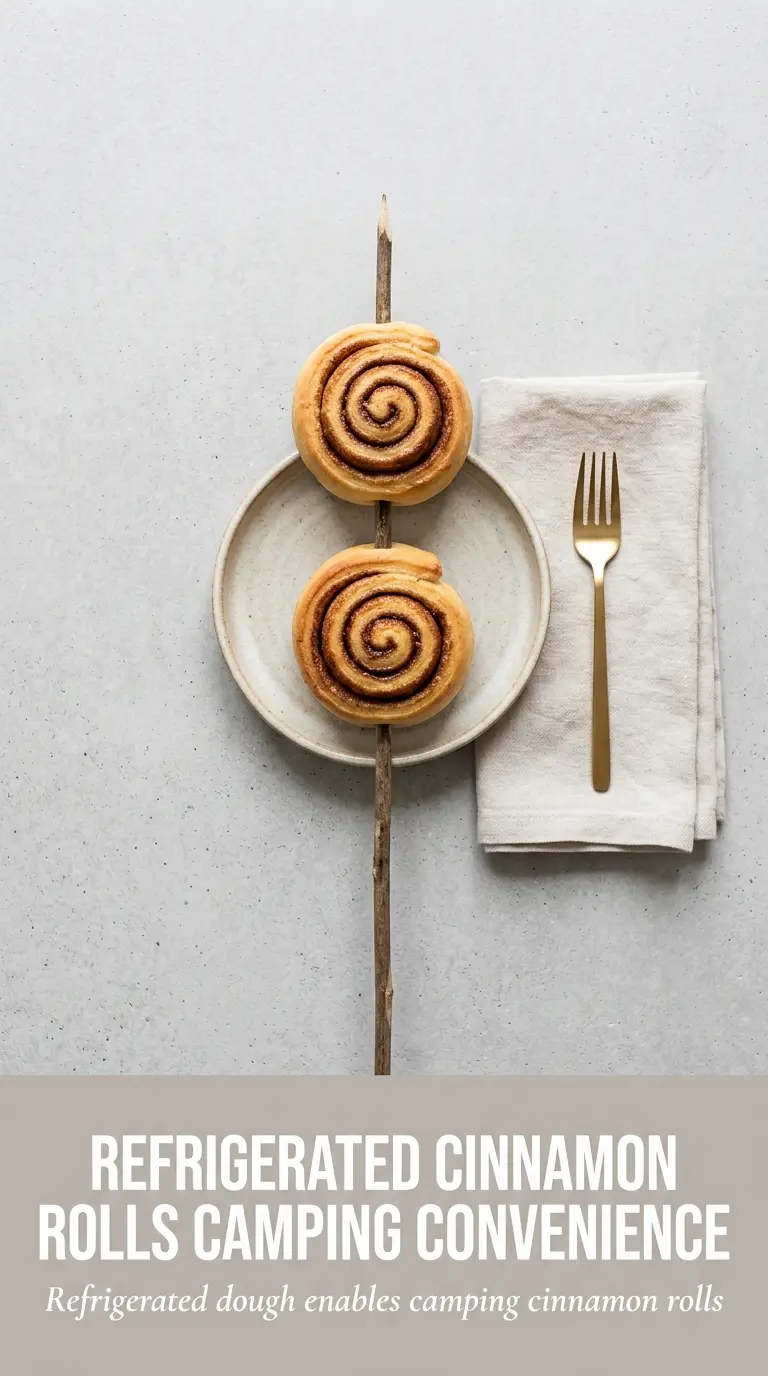
- Refrigerated cinnamon rolls — This is the shortcut that makes the recipe work. The dough is already portioned, sweetened, and soft enough to wrap without snapping. Homemade dough can work, but it needs more time and a firmer chill so it doesn’t stretch into a mess.
- Icing packet — The included icing melts into the warm spiral and gives you that classic finish without extra prep. If you want a thicker drizzle, wait until the rolls cool for a full minute or two before spooning it on.
- Roasting sticks — Use sturdy, food-safe sticks that let you rotate the roll without wobbling. Thin skewers are too flimsy for dough this soft.
- Aluminum foil — A narrow strip wrapped near the end of the stick can help the dough grip better and makes cleanup easier when sugar starts to caramelize.
Getting the Spiral Cooked Through Without Losing the Shape
Unrolling and Winding the Dough
Separate each cinnamon roll and unroll it into a long strip. Then wind it around the end of the roasting stick in a tight spiral, pressing lightly so the layers touch. If the dough feels sticky or warm from the package, a few minutes in the cooler air helps it hold shape better. Leave a little space at the very end so the roll doesn’t slide off when the outer layer expands.
Cooking Over the Coals
Hold the rolls over hot coals, not direct flames, and keep the stick moving the whole time. You’re looking for a deep golden color and a surface that feels set when you nudge it gently with tongs. If the dough bubbles and slumps, the heat is too high. Pull it back and give it another minute over a cooler spot until the center catches up.
Cooling and Finishing
Let the rolls rest for about 2 minutes before sliding them off the stick. That short pause keeps the spiral from tearing and gives the steam a chance to settle so the icing doesn’t run off instantly. Drizzle the icing while the rolls are still warm enough to melt it into the ridges. That’s when you get the best contrast between the crisp edges and the soft middle.
Add a Skewer of Apple Slices
Thread a few apple slices onto the stick below the roll or serve them on the side. The tart fruit cuts through the sweet icing and gives the campfire breakfast a little freshness without changing the method.
Make It Dairy-Free
Use a dairy-free canned cinnamon roll if you can find one, then swap in a simple powdered sugar glaze made with plant milk instead of the included icing. You lose a little of that classic sticky finish, but the spiral and campfire-toasted edges still carry the recipe.
Turn It Into a Camping Dessert
Add a pinch of cinnamon sugar to the outside before roasting and finish with chopped toasted pecans if you’re serving these after dinner. That pushes the flavor a little deeper and gives you more crunch around the edges.
Storage and Reheating
- Refrigerator: Best eaten fresh, but leftovers keep for 1 day wrapped airtight. The texture softens as they sit.
- Freezer: Not a good freezer recipe. The baked spiral turns gummy after thawing.
- Reheating: Warm leftovers wrapped in foil over low campfire heat or in a 300°F oven for a few minutes. Direct high heat dries out the dough and burns the sugar before the center warms.
Answers to the Questions Worth Asking
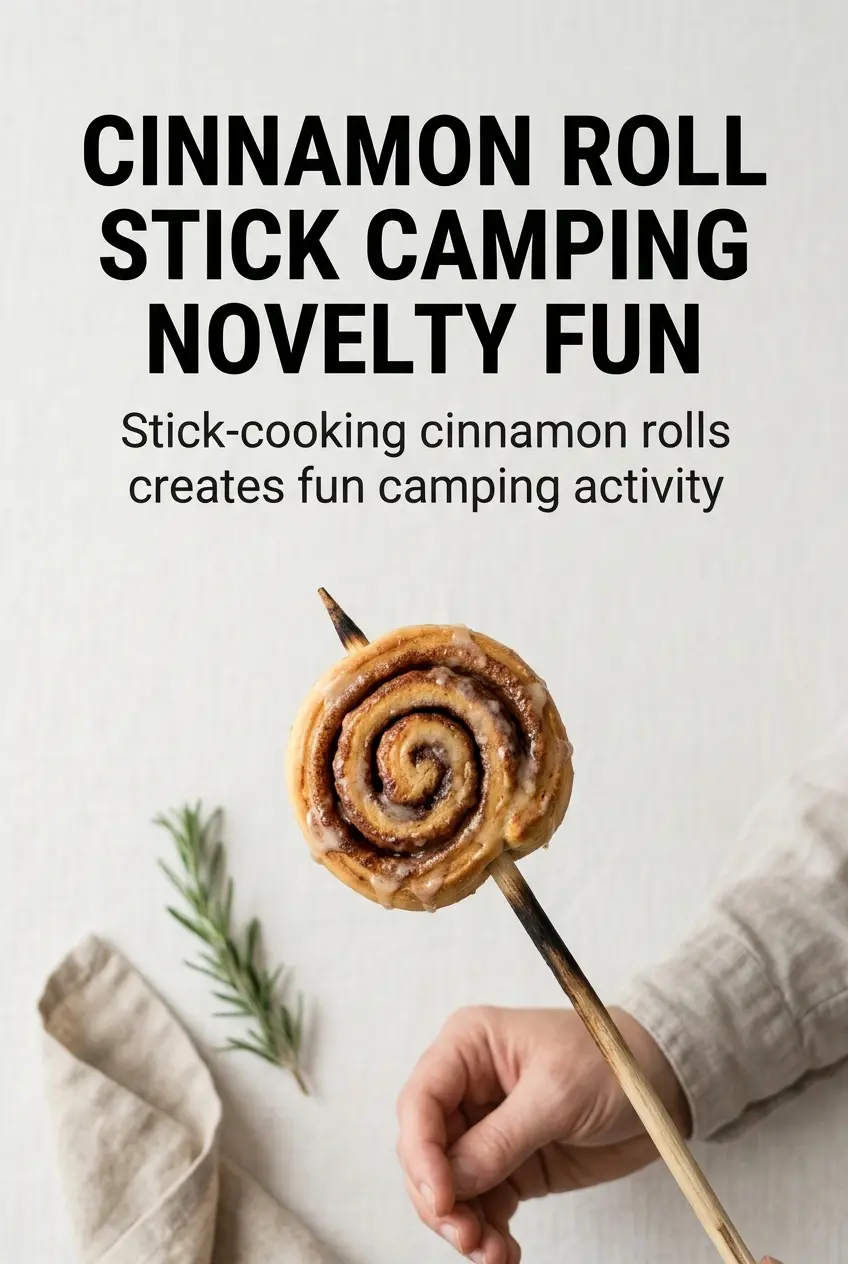
Campfire Cinnamon Rolls on a Stick
Ingredients
Equipment
Method
- Separate the refrigerated cinnamon rolls and unroll each one into a long strip.
- Wrap each strip around the end of a roasting stick in a tight spiral so the dough layers touch closely.
- Hold the wrapped rolls over campfire coals (not flames) and rotate constantly for 10-12 minutes until golden brown and cooked through.
- Remove the rolls from the heat and let cool for 2 minutes.
- Slide the roll off the stick and drizzle with the included icing.
- Serve warm while the icing is still soft.