Steaming campfire ramen hits a sweet spot that a lot of outdoor meals miss: it’s fast, cheap, and still feels like an actual bowl of dinner instead of a snack pulled from a cooler. The noodles turn silky, the eggs poach right in the broth, and the frozen vegetables bring enough color and texture to make the whole pot feel complete.
What makes this version work is timing. The noodles go in first so they can start softening, then the eggs cook gently in the simmering broth instead of turning rubbery in a hard boil. Reserving the seasoning packets until the end keeps the broth from getting overly salty before you know how much flavor you want. That matters even more over a campfire, where heat can swing fast and a pot can go from calm simmer to rolling boil in a minute.
Below, you’ll find the small details that keep the noodles from going mushy, plus a few simple swaps that make this easy to adapt when you’re cooking with whatever you packed.
The noodles stayed springy and the eggs poached perfectly right in the pot. I was worried the vegetables would get soggy, but they held up and made the ramen feel like a full meal after a long hike.
Save this campfire ramen for the nights when you want a hot, one-pot meal with springy noodles and poached eggs after a long day outside.
The Trick to Keeping Campfire Ramen Brothy, Not Mushy
Instant noodles don’t need long over the fire. The mistake most people make is letting them sit in boiling water until they’re soft enough to fall apart, and by then the broth has turned cloudy and the texture goes from springy to tired. Here, the noodles start cooking first, then the eggs finish in the same pot while the ramen is still just barely tender.
The other thing that matters is keeping the heat controlled. A hard boil will break the noodles and can make the eggs bounce around in the pot instead of setting softly. Aim for a steady simmer, where the surface moves but doesn’t aggressively churn. That’s the difference between ramen that tastes like a proper bowl and ramen that feels like a rushed compromise.
What Each Ingredient Is Actually Doing in the Pot
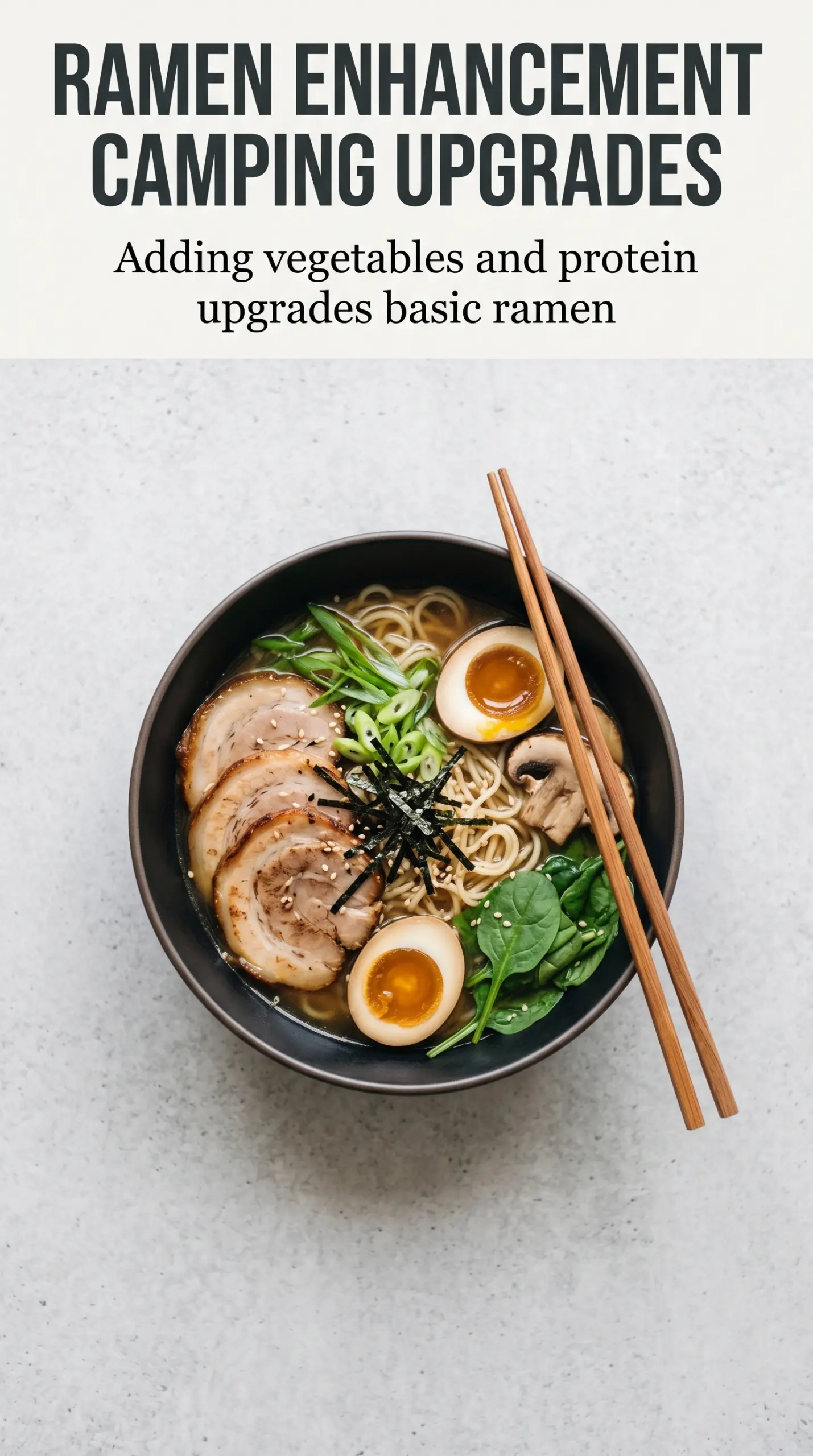
- Instant ramen noodles — These are the backbone of the meal and the part that turns a few pantry items into dinner. Any basic package works here, and the cheapest version is fine because you’re not relying on the seasoning packet for quality.
- Frozen mixed vegetables — Frozen vegetables are the smart camp choice because they’re already cut, already washed, and they add texture without any prep. Don’t thaw them first; they go straight in from frozen and help cool the broth just enough to keep the eggs tender.
- Eggs — Cracking the eggs directly into the pot gives you soft poached eggs that feel heartier than hard-boiled halves. Fresh eggs hold together best, but older eggs can still work if you lower them in carefully and don’t stir the pot for the first minute.
- Soy sauce — This gives the broth a deeper, saltier edge if the seasoning packet isn’t enough on its own. Add it at the end and taste as you go, because the ramen packet already brings plenty of salt.
- Green onions — These bring a sharp, fresh finish that cuts through the broth and keeps the bowl from tasting flat. Slice them ahead of time and keep them in a zip-top bag so they’re ready when the ramen is done.
Building the Bowl in the Right Order Over the Fire
Getting the Water to a True Simmer
Bring the water to a boil first, then let it settle just a little before the noodles go in. Over a campfire, the heat keeps surging, so if the pot is raging you’ll end up with broken noodles and cloudy broth. You want bubbles breaking the surface in a steady, even way, not a furious rolling boil.
Cooking the Noodles and Vegetables Together
Add the ramen noodles and frozen vegetables at the same time, then stir gently to separate the noodles as they soften. Three minutes is usually the sweet spot, but start checking early if your fire runs hot because instant noodles go from perfect to swollen fast. If the vegetables seem cold and firm, keep going for another minute rather than cranking the heat.
Poaching the Eggs in the Broth
Crack the eggs directly into the pot after the noodles have started to tenderize. Leave them alone for the first minute so the whites can set around the yolks instead of shredding into the broth. If you want the yolks softer, pull the pot off the heat as soon as the whites turn opaque.
Seasoning and Finishing
Stir in the seasoning packets only after the eggs are cooked and the noodles are where you want them. That keeps you from over-salting the broth while you’re still building the pot. Finish with sliced green onions, a splash of soy sauce if needed, and hot sauce for a little heat.
How to Change This Ramen Without Losing the Good Part
Make It Vegetarian and Still Substantial
This recipe already leans vegetarian, so the main thing is checking the ramen seasoning packet if you’re strict about ingredients. If you want more body, add extra vegetables or a handful of tofu cubes at the same time as the noodles. The broth stays light, but the bowl eats like a full meal.
Gluten-Free Ramen Swap
Use gluten-free instant noodles and a gluten-free seasoning or bouillon in place of the packet. The texture may be a little less springy than wheat noodles, so watch the pot closely and pull them as soon as they’re tender. Overcooking is what turns gluten-free noodles mushy fastest.
Make It Spicier Without Changing the Recipe
Hot sauce at the end gives the cleanest heat, while chili crisp adds more richness and crunch if you packed it. Stir heat in after the seasoning so you can taste the broth first, then build from there. That keeps the spice level under control instead of overpowering the vegetables and eggs.
Storage and Reheating
- Refrigerator: Store leftovers in a covered container for up to 2 days. The noodles will keep soaking up broth, so expect them to soften.
- Freezer: This doesn’t freeze well. The noodles turn mealy and the eggs lose their texture, so it’s better cooked fresh.
- Reheating: Reheat gently on the stove with a splash of water or broth to loosen it back up. Don’t boil it hard again, or the noodles will break and the eggs will turn rubbery.
Answers to the Questions Worth Asking
Ramen While Camping
Ingredients
Equipment
Method
- Bring 6 cups water to a boil in a pot over a campfire until rolling bubbles are visible at the surface.
- Add 4 packages instant ramen noodles (reserve seasoning packets) and 1 cup frozen mixed vegetables, stirring so noodles separate and vegetables disperse.
- Cook for 3 minutes, keeping the water at a steady boil and watching for the noodles to soften at the edges.
- Crack 4 eggs directly into the pot and gently avoid breaking the yolks, so the whites begin to set around the noodles.
- Continue cooking for 3-4 minutes until the eggs are poached and the noodles are tender, with broth visibly steaming from the pot.
- Add the reserved ramen seasoning packets and stir to combine until the broth turns evenly seasoned and glossy.
- Divide into bowls and top with green onions, soy sauce, and hot sauce, letting the toppings sit briefly while the bowls steam.