Cheesy chicken broccoli orzo lands right in the sweet spot between comforting and practical: tender chicken, small bites of broccoli, and orzo coated in a cheddar cream sauce that clings to every spoonful. It eats like a skillet dinner that took a lot more effort than it did, which is exactly why it keeps ending up back on the table.
What makes this version work is the sequence. The chicken gets browned first, then the garlic and orzo pick up all that flavor left in the pan before the broth and cream go in. That little bit of toasting gives the pasta a better base, and it keeps the sauce from tasting flat. The broccoli goes in near the end so it stays bright and just tender instead of turning dull and soft.
Below, I’ll walk through the one place this dish usually goes sideways, the ingredient choices that matter most, and a few ways to adjust it without losing the creamy, cheesy finish.
The orzo turned out creamy without getting mushy, and the broccoli stayed bright and crisp-tender. I added the cheese off the heat like you said, and the sauce came together smooth instead of grainy.
Save this cheesy chicken broccoli orzo for the nights when you want a creamy one-pan dinner with real cheddar pull.
The Trick That Keeps the Orzo Creamy Instead of Gummy
Orzo can go from silky to gluey fast, and the difference usually comes down to two things: too little liquid and too much heat. This dish needs an uncovered simmer so the pasta can release starch gradually while the cream reduces around it. If you cover the pan, the liquid hangs around too long and the orzo softens before the sauce thickens enough to coat it.
The other mistake is walking away during the final few minutes. Orzo likes attention. Stirring often keeps it from catching on the bottom and helps the starch distribute evenly through the sauce, which is what gives you that spoon-coating texture instead of a dry skillet with some sauce pooled around the edges.
- Chicken browning — A good sear gives the finished dish a deeper savory base. If the pan looks crowded, cook the chicken in two batches so it actually browns instead of steaming.
- Uncovered simmer — This is what lets the sauce reduce while the orzo cooks. The liquid should bubble gently, not boil hard, or the dairy can separate and the pasta can overcook on the outside before the center is tender.
- Cheese at the end — Sharp cheddar and Parmesan melt best after the heat drops a bit. If they go in over high heat, the sauce can turn grainy instead of smooth.
What Each Ingredient Is Actually Doing in the Pan

- Chicken breasts — They stay lean and tender when cut into bite-sized pieces and cooked quickly. Chicken thighs work too if you want a richer result and don’t mind a little extra richness in the finished dish.
- Orzo — This pasta is what gives the dish its risotto-like feel without the constant stirring. There isn’t a perfect substitute that behaves exactly the same, though small pasta like ditalini can work in a pinch with a little more liquid and a closer eye on the texture.
- Heavy cream — It softens the sharpness of the cheddar and helps the sauce stay smooth. Half-and-half can work, but the sauce will be thinner and a little less luxurious.
- Sharp cheddar — This is the main flavor driver, so use a cheddar you actually like eating on its own. Pre-shredded cheese works, but freshly shredded melts more smoothly because it doesn’t have anti-caking starches on it.
- Broccoli florets — Cutting them small matters here. Tiny florets cook in time with the orzo and stay bright green instead of going gray and soft.
Building the Sauce So It Stays Smooth
Searing the Chicken First
Season the chicken before it hits the pan, then let it sit long enough to pick up color. You want golden edges, not pale steamed pieces, because that browned fond is part of the flavor in the sauce. If the chicken is crowded, it will release moisture and lose that color, so give it enough space to sear.
Toasting the Orzo and Starting the Base
Once the garlic has smelled fragrant for just 30 seconds, add the orzo and stir it around the pan. That quick toast keeps the pasta from tasting bland and gives the final dish a nuttier backbone. Pour in the broth and cream right after that so the garlic doesn’t burn and the orzo starts absorbing liquid right away.
Cooking Until the Sauce Tightens
Let the pan simmer uncovered, stirring often, until the orzo is tender and the liquid has reduced to a creamy sauce. The mixture should look loose at first, then gradually thicken as the pasta releases starch. If the pan gets dry before the orzo is done, add a splash of broth and keep going; if it looks soupy at the end, give it another minute or two with the heat on and the spoon moving.
Finishing with Cheese and Broccoli
Add the broccoli in the last few minutes so it stays vivid and crisp-tender. Pull the pan off the heat before stirring in the cheddar and Parmesan, then let the residual warmth melt them in. That off-heat finish is what keeps the sauce glossy instead of stringy or broken.
How to Adapt This for Different Nights and Different Fridges
Make It Gluten-Free
Use a gluten-free orzo-style pasta and watch the liquid closely, since some gluten-free pastas soften faster and need a little less time. The texture will still be creamy, but it may not hold quite as long on the stove before getting soft.
Swap in Chicken Thighs for More Richness
Boneless thighs bring a little more fat and stay tender even if they simmer a minute longer. The sauce ends up a touch richer, and the chicken pieces feel juicier in the final bowl.
Make It Lighter Without Losing the Creamy Texture
Use half-and-half instead of heavy cream and reduce the heat a little when the dairy goes in. The sauce won’t be as thick or plush, but the cheddar still carries the dish if you keep the simmer gentle.
Storage and Reheating
- Refrigerator: Store for up to 4 days. The orzo will absorb more sauce as it sits, so the leftovers get thicker.
- Freezer: It freezes, but the cream sauce can separate a bit when thawed. If you do freeze it, cool it completely and thaw overnight in the fridge before reheating.
- Reheating: Warm it gently on the stovetop with a splash of broth or milk, stirring often. High heat is the main reason creamy pasta turns oily or grainy when reheated.
Answers to the Questions Worth Asking
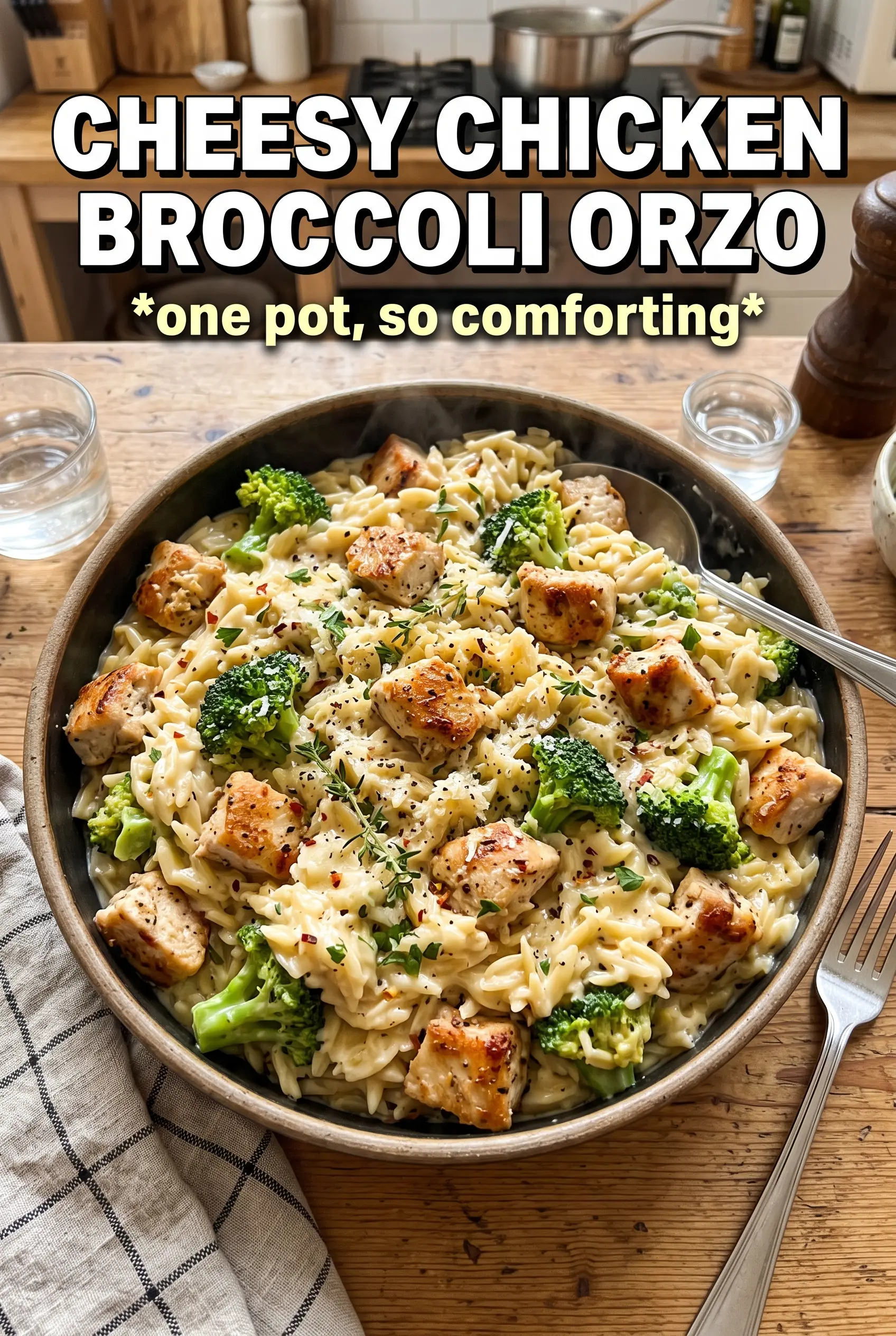
Cheesy Chicken Broccoli Orzo
Ingredients
Equipment
Method
- Season the chicken pieces with salt, pepper, garlic powder, and smoked paprika to taste. Heat olive oil in a large skillet over medium-high heat and cook the chicken for 5-6 minutes until golden and cooked through, then remove.
- Add garlic to the same pan and cook for 30 seconds until fragrant. Stir in orzo and toast for 1 minute, then pour in chicken broth and heavy cream and bring to a simmer.
- Simmer the orzo uncovered for 8-10 minutes, stirring often until it’s tender. Add the broccoli florets in the last 4 minutes of cooking until bright green and just tender.
- Stir in the shredded cheddar cheese and Parmesan cheese until melted and the orzo is creamy. Return the cooked chicken to the pan and stir to combine, then taste and adjust seasoning.
- Garnish with fresh parsley and serve while the cheese is still melted and glossy.