Cheesy meatloaf casserole bakes up with everything people love about a classic meatloaf, only easier to serve and a lot more rewarding at the table. The loaf stays tender in the middle, the cheddar melts into pockets through the beef, and the ketchup glaze turns sticky and caramelized on top instead of sliding off the sides. Every slice holds together cleanly, which is exactly what you want when dinner needs to land well and not fall apart on the plate.
The trick here is keeping the mixture balanced. Breadcrumbs and milk soften the beef, the eggs bind it, and the onion and garlic are fine enough to disappear into the loaf instead of leaving crunchy bits behind. Folding part of the cheese into the meat mixture gives you those savory, melty streaks inside, while the rest goes on near the end so it melts without overcooking or turning greasy.
Below, you’ll find the timing that keeps the center juicy, the glaze schedule that gives you the best top, and a few smart variations if you need to work with what you’ve got on hand.
The cheddar stayed melted through the middle and the glaze got sticky instead of watery. I added the second layer at the end like you said and it came out with the best crust on top.
Save this cheesy meatloaf casserole for the night you want tender beef, melted cheddar, and a caramelized ketchup glaze in one pan.
The Part That Keeps the Loaf Tender Instead of Dense
Most meatloaf goes wrong because the mixture gets packed down too tightly or baked until every bit of moisture is gone. Here, the breadcrumbs and milk do more than stretch the beef; they hold onto moisture so the loaf stays soft after it rests. The cheese changes the texture too, but only if you fold it in gently. If you mash it around too much, you end up with a heavy mixture that bakes up tight.
The other thing that matters is the size of the onion and garlic pieces. Finely diced onion melts into the meat as it bakes, while minced garlic spreads through the loaf without leaving harsh pockets. You want the mixture evenly combined, not kneaded like bread. Stop mixing as soon as everything looks uniform and the beef still feels loose in the bowl.
What Each Ingredient Is Doing in This Casserole

- Ground beef — Use 80/20 if you can. That bit of fat keeps the casserole juicy and helps the cheese taste richer. Leaner beef works, but it needs the rest time and the glaze to carry the moisture.
- Breadcrumbs and milk — This is the panade, and it is what keeps the loaf from baking up like a brick. The breadcrumbs soak up the milk first, then disperse through the meat so the finished slices stay tender.
- Eggs — They bind the mixture so the casserole cuts cleanly after resting. Without them, the loaf tends to crumble when you slice into it.
- Sharp cheddar — Sharp cheddar gives you flavor that stands up to the beef and glaze. Pre-shredded cheese will melt fine, but freshly shredded cheese melts smoother and gives you better pockets inside the loaf.
- Ketchup glaze — The brown sugar helps it caramelize, and the Worcestershire adds depth so it tastes more like a glaze than straight ketchup. Spreading it in two stages keeps the top glossy without burning before the center is done.
Building the Loaf So the Cheese Stays Inside and the Glaze Stays on Top
Mix the base without compacting it
Combine the beef, breadcrumbs, eggs, milk, onion, garlic, Worcestershire, garlic powder, salt, and pepper in a large bowl. Use your hands or a fork and stop once the mixture looks evenly blended. If you overwork it, the proteins tighten and the casserole bakes up dense instead of sliceable. The mixture should hold together when squeezed, but still look loose in the bowl.
Fold in the cheese and shape it gently
Work in 1.5 cups of the cheddar last, just until it’s distributed. Press the mixture into a greased 9×13 baking dish and shape it into a loaf in the center. Don’t pack it down hard; a light hand keeps the texture tender. If the loaf looks flattened against the pan, it will bake up more like a meat brick than a casserole.
Glaze in two stages for a sticky top
Mix the ketchup, brown sugar, and Worcestershire, then spread half over the loaf before baking. After 50 minutes, add the remaining glaze and the rest of the cheddar, then bake again until the cheese is melted and the center reaches 160°F. The first layer bakes into the surface and the second one stays glossy and sticky. If you add all the glaze at the start, the sugar can darken too fast before the meat is done.
Let the casserole rest before slicing
Pull the dish from the oven and let it sit for 10 minutes. That pause lets the juices settle back into the meat, so the slices don’t run apart on the cutting board. If you cut too soon, the cheese and juices will spill out and the slices won’t hold their shape. Use a sharp knife and a spatula to lift each piece cleanly.
How to Adapt It When You Need a Different Finish
Gluten-Free Version
Swap the breadcrumbs for certified gluten-free breadcrumbs in the same amount. You still get the same tender texture because the job of the crumbs is to hold moisture, not add flavor. If you use crushed crackers or oats instead, the texture shifts a little, but it still works.
Lighter Beef Option
If you use leaner ground beef, keep the rest time and don’t skip the glaze. Less fat means less built-in moisture, so the panade matters even more. The result will still slice well, but it won’t taste quite as rich as the 80/20 version.
Make It More Like a Stuffed Meatloaf Casserole
Reserve a little cheddar and tuck it through the center of the loaf as you press it into the dish. That gives you a thicker cheesy middle and a more dramatic slice, but it also raises the risk of leakage if the cheese sits too close to the pan edge. Keep the cheese centered and surrounded by meat for the cleanest cut.
Storage and Reheating
- Refrigerator: Store leftovers covered for up to 4 days. The texture firms up a little, but the flavor gets even better after a night in the fridge.
- Freezer: It freezes well in slices or as a whole loaf. Wrap tightly, then thaw overnight in the refrigerator before reheating so the cheese doesn’t turn grainy.
- Reheating: Warm covered in a 325°F oven until hot in the center, or reheat slices gently in the microwave with a damp paper towel on top. High heat dries out the beef fast, so use low and steady heat.
Answers to the Questions Worth Asking
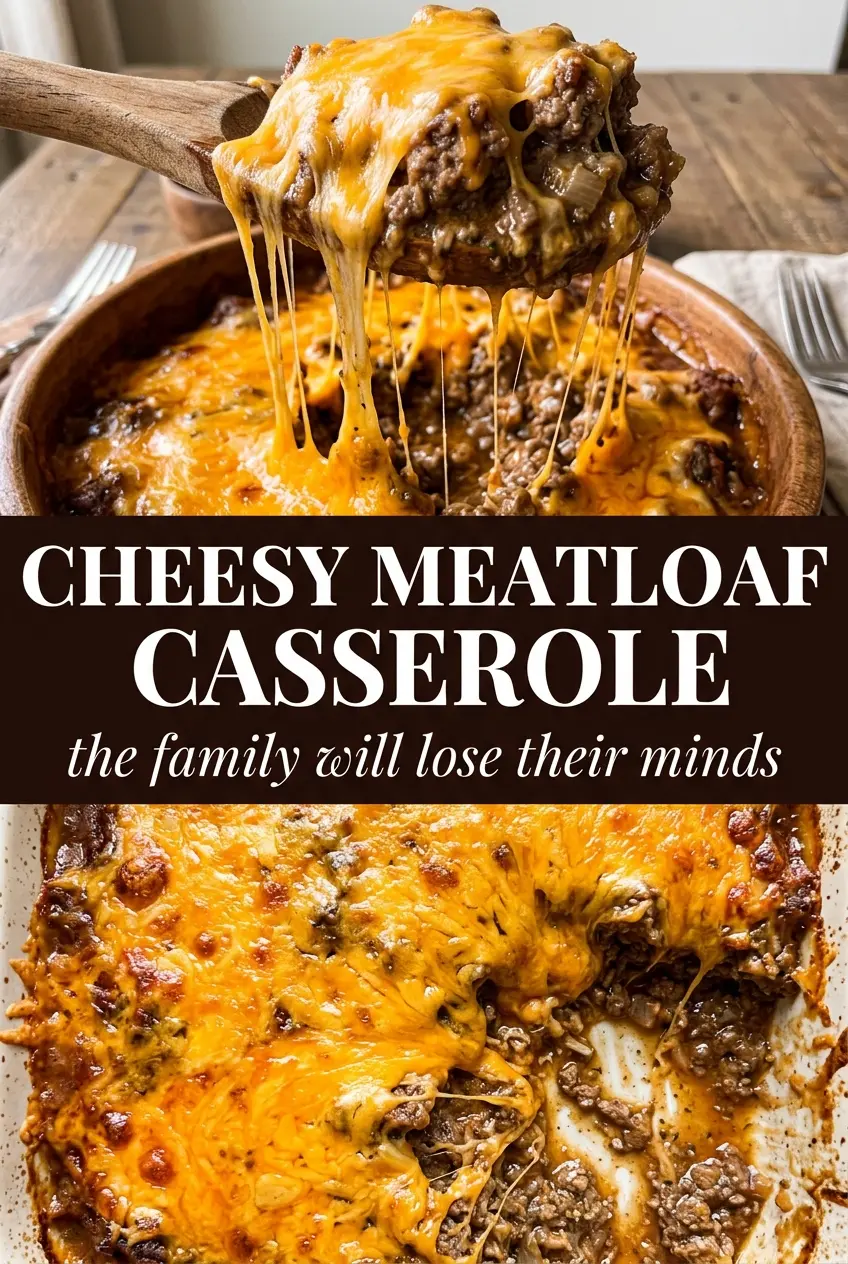
Cheesy Meatloaf Casserole
Ingredients
Equipment
Method
- Preheat the oven to 350°F and grease a 9x13 baking dish so the meatloaf releases cleanly.
- In a mixing bowl, combine ground beef, breadcrumbs, eggs, whole milk, onion, garlic, Worcestershire sauce, garlic powder, salt, and black pepper.
- Fold in 1.5 cups shredded sharp cheddar, then press the mixture into the baking dish and shape it into a loaf.
- Mix the glaze ingredients (ketchup, brown sugar, and Worcestershire sauce) and spread half over the top.
- Bake at 350°F for 50 minutes, until the loaf is set and the top looks slightly thickened.
- Spread the remaining glaze over the top, scatter the remaining cheddar, and continue baking for 15 more minutes until the internal temperature reaches 160°F.
- Rest the meatloaf casserole for 10 minutes to let juices settle before slicing.
- Slice and serve, with cheddar visible and golden at the edges.