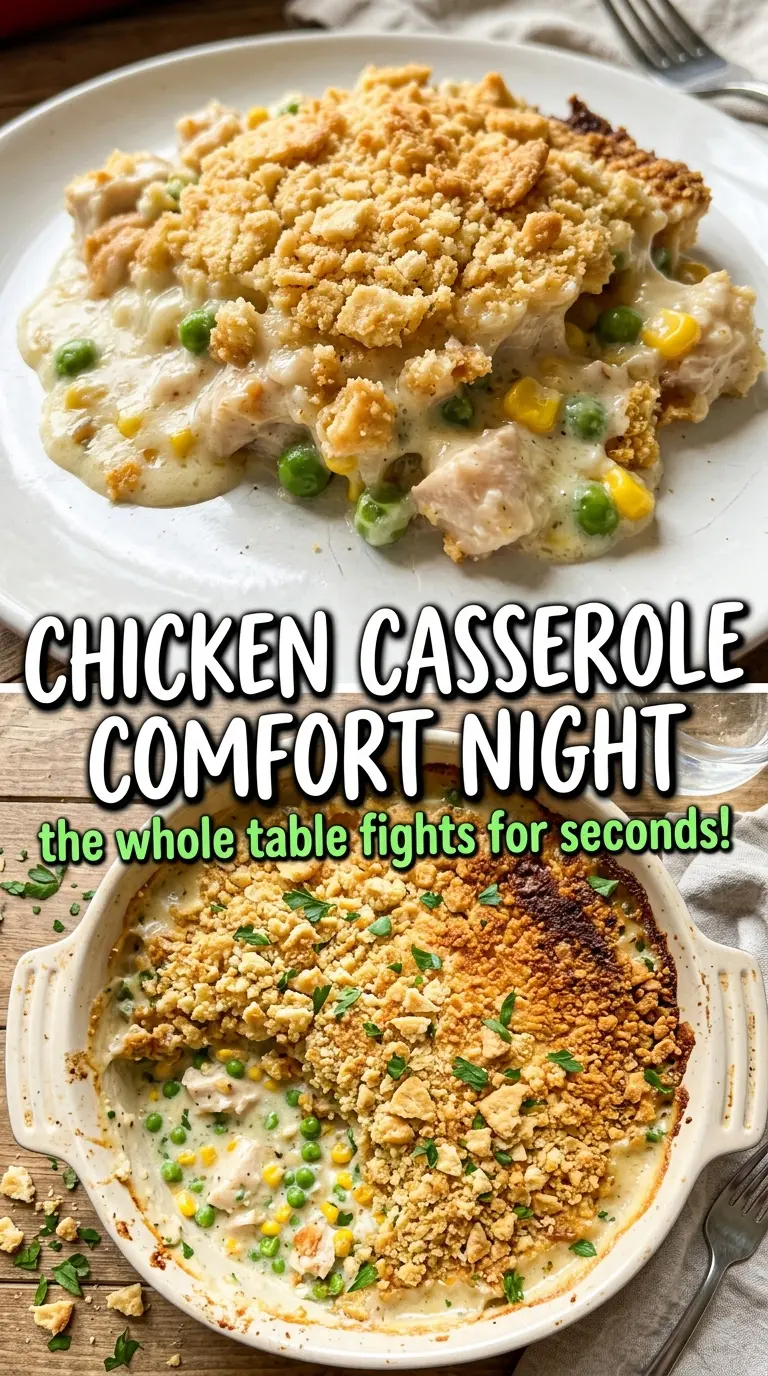
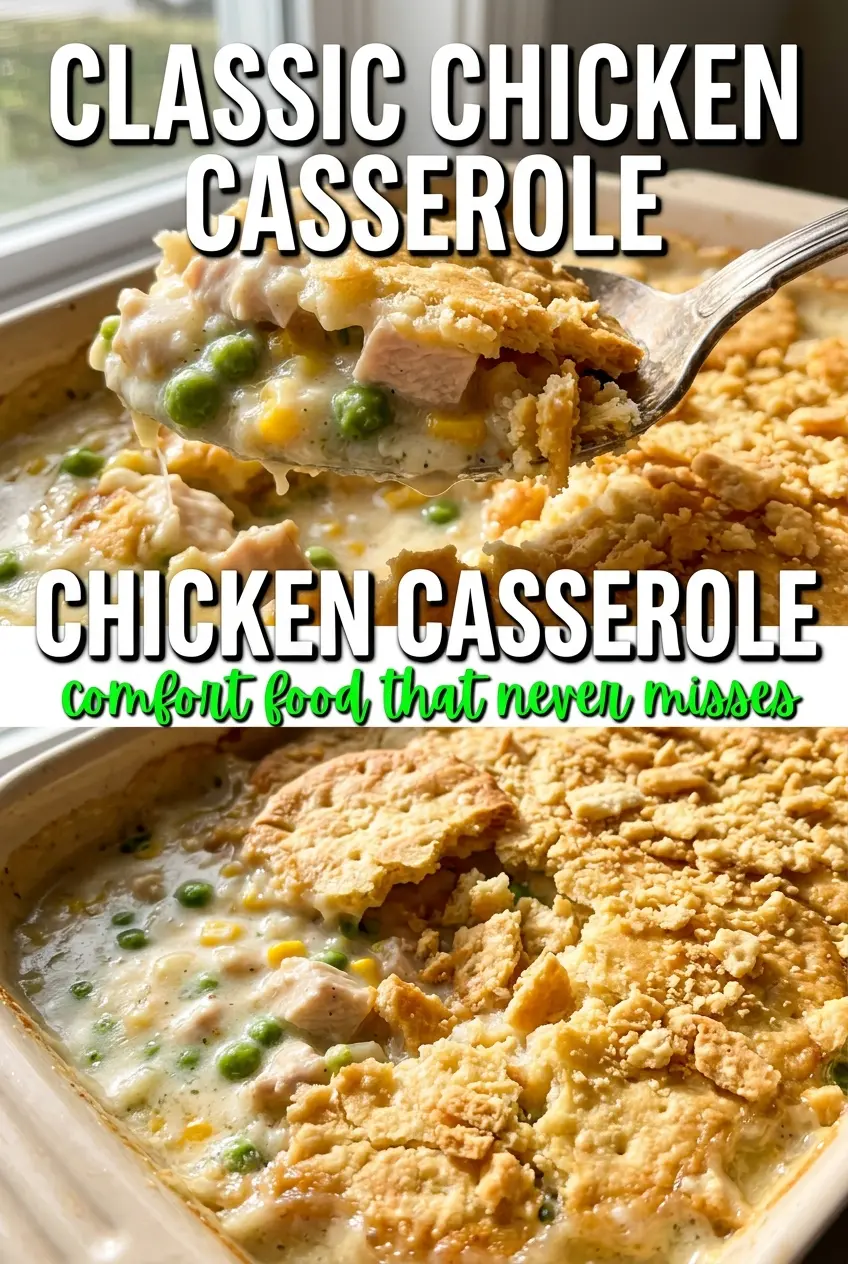
Golden, bubbly chicken casserole is the kind of dinner that earns repeat requests because it lands on the table creamy in the middle, crisp on top, and sturdy enough to scoop into neat squares. The Ritz and cheddar topping gives every bite a salty, crackly contrast that keeps the rice and chicken from feeling heavy. It’s comfort food, but it still has texture, which is what makes people go back for seconds.
This version works because the sauce starts with two canned soups, sour cream, and broth, which gives you a rich base without having to build a sauce from scratch. The cooked rice absorbs just enough of that creamy mixture to hold everything together, and the frozen peas and carrots add color and a little sweetness without extra prep. The cracker topping goes on after the cheese, so it bakes into a browned lid instead of sinking into the filling.
Below, I’m sharing the little details that keep the casserole creamy instead of dry, plus a few smart swaps if you want to use what’s already in your kitchen.
The cracker topping stayed crisp all the way to the edges, and the chicken-rice filling was creamy without turning mushy. I baked it right at 40 minutes and it came out perfect.
Save this chicken casserole for nights when you want creamy chicken, tender rice, and a buttery Ritz crust in one pan.
The Creamiest Casseroles Fail When the Filling Starts Too Thick
The biggest mistake with a chicken casserole like this is building a filling that looks perfect in the bowl and then bakes up dry in the oven. Rice keeps absorbing liquid as it heats, so the mixture needs to look a little looser than you think before it goes into the dish. If it seems spoonable but not pourable, it usually needs a splash more broth.
The second thing that matters is balance on the topping. Put the cheese directly over the filling, then add the buttered crackers on top so they brown and stay crisp instead of disappearing into the sauce. That order gives you a layer that crackles when you serve it and protects the casserole from drying out.
- Cooked rice — Long-grain white rice holds its shape best here. If the rice is freshly cooked, let it cool for a few minutes first so it doesn’t turn gummy when mixed with the soups.
- Cream of chicken and cream of mushroom soup — These bring body and seasoning fast. You can swap one of them for a second can of cream of chicken if mushroom isn’t your thing, but you’ll lose a little savory depth.
- Sour cream — This is what keeps the casserole tangy and creamy instead of flat. Full-fat works best; low-fat sour cream can make the texture a little thinner.
- Ritz crackers — They’re not just topping here. Their buttery crumb bakes into a crust that stays more tender and golden than plain breadcrumbs.
- Cheddar cheese — Sharp cheddar gives the filling a bigger, saltier finish. Pre-shredded cheese will work, but freshly shredded melts more smoothly and gives fewer clumps.
What Each Ingredient Is Actually Doing in This Chicken Dish
- Chicken (cut into uniform pieces) — Pat dry so it browns. Even thickness ensures uniform cooking.
- Oil or butter (the browning medium) — High-heat oil essential for proper searing. Creates pan flavor.
- Seasonings (salt, pepper, spices) — Don’t hold back. Chicken carries the entire flavor profile.
- Aromatics (garlic, onion, herbs) — Cook with fat to bloom flavors. Become the foundation of the dish.
- Sauce or braising liquid (cream, broth, or tomato) — This keeps chicken moist. Balance richness with acid.
- Vegetables (if using) — Layer by cooking time so everything finishes together.
- Acid (lemon, vinegar, or wine) — This brightens and prevents one-dimensional flavor.
- Proper doneness (165°F internal temperature) — Use a thermometer for accuracy. Overcooked is dry.
How to Layer the Dish So the Top Stays Crisp and the Middle Stays Creamy
Mix the Filling Until It Looks Loose
Stir the chicken, rice, soups, sour cream, broth, peas and carrots, and seasonings until everything looks evenly coated. The mixture should look creamy and a little wet, not dry or compact. If your rice was chilled and stiff, break up the clumps with the spoon before it goes into the pan. A thick filling bakes up dense, and dense casserole usually means the rice had already drunk too much liquid before it even hit the oven.
Build the Layers in the Right Order
Spread the filling into the greased baking dish, then add the cheddar in an even layer. That cheese melts into the surface and helps anchor the topping. After that, scatter the crushed Ritz crackers mixed with melted butter all over the top. If you dump the crackers directly onto the filling without the cheese barrier, they soak up sauce and lose their crunch.
Bake Until the Edges Bubble and the Center Hums
Bake at 350°F until the casserole is bubbling around the edges and the top is deep golden. That bubbling matters more than the clock, because it tells you the center has heated through and the sauce has thickened. If the topping is browning too fast before the middle is hot, lay a loose piece of foil over the dish for the last few minutes. Pull it out when the casserole is set but still creamy underneath, not when it looks dry on top.
Make It a Rotisserie Chicken Shortcut
Use shredded rotisserie chicken and the casserole comes together fast without losing that homemade, hearty feel. The only thing to watch is salt, since rotisserie chicken and canned soups can both lean salty. Taste the filling before it goes into the pan and season lightly.
Gluten-Free Version
Use certified gluten-free cream soups and swap the Ritz crackers for a gluten-free buttery cracker or crushed gluten-free breadcrumbs mixed with extra melted butter. The casserole still gets the same creamy base and crisp top, though the topping will be a little more crumbly than flaky.
Extra Vegetable Version
Stir in a cup of steamed broccoli, corn, or diced green beans if you want more vegetables in the mix. Keep the additions cooked or thawed so they don’t water down the casserole as it bakes. Raw vegetables release moisture and can leave the filling soupy.
Make-Ahead Casserole
Assemble the filling and chill it covered for up to 24 hours, then add the cheese and cracker topping just before baking. If you add the topping too early, the crackers soften in the fridge and lose their crunch. Let the dish sit on the counter while the oven preheats so it bakes more evenly.
Storage and Reheating
- Refrigerator: Store covered for 3 to 4 days. The topping softens a bit, but the filling stays creamy.
- Freezer: Freeze the baked casserole in portions or the whole dish for up to 2 months. For best texture, freeze without the topping and add fresh crackers before reheating.
- Reheating: Reheat covered at 325°F until hot, then uncover for the last few minutes if you want the top to crisp up again. Microwave reheating works for a single serving, but it will soften the cracker crust.
Answers to the Questions Worth Asking
Chicken Casserole
Ingredients
Equipment
Method
- Preheat the oven to 350°F and grease a 9x13 baking dish so the casserole releases cleanly.
- Combine shredded chicken, cooked rice, both soups, sour cream, chicken broth, peas and carrots, garlic powder, onion powder, salt, and pepper in a mixing area and stir until the mixture is evenly coated.
- Spread the chicken mixture into the prepared baking dish in an even layer so it bakes consistently.
- Top with shredded cheddar cheese to form a melty layer that helps anchor the cracker crust.
- Mix crushed Ritz crackers with melted butter and sprinkle the mixture over the cheese for a golden, crunch-crackled finish.
- Bake at 350°F for 35-40 minutes until bubbly and the cracker topping is golden brown, with steam rising from the center.