Golden chicken cutlets in Marsala mushroom sauce earn their place on the table fast. The chicken stays crisp at the edges, the sauce turns silky and deep brown, and the whole pan tastes like it took a lot more effort than it did. This is the kind of dinner that feels restaurant-style without asking for anything fussy from you.
What makes it work is the order. The chicken gets a light flour coating so it browns cleanly and gives the sauce a little body later. Then the mushrooms go into the same pan, where they pick up every bit of flavor left behind, and the Marsala reduces enough to lose that raw wine edge before the broth and cream go in.
Below, I’ve included the small details that matter most: how to keep the sauce glossy instead of thin, what to watch for when the mushrooms are ready, and the best way to warm the chicken back through without softening the crust.
The sauce thickened up perfectly and the chicken stayed tender even after I put the cutlets back in at the end. The Marsala and mushrooms tasted rich together, and it was just as good over noodles the next day.
Save this Chicken Marsala for the nights when you want silky mushroom sauce, golden cutlets, and a dinner that feels special without extra work.
The Part That Keeps Chicken Marsala From Going Flat
The biggest mistake with Chicken Marsala is treating it like a simple pan sauce and rushing the reduction. Marsala needs a few minutes in the pan to cook off its sharp edge and concentrate into something deep and almost nutty. If you stop too soon, the sauce tastes thin and a little boozy instead of rich.
The other thing that matters is the flour on the chicken. You want a thin, even dusting, not a heavy crust. That light coating helps the cutlets brown quickly and gives the sauce enough body to cling without turning pasty. If the chicken looks pale when it leaves the pan, it hasn’t built the flavor base you need.
- Thin cutlets — Halving the chicken breasts gives you fast, even cooking and keeps the meat tender. Thick pieces need longer in the pan, which dries out the outside before the center is ready.
- Dry Marsala wine — Dry Marsala gives the sauce its classic savory depth. Sweet Marsala makes the dish heavier and more dessert-like, which changes the whole balance.
- Cremini mushrooms — They hold their shape and bring a deeper mushroom flavor than white buttons. Slice them evenly so they brown at the same rate.
What Each Ingredient Is Actually Doing in This Dish
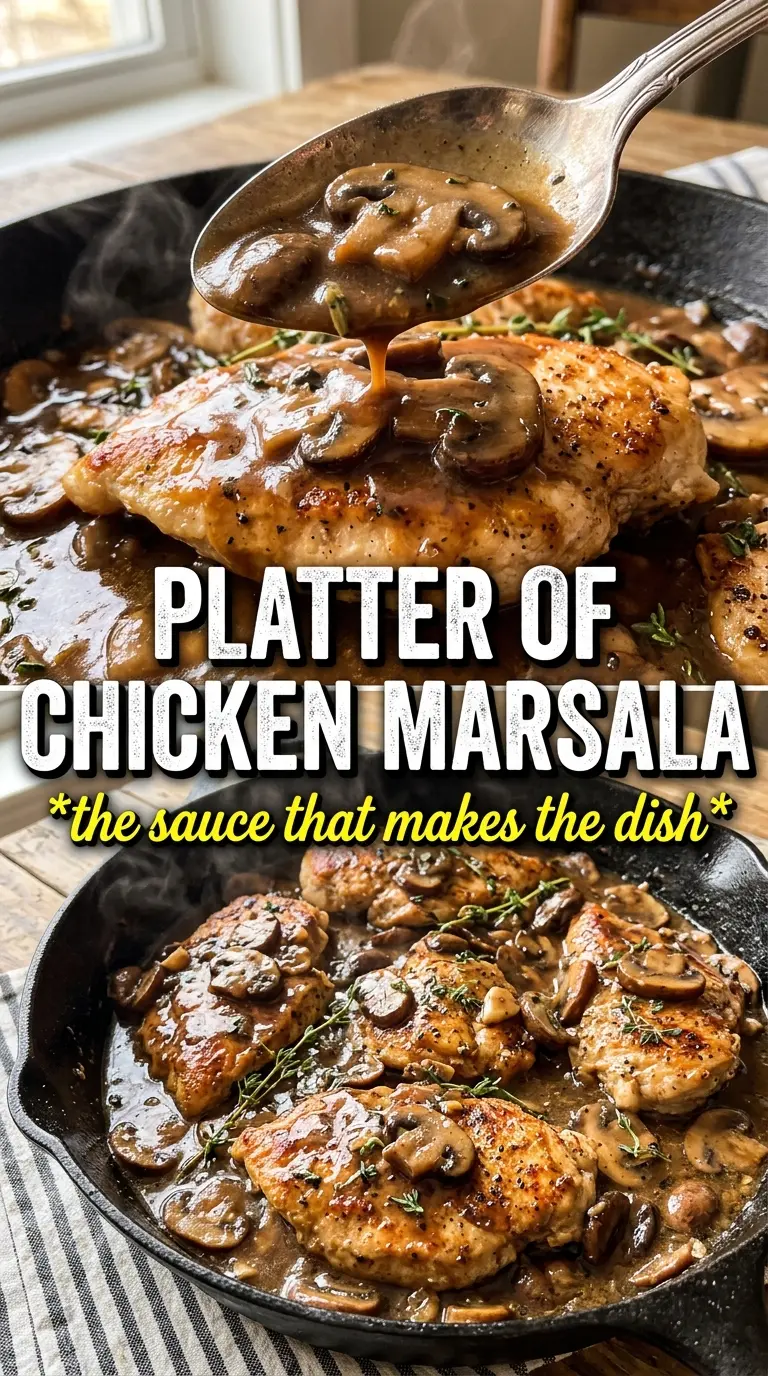
- Chicken breasts — Slicing them into cutlets is what makes this a quick dinner instead of a long braise. You can swap in chicken thighs, but the texture will be a little softer and the finished dish a bit richer.
- Flour — This is what helps the chicken brown and what gives the sauce a gentle, natural thickness. If you need a gluten-free version, use a good 1:1 gluten-free flour blend and keep the coating light.
- Butter and olive oil — The oil keeps the butter from burning too fast, while the butter adds the flavor you want in the first sear. The final cold butter swirl is what gives the sauce that glossy, restaurant finish.
- Shallots and garlic — Shallots melt into the sauce and taste softer than onions, which keeps the pan sauce elegant. Garlic only needs a minute; if it browns hard, it turns bitter fast.
- Heavy cream — It smooths out the wine and ties the sauce together. Half-and-half can work in a pinch, but the sauce will be looser and less plush.
Building the Sauce in the Same Pan Without Breaking It
Getting the Cutlets Golden
Season the chicken, then dredge each piece in flour and shake off the excess. The pan should be hot enough that the chicken sizzles the second it lands, but not so hot that the flour scorches before the meat cooks through. Work in batches if needed. Crowding the pan traps steam, and steam is what keeps you from getting that deep golden color.
Letting the Mushrooms Brown, Not Sweat
After the chicken comes out, the mushrooms go into the same pan with the shallots. Leave them alone long enough to pick up color before stirring too often. If they just turn soft, they’ll release water and the sauce will taste flat. Once the mushrooms are browned and the shallots have softened, the garlic goes in for only a minute so it perfumes the pan without burning.
Reducing the Marsala the Right Way
Pour in the Marsala and let it bubble until the sharp alcohol smell fades and the liquid looks a little syrupy. That reduction is what gives the finished sauce its depth. Add the broth and cream after that, then simmer gently. If the heat is too high, the cream can separate and the sauce loses its smooth finish.
Finishing With Butter and Thyme
Swirl in the remaining butter off the heat or over very low heat. That last step thickens the sauce and gives it a sheen you can see right away. Stir in the thyme, then return the chicken just long enough to warm through. If you boil it after the butter goes in, the sauce can turn greasy instead of glossy.
How to Adapt Chicken Marsala Without Losing the Point
Dairy-Free Marsala
Use olive oil only for the sear and skip the cream, then finish the sauce with a little extra broth and an extra pat of dairy-free butter if you have it. The sauce will be a little lighter and less silky, but the Marsala and mushrooms still carry the dish.
Gluten-Free Version
Swap the all-purpose flour for a gluten-free flour blend and keep the coating thin. The texture stays close to the original, and the sauce still thickens nicely as long as you don’t overload the pan with flour.
Using Chicken Thighs
Boneless thighs work well if you want a richer, juicier result. They need a little extra cooking time, and the finished dish will be less delicate, but the sauce pairs nicely with that darker meat.
Storage and Reheating
- Refrigerator: Store leftovers for up to 3 days. The chicken stays tender, but the sauce will thicken as it chills.
- Freezer: It freezes better without the cream, but the full dish can be frozen in a pinch for up to 2 months. The sauce may separate a little when thawed.
- Reheating: Warm gently in a skillet over low heat with a splash of broth. High heat can make the chicken tough and can cause the creamy sauce to split.
Answers to the Questions Worth Asking
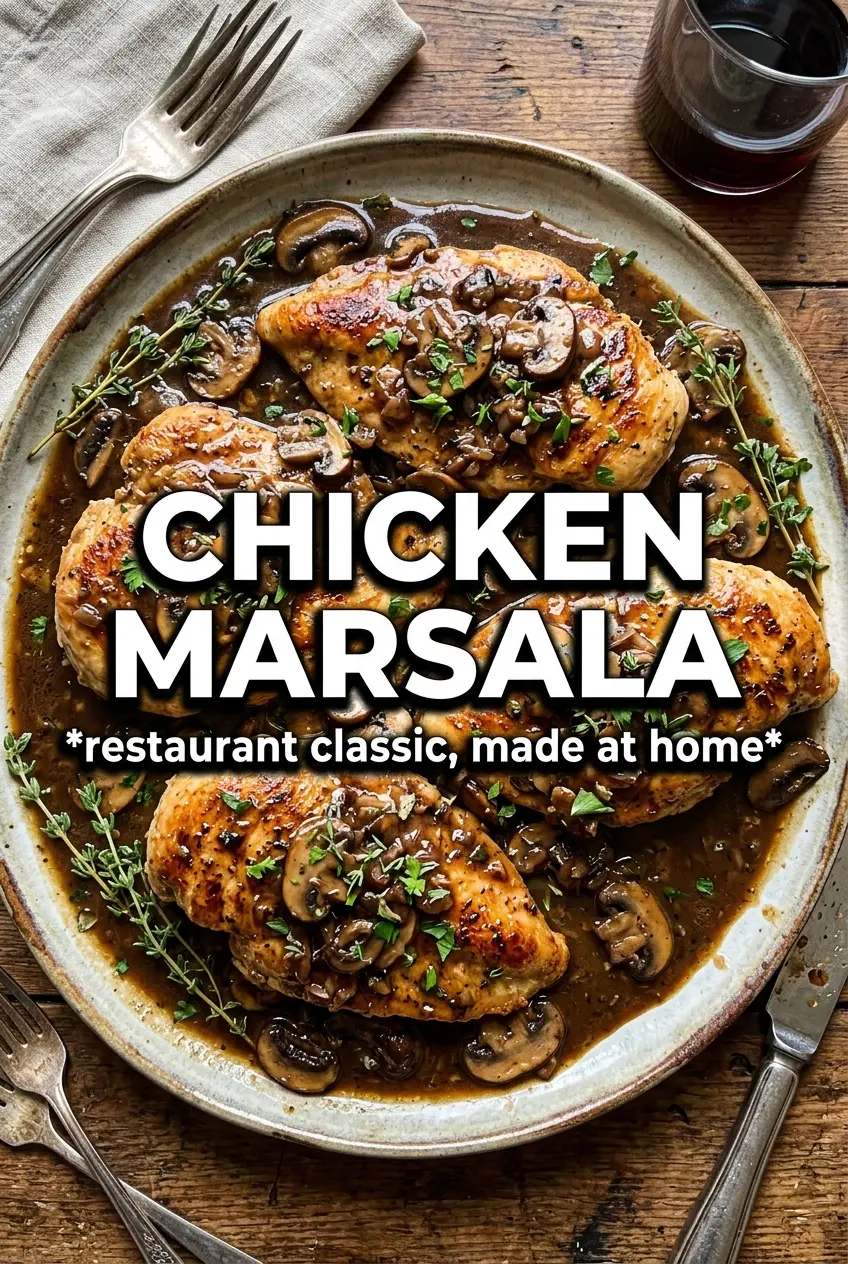
Chicken Marsala
Ingredients
Equipment
Method
- Season the chicken cutlets with salt and pepper, then pat lightly so the surface clings to flour.
- Dredge the cutlets in all-purpose flour, then shake off excess so they brown instead of steam.
- Heat olive oil and 2 tablespoons butter in a cast iron skillet over medium-high heat until shimmering.
- Pan-fry the cutlets for 3-4 minutes per side until golden, then transfer to a plate.
- Cook the mushrooms and minced shallots in the same skillet over medium-high heat for 5-6 minutes until golden.
- Add minced garlic and cook for 1 minute, stirring so it stays fragrant and doesn’t brown.
- Pour in the dry Marsala wine and let it bubble for 2-3 minutes to reduce slightly.
- Add chicken broth and heavy cream, then simmer for 5 minutes until the sauce coats the back of a spoon.
- Swirl in the remaining 2 tablespoons cold butter until the sauce looks glossy, then stir in fresh thyme leaves.
- Return the cutlets to the pan and spoon the sauce over top, then garnish with fresh parsley and serve hot.