Golden chicken over buttery noodles is the kind of dinner that disappears fast because every bite gives you something different: tender, well-seasoned chicken on top, silky egg noodles underneath, and a garlic butter coating that clings instead of pooling in the pan. It hits that sweet spot between comforting and practical, which is why it earns a repeat spot on busy nights.
The trick is keeping the noodles glossy, not greasy. A little pasta water helps the butter and Parmesan turn into a light sauce that wraps around the noodles instead of separating. Searing the chicken first also leaves browned bits in the skillet, and those bits bring depth to the garlic butter without any extra work.
Below, I’ve broken down the one detail that keeps the noodles from turning heavy, plus the small timing choices that make this dish taste like more than chicken and pasta tossed together at the last minute.
The noodles came out glossy and light, not oily, and the garlic butter soaked into every curl. My husband kept stealing bites straight from the skillet.
Save these chicken with buttered noodles for a fast skillet dinner with silky garlic butter sauce and golden sliced chicken.
The Step That Keeps the Noodles Silky Instead of Heavy
Butter noodles can go wrong fast when the pan is too hot or the sauce is built without enough moisture. Butter alone will coat the pasta for a minute, then it turns slick and separate instead of creamy and clingy. The fix is using a little pasta water and adding it while the noodles are still hot, so the starch helps the butter loosen into a light sauce.
The chicken matters here too. Searing it first does more than cook the meat; it leaves browned bits in the skillet that the garlic butter picks up later. That extra flavor is what keeps this from tasting flat. If your noodles ever feel dry in the pan, you’re probably adding them to butter that’s too thick or too cool.
What Each Ingredient Is Doing in the Skillet
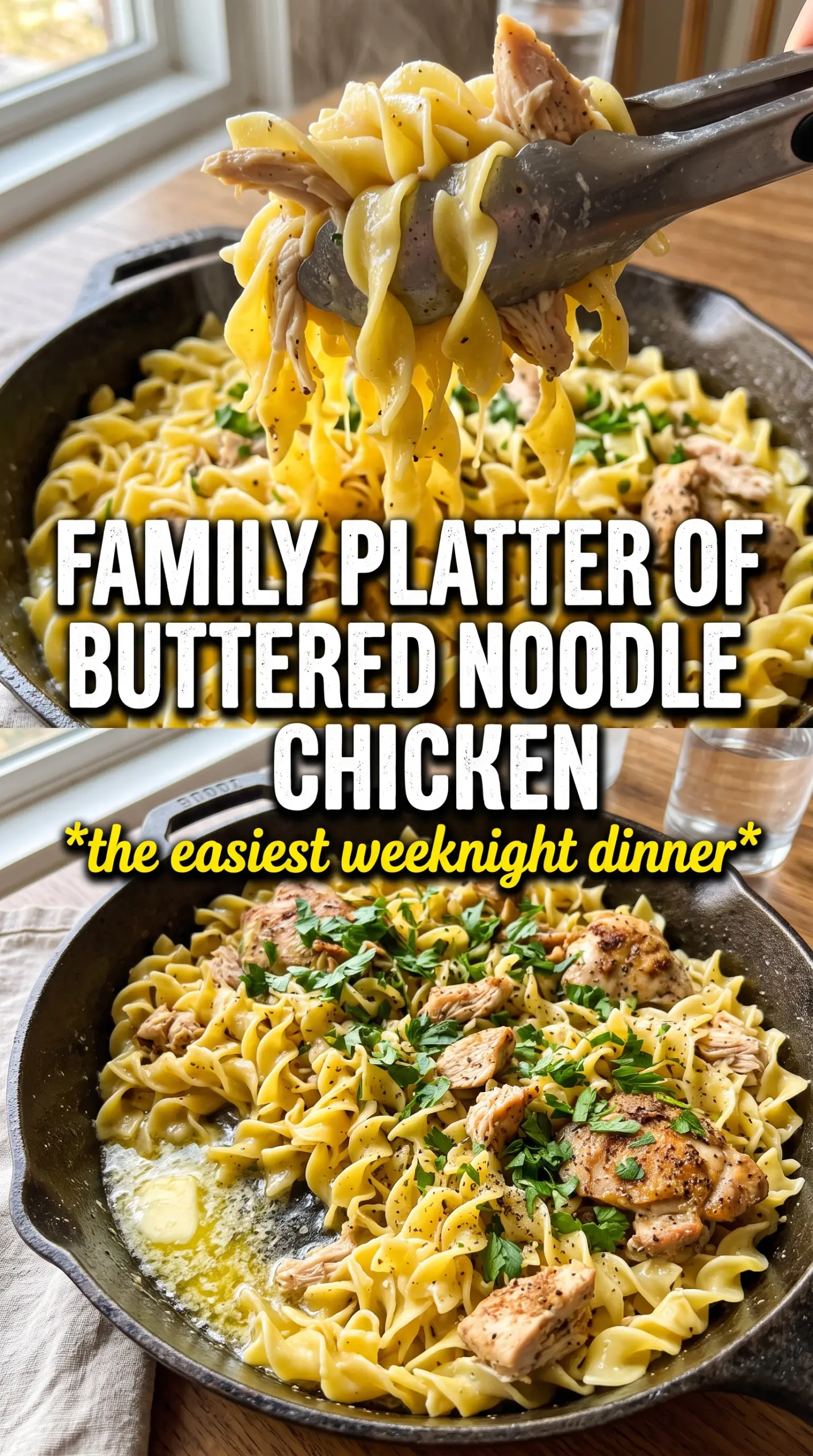
- Chicken breasts — Lean chicken breast gives you clean slices that sit nicely on top of the noodles. Cutlets or thinner pieces cook more evenly, but if your breasts are thick, pound them lightly so the centers don’t lag behind the outside.
- Egg noodles — These are the right shape for catching butter and Parmesan. Regular pasta works in a pinch, but egg noodles give you that soft, comforting texture that makes the dish feel complete.
- Butter — This is the base of the sauce, so use the good stuff if you can. Salted or unsalted both work; if you use salted butter, back off on the added salt until the end.
- Garlic and red pepper flakes — Fresh garlic is worth it here because the sauce is built around it. Don’t let it brown; once garlic turns dark, the whole pan tastes bitter.
- Parmesan — Grated Parmesan adds body and a salty finish. Finely grated cheese melts more smoothly than big shreds, which helps keep the sauce silky instead of clumpy.
- Pasta water — This is the part that saves the texture. The starch helps the butter emulsify, and a splash at a time is all you need.
Building the Garlic Butter Sauce Before It Breaks
Season and Sear the Chicken
Season the chicken well before it ever hits the pan. You want a deep golden crust on both sides, not pale chicken that steamed in its own moisture. Medium-high heat gives you color without drying out the meat, but if the skillet is smoking hard, turn it down a touch before the second side goes in. Let the chicken rest before slicing so the juices stay in the meat instead of running onto the cutting board.
Wake Up the Garlic in Butter
Use the same skillet after the chicken comes out. Those browned bits at the bottom dissolve into the butter and give the sauce its backbone. Add the garlic and red pepper flakes over medium heat and stir constantly for just a minute or two, until the garlic smells sweet and sharp. If it starts browning before the butter has a chance to perfume the pan, lower the heat immediately.
Toss the Noodles Until They Glaze
Add the hot noodles straight into the skillet and toss them in the butter before the sauce cools down. Splash in a little pasta water if the noodles look dry or start sticking together. The noodles should look glossy and lightly coated, not swimming in butter. Stir in the parsley, then taste before adding more salt, because Parmesan can push the seasoning farther than you expect.
Finish With Chicken and Cheese
Slice the chicken after resting and lay it over the noodles so the juices stay where they belong. Scatter the Parmesan over the top right before serving so it melts from the residual heat instead of clumping in the pan. If the skillet sits too long before plating, the noodles tighten up and lose that silky finish, so this is a dish that wants to go from stove to table quickly.
How to Tweak This Chicken and Buttered Noodles Dinner Without Losing the Comfort
Dairy-Free Version
Use a plant-based butter that melts cleanly and a dairy-free Parmesan-style cheese if you like the finished salinity. The sauce won’t be quite as rich or glossy as the original, but it still coats the noodles well if you keep the heat low and use pasta water to help it come together.
Gluten-Free Swap
Use gluten-free egg-style pasta or another short noodle with a shape that catches the sauce. Cook it just to al dente, because gluten-free pasta can go from tender to mushy fast once it sits in the skillet.
Add Extra Vegetable Bulk
Toss in peas, spinach, or steamed broccoli at the end. Spinach wilts instantly, peas warm through in seconds, and broccoli gives the dish more bite without changing the sauce. Keep the additions light so the butter still coats everything instead of disappearing into a crowded pan.
Storage and Reheating
- Refrigerator: Store leftovers in an airtight container for up to 3 days. The noodles will absorb some of the butter as they sit, so they’ll look less glossy the next day.
- Freezer: This dish doesn’t freeze well. The noodles lose their texture and the butter sauce turns grainy after thawing.
- Reheating: Warm gently in a skillet over low heat with a splash of water or broth, stirring until the noodles loosen again. The biggest mistake is blasting it in the microwave until the chicken gets rubbery and the sauce dries out.
Questions I Get Asked About This Recipe
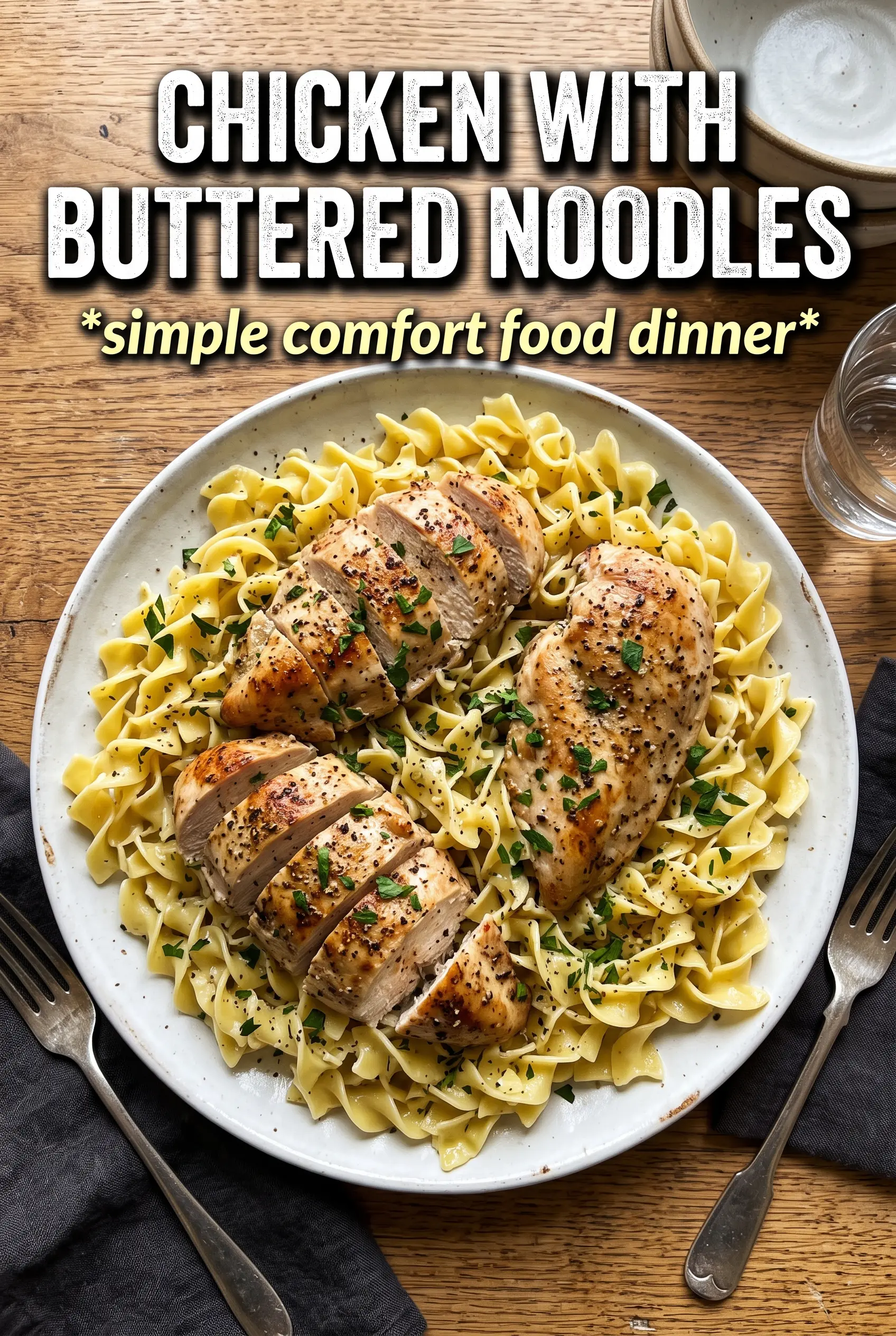
Chicken with Buttered Noodles
Ingredients
Equipment
Method
- Season chicken with salt, pepper, garlic powder, and Italian seasoning to taste. Heat olive oil in a skillet over medium-high heat and sear chicken until golden, 5-6 minutes per side, until it reaches 165°F, then rest and slice.
- Melt butter in the same skillet over medium heat. Add garlic and red pepper flakes and cook 1-2 minutes until fragrant, stirring to keep the garlic from browning.
- Add cooked egg noodles to the garlic butter and toss to coat. Add reserved pasta water as needed to loosen the sauce so it clings to the noodles.
- Season the noodles with salt and pepper to taste and stir in fresh parsley. Cook for 30-60 seconds just to warm everything through and keep the parsley bright.
- Divide noodles among plates and top with sliced chicken. Scatter Parmesan generously over the top and serve immediately while the butter is still glistening on the noodles.