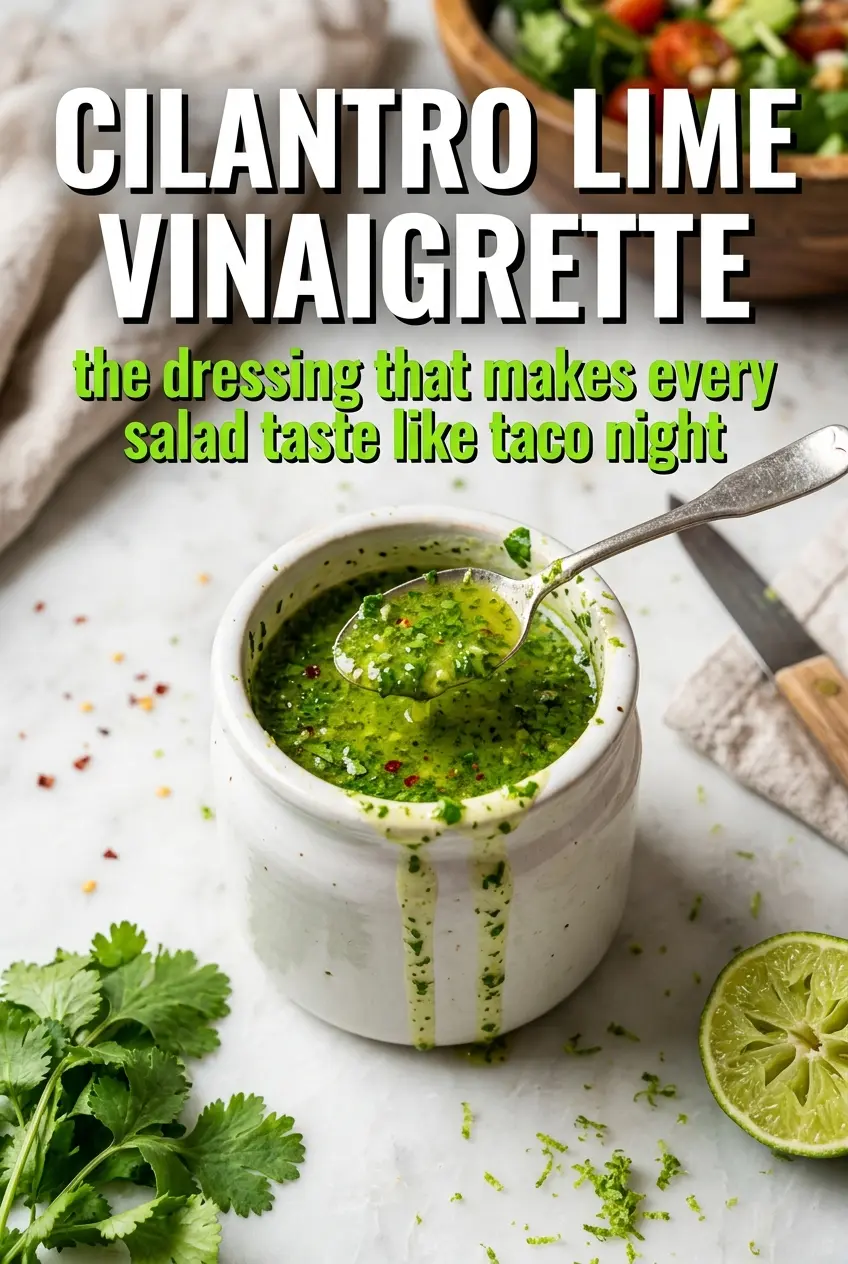
Bright, punchy cilantro lime vinaigrette is the kind of dressing that wakes up everything it touches. It’s sharp from the lime, rounded out with a little honey, and carried by enough garlic and cumin to make it taste like more than just a quick blender sauce. The texture lands in that sweet spot between silky and lightly flecked with herbs, so it pours cleanly but still looks homemade in the best way.
This version works because the acid is balanced before the oil goes in. Lime juice alone can taste harsh, especially with cilantro, but white wine vinegar adds another layer of brightness that keeps the dressing from tasting flat after it sits in the fridge. The Dijon helps hold the emulsion together, and blending the cilantro with the acidic ingredients first gives you a greener, smoother base before the oil is drizzled in.
Below, I’m walking through the little details that matter here: how to keep the cilantro flavor fresh instead of muddy, what to do if your vinaigrette turns too sharp, and the small adjustment that makes it work on salads, tacos, grain bowls, and grilled vegetables.
The dressing came out bright green and emulsified in seconds. I tossed it with cabbage and grilled chicken, and it clung to everything instead of pooling at the bottom of the bowl.
Cilantro lime vinaigrette brings the bright, herby bite that makes tacos, salads, and grain bowls taste finished.
The Step That Keeps the Cilantro Flavor Fresh, Not Bitter
The biggest mistake with herb vinaigrettes is blending too long after the oil goes in. Cilantro can turn dull and grassy if it gets beaten to death, especially once the fat is fully incorporated. The better move is to blend the acidic ingredients and herbs first until the mixture is smooth and vividly green, then add the oil in a thin stream just until it comes together.
That order matters because the acid helps preserve the color and keeps the garlic from tasting harsh. If your dressing tastes sharp at the end, it usually needs either a touch more honey or a pinch of salt, not more oil. Oil softens the edges, but salt is what makes the lime and cilantro taste deliberate instead of scattered.
What Each Ingredient Is Actually Doing in This Dressing
- Fresh cilantro leaves — Use the leaves and tender stems if they’re clean and soft. The stems carry a lot of flavor, but thick woody stems can make the dressing taste fibrous. If your cilantro is extra mature, strip the leaves and soft tops only.
- Lime juice — Fresh lime juice gives the vinaigrette its sharp, clean brightness. Bottled juice tends to taste flatter and more bitter, and that shows up fast in a simple dressing like this.
- White wine vinegar — This deepens the acidity so the dressing tastes lively even after it chills. If you need a substitute, rice vinegar is the closest swap; it’s a little softer, so add a small extra squeeze of lime if the dressing tastes muted.
- Olive oil — A mild extra-virgin olive oil keeps the dressing smooth without overpowering the herbs. A strongly peppery oil can compete with the cilantro, which is why a gentler bottle works better here.
- Dijon mustard — This is the quiet emulsifier. It helps the vinaigrette hold together and gives the dressing a little backbone, especially if you’re serving it on crunchy greens or roasted vegetables.
- Honey — Just enough honey rounds out the acid and keeps the garlic from reading too sharp. Maple syrup works in a pinch, but it changes the flavor and makes the dressing a little less clean-tasting.
- Cumin — Cumin gives this vinaigrette its warm, savory edge. Don’t overdo it; you want it to support the cilantro-lime combo, not take over the bowl.
How to Blend It So It Stays Smooth and Emulsified
Build the green base first
Add the cilantro, lime juice, vinegar, garlic, honey, Dijon, and cumin to the blender and run it until the cilantro is fully broken down. The dressing should look bright green and slightly foamy at this stage. If chunks of herb are still floating around, the final texture will be uneven, so scrape down the sides once before moving on.
Drizzle in the oil slowly
With the blender on low, pour in the olive oil in a thin stream. That slow addition is what lets the dressing thicken and hold together instead of separating into a thin herb juice and an oily top layer. If you dump the oil in all at once, it’ll still taste fine, but it won’t cling to salad the same way.
Season and settle the flavor
Taste the dressing after blending and adjust with salt and pepper. Cold dressing always tastes a little quieter than it does at room temperature, so give it a few minutes before making a final judgment. If it still tastes too tart, add a tiny bit more honey; if it tastes flat, it needs salt before it needs anything else.
Make It Dairy-Free and Naturally Gluten-Free
This recipe already fits both of those needs as written. The only thing to watch is the mustard, since some brands use vinegar or spice blends that can taste stronger than others. If you’re serving someone with a strict gluten-free diet, check the label once and you’re set.
Use It as a Creamier Sauce
Blend in 2 to 3 tablespoons of plain yogurt or sour cream if you want a thicker dressing for bowls or grilled chicken. It softens the acidity and makes the vinaigrette feel more like a sauce, but it also shortens the fridge life, so plan to use it within 3 days.
Swap the Honey for a Vegan Option
Use maple syrup in the same amount if you want to keep it fully vegan. The dressing will still emulsify, but maple brings a darker sweetness, so the finish is a little less bright and a little more rounded than honey.
Storage and Reheating
- Refrigerator: Store in a sealed jar for up to 5 days. The herbs may darken slightly, and the dressing will separate as it chills.
- Freezer: I don’t recommend freezing this one. The herb texture and emulsion don’t come back well after thawing.
- Reheating: No reheating needed. Let it sit at room temperature for 10 to 15 minutes, then shake hard before serving so the oil and acids rejoin.
Questions I Get Asked About This Recipe
Cilantro Lime Vinaigrette
Ingredients
Equipment
Method
- Add fresh cilantro leaves, lime juice, white wine vinegar, garlic, honey, Dijon mustard, and cumin to a blender. Blend until smooth and bright green, with no visible large cilantro pieces.
- With the blender running on low speed, slowly drizzle in olive oil until emulsified into a glossy green dressing. Add salt and pepper to taste and blend briefly to combine.
- Transfer the vinaigrette to a jar and refrigerate until ready to use. Shake well before serving for a re-emulsified texture.