Classic glazed meatloaf earns its place at the table because it slices cleanly, stays moist in the middle, and carries that sticky ketchup glaze all the way to the last bite. The best versions aren’t fluffy or crumbly. They’re dense enough to hold together, tender enough to cut with a fork, and seasoned all the way through so every slice tastes like more than just seasoned beef.
The trick is mixing just until the ingredients come together. Overworking ground beef turns the loaf tight and tough, which is the fastest way to end up with a dry slice that falls apart on the plate. Grated onion does a lot of the heavy lifting here too. It disappears into the meat, bringing moisture and sweetness without leaving big raw chunks behind.
Below, I’m walking through the little details that keep the texture right and the glaze glossy instead of burnt. There’s also a good note on what to do if you want to swap the beef, plus the one resting step that keeps the slices from crumbling when you cut them.
The glaze caramelized beautifully, and the loaf held together perfectly after the 10-minute rest. Even the leftovers sliced cleanly the next day.
Save this classic glazed meatloaf for the night you want a tender slice and a caramelized ketchup-brown sugar topping that never disappoints.
The Reason Most Meatloaves Turn Dense Before They Even Hit the Oven
Meatloaf gets tough for two reasons: the mixture is overworked, or it bakes in a way that dries out the edges before the center is done. Ground beef only needs to be combined until the breadcrumbs disappear and everything looks evenly distributed. After that, stop. The loaf will tighten up as it bakes, and that resting time at the end matters just as much as the bake itself.
This version uses grated onion and milk to keep the crumb tender without making it mushy. The onion melts into the meat as it cooks, while the breadcrumbs soak up the moisture and hold it in place. The result is a slice that stays plush instead of greasy or grainy.
- Do not overmix the beef — once the ingredients are evenly distributed, quit stirring. A compact mixture bakes into a rubbery loaf.
- Use 80/20 ground beef — leaner beef can work, but it gives you a drier slice and less forgiving texture.
- Grate the onion finely — chopped onion leaves little raw pockets, but grated onion disappears into the loaf and seasons it from the inside out.
- Rest before slicing — the juices need those 10 minutes to settle, or they’ll run out onto the cutting board.
What the Ketchup Glaze Is Doing Besides Tasting Good
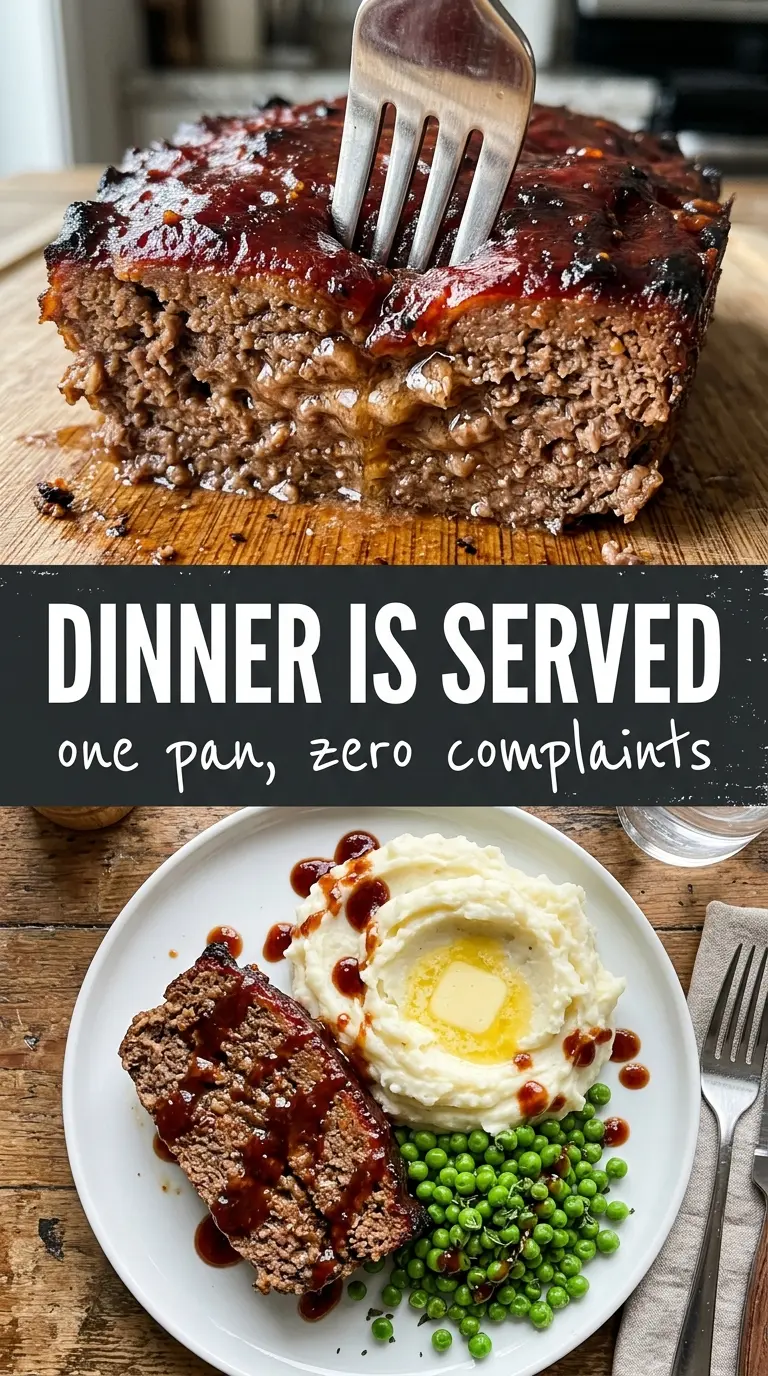
- Ketchup — this gives the glaze its familiar tang and body. You need the thickness here, not a thinner tomato sauce, or it will run off the loaf instead of setting on top.
- Brown sugar — this is what helps the glaze lacquer and caramelize. White sugar will sweeten it, but it won’t give the same deep, sticky finish.
- Apple cider vinegar — it keeps the glaze from tasting flat. That little bit of acid cuts through the richness of the beef.
- Worcestershire sauce — the glaze needs it for depth, not just saltiness. It echoes the seasoning in the meat and keeps the topping from tasting one-note.
- Breadcrumbs and milk — together, they act like the binder and the moisture reserve. If you skip either one, the loaf can turn compact and dry.
Building the Loaf So the Center Stays Juicy and the Top Gets Sticky
Mixing the Meat Without Tightening It
Combine the beef, breadcrumbs, eggs, milk, onion, garlic, Worcestershire, thyme, garlic powder, salt, and pepper in a large bowl, then mix just until the mixture comes together. The bowl should look evenly combined, but still loose and workable. If you keep squeezing it after that point, the loaf turns dense in the oven and loses that tender bite. Cold hands help here because the fat stays stable and the mixture doesn’t smear.
Shaping for Even Baking
Form the mixture into a loaf on a foil-lined baking sheet or press it into a loaf pan. A baking sheet gives you more caramelization around the edges, while a loaf pan gives you cleaner sides and a more classic shape. Either way, don’t pack it down hard. A gentle shape lets the heat move through evenly and keeps the center from lagging behind the edges.
Glazing in Two Coats
Mix the glaze and spread half over the top before baking. That first layer cooks into the surface and starts building flavor; the second layer goes on after 45 minutes, when the loaf has already set enough to hold it. If you add all the glaze at the start, the sugar can darken too fast and turn bitter before the meat reaches temperature.
Knowing When It’s Done
Bake until the internal temperature reaches 160°F and the glaze looks glossy and slightly sticky. The center should no longer feel soft when lightly pressed, but the loaf should still have a little give. Pulling it early leaves you with a gray, underdone middle; leaving it in too long dries out the edges. Let it rest before slicing so the juices stay where they belong.
How to Adjust This Meatloaf Without Losing What Makes It Work
Swap in a beef-and-pork blend
Use half ground beef and half ground pork if you want a richer, softer loaf. Pork adds a little extra fat and tenderness, while the beef keeps the flavor grounded and familiar. The glaze still works the same way, but the finished slices will feel a touch more supple.
Make it gluten-free without changing the texture too much
Use gluten-free breadcrumbs or crushed gluten-free crackers in the same amount. You still need a dry binder to hold the juices in place, so don’t leave that out. The texture stays close to the original as long as the substitute is fine and evenly mixed.
Go dairy-free
Swap the whole milk for an unsweetened plain oat milk or almond milk. You lose a little richness, but the loaf still holds together well because the eggs and breadcrumbs do most of the structural work. Use an unflavored milk so the glaze and seasoning stay front and center.
Storage and Reheating
- Refrigerator: Store slices in an airtight container for up to 4 days. The glaze firms up a bit, but the flavor holds well.
- Freezer: Meatloaf freezes well. Wrap slices tightly and freeze for up to 3 months, or freeze the whole cooked loaf once fully cooled.
- Reheating: Warm slices covered in a 325°F oven with a splash of water or broth, or microwave in short bursts. The common mistake is blasting it uncovered, which dries out the beef and makes the glaze hard instead of glossy.
Questions I Get Asked About This Recipe
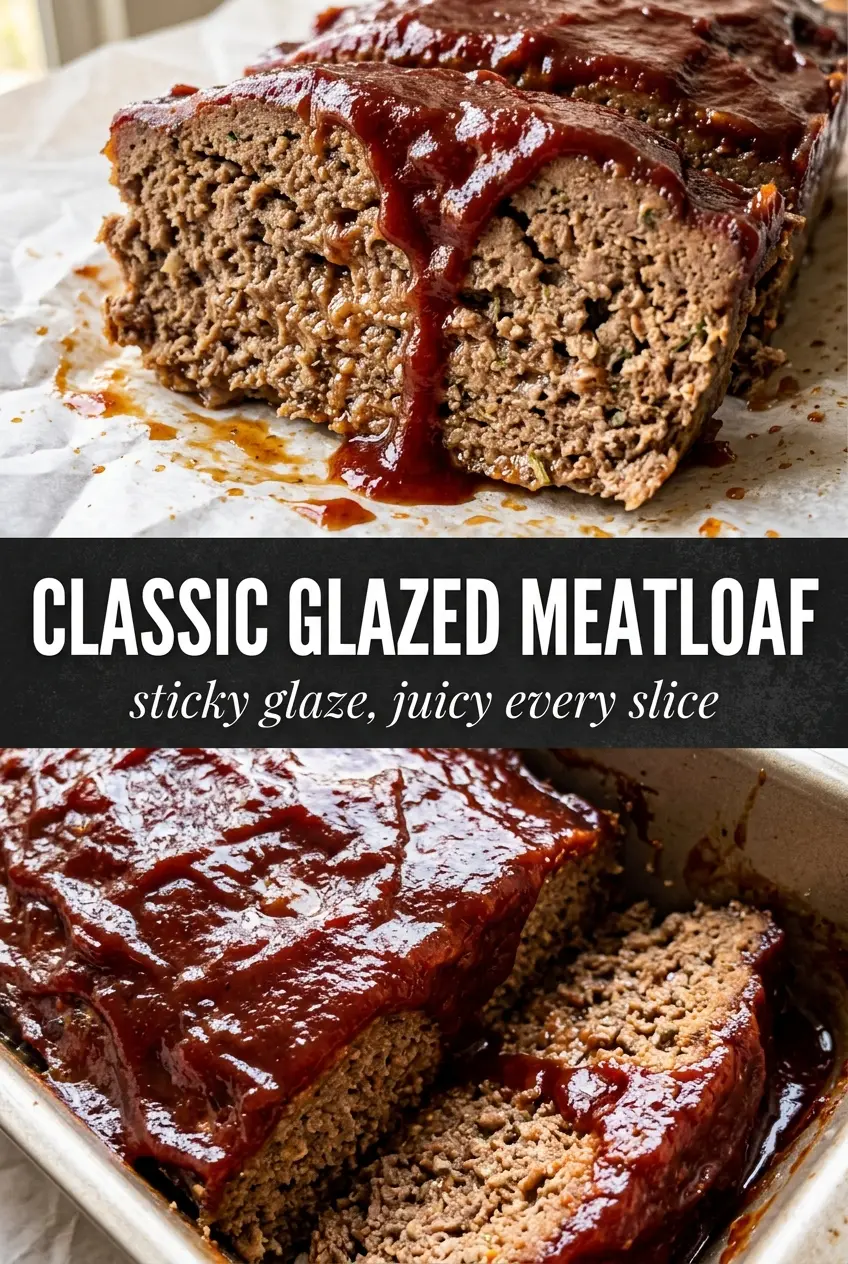
Classic Glazed Meatloaf
Ingredients
Equipment
Method
- Preheat the oven to 350°F and line a loaf pan or baking sheet with foil.
- Combine ground beef, breadcrumbs, eggs, whole milk, grated onion, minced garlic, Worcestershire sauce, dried thyme, garlic powder, salt, and black pepper, then mix until just combined; do not overmix.
- Shape the mixture into a loaf on the baking sheet or press it into a loaf pan.
- Mix ketchup, brown sugar, apple cider vinegar, and Worcestershire sauce, then spread half of the glaze over the top of the meatloaf.
- Bake for 45 minutes at 350°F, until the glaze looks slightly set and glossy.
- Spread the remaining glaze over the top, then bake 15–20 more minutes until the internal temperature reaches 160°F and the glaze is crackled and caramelized.
- Rest the meatloaf 10 minutes before slicing so the juices settle and the slices hold together.