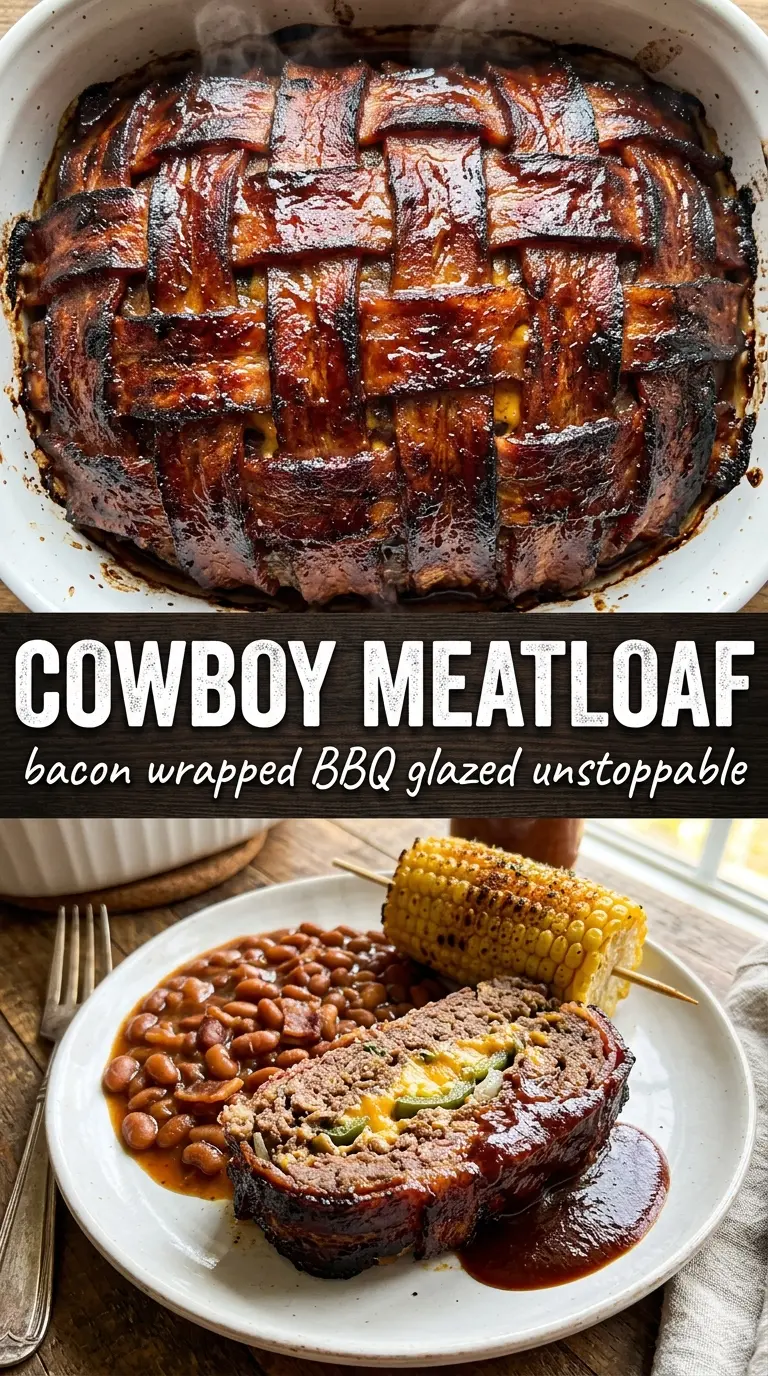
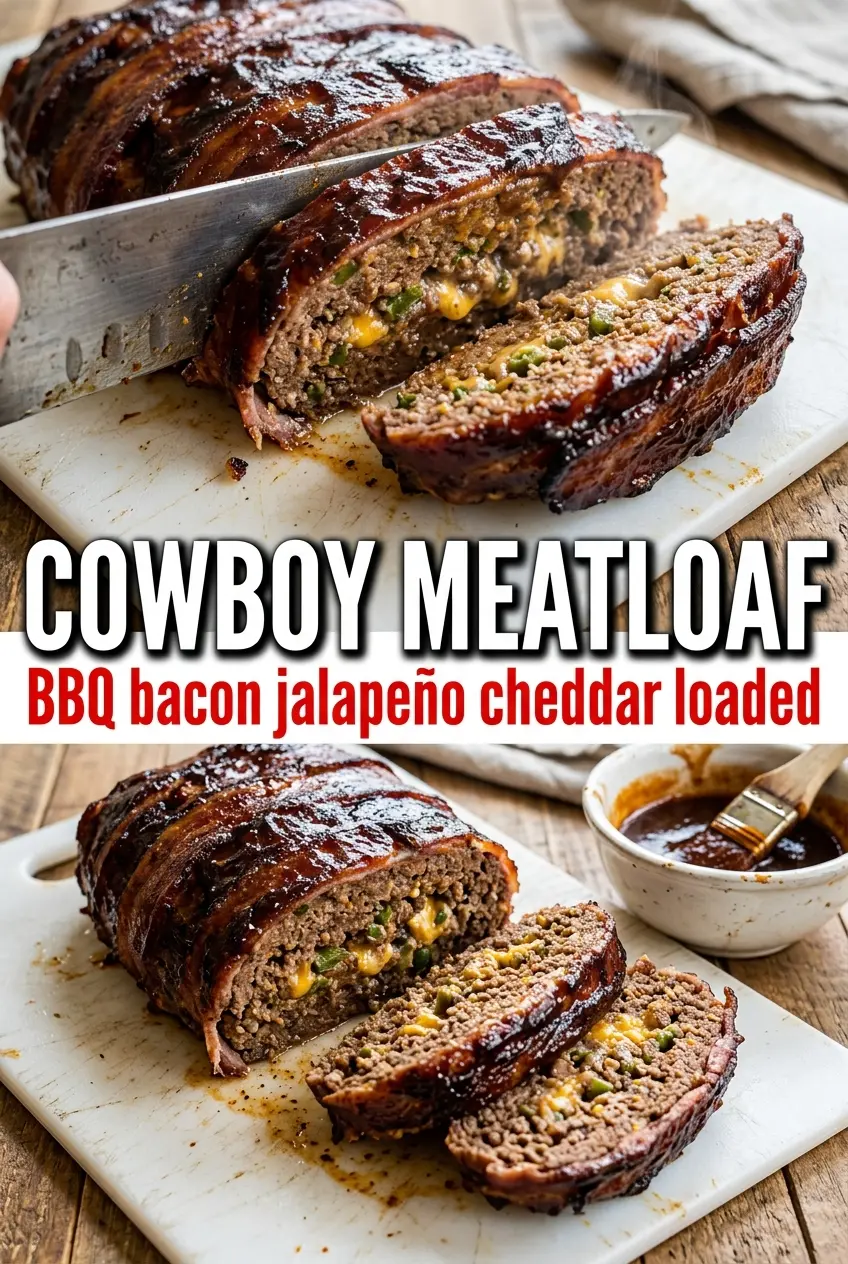
Bacon, cheddar, jalapeños, and a smoky BBQ-ketchup glaze turn this cowboy meatloaf into the kind of dinner that gets requested again before the dishes are even done. It slices cleanly after a short rest, holds together without feeling dense, and brings enough bold flavor to stand up to cornbread, potatoes, or a pile of coleslaw on the side.
What makes this version work is the balance. Ground beef brings the body, breakfast sausage adds seasoning and richness, and the breadcrumbs and milk keep the loaf tender instead of tight. Grated onion melts into the mixture as it bakes, which means you get moisture and flavor without big chunks that fall apart when you slice.
The glaze matters too. Half goes on early so it can caramelize into the meat, and the rest goes on near the end for that sticky, smoky finish. Below, I’ve laid out the details that keep the loaf juicy, the best way to handle the jalapeños, and a few variations if you want to make it milder, cheesier, or easier to reheat later.
The loaf held together beautifully, and the BBQ glaze got sticky without sliding off. I used one jalapeño instead of two and it still had plenty of kick, plus the cheddar stayed melted all the way through.
Save this cowboy meatloaf for a smoky, cheesy dinner with bacon and BBQ glaze that slices like a dream.
The Secret to Keeping a Loaded Meatloaf Tender, Not Heavy
The fastest way to ruin a meatloaf like this is to pack it down like a sandwich loaf. Once you compress ground beef and sausage too much, the fat has nowhere useful to go and the finished slice turns dense and a little rubbery. Mix until everything is evenly distributed, then stop. The loaf should hold its shape, but it shouldn’t look polished.
The other trap is skipping the rest. Hot meatloaf looks finished, but the juices are still moving around inside. Ten minutes on the counter lets the loaf settle, so your slices stay intact instead of collapsing under the knife. That short wait also helps the glaze cling instead of running off the first time you cut in.
- Ground beef and breakfast sausage — This combination gives you the best of both worlds: beef for structure and sausage for seasoning, fat, and a little extra richness. If you use all beef, the loaf tastes flatter unless you season more aggressively.
- Breadcrumbs and milk — These work like a simple panade, which keeps the meat tender and helps the loaf hold moisture. Crushed saltines can stand in if that’s what you have, but plain breadcrumbs are the most neutral choice.
- Grated onion — Grating instead of chopping is worth the extra minute. The onion melts into the meat as it cooks, so you get flavor and moisture without hard pieces breaking up each slice.
- Bacon and cheddar — These are the cowboy part of cowboy meatloaf. Use real sharp cheddar and fully cooked bacon so you don’t add extra grease or undercooked pockets to the loaf.
What Each Ingredient Is Actually Doing in This Recipe
- Primary ingredient (the star) — Quality matters most. Choose the best you can find.
- Cooking medium (oil, butter, or broth) — This carries flavors and prevents dryness.
- Seasonings (salt, pepper, spices, herbs) — Layer flavors so nothing overpowers. Build depth gradually.
- Aromatics (garlic, onion, herbs) — Cook with fat to bloom flavors. Become the foundation.
- Supporting ingredients — Complement the main ingredient without overpowering it.
- Sauce or liquid (if applicable) — Brings flavors together. Balance richness with acid.
- Acid (lemon, vinegar, wine, or other) — Brightens and prevents flat-tasting results.
- Final finish (garnish, glaze, or sauce) — Prevents one-dimensional taste and adds visual appeal.
Building the Glaze So It Bakes On Instead of Sliding Off
Mixing the glaze is easy; timing it is what makes it stick. The first layer goes on before the loaf hits the oven, where the sugars can start to caramelize and fuse with the surface. The second layer waits until the meat is mostly cooked, so it stays glossy and thick instead of burning during the full bake.
If your glaze looks thin at first, that’s fine. The ketchup gives it body, the BBQ sauce brings smoke, and the brown sugar helps it darken into a sticky finish. Brush it on rather than dumping it, especially around the edges, so you get an even coat without washing off the top crust.
Mixing the Meat Without Overworking It
Combine the beef, sausage, breadcrumbs, eggs, milk, onion, garlic, Worcestershire, paprika, jalapeños, bacon, and cheddar in a large bowl and use your hands just long enough to distribute everything evenly. The mixture should feel cohesive but still loose. If it starts looking paste-like, you’ve gone too far. That’s when the loaf turns compact instead of tender.
Shaping the Free-Form Loaf
Form the mixture into a loaf on a foil-lined baking sheet instead of packing it into a pan. Free-form baking gives the outside more surface area, which means better browning and less steaming. Shape it about the same thickness from end to end so it cooks evenly; a skinny tail at one end will dry out before the center reaches temperature.
Glazing, Baking, and Resting
Spread on half the glaze, bake until the outside has set, then add the rest for the final stretch. You’re looking for an internal temperature of 160°F in the center, and the top should be dark, sticky, and a little caramelized around the edges. If the glaze darkens too fast, tent it loosely with foil and keep going. Resting for 10 minutes finishes the job and keeps the juices where they belong.
How to Adapt Cowboy Meatloaf Without Losing the Point
Make It Milder for Kids or Heat-Sensitive Eaters
Leave out the jalapeños and use mild cheddar. You’ll still get the smoky bacon and BBQ flavor, but the finish will be gentler and a little sweeter. If you want a hint of warmth without real heat, add a pinch of black pepper or a small splash of hot sauce to the glaze.
Go Gluten-Free Without Changing the Texture Much
Swap the breadcrumbs for a gluten-free breadcrumb blend or crushed gluten-free crackers in the same amount. The loaf still needs that binder to stay tender, so don’t skip it. If your substitute is very dry, add another tablespoon or two of milk until the mixture feels moist but not wet.
Use All Beef If That’s What You Have
You can replace the sausage with another pound of ground beef, but the loaf will be a little leaner and less seasoned. Add an extra half teaspoon of salt and a pinch more smoked paprika to make up some of that lost depth. The texture still works, but the flavor won’t be quite as rich.
Storage and Reheating
- Refrigerator: Store slices in an airtight container for up to 4 days. The glaze gets even more settled and the bacon flavor comes forward after a night in the fridge.
- Freezer: This freezes well. Wrap slices tightly or freeze the whole cooled loaf, then thaw overnight in the refrigerator before reheating.
- Reheating: Rewarm covered in a 300°F oven with a spoonful of water or a little extra BBQ sauce to keep the edges from drying out. The biggest mistake is blasting it in the microwave until the cheese gets greasy and the meat tightens up.
Answers to the Questions Worth Asking
Cowboy Meatloaf
Ingredients
Equipment
Method
- Preheat the oven to 350°F and line a baking sheet with foil for easy cleanup.
- Combine ground beef, breakfast sausage, breadcrumbs, eggs, milk, onion, garlic, Worcestershire sauce, smoked paprika, jalapeños, bacon, sharp cheddar, and salt and pepper, then mix well until evenly distributed.
- Shape the mixture into a free-form loaf on the lined baking sheet so it bakes evenly.
- Mix BBQ sauce, ketchup, and brown sugar, then spread half of the glaze over the top of the loaf.
- Bake at 350°F for 55 minutes, until the top looks set and the glaze starts to darken and cling to the meat.
- Spread the remaining glaze over the loaf, then bake for 15 more minutes until the internal temperature reaches 160°F.
- Rest the cowboy meatloaf for 10 minutes before slicing so the juices redistribute and the slices hold together.
- Slice and serve with cornbread and coleslaw.