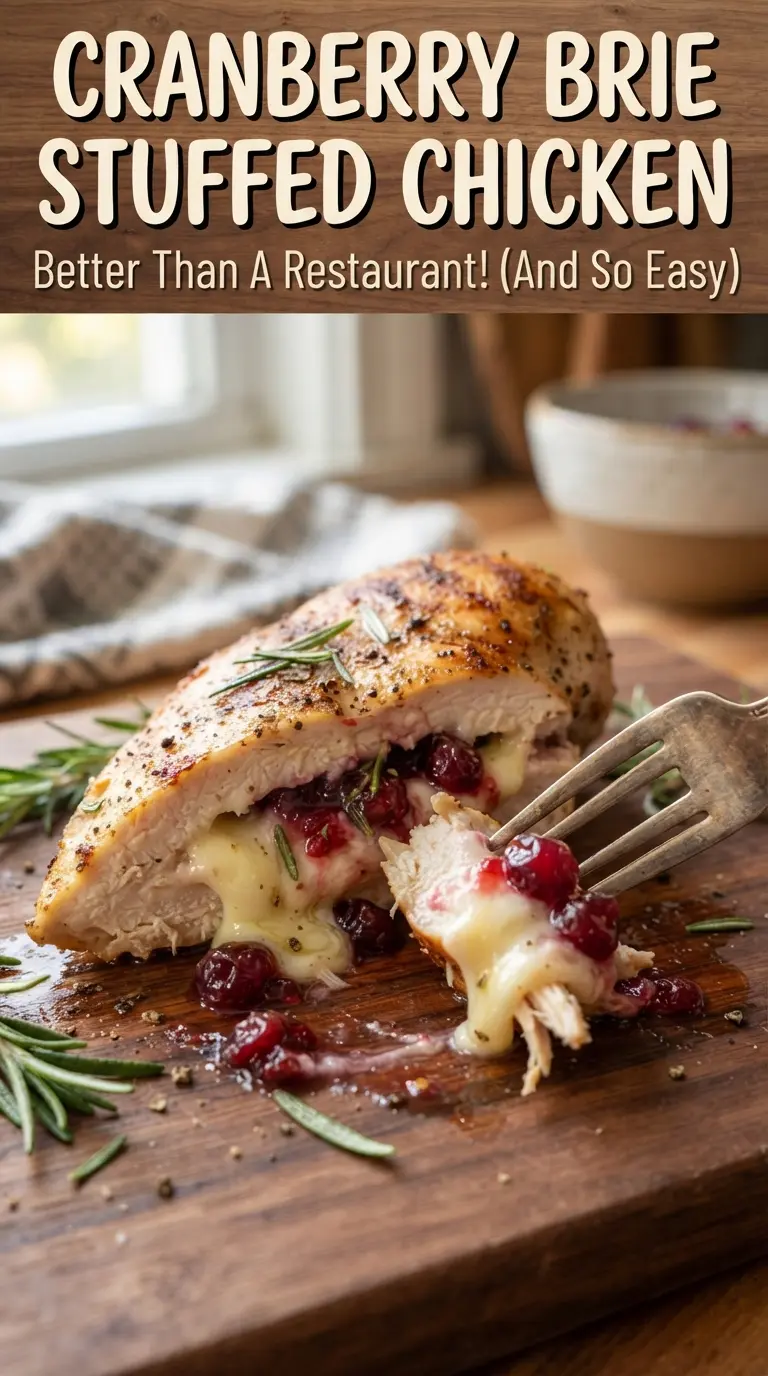
Golden-seared chicken stuffed with brie and cranberry sauce hits that sweet-savory balance that keeps this dish on repeat. The chicken stays juicy because the filling melts inside the pocket instead of drying out on top, and the cranberry sauce turns glossy and tangy as it warms through. When you slice into it, the cheese softens into the berries and makes its own little sauce right on the plate.
The trick is treating the chicken like a small roast, not a fast skillet cutlet. A deep pocket gives you enough room for spinach, brie, and cranberry without everything leaking out during the sear, and finishing it in the oven keeps the exterior from overcooking before the center is done. The pan sauce pulls the whole thing together at the end, using the browned bits left behind in the skillet.
Below, I’ve included the little details that matter here: how to keep the filling in place, what to watch for when the brie starts to melt, and a few variations if you want to change the herbs or make it work with what’s already in your kitchen.
The cranberry sauce stayed tucked inside the chicken and the brie melted into the spinach instead of running all over the pan. I baked it right to 165 and the sauce thickened up beautifully at the end.
Cranberry Brie Stuffed Chicken is one to pin for a dinner that slices beautifully and finishes with a glossy rosemary pan sauce.
The Pocket Matters More Than the Sear
If the pocket is too shallow, the brie melts out before the chicken finishes and you end up with cheese on the pan instead of inside the breast. A deep, horizontal pocket gives the filling room to spread without tearing through the side, which is the difference between a neat slice and a messy leak. The outside still needs a good sear, but the oven does the real work of bringing the chicken to temperature without scorching the cheese.
- Chicken breasts — Use breasts that are similar in size so they finish at the same time. If one is especially thick, pound it lightly on the thicker end before cutting the pocket.
- Brie — This is the ingredient that gives you the soft, creamy center. A rind-on wedge melts fine here; if you want a smoother melt, trim off most of the rind, but don’t replace it with a low-moisture cheese or you’ll lose the contrast.
- Whole berry cranberry sauce — The berries give you little bursts of tartness and help the filling stay in place. Jellied cranberry sauce works in a pinch, but it turns sweeter and less textured.
- Baby spinach — This adds a thin green layer that keeps the cheese from sitting directly against the chicken. Wilt it slightly with your hands as you stuff, or it can spring the pocket open.
- Chicken broth, honey, balsamic, rosemary — These make the pan sauce. The broth loosens the browned bits, honey rounds out the cranberry, balsamic sharpens it, and rosemary gives the sauce a savory edge so it doesn’t taste like dessert.
What Each Ingredient Is Actually Doing in This Recipe
- Primary ingredient (the star) — Quality matters most. Choose the best you can find.
- Cooking medium (oil, butter, or broth) — This carries flavors and prevents dryness.
- Seasonings (salt, pepper, spices, herbs) — Layer flavors so nothing overpowers. Build depth gradually.
- Aromatics (garlic, onion, herbs) — Cook with fat to bloom flavors. Become the foundation.
- Supporting ingredients — Complement the main ingredient without overpowering it.
- Sauce or liquid (if applicable) — Brings flavors together. Balance richness with acid.
- Acid (lemon, vinegar, wine, or other) — Brightens and prevents flat-tasting results.
- Final finish (garnish, glaze, or sauce) — Prevents one-dimensional taste and adds visual appeal.
How to Keep the Filling Inside While the Chicken Finishes
Cutting a real pocket
Slice into the thickest side of each breast and stop about half an inch from the opposite edge so you create a wide pocket instead of two thin flaps. If you cut all the way through, the filling will spill before the chicken has a chance to set. Season the outside after stuffing so the salt and spices stay on the surface where they’ll actually help the crust.
Stuffing without overfilling
Start with spinach, then brie, then cranberry sauce. That order keeps the brie from sliding out the opening and gives the sauce something to sit against instead of running straight into the pan. Toothpicks should close the opening, not squeeze it shut; if the seam is stuffed tight, the cheese has nowhere to go except out the side.
Searing for color, not doneness
Heat the oil until it shimmers, then lay the chicken in and leave it alone long enough to build a deep golden crust. If you move it too soon, the surface tears and sticks. Two to four minutes per side is enough here because the oven finishes the cooking; the skillet is for flavor and color, not for drying the meat out.
Finishing in the oven and building the sauce
Once the skillet goes into the oven, pull the chicken as soon as it reaches 165F in the thickest part. While it rests, stir the broth, cranberry, honey, balsamic, and rosemary into the hot skillet and let it simmer until it looks lightly syrupy. If the sauce seems thin at first, it needs the full three minutes to reduce and pick up the browned bits from the pan.
What to Change When You Need a Different Version
Dairy-free version
Swap the brie for a dairy-free soft cheese that melts well, or use a layer of extra cranberry sauce and spinach instead. You won’t get the same creamy center, but you’ll keep the sweet-tart contrast and the chicken will still slice neatly if you don’t overstuff it.
Lower-sugar finish
Use unsweetened cranberry sauce if you can find it, then skip the honey in the pan sauce or reduce it to a teaspoon. The result is a sharper, more savory sauce that leans into the balsamic and rosemary instead of turning sweet.
Make-ahead dinner
You can stuff and toothpick the chicken a few hours ahead, then keep it covered in the refrigerator until you’re ready to sear. Don’t sear it early and reheat it later; that’s how the brie breaks down and the chicken dries out before serving.
Storage and Reheating
- Refrigerator: Store leftovers for up to 3 days. The chicken stays moist, but the brie firms up once chilled.
- Freezer: It freezes, but the cheese texture changes after thawing. Wrap tightly and freeze for up to 2 months if you don’t mind a softer, less neat filling.
- Reheating: Warm covered in a 325F oven until heated through. The microwave works in a pinch, but it can make the filling separate and the chicken rubbery.
Answers to the Questions Worth Asking

Cranberry Brie Stuffed Chicken
Ingredients
Equipment
Method
- Preheat oven to 400F while you prep the chicken. Keep a focused work area so the pockets can be stuffed right away.
- Cut a deep pocket into the side of each chicken breast. Season the outside of each breast with salt, black pepper, garlic powder, and dried thyme.
- Stuff each pocket with baby spinach, brie, and 1 tablespoon cranberry sauce. Secure with toothpicks so the filling stays inside during cooking.
- Heat olive oil in a hot, oven-safe skillet and sear the chicken 3-4 minutes per side until golden. The surface should look browned, but not fully cooked.
- Transfer the skillet to the oven and bake 15-18 minutes until the chicken reaches 165F. Let it rest briefly in the pan after baking so juices settle.
- Remove chicken and add chicken broth, remaining cranberry sauce, honey, balsamic vinegar, and chopped fresh rosemary to the skillet. Simmer for 3 minutes to thicken slightly and marry flavors.
- Spoon the sauce over the chicken and serve. Use the toothpicks out of the way at the table if you want a cleaner slice.