Golden roast chicken gets a bright, sticky finish here: crisp skin lacquered with maple, tart cranberries that burst into the pan sauce, and rosemary running through the whole bird. The balance is what makes it worth repeating. You get the rich, savory comfort of a classic roast chicken, but every slice lands with a little sweet-tart pop instead of feeling heavy.
The trick is building flavor in layers. Butter goes under and over the skin so the meat stays moist and the outside browns evenly, while the orange and garlic in the cavity perfume the bird from the inside. The maple-Dijon glaze goes on near the end, not at the start, so it reduces into a shiny coating instead of burning before the chicken is done. The cranberries and broth turn the drippings into a pan sauce that tastes much more complex than the short ingredient list suggests.
Below, you’ll find the timing that keeps the glaze glossy, not bitter, plus the one resting step that keeps the juices where they belong. If you’ve ever wanted a roast chicken that looks as good as it tastes, this is the one to make.
The glaze turned out glossy instead of burnt, and the cranberries burst into the pan juices just enough to make a sauce that was sweet, tangy, and perfect over the carved chicken.
Save this cranberry maple roast chicken for the night you want a glossy, tart-sweet roast with a built-in pan sauce.
The Part That Keeps the Glaze From Burning
Maple syrup is the ingredient that can make this chicken look brilliant or ruin it fast. It needs heat to turn sticky and glossy, but it scorches if it goes on too early. That’s why the bird gets most of its roasting time before the glaze shows up. By the time you brush it on, the chicken is already close to done, so the maple has enough time to tighten into a lacquer without crossing into bitter territory.
The other thing that matters is the pan environment. Cranberries and broth go in after the first roast, which gives the fruit time to soften and burst without drying out in the oven. If you add them too soon, they collapse into leathery little shells before the chicken finishes cooking. The last 25 to 30 minutes are where the sauce happens.
What Each Ingredient Is Actually Doing in This Roast Chicken
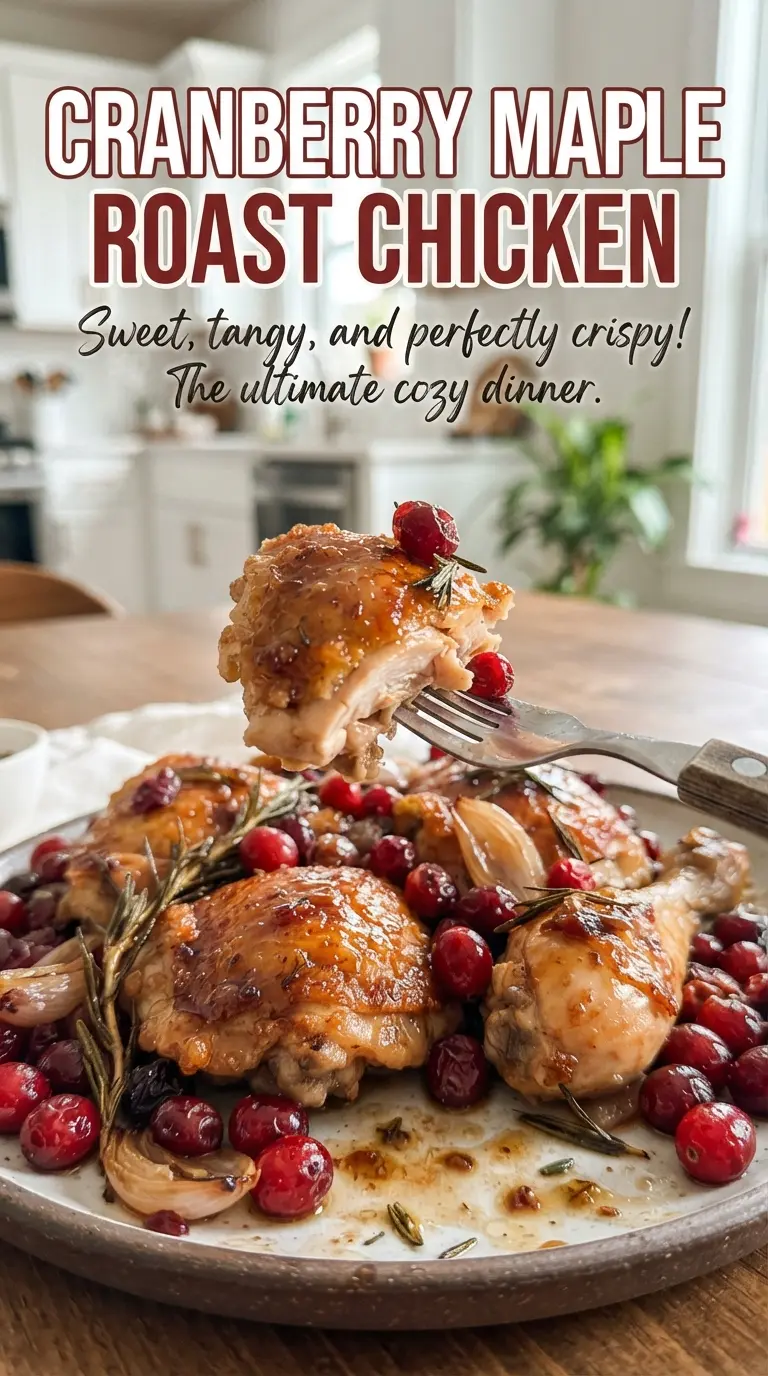
- Whole chicken — A 5-pound bird cooks evenly enough for this timing and gives you enough surface area for the glaze to cling to. Patting it dry is not optional; moisture on the skin turns into steam, and steam keeps the skin pale.
- Butter and rosemary — Softened butter carries the rosemary flavor under the skin, where it actually seasons the meat. Oil will brown, but butter gives you a richer finish and helps the skin color more evenly.
- Orange and garlic — These perfume the chicken from the inside and soften the roast’s sweetness. A lemon swap works in a pinch, but orange gives the glaze a rounder, softer edge that fits the maple better.
- Maple syrup and Dijon — Maple brings the shine and sweetness; Dijon keeps it from tasting flat. Don’t swap in a milder mustard here, or the glaze loses the sharpness that balances the cranberries.
- Cranberries and chicken broth — Cranberries burst into the drippings and help build the pan sauce, while broth loosens everything just enough to spoon over the carved chicken. Fresh cranberries work best because they hold their shape until the end, then break at exactly the right time.
- Red onion — The wedges roast in the chicken fat and glaze, picking up sweet edges and a soft texture. They also keep the pan from feeling one-note by adding a little savory depth under the fruit.
Roasting in Two Stages So the Skin Stays Crisp
Seasoning and Stuffing the Bird
Start by drying the chicken thoroughly, then season it inside and out with salt and pepper. Rub the softened butter mixed with rosemary under the skin first, then over the outside, so the meat stays juicy and the skin gets a direct path to browning. The orange and garlic halves go in the cavity, not the pan, because they need the chicken’s heat and moisture to perfume the meat from the inside.
The First Roast
Set the chicken in the pan with the onion wedges around it and roast for 50 minutes. At this stage, the skin should be turning deep gold but not fully lacquered yet. If your oven runs hot, watch the breast closely near the end of this first stretch; you want color, not dark brown spots.
Glazing and Finishing
Whisk the maple syrup and Dijon together, then brush half over the chicken and add the cranberries and broth to the pan. Roast for another 25 to 30 minutes, brushing with the remaining glaze partway through. The chicken is done when the thigh hits 165°F and the glaze looks shiny and set. If the cranberries look dry before the chicken is done, the broth is gone; add a small splash more to keep the pan juices saucy.
The Rest That Keeps It Juicy
Pull the chicken out and let it rest for 15 minutes before carving. That pause matters because the juices settle back into the meat instead of running across the cutting board. Spoon the cranberry pan sauce over the sliced chicken right before serving so the skin keeps as much texture as possible.
How to Adapt This for Different Tables and Pantry Situations
Dairy-Free Version
Swap the butter for olive oil or a plant-based butter that stays soft enough to spread under the skin. You’ll lose a little of the rich dairy roundness, but the rosemary, orange, and maple still carry the dish well.
No Fresh Cranberries
Frozen cranberries work without thawing. They may give off a little more liquid, so keep an eye on the pan and let the glaze reduce fully at the end. Dried cranberries won’t behave the same way here; they won’t burst into a sauce and the dish loses its bright finish.
Herb Swap
Rosemary can be replaced with thyme if that’s what you have. Thyme gives the chicken a gentler, woodsy note and keeps the roast feeling balanced, though it won’t stand up to the maple quite as boldly as rosemary.
Storage and Reheating
- Refrigerator: Store leftovers for up to 4 days. The skin softens, but the flavor deepens as the pan sauce settles into the meat.
- Freezer: Freeze carved chicken and sauce separately for up to 2 months. The texture is best when the meat is frozen without the crispy skin, since the skin won’t stay crisp after thawing.
- Reheating: Reheat gently in a covered dish at 325°F with a spoonful of broth or pan juices. High heat dries out the breast meat fast and makes the glaze taste sticky instead of fresh.
Answers to the Questions Worth Asking
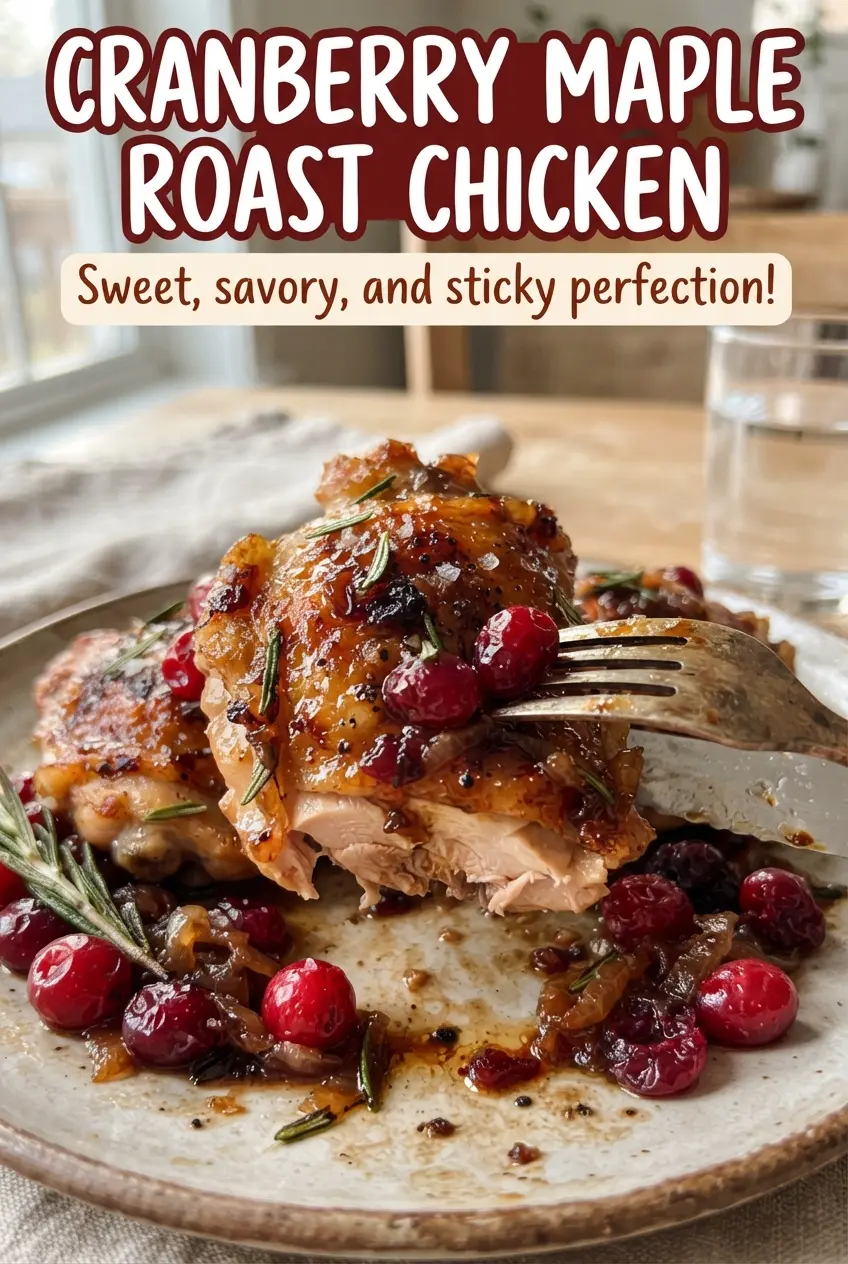
Cranberry Maple Roast Chicken
Ingredients
Equipment
Method
- Preheat the oven to 425F, positioning a rack in the middle. Look for the oven to fully reach temperature before roasting.
- Season the chicken inside and out with salt and black pepper, then rub the softened butter mixed with chopped rosemary under and over the skin. Use a firm hand so the herb butter coats all visible areas.
- Stuff the cavity with the orange halves and halved garlic, then place the chicken in a roasting pan and nestle the red onion wedges around it. Keep the onion in the pan so it caramelizes alongside the bird.
- Roast for 50 minutes. The skin should start turning golden and the juices should begin to bubble in the bottom of the pan.
- Whisk together the maple syrup and Dijon mustard, then brush half of the glaze over the chicken. Save the remaining glaze for later brushing.
- Add the fresh cranberries and chicken broth to the roasting pan around the chicken. The cranberries should settle and start to soften as they heat.
- Roast 25-30 minutes more, brushing with the remaining glaze until the thigh reaches 165F. Watch for deep golden lacquered skin and bubbling pan sauce, and confirm doneness with a thermometer.
- Rest the chicken for 15 minutes before carving. This lets the juices reabsorb for cleaner slices.
- Carve the chicken and spoon the cranberry pan sauce over the top. Serve immediately while the glaze and berries are hot.