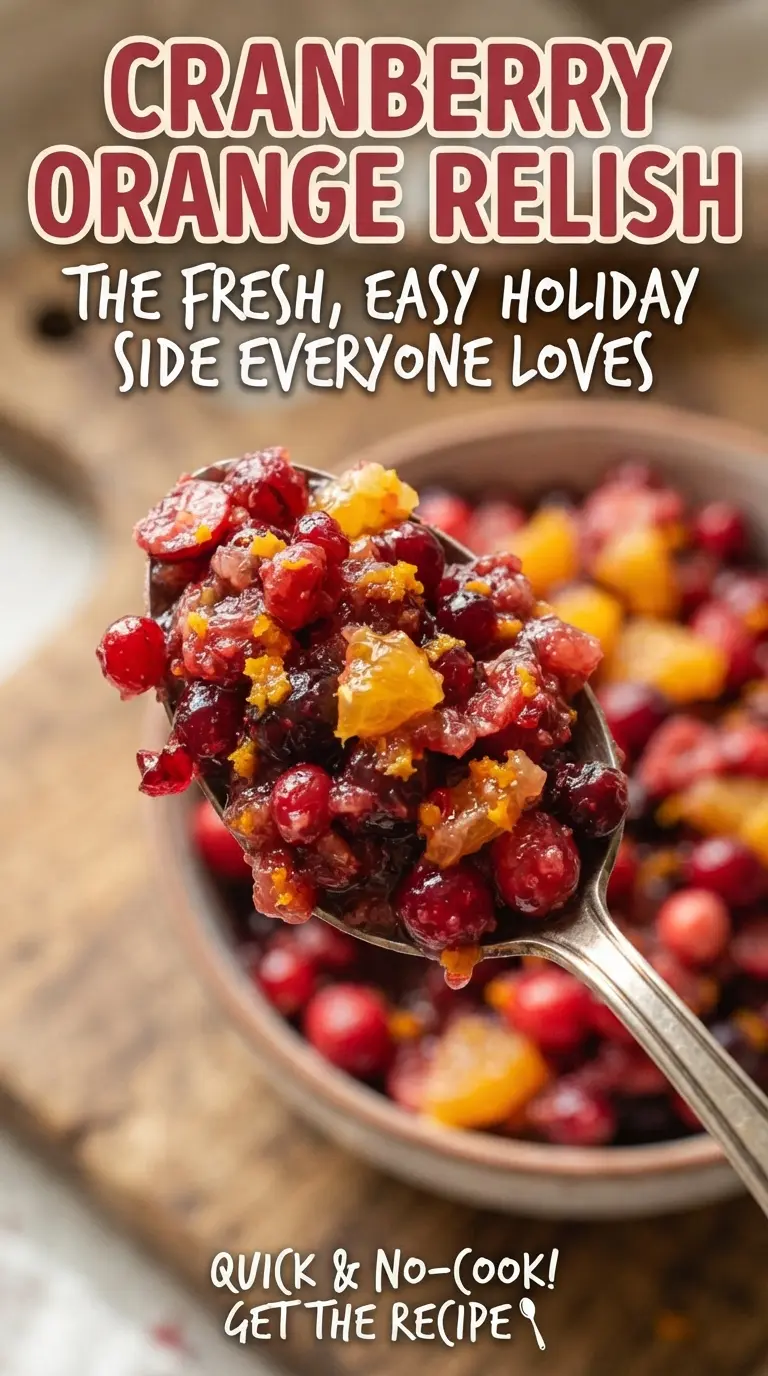
Cranberry orange relish brings that bright, sharp-sweet snap that cuts through rich food better than almost anything else on the table. The cranberries stay a little toothsome, the orange adds perfume and bitterness from the peel, and the sugar rounds everything out just enough so it tastes fresh instead of harsh. It’s the kind of side dish people keep spooning onto turkey, ham, biscuits, or even a block of cream cheese with crackers.
What makes this version work is the balance between the fruit and the time in the fridge. Pulsing the cranberries and orange in a food processor gives you a lively texture, but stopping before it turns into paste keeps the relish from tasting like jam. The sugar needs those few hours to draw out the juices and soften the bite, and that rest is what turns a pile of chopped fruit into something spoonable and cohesive.
You’ll find the quick technique below, plus the one substitution that keeps the flavor bright if you don’t have orange liqueur on hand. I’ve also included a few ways to use it beyond the holiday table, because this is one of those simple recipes that earns its keep fast.
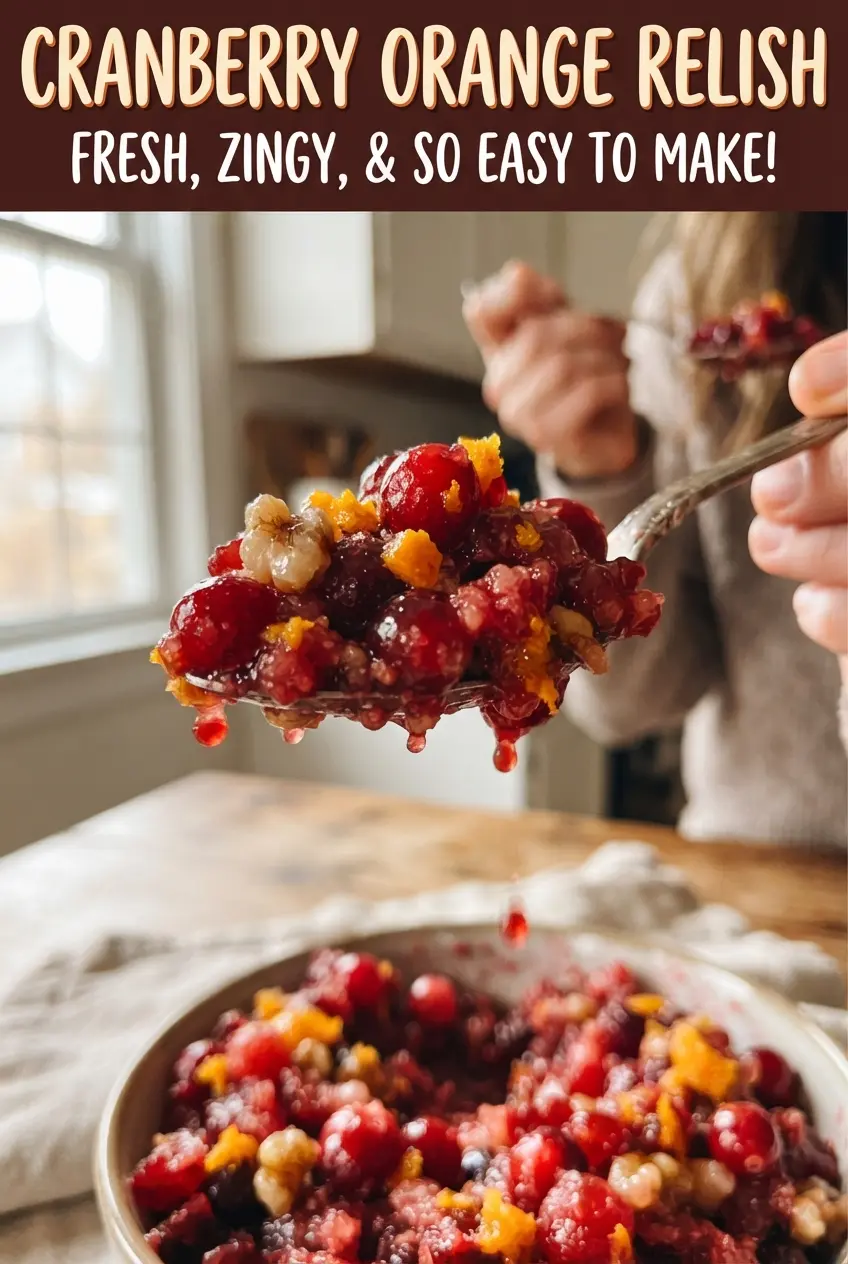
I’ve made cranberry relish for years, but this was the first time the orange flavor came through without tasting bitter. The texture after chilling was perfect — not soupy, just juicy enough to spoon onto turkey.
Love cranberry orange relish’s bright, tangy bite? Save it to Pinterest for turkey dinners, ham spreads, and easy holiday sides.
The Secret to Keeping Cranberry Relish Bright Instead of Bitter
The biggest mistake with cranberry orange relish is overprocessing the fruit. If you run the food processor until everything turns into a smooth puree, the relish loses the clean pop of cranberry and starts to taste muddy. A few quick pulses are enough; you want tiny pieces, not a sauce.
Using the orange unpeeled is what gives this relish its signature edge, but that only works well if you seed it first. The white pith brings bitterness, which is welcome here in small amounts because it balances the sugar, but too much pulp or membrane can make the texture stringy. Chilling does more than cool it down — it softens the cranberries, blends the citrus, and takes the raw sharpness off the fruit.
- Fresh cranberries — Frozen cranberries work too if that’s what you have; use them straight from the freezer and pulse only until finely chopped. Thawing first makes them mushy.
- Navel orange — A sweet, seedless orange gives the cleanest citrus flavor. Don’t peel it, but do remove every seed and trim away any thick white core if it looks especially pithy.
- Sugar — This isn’t just for sweetness. It pulls juice from the fruit and turns the mixture glossy and spoonable after chilling.
- Orange liqueur or orange juice — Liqueur adds a deeper, slightly floral orange note. If you skip it, use orange juice and add a little extra zest from the orange before processing.
What Each Ingredient Is Actually Doing in This Recipe
- Primary ingredient (the star) — Quality matters most. Choose the best you can find.
- Cooking medium (oil, butter, or broth) — This carries flavors and prevents dryness.
- Seasonings (salt, pepper, spices, herbs) — Layer flavors so nothing overpowers. Build depth gradually.
- Aromatics (garlic, onion, herbs) — Cook with fat to bloom flavors. Become the foundation.
- Supporting ingredients — Complement the main ingredient without overpowering it.
- Sauce or liquid (if applicable) — Brings flavors together. Balance richness with acid.
- Acid (lemon, vinegar, wine, or other) — Brightens and prevents flat-tasting results.
- Final finish (garnish, glaze, or sauce) — Prevents one-dimensional taste and adds visual appeal.
How to Build the Right Texture Before It Hits the Fridge
Pulse, Don’t Puree
Add the cranberries and orange chunks to a food processor and pulse in short bursts. Stop as soon as the pieces look evenly chopped with some texture left behind. If you keep going, the orange turns watery and the cranberries lose their bright, almost crunchy edge.
Sweeten and Season While It’s Dry
Stir the chopped fruit with the sugar, orange liqueur or juice, and salt right away. At this stage the mixture will look dry and a little gritty, and that’s normal. The sugar dissolves as it sits, so don’t judge the final texture yet.
Let the Fruit Do the Work
Cover the bowl and chill it for at least 4 hours, or overnight if you can. This resting time is what thickens the relish and smooths out the sharpest edges. If you serve it too early, it tastes harsh and the sugar can still feel crunchy.
Stir Before Serving
Give the relish a good stir before spooning it into a serving bowl. Juices settle at the bottom, and mixing brings the texture back together. Finish with fresh mint for a clean, bright look that matches the flavor.
How to Adapt This for Bigger Crowds or a Different Table
Make It Sweeter for Kids or Mild Palates
Add another 2 to 3 tablespoons of sugar if you want a softer, less tart relish. That extra sweetness mutes the cranberry bite, but it also makes the orange flavor taste a little rounder and less sharp.
Use Orange Juice Instead of Liqueur
Orange juice keeps the recipe alcohol-free and still gives you the citrus backbone this relish needs. The flavor will be a little lighter and less fragrant than with liqueur, so the orange zest in the fruit matters more.
Make a Double Batch for Holiday Hosting
This recipe scales cleanly. Just pulse the fruit in batches so the processor doesn’t turn the bottom layer into paste, then combine everything in a large bowl and chill it in a container with enough room for the juices to move around.
Storage and Reheating
- Refrigerator: Keeps for 5 to 7 days in a covered container. The texture loosens a bit as it sits, but the flavor gets better for the first couple of days.
- Freezer: It freezes well for up to 2 months. Thaw it in the refrigerator, then stir well to bring the juices back together.
- Reheating: No reheating needed. Serve it cold or at cool room temperature; heating softens the fruit too much and dulls the fresh citrus taste.
Questions I Get Asked About This Recipe
Cranberry Orange Relish
Ingredients
Equipment
Method
- Pulse fresh cranberries and orange chunks in a food processor until finely chopped but not pureed, stopping to scrape down if needed.
- Transfer the chopped mixture to a bowl, then stir in sugar, orange liqueur or orange juice, and salt until evenly combined.
- Cover and chill the relish for at least 4 hours or overnight so the flavors meld and the texture sets.
- Stir well before serving to redistribute any liquid and keep the relish evenly chopped.
- Garnish with fresh mint right before serving for a fresh, speckled look.