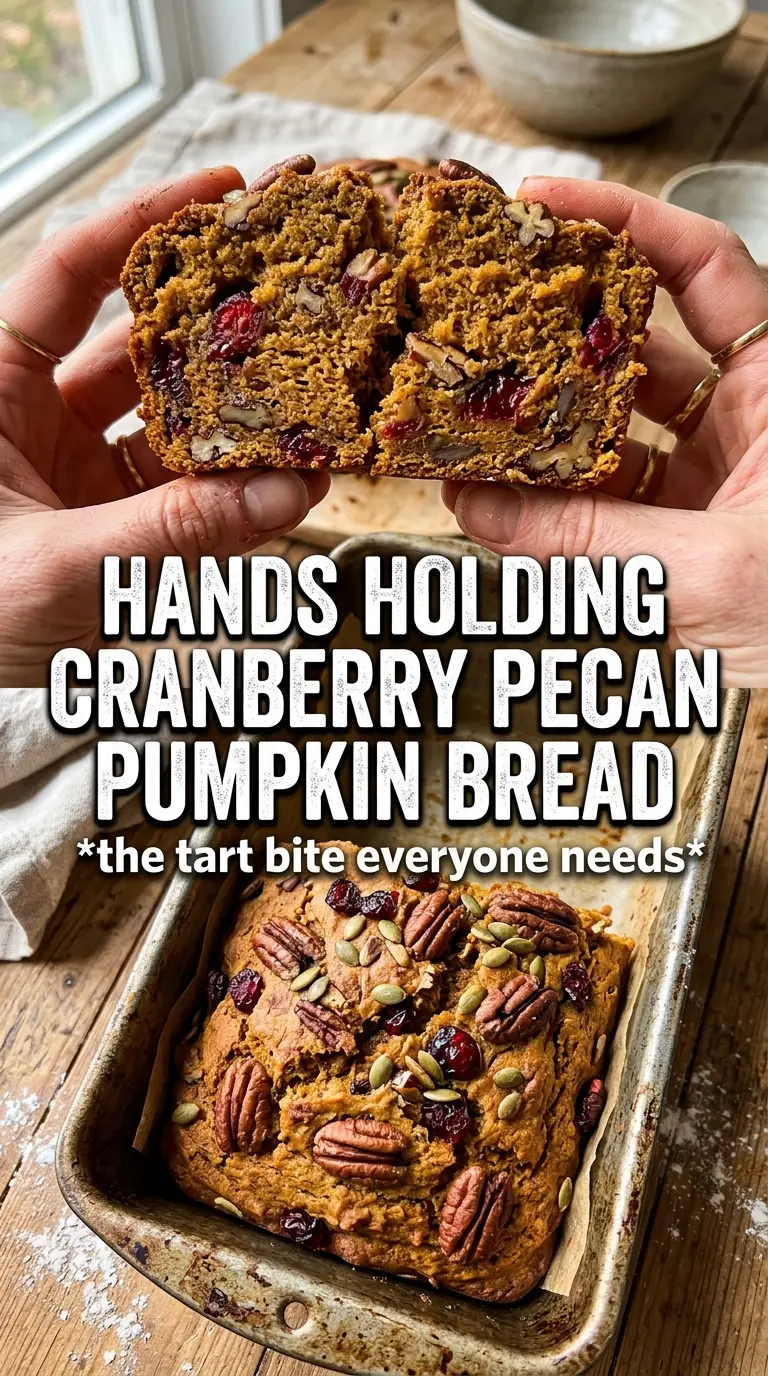
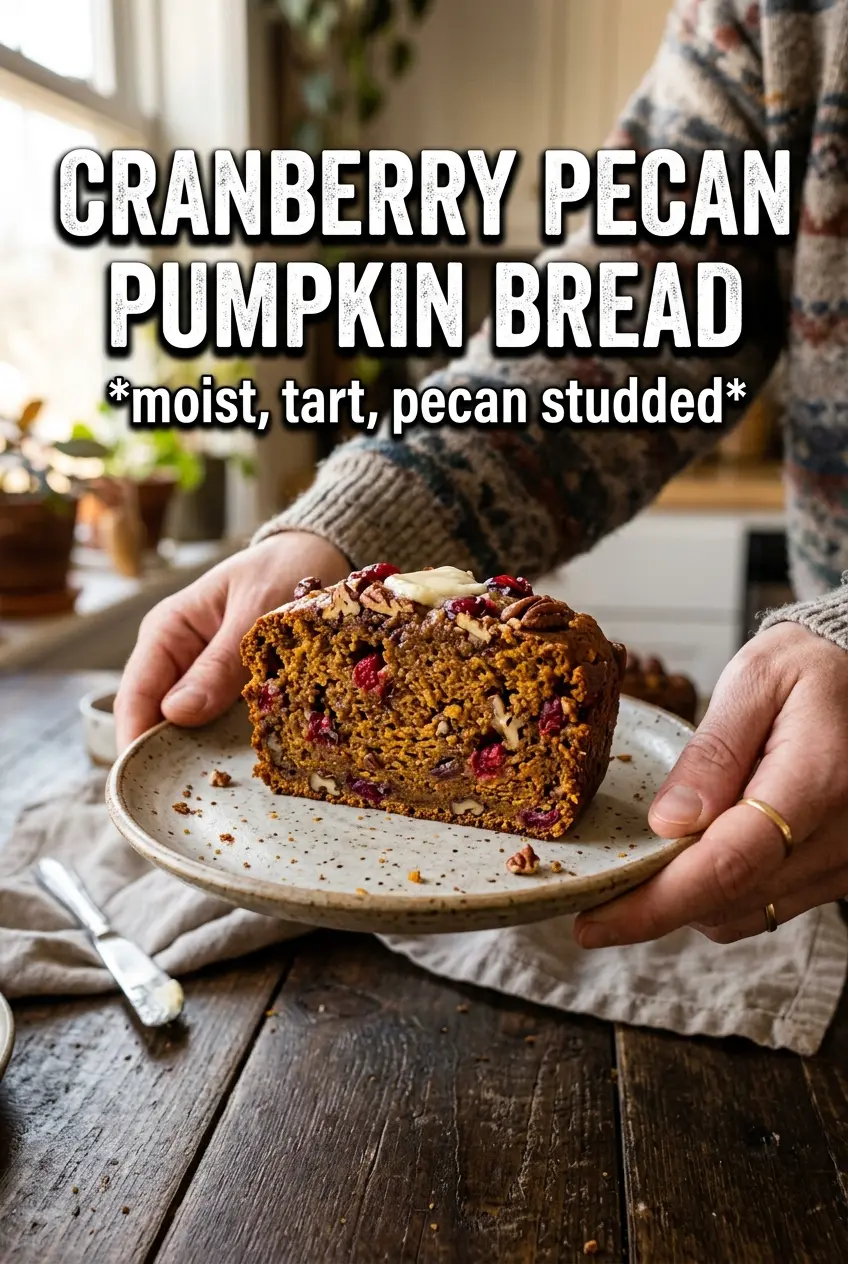
Cranberry pecan pumpkin bread bakes up with a tender, almost custardy crumb, pockets of tart cranberry, and just enough crunch from the pecans to keep every slice interesting. The orange glaze on top pulls the whole loaf together with a bright finish that keeps the pumpkin from tasting heavy. It’s the kind of loaf that disappears fast because it works just as well for breakfast as it does with coffee in the afternoon.
The texture comes from the balance of ingredients: pumpkin puree for moisture, oil for a soft crumb, and both granulated and brown sugar for sweetness with a little depth. The cranberries need to be chopped so they don’t sink in big pockets, and the pecans should be folded in at the end so they stay scattered through the batter instead of getting crushed. I tested this with both fresh and frozen cranberries, and both work as long as you don’t thaw the frozen ones first.
Below, I’ll show you how to keep the loaf from turning dense, how to handle the glaze so it drips instead of disappearing, and what to change if you want to make it dairy-free or swap in a different nut.
The crumb stayed incredibly soft, and the orange glaze gave just enough brightness to balance the tart cranberries. I used frozen cranberries straight from the bag and the loaf still baked up perfectly in the middle.
Like this loaf? Save this cranberry pecan pumpkin bread for the mornings when you want a soft pumpkin crumb, tart fruit, and a bright orange glaze in every slice.
The Trick to Keeping Pumpkin Bread Tender Instead of Gummy
Most pumpkin breads go wrong in the same place: too much mixing after the flour goes in. Once the dry ingredients hit the wet bowl, stir only until the streaks disappear. The batter should look thick and a little rough, not silky smooth. That small restraint keeps the loaf soft instead of tight and dense.
The other thing that matters here is moisture balance. Pumpkin puree brings plenty of water, so the oil and sugars need to stay in step with it instead of being cut back. If your loaf has ever baked up with a wet line in the center, it usually means the batter was overworked or the loaf went into the oven before the pan was fully hot. This one bakes best in a steady 350°F oven until the top springs back lightly and a toothpick comes out with only a few moist crumbs.
What Each Ingredient Is Actually Doing in This Loaf
- Pumpkin puree — This is the backbone of the loaf. It gives the bread its soft texture and earthy pumpkin flavor, and canned puree is the right choice here because it’s thick and consistent. Don’t use pumpkin pie filling; it already has sugar and spices mixed in.
- Vegetable oil — Oil keeps the crumb plush for days, which butter doesn’t quite do in the same way. Melted butter will change the texture and make the bread a little firmer once cooled. If you want the softest slice, keep the oil.
- Brown sugar — The molasses in brown sugar adds depth and helps the top bake with a little more color. Granulated sugar handles the clean sweetness, but the brown sugar is what keeps the loaf from tasting flat.
- Orange zest and juice — The zest in the batter and the juice in the glaze are what make this bread stand out. The citrus wakes up the pumpkin and cranberry without turning the loaf into something that tastes like orange cake. Fresh zest matters here; bottled juice won’t give you the same lift.
- Cranberries — Fresh or frozen both work, but chopping them keeps the loaf from tearing when you slice it. If you use frozen cranberries, fold them in straight from the freezer so they don’t bleed into the batter.
- Pecans — These add the crunch that keeps every bite from feeling soft all the way through. Walnuts will work if that’s what you have, but pecans bring a sweeter, rounder flavor that fits the pumpkin better.
Building the Batter So the Loaf Rises Evenly
Mix the dry ingredients first
Whisk the flour, baking soda, pumpkin pie spice, cinnamon, and salt in one bowl until everything looks evenly distributed. This keeps the spices from clumping in one bite and the baking soda from staying in little pockets that can leave a bitter taste. If you skip this step or rush it, the loaf can rise unevenly.
Whisk the wet ingredients until smooth
In a second bowl, whisk the pumpkin puree, both sugars, oil, eggs, vanilla, and orange zest until the mixture looks glossy and uniform. The sugar should start dissolving into the pumpkin, and the eggs should disappear completely. If you still see streaks of egg white, keep whisking before you add the flour.
Fold, don’t beat
Add the dry mixture to the wet bowl and fold with a spatula just until no dry flour remains. Then fold in the cranberries and pecans, saving a handful to scatter over the top. Overmixing at this stage is what makes quick bread tough, so stop as soon as the batter comes together.
Bake until the center is set
Scrape the batter into a greased 9×5 loaf pan, top with the reserved fruit and nuts, and bake until the center tests clean with only a few moist crumbs clinging to the toothpick. The top should be deeply golden and spring back lightly when touched. If the top browns too quickly before the middle is done, tent it loosely with foil for the last 15 minutes.
Make it dairy-free without changing the crumb
This recipe is naturally dairy-free as written, which is part of why the crumb stays so soft for days. Just keep the oil and skip any butter-based swap if you want the same plush texture. The orange glaze uses juice instead of milk, so it fits right in without any extra changes.
Use walnuts instead of pecans
Walnuts bring a sharper, slightly more bitter edge than pecans, which makes the bread taste a little less sweet. They still work well if that’s what’s in the pantry, especially with the orange glaze on top. Chop them the same size as the pecans so the loaf slices cleanly.
Skip the glaze for a less sweet breakfast loaf
The bread is flavorful enough to stand on its own without the glaze. Leave it off if you want a more breakfast-style loaf and a better contrast between the tart cranberries and the warm spice. You’ll lose the citrus finish, but the crumb and texture stay the same.
How to store and reheat slices
- Refrigerator: Keep covered for up to 5 days. The crumb firms slightly in the fridge, but the flavor stays good.
- Freezer: This loaf freezes well. Wrap individual slices tightly, then place them in a freezer bag for up to 3 months.
- Reheating: Warm slices in a toaster oven or microwave just until heated through. Don’t overheat or the cranberries can turn chewy and the crumb dries out fast.
Questions I Get Asked About This Recipe
Cranberry Pecan Pumpkin Bread
Ingredients
Equipment
Method
- Preheat the oven to 350F and grease a 9x5 loaf pan to prevent sticking.
- Whisk all-purpose flour, baking soda, pumpkin pie spice, cinnamon, and salt until evenly combined with no visible streaks.
- Whisk pumpkin puree, granulated sugar, brown sugar, vegetable oil, eggs, vanilla, and orange zest until smooth and glossy.
- Fold the dry mixture into the wet just until no dry flour remains, then fold in cranberries and pecans, reserving a few for the top (visual cue: batter should look thick and speckled).
- Pour the batter into the loaf pan and scatter the reserved cranberries and pecans over the top for a visible crust layer.
- Bake at 350F for 60–65 minutes, until a toothpick comes out clean (visual cue: the loaf will look set and slightly domed).
- Cool the loaf for 20 minutes before glazing so the drizzle stays on top.
- Whisk powdered sugar, orange juice, and cinnamon into a smooth glaze, then drizzle over the warm-cooled loaf.