Bright cranberry relish wakes up a holiday plate in a way cooked sauces just can’t match. It stays raw and chunky, with sharp cranberry bite, citrusy orange, and a little sweetness from the apple that softens the edges without turning it into jam. The result is crisp, fresh, and spoonable, with enough texture to hold its own next to turkey, ham, or a heavy casserole.
The trick here is keeping the fruit chopped, not pureed. If the cranberries turn too fine, the relish can go past lively and into mushy territory before it ever hits the table. The orange goes in unpeeled, which gives you that fragrant oils from the peel along with the juice and flesh, and the apple adds body plus a clean sweetness that helps the sugar dissolve into the mixture overnight.
Below, I’ll walk through the one step that matters most, the ingredient choices that change the texture, and a few easy ways to adjust the relish if you want it sweeter, tarter, or nut-free.
The sugar dissolved overnight and the relish stayed bright and chunky instead of watery. I loved how the orange peel perfume came through without tasting bitter.
This cranberry relish stays chunky, bright, and citrusy after chilling overnight — save it for the holiday meal that needs a fresh, tangy side.
The Secret to Keeping Cranberry Relish Bright Instead of Watery
The mistake most people make with cranberry relish is overprocessing the fruit. You want a coarse chop, not a paste, because cranberries release juice fast and can turn soggy if they’re blitzed too far. The relish also needs time in the fridge for the sugar to dissolve and the flavors to settle into each other; that resting time is what smooths out the sharpness without cooking away the fresh flavor.
The other detail that matters is the order. Chop the cranberries first and get them into the bowl, then pulse the orange and apple separately so the citrus peel doesn’t disappear and the apple doesn’t turn to puree. That layering keeps the relish lively and textured instead of muddy.
What Each Fruit Is Doing in This Relish
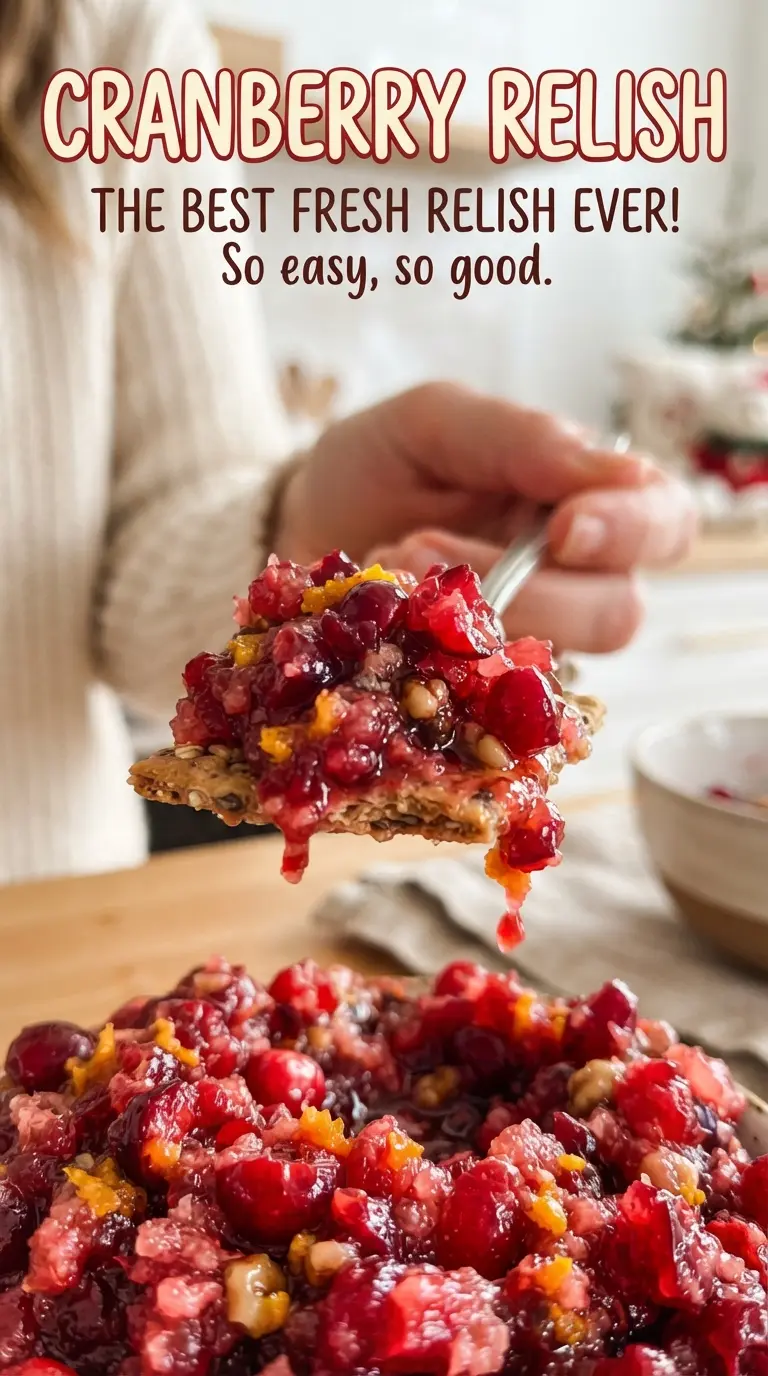
- Fresh cranberries — These bring the sharp, clean bite that defines the relish. Frozen cranberries will work if that’s what you have, but thaw and drain them first so extra moisture doesn’t thin the mixture.
- Orange, unpeeled — The peel gives the relish its fragrance and a little bitterness that keeps it from tasting flat. Seed it well before chopping so you don’t end up with harsh little bits in the final bowl.
- Apple — This adds body and a softer sweetness that helps the sugar spread through the fruit. A crisp apple holds up best; something mealy will break down too much and make the relish mushier.
- Sugar — It does more than sweeten. It draws moisture from the fruit during chilling and helps create that glossy, spoonable texture. Cutting it too far makes the relish taste harsh and unbalanced.
- Pecans — These are optional, but they add a pleasant crunch right at the end. Stir them in just before serving so they stay crisp instead of going soft in the fridge.
How to Build the Texture Without Turning It to Purée
Chopping the Cranberries First
Pulse the cranberries in a food processor just until they’re coarsely chopped and a few pieces are still visible. If you keep going until the bowl looks uniform, the berries will leak too much juice and the relish will lose its pop. Transfer them to a bowl right away so you don’t accidentally keep breaking them down in the processor.
Processing the Orange and Apple
Pulse the orange and apple separately until finely chopped. The goal is small pieces that can mingle with the cranberries, not a smooth puree. If the orange gets too far, the peel can go from fragrant to bitter, so stop as soon as the mixture looks even and broken up.
Mixing and Chilling
Stir the fruit together with the sugar, cover the bowl, and chill it at least 4 hours or overnight. During that rest, the sugar dissolves and the fruit juices loosen into a glossy relish instead of a crunchy fruit salad. Stir once or twice if you think of it, then add the pecans just before serving so they keep their bite.
How to Adapt This Cranberry Relish for Different Tables
Nut-Free Cranberry Relish
Leave out the pecans and serve the relish as-is. You’ll keep the clean, juicy texture and lose none of the flavor, which makes this the easiest change if you’re cooking for a mixed crowd or need a side that’s safe around nut allergies.
Less-Sweet Relish
Start with 1/2 cup sugar instead of 3/4 cup, then chill and taste before serving. Cranberries vary a lot in tartness, so this lets you keep the relish bright without making it sharp. The texture will still set up, just with a little more tang.
No-Food-Processor Version
Use a sharp chef’s knife and chop everything finely by hand. The texture will be a little looser and more rustic, but the flavor stays the same. Keep the pieces small and even so the sugar can dissolve properly during chilling.
Storage and Reheating
- Refrigerator: Keep covered for up to 5 days. The relish gets softer as it sits, but the flavor stays bright.
- Freezer: It freezes well for up to 2 months. Thaw in the refrigerator and stir well; the texture will be a little looser after freezing, but still good for serving.
- Reheating: No reheating needed. Serve it cold or at cool room temperature, and don’t warm it or the fresh fruit texture will collapse.
Questions I Get Asked About This Recipe
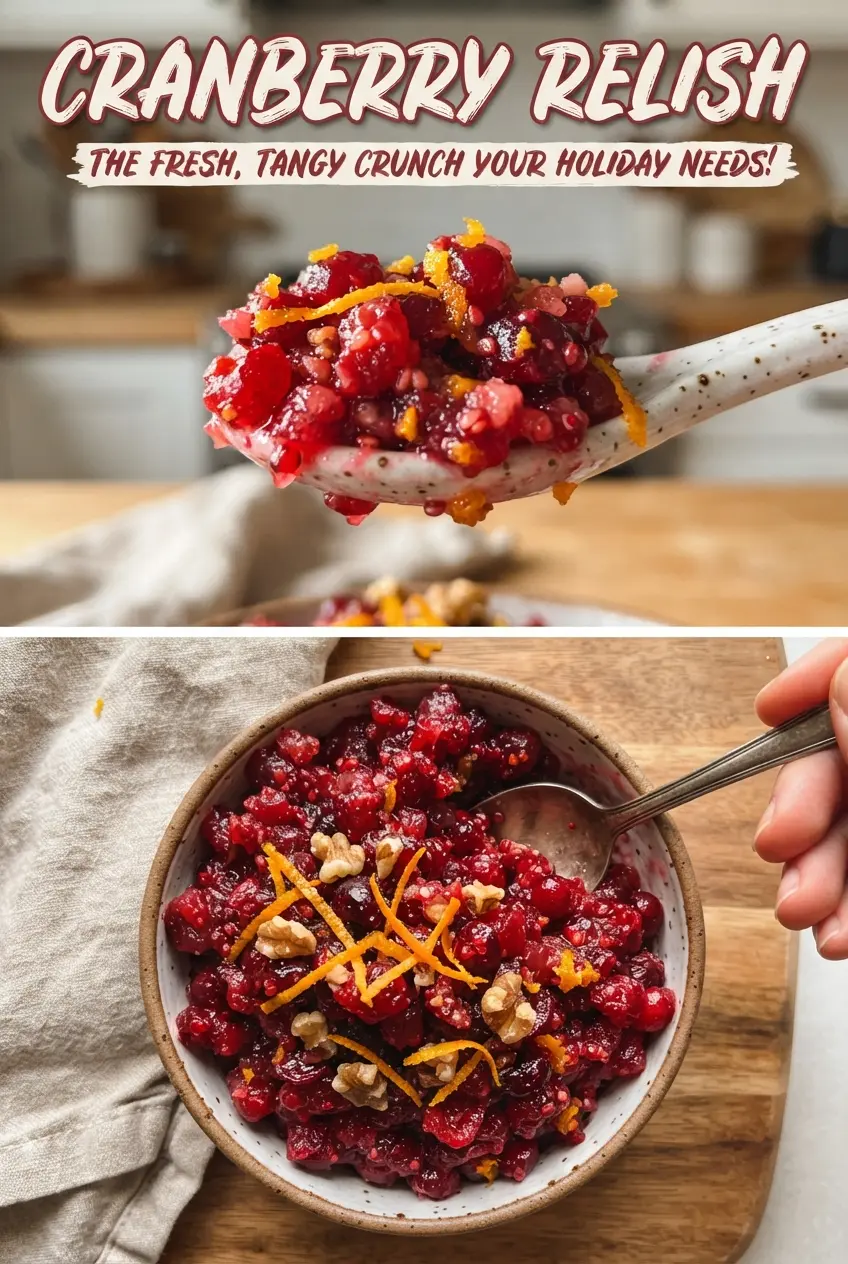
Cranberry Relish
Ingredients
Equipment
Method
- Pulse the fresh cranberries in a food processor until coarsely chopped, then transfer them to a bowl. Aim for visible cranberry pieces rather than a smooth purée (visual cue: chunky texture).
- Pulse the orange and apple in the food processor until finely chopped. Keep pulsing in short bursts so the mixture stays finely chopped but not paste-like (visual cue: small, even pieces).
- Stir the orange, apple, and sugar into the cranberries until evenly combined. The mixture should look glossy and speckled (visual cue: sugar fully distributes through the berries).
- Cover and chill for at least 4 hours or overnight to dissolve the sugar and meld the flavors. Refrigerate until the relish looks slightly more cohesive (visual cue: syrupy sheen and better clumping at the edges).
- Stir in the chopped pecans just before serving. Fold until evenly speckled so the nuts stay crunchy (visual cue: toasted-looking nut flecks throughout).