Cranberry sauce should taste bright first, then spiced, with enough body to sit proudly beside everything else on the plate. This version does that without turning muddy or overly sweet. The orange juice wakes up the cranberries, the cinnamon adds warmth without flattening the fruit, and the zest at the end keeps the flavor fresh instead of cooked out.
The key is starting with the sugar, juice, water, and cinnamon together before the cranberries go in. That gives the sugar a chance to dissolve cleanly and the spice time to steep, so the berries cook in a syrup that already tastes layered. I also leave the cinnamon sticks in while the sauce cools, which pulls a little more spice into the background without making the cinnamon taste dusty or harsh.
Below, I’ll show you how to keep the sauce from going thin, why the orange zest goes in at the end, and how to adjust the texture if you like it looser or thicker. It’s a small recipe, but those little choices change the whole bowl.
I loved how the sauce thickened as it cooled and the orange made it taste fresh instead of just sweet. The cinnamon stayed mellow, and it set up perfectly after an hour in the fridge.
Cranberry Sauce with Orange and Cinnamon brings bright fruit, warm spice, and a spoonable texture worth keeping in the fridge all week.
The Part Most Cranberry Sauces Miss: Getting Body Without Overcooking the Berries
Cranberry sauce looks simple until it turns watery, jammy, or dull. The sweet spot is when the berries have burst but some still hold their shape. That gives you a sauce with structure instead of a smooth paste, and it matters because cranberry sauce thickens a lot as it cools.
Orange juice adds acidity and fruitiness, but it also brings enough liquid that the pan needs a full simmer, not just a warm stir. If the mixture never reaches a real boil before the berries go in, the sugar can stay grainy and the sauce won’t develop that glossy finish. Let it bubble, then simmer just long enough for the cranberries to split and the liquid around them to look slightly syrupy.
- Fresh cranberries — Fresh berries hold their pop better than dried cranberries or frozen ones that have thawed and broken down. If you use frozen, add them straight from the freezer and expect a softer set.
- Orange juice and zest — Juice gives the sauce its bright base, but zest is where the orange aroma lives. Stir the zest in at the end so it stays fragrant instead of cooking flat.
- Cinnamon sticks plus ground cinnamon — The sticks steep gently and add warmth, while the ground cinnamon gives immediate spice. Using both keeps the flavor layered instead of one-note.
- Sugar — Granulated sugar is the right choice here because it dissolves cleanly and lets the fruit lead. Cutting it much lower makes the sauce sharply tart unless your oranges are very sweet.
What Each Ingredient Is Actually Doing in This Bowl
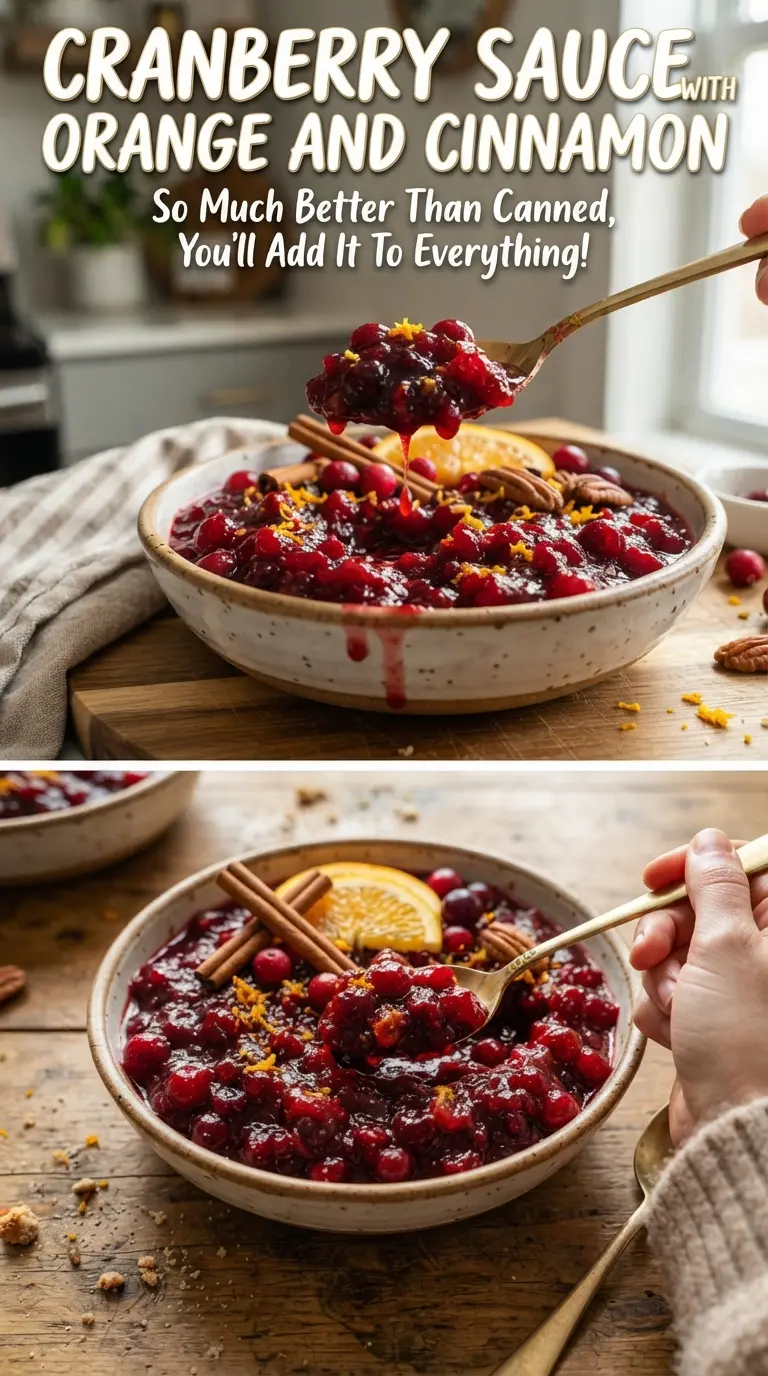
Ingredient notes:
- Fresh cranberries — These are what give the sauce its tart snap and natural pectin, which is why the sauce thickens on its own as it cools. If you’re using frozen cranberries, don’t thaw them first; just cook them a minute or two longer.
- Orange juice — This does more than sweeten. It softens the tart edge of the cranberries and makes the sauce taste rounder. Bottled juice works in a pinch, but fresh juice tastes cleaner and brighter.
- Water — This keeps the sugar from scorching before the berries release their juice. You need less than you think; too much water just delays thickening.
- Cinnamon sticks — These infuse the syrup without turning the sauce cloudy or gritty. Leave them in while the sauce cools if you want a deeper spice note, then remove them before serving.
- Ground cinnamon — A small amount gives the sauce immediate warmth while the sticks do the slow work. Too much turns the whole batch dusty, so keep it restrained.
- Orange zest — Zest goes in at the end because heat quickly dulls its oils. Stir it in off the heat for the freshest orange flavor in the bowl.
- Salt — Just a pinch sharpens the fruit and keeps the sauce from tasting flat. It doesn’t make the sauce salty; it makes the cranberry taste more like cranberry.
The 15 Minutes That Decide Whether This Sauce Stays Bright or Turns Flat
Building the Syrup Base
Start with the sugar, orange juice, water, cinnamon sticks, ground cinnamon, and salt in a saucepan. Bring it to a full boil so the sugar dissolves completely and the cinnamon starts steeping right away. If you add the cranberries before the liquid is hot, the sauce can taste thin and the sugar may stay a little grainy.
Cooking the Cranberries Until They Burst
Once the base is boiling, stir in the cranberries and lower the heat to a steady simmer. You’ll hear the berries start to pop after a minute or two, then more will split open as the mixture thickens. Stop cooking when most of the berries have burst and the liquid looks glossy and slightly syrupy; if you keep going until it seems thick in the pan, it’ll be too stiff after chilling.
Finishing for Brightness
Take the pan off the heat and stir in the orange zest. That keeps the citrus top note fresh instead of cooked down. Leave the cinnamon sticks in while the sauce cools if you want a little more spice, then remove them before chilling. The sauce will still look loose when warm, but it sets up as it cools, so don’t chase a thicker texture on the stove.
How to Adapt This for a Sweeter, Brighter, or More Make-Ahead Bowl
Less Sweet, More Tart
Cut the sugar back to 1/2 cup if you like cranberry sauce with more bite. The sauce will taste sharper and a little looser, so let it cool completely before deciding whether it needs another spoonful of sugar.
Citrus-Forward Version
Swap 2 tablespoons of the orange juice for fresh lemon juice if you want a sharper finish. That adds brightness and makes the cranberries taste even more vivid, but it also pushes the sauce further from a sweet, jammy style.
Dairy-Free, Gluten-Free, Naturally
This recipe already fits both diets as written. The only thing to watch is cross-contamination if you’re serving it with a larger meal, since the sauce itself contains no dairy or gluten ingredients.
Make-Ahead Storage and Reheating
- Refrigerator: Store covered for up to 1 week. It firms up as it chills, so expect a thicker, spoonable texture the next day.
- Freezer: It freezes well for up to 2 months. Cool it completely first, then pack it in an airtight container with a little space at the top for expansion.
- Reheating: Warm it gently on the stove over low heat or let it sit at room temperature until it loosens. The biggest mistake is boiling it again, which can make it lose that fresh cranberry flavor and thin out more than you want.
Answers to the Questions Worth Asking
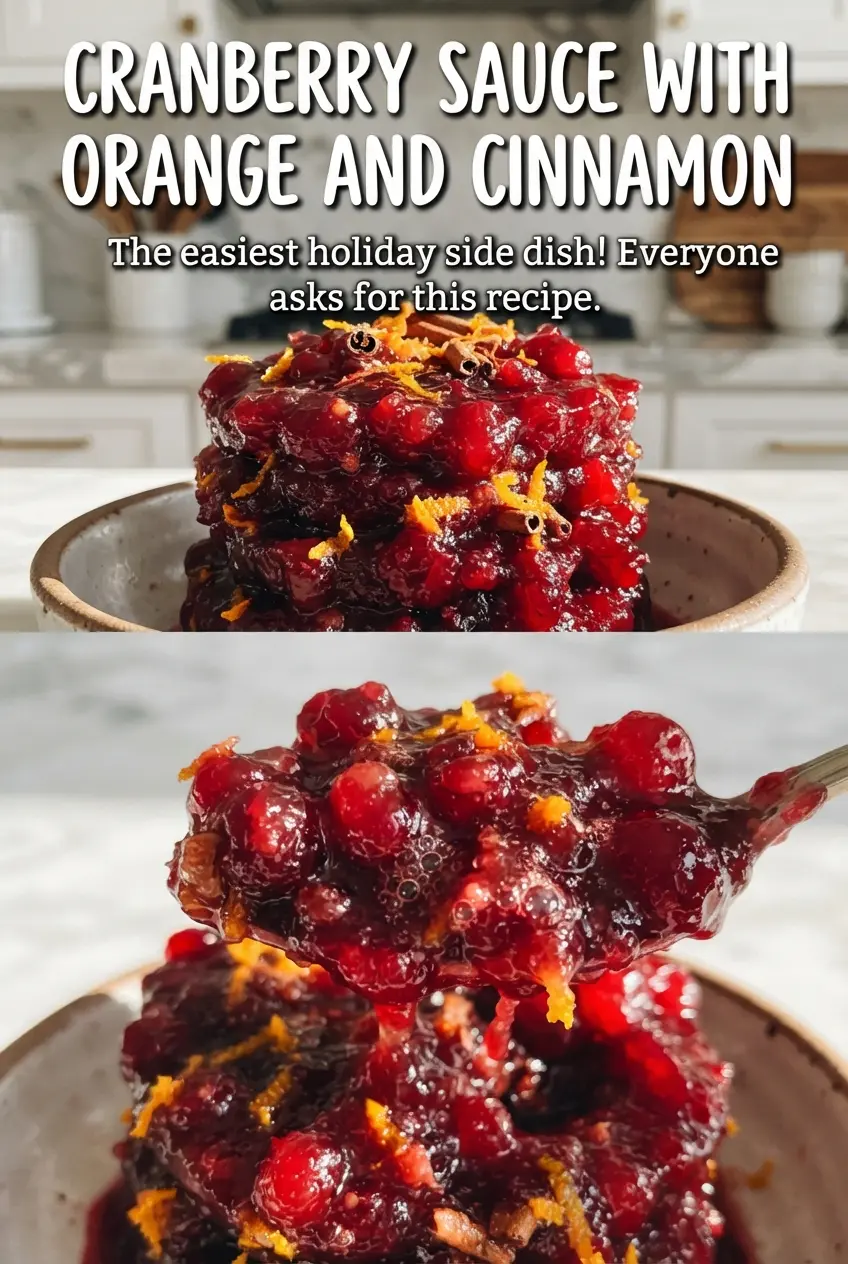
Cranberry Sauce with Orange and Cinnamon
Ingredients
Equipment
Method
- Combine sugar, orange juice, water, cinnamon sticks, ground cinnamon, and salt in a saucepan, then bring to a boil over medium-high heat, stirring until the sugar dissolves and the liquid is actively bubbling.
- Add fresh cranberries to the boiling mixture and simmer for 10-12 minutes, stirring occasionally, until most berries burst and the sauce thickens slightly with visible skins splitting.
- Remove the saucepan from the heat and stir in the orange zest until evenly distributed throughout the spiced cranberry mixture.
- Leave the cinnamon sticks in as it cools for extra spice, then remove them once the sauce has cooled enough to handle.
- Chill the cranberry sauce before serving so it thickens to a spoonable, jammy texture.