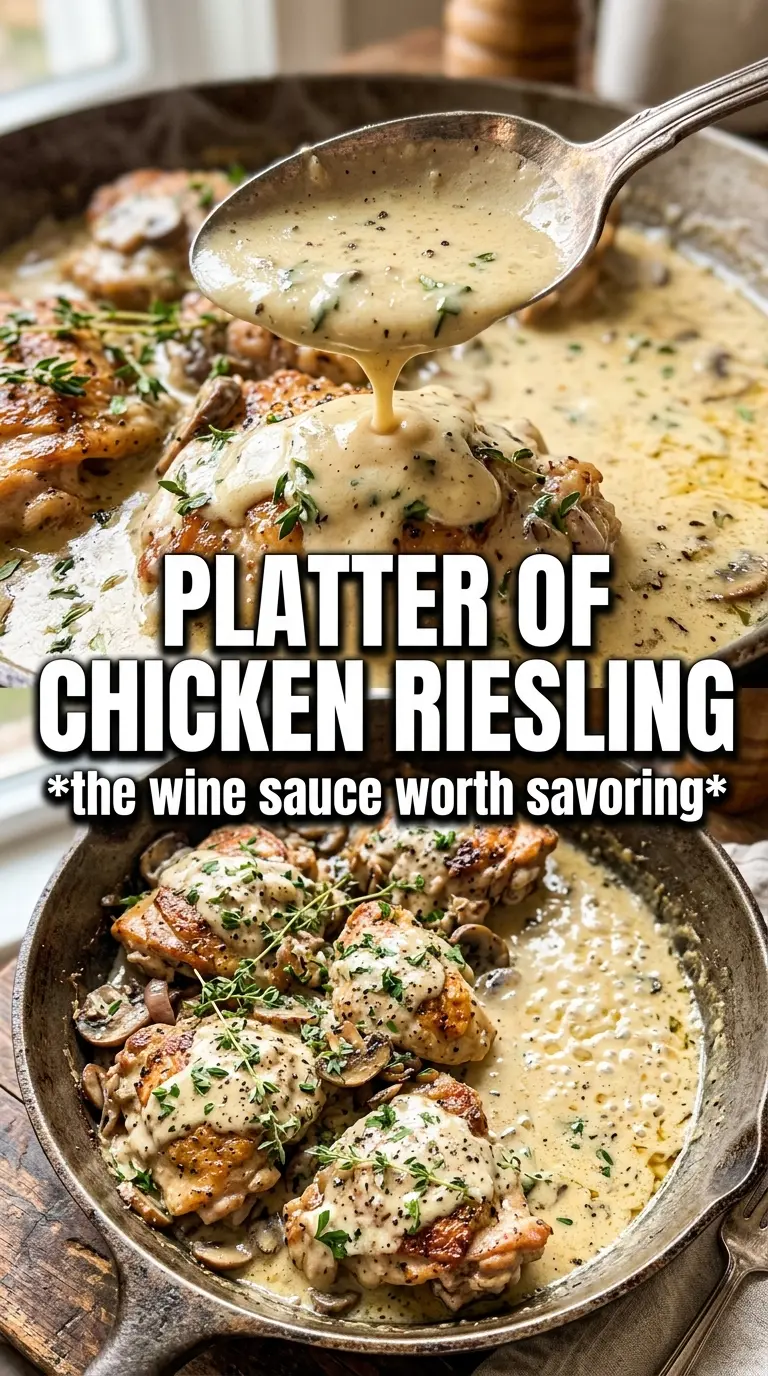
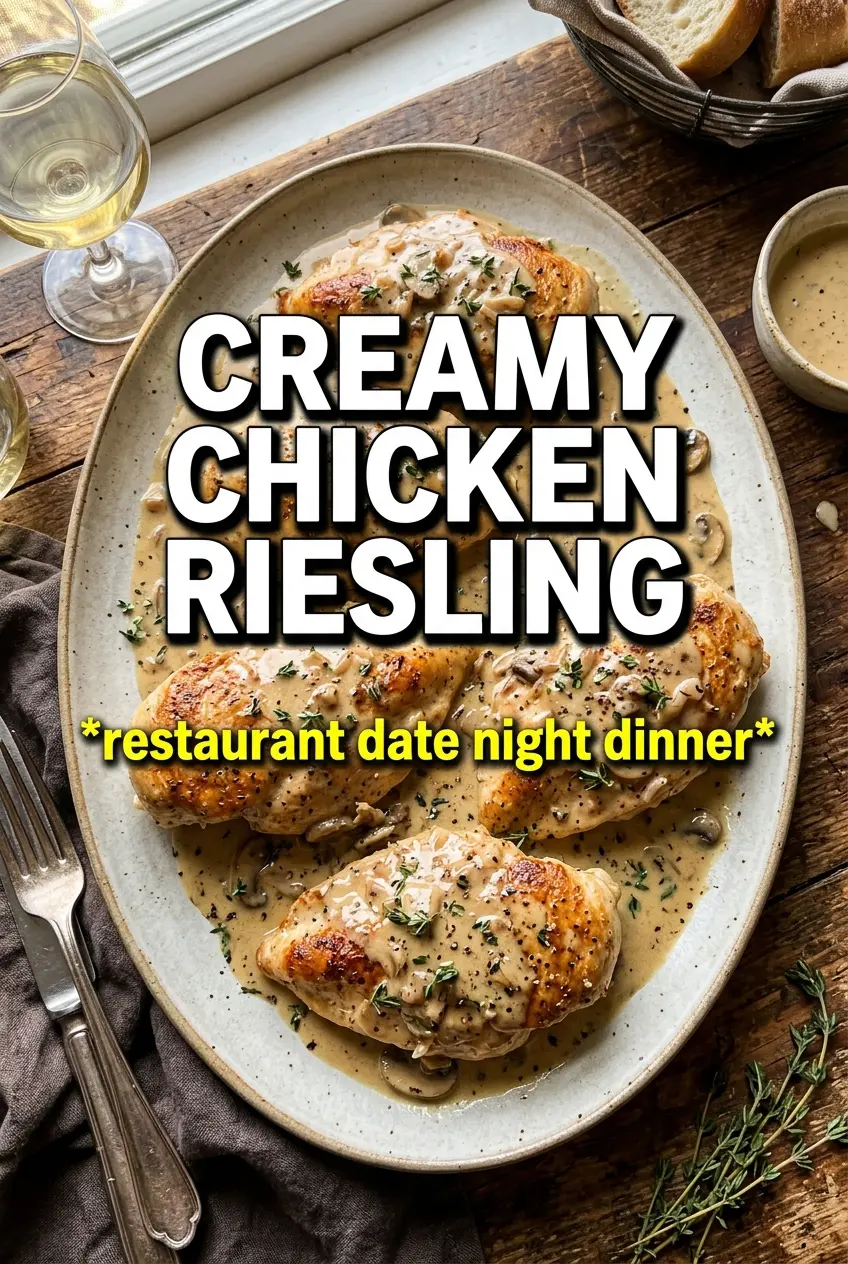
Golden chicken thighs in a creamy Riesling sauce have a way of tasting far more elegant than the effort they ask of you. The skin turns crisp in the skillet, the wine reduction brings a gentle floral note, and the final sauce lands somewhere between silky and light, with mushrooms and shallots giving it enough depth to stand on its own. It’s the kind of pan dinner that feels special without turning into a project.
What makes this version work is the order. The chicken gets a proper sear first, which leaves the skillet full of browned bits that the wine can pick up and turn into flavor. Then the Riesling cooks down before the cream goes in, so the sauce tastes like wine instead of raw alcohol. A spoonful of Dijon and a little butter at the end pull everything together without making it heavy.
Below, I’ve included the small details that matter most here: how to keep the sauce smooth, what to watch for if your wine is sweeter than expected, and a few easy swaps if you need to adapt the dish for what’s in your kitchen.
The sauce reduced beautifully and stayed silky after the cream went in. I’ve made plenty of wine chicken recipes, but this one had the best balance of mushrooms, tarragon, and that light Riesling sweetness.
Save this Creamy Chicken Riesling for a skillet dinner with crisp chicken skin, a fragrant wine reduction, and a silky mushroom sauce.
The Part Most People Get Wrong: Letting the Wine Cook Down Before the Cream Goes In
The biggest mistake in a Riesling chicken skillet is rushing the liquid stage. If the wine goes in and the cream follows too fast, the sauce tastes thin and can lean sharp instead of rounded. Letting the Riesling bubble for a few minutes does two things at once: it concentrates the flavor and burns off the edge of the alcohol so the sauce reads as fragrant, not harsh.
This also protects the texture. Cream behaves best when it has a reduced, flavorful base to cling to. If the pan is crowded with too much liquid, the sauce takes longer to thicken and the chicken can start to overcook while you wait. A steady simmer, not a hard boil, is what gives you that pale golden sauce that coats the spoon.
- Riesling — This is the signature flavor, so use a bottle you’d actually drink. A dry or off-dry Riesling keeps the sauce balanced; very sweet wine can make the final dish feel sticky unless you simmer it a bit longer.
- Heavy cream — Cream gives the sauce body and keeps the wine from tasting flat. Half-and-half can work in a pinch, but the sauce will be thinner and less stable.
- Dijon mustard — Dijon doesn’t make the sauce taste mustardy. It sharpens the cream and helps the sauce taste finished. Grainy mustard changes the texture, so I only use it if that’s what I have on hand.
- Tarragon — Fresh tarragon gives the dish its classic perfume. Dried tarragon works, but use less because it gets louder as it sits in the hot sauce.
- Chicken thighs — Bone-in, skin-on thighs stay juicy through the simmer and add enough fat to flavor the sauce. Breasts can work, but they need less cooking time and are easier to dry out.
What Each Ingredient Is Actually Doing in This Recipe
- Primary ingredient (the star) — Quality matters most. Choose the best you can find.
- Cooking medium (oil, butter, or broth) — This carries flavors and prevents dryness.
- Seasonings (salt, pepper, spices, herbs) — Layer flavors so nothing overpowers. Build depth gradually.
- Aromatics (garlic, onion, herbs) — Cook with fat to bloom flavors. Become the foundation.
- Supporting ingredients — Complement the main ingredient without overpowering it.
- Sauce or liquid (if applicable) — Brings flavors together. Balance richness with acid.
- Acid (lemon, vinegar, wine, or other) — Brightens and prevents flat-tasting results.
- Final finish (garnish, glaze, or sauce) — Prevents one-dimensional taste and adds visual appeal.
Building the Skillet in the Right Order
Getting the Chicken Skin Deeply Golden
Season the thighs well before they hit the pan, then lay them skin-side down in hot olive oil and leave them alone until the skin releases easily. That first sear should be deep golden, not pale blond, because this is where the dish picks up its savory backbone. If the chicken sticks, it needs another minute; forcing it early tears the skin and leaves you with a softer finish.
Once you flip the thighs, give them just a brief second sear on the other side, then move them out of the pan. They’ll finish cooking in the sauce later, so this stage is about building color, not fully cooking through.
Softening the Shallots and Mushrooms
Shallots and mushrooms need enough time to lose their moisture and start taking on color. At first, the mushrooms will crowd the pan and look like they’re refusing to brown. Keep going. As the water cooks off, the edges caramelize and the whole pan starts smelling nutty instead of raw.
Add the garlic only at the end of this stage. Garlic burns fast, especially after the mushrooms have already spent time in the pan, and burnt garlic will overpower the delicate wine sauce.
Finishing the Sauce Without Breaking It
Once the Riesling goes in, scrape up every browned bit from the bottom of the skillet. Let it simmer long enough that the sharp alcohol smell fades and the liquid looks a little smaller and more concentrated. Then add the cream, broth, Dijon, and tarragon, and return the chicken skin-side up so the skin stays above the sauce as much as possible.
Keep the heat at a gentle simmer while the chicken finishes. If the sauce ever starts to look oily or grainy, the heat is too high. Pull it back right away, because cream sauces recover much better from low heat than from a boil.
The Butter Finish and Final Taste
When the chicken is done, move it to a platter and swirl in the butter off the heat. That last tablespoon gives the sauce a glossy look and smooths out any sharpness from the wine. Taste the sauce after the butter melts; if it needs more salt, add it now, not before the reduction, because the flavor changes once the liquid concentrates.
Return the chicken to the pan and spoon the sauce over the top. Fresh tarragon right before serving wakes up the whole dish.
How to Adapt This Creamy Chicken Riesling for Your Kitchen
Make It Dairy-Free
Use full-fat coconut cream instead of heavy cream and finish with a dairy-free butter or a little olive oil. The sauce will lose some of its classic richness and pick up a faint coconut note, so keep the Riesling dry and the tarragon fresh to hold the flavor profile in balance.
Use Chicken Breasts Instead of Thighs
Boneless or bone-in breasts work, but they need a shorter simmer and a little more attention. Pull them as soon as they reach 165°F, because breast meat dries out faster than thighs and won’t forgive a long hold in the sauce.
Go Gluten-Free Without Changing the Method
This recipe is naturally gluten-free as written, as long as your chicken broth and Dijon are certified gluten-free. The sauce thickens from reduction and cream, so you don’t need flour or any special substitute.
Swap in Thyme When You’re Out of Tarragon
Thyme gives the sauce a more savory, woodsy edge and loses the classic anise-like note that tarragon brings. It still works nicely with mushrooms and wine, but the finished dish will taste more rustic than French-style.
Storage and Reheating
- Refrigerator: Store in an airtight container for up to 3 days. The sauce may thicken as it chills, and the chicken skin won’t stay crisp.
- Freezer: It freezes, but cream sauces can separate a little on thawing. Freeze for up to 2 months in a freezer-safe container, then reheat gently and whisk if needed.
- Reheating: Reheat covered over low heat on the stove with a splash of broth or water. Don’t boil it, because high heat is what usually breaks the cream sauce and toughens the chicken.
Questions I Get Asked About This Recipe
Creamy Chicken Riesling
Ingredients
Equipment
Method
- Season the bone-in skin-on chicken thighs with salt, pepper, and garlic powder to taste. Pat them dry so the skin browns properly.
- Heat 2 tbsp olive oil in a large skillet over medium-high heat, then place chicken skin-side down. Sear for 7-8 minutes until deeply golden.
- Flip the chicken and sear the other side. Sear for 4 minutes until it looks browned.
- Remove the chicken from the skillet and set aside. Keep any rendered fat in the pan for flavor.
- Add the minced shallots and sliced cremini mushrooms to the skillet. Cook for 5-6 minutes over medium-high heat until golden.
- Add the minced garlic and stir to coat. Cook for 1 minute until fragrant.
- Pour in the Riesling wine and let it cook off for 3 minutes. Simmer until the raw alcohol smell dissipates.
- Add the heavy cream, chicken broth, fresh tarragon (or dried), and Dijon mustard. Stir until the sauce looks smooth.
- Return the chicken to the skillet, skin-side up. Cover and simmer for 15-18 minutes until the internal temperature reaches 165°F.
- Remove the chicken from the skillet and set aside. Swirl 1 tbsp butter into the sauce until glossy.
- Return the chicken to the skillet and spoon the glossy Riesling cream sauce over top. Garnish with fresh tarragon and serve.