Golden, seared chicken thighs tucked into a coconut milk sauce like this earn their place fast. The skin stays bronzed and crisp on top, the sauce turns silky without feeling heavy, and the ginger, garlic, and lime keep every bite bright enough to keep you going back for another spoonful. It’s the kind of skillet dinner that tastes like it took more work than it did.
The trick is building the flavor in layers. Browning the chicken first leaves those sticky bits in the pan, and that’s where the sauce gets its depth. Full-fat coconut milk matters here because it gives you body and a gentle sweetness that lighter milk just can’t match. A little soy sauce sharpens everything, and lime at the end keeps the sauce from tasting flat.
Below, I’ve included the small moves that keep the chicken juicy and the sauce smooth, plus a few swaps if you need to work around what’s in the pantry. If you’ve ever had coconut milk turn dull or separated, the process section will help you avoid that.
The sauce thickened up beautifully and the chicken stayed juicy under the skin. I served it with rice and my husband asked if we could put it on next week’s menu too.
Save this creamy coconut milk chicken for the night you want golden skillet chicken and a silky ginger-lime sauce over rice.
The Reason the Chicken Stays Juicy Instead of Turning Watery
Chicken thighs are the right cut here because they stay tender while the sauce simmers. Bone-in, skin-on pieces add flavor and give you a built-in shield against overcooking, which matters when the chicken finishes in coconut milk instead of staying dry in a hot oven. The skin won’t stay shatteringly crisp once it goes back into the sauce, but it should still hold its shape and contribute a rich, roasted edge to the dish.
The other thing that matters is heat control. If you rush the simmer, the coconut milk can separate and the chicken can seize up before it’s done. Keep it at a gentle bubble after the chicken goes back in. You want a quiet simmer that barely moves the surface, not a hard boil that beats the sauce apart.
- Bone-in, skin-on chicken thighs — These give you the best flavor and the most forgiving texture. Boneless thighs work too, but they cook faster and won’t bring quite the same depth to the skillet.
- Full-fat coconut milk — This is what makes the sauce creamy. Lite coconut milk makes a thinner, less stable sauce and won’t cling to the chicken the same way.
- Ginger and garlic — Fresh is worth using here because it gives the sauce its sharp, aromatic backbone. Ground versions taste flat in comparison.
- Lime juice and zest — Add both at the end. If you cook the lime too long, the sauce loses that fresh edge and tastes muddier.
What Each Ingredient Is Actually Doing in This Recipe

- Primary ingredient (the star) — Quality matters most. Choose the best you can find.
- Cooking medium (oil, butter, or broth) — This carries flavors and prevents dryness.
- Seasonings (salt, pepper, spices, herbs) — Layer flavors so nothing overpowers. Build depth gradually.
- Aromatics (garlic, onion, herbs) — Cook with fat to bloom flavors. Become the foundation.
- Supporting ingredients — Complement the main ingredient without overpowering it.
- Sauce or liquid (if applicable) — Brings flavors together. Balance richness with acid.
- Acid (lemon, vinegar, wine, or other) — Brightens and prevents flat-tasting results.
- Final finish (garnish, glaze, or sauce) — Prevents one-dimensional taste and adds visual appeal.
Building the Sauce Without Breaking It
Season and Sear the Chicken
Pat the chicken dry before seasoning it. Any surface moisture will fight the browning and leave you with pale skin instead of a deep golden crust. Start skin-side down in hot coconut oil and leave it alone until the skin releases cleanly from the pan and has a bronzed, crackly look. If it sticks, it needs another minute.
Wake Up the Aromatics
Use the same skillet after the chicken comes out. The fond at the bottom is part of the sauce, so don’t scrub it away. Cook the onion until it softens and looks translucent, then add the garlic, ginger, and red pepper flakes just long enough for them to smell fragrant. If the garlic browns hard, it turns bitter fast.
Simmer the Coconut Sauce Gently
Pour in the coconut milk and broth and stir until the browned bits dissolve into the liquid. Bring it just to a simmer before adding the chicken back, then lower the heat so the sauce barely bubbles around the edges. That gentle heat keeps the coconut milk smooth and gives the chicken time to finish without turning tough.
Finish With Lime
Stir in the lime juice and zest after the chicken is cooked through. Acid added too early can dull the coconut flavor and make the sauce taste less rounded. The final hit of lime should taste fresh and bright, not sharp or sour.
How to Adapt This Coconut Chicken for Different Kitchens
Boneless Chicken Thighs Instead of Bone-In
Use boneless thighs if that’s what you have, but cut the simmer time down by several minutes. They’ll stay juicy, but they won’t have the same built-in protection from overcooking, so start checking them early.
Dairy-Free Is Already Covered
This recipe is naturally dairy-free as written. Just confirm your chicken broth and soy sauce are dairy-free if you’re cooking for someone with a strict allergy concern.
Gluten-Free Version
Swap the soy sauce for tamari or coconut aminos. Tamari keeps the same salty depth, while coconut aminos taste a little sweeter and softer, so the final sauce will be gentler.
Milder Heat for Kids or Heat-Sensitive Eaters
Leave out the red pepper flakes and add just a pinch at the table for the people who want more heat. That keeps the coconut sauce mellow and lets the ginger and lime lead the dish instead.
Storage and Reheating
- Refrigerator: Store in an airtight container for up to 4 days. The sauce thickens as it chills, and the chicken stays moist.
- Freezer: It freezes well for up to 2 months, though the sauce may look slightly separated after thawing. Stir it gently while reheating and it comes back together.
- Reheating: Warm it slowly on the stovetop over low heat with a splash of broth or water. High heat is the quickest way to split the coconut milk and dry out the chicken.
The Questions That Come Up With Coconut Milk Chicken
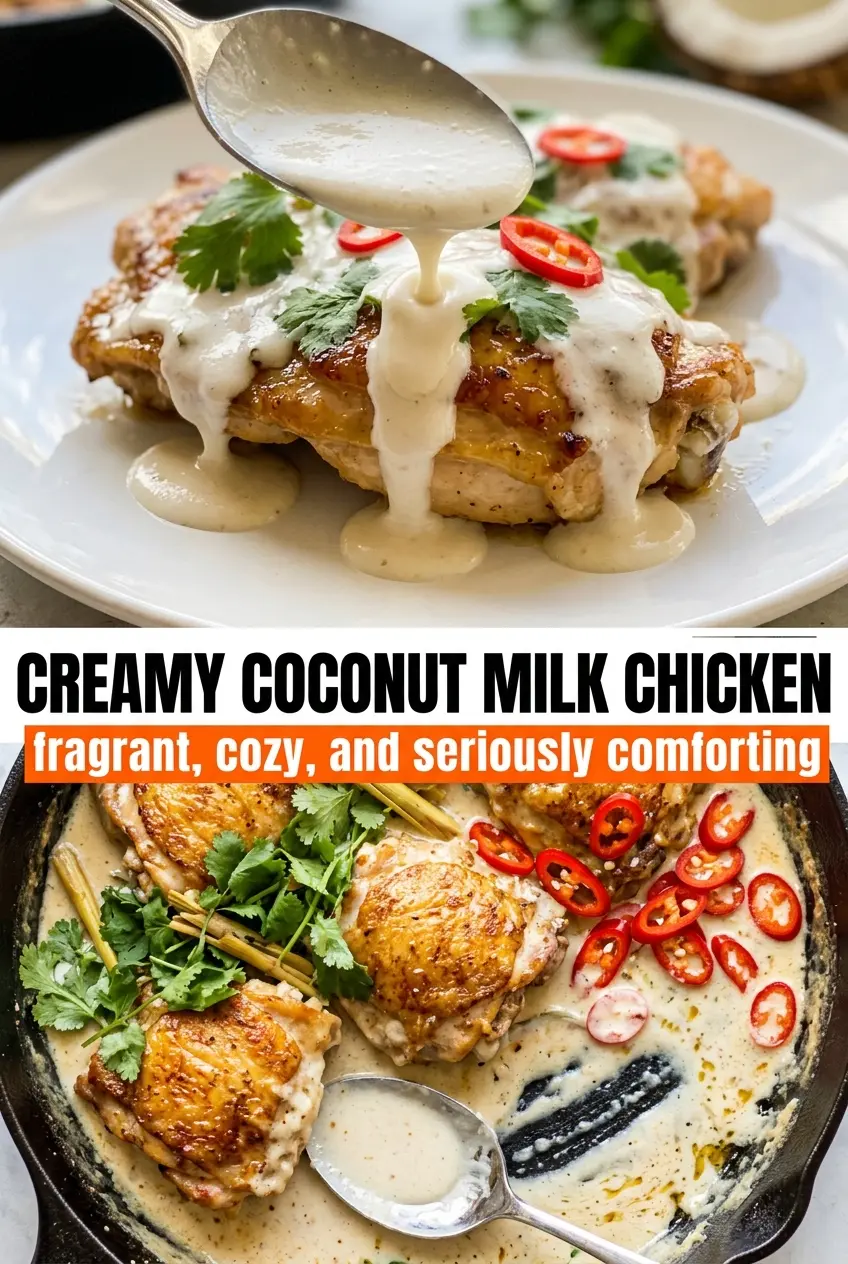
Creamy Coconut Milk Chicken
Ingredients
Equipment
Method
- Season bone-in skin-on chicken thighs with salt, pepper, garlic powder, and turmeric until evenly coated.
- Pat lightly if needed so the spice mix adheres to the chicken skin.
- Heat coconut oil in a large skillet over medium-high heat and sear the thighs skin-side down for 6-7 minutes until golden.
- Flip the thighs and sear for 3 more minutes, then remove to a plate.
- In the same skillet, cook diced onion for 3 minutes until softened.
- Add minced garlic, grated fresh ginger, and red pepper flakes and cook for 1 minute until fragrant.
- Pour in full-fat coconut milk and chicken broth, then stir in soy sauce and bring the mixture to a simmer.
- Return the thighs to the skillet skin-side up, cover, and simmer over medium-low for 18-20 minutes until the internal temperature reaches 165°F.
- Stir in lime juice and lime zest to brighten the sauce.
- Garnish with fresh cilantro and serve over jasmine rice with lime wedges.