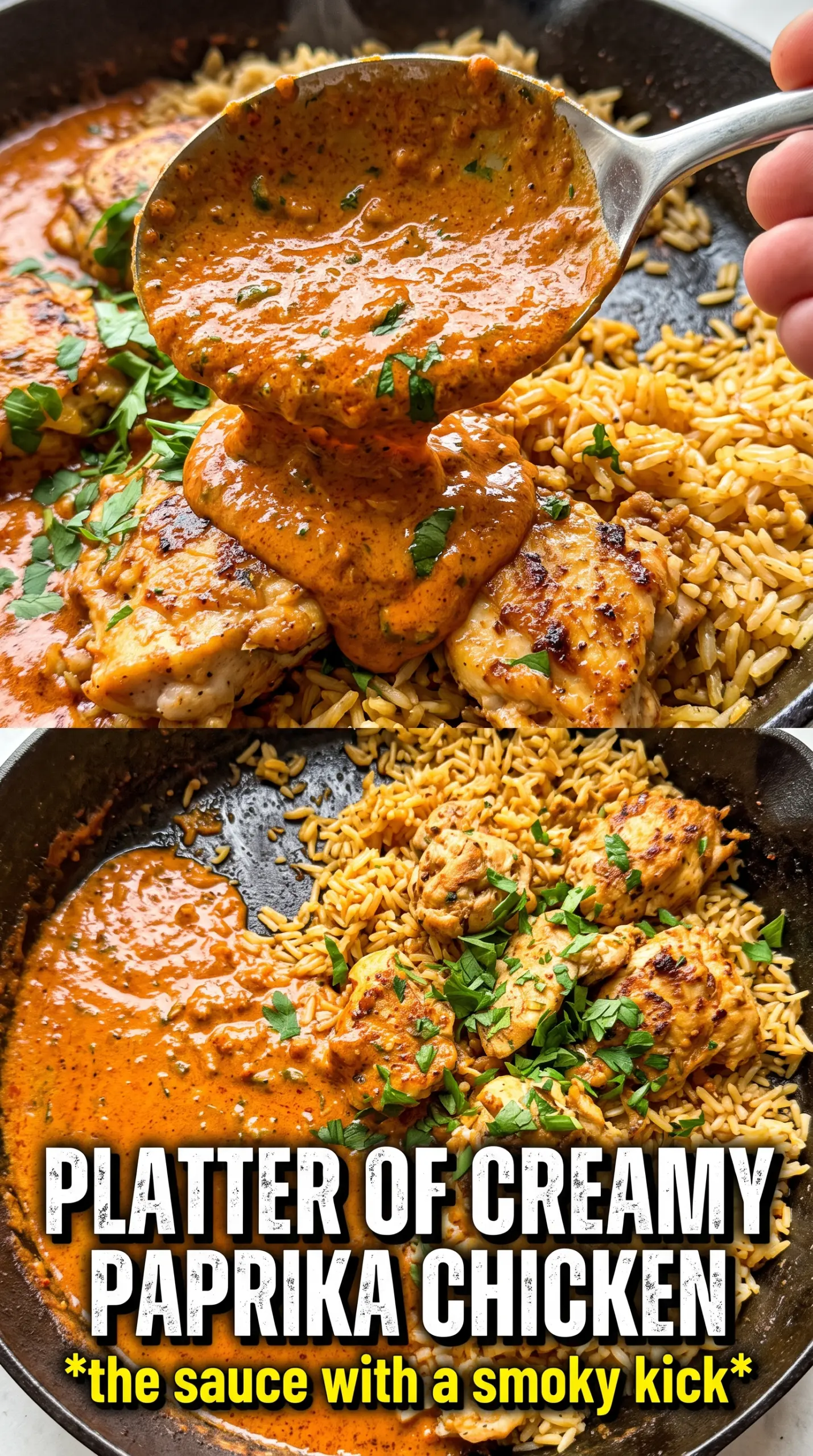
Golden chicken thighs in a paprika-rich cream sauce are the kind of dinner that disappears fast, especially when the sauce clings to fluffy rice and every bite has both warmth and tang. The skin stays deeply browned before it goes back into the pan, so you get real texture instead of soft, gray chicken swimming in sauce.
The key is building the sauce in the same skillet after the chicken comes out. That means the onions pick up the browned bits left behind, and the paprika blooms in the oil instead of tasting dusty. Sour cream goes in off the heat at the end, which keeps the sauce smooth and prevents that grainy, broken look that happens when dairy gets boiled too hard.
Below, I’ve included the timing that keeps the chicken juicy, the one step that protects the sauce, and a few smart swaps if you need to work with what’s in your kitchen.
The sour cream stayed silky and the paprika sauce thickened up beautifully over the rice. I followed the simmer time exactly, and the chicken came out juicy with crisp skin on top.
Save this creamy paprika chicken with rice for the nights when you want a rich skillet dinner with a silky sour cream sauce.
The Trick Is Keeping the Sour Cream Out of the Boil
Most paprika chicken goes sideways at the very end. The sauce looks fine until the dairy hits hard heat, then it turns grainy or splits into little curds with orange oil around the edges. This version stays smooth because the chicken simmers in the tomato-broth base first, and the sour cream only goes in after the pan comes off the heat.
The other thing that matters is the paprika itself. Sweet Hungarian paprika brings the round, earthy color this dish needs, while smoked paprika adds a deeper edge without taking over. If you dump both into a dry pan and walk away, they can scorch in seconds, so they only need a brief cook with the onions and garlic before the liquid goes in.
- Keep the heat at a steady simmer once the chicken returns to the pan. A hard boil will tighten the meat and rough up the sauce.
- Use full-fat sour cream for the cleanest texture. Lower-fat versions are more likely to curdle.
- Let the sauce rest for a minute after stirring in the sour cream. It finishes smoothing out as the residual heat settles.
What Each Ingredient Is Actually Doing in This Dish
- Bone-in, skin-on chicken thighs — These stay juicier than breasts and give you enough fat to brown the skin properly. Boneless thighs will work, but they cook faster and won’t give you the same deep flavor from the sear.
- Sweet Hungarian paprika — This is the backbone of the dish. It gives the sauce its color and gentle warmth, so fresh paprika matters here; old paprika can taste flat and dusty.
- Smoked paprika — A small amount adds depth and makes the sauce taste like it simmered longer than it did. If you only have sweet paprika, use it all and the dish will still work, just with a softer finish.
- Crushed tomatoes — They add body and a little acidity, which keeps the sour cream from tasting heavy. Tomato sauce can stand in, but the sauce will be smoother and less textured.
- Sour cream — This is what turns the paprika base into a creamy sauce. Stir it in off the heat and don’t let it boil, or it can split.
- White rice — Rice catches the sauce and balances the richness. Long-grain rice works best because it stays fluffy under the sauce instead of turning sticky.
The 20 Minutes That Matter Most
Getting the Skin Deeply Browned
Start the chicken skin-side down in hot oil and leave it alone until the skin turns deep gold and releases without sticking. That usually takes 6 to 7 minutes, and the pan should sound like a steady sizzle, not a frantic sputter. If the chicken sticks, it isn’t ready yet. Once the skin is browned, flip it long enough to color the second side, then pull it out so the meat doesn’t overcook while the sauce comes together.
Building the Paprika Base
Cook the onion in the same pan until it softens and starts turning translucent at the edges. That’s when the garlic and both paprikas go in. You only need about a minute here, just until the spices smell fragrant and the onion looks glossy. If the pan is too hot, the paprika can turn bitter fast, so lower the heat if it starts sticking before the liquid goes in.
Simmering the Chicken Through
Add the tomatoes and broth, bring everything to a simmer, then return the chicken skin-side up. Cover the pan and let it cook gently until the chicken reaches 165°F, usually 18 to 20 minutes. The sauce should bubble lazily around the edges, not boil hard in the center. If the liquid is reducing too fast, lower the heat and keep the lid on so the chicken stays tender.
Finishing With Cream
Turn off the heat before you stir in the sour cream. The sauce should look smooth, pale, and glossy as the red paprika turns into a creamy orange. If you want the sauce a little thicker, let it sit for a couple of minutes before serving, but don’t put it back on the burner after the dairy goes in. Spoon it over hot rice and finish with dill for a clean, fresh note.
How to Adapt This for What You Have on Hand
Dairy-Free Version
Use unsweetened coconut cream or a plain unsweetened cashew cream instead of sour cream. The sauce will be a little less tangy and a little richer, so add a small splash of lemon juice at the end if it tastes flat.
Chicken Breasts Instead of Thighs
Boneless chicken breasts cook faster and don’t bring as much richness, so sear them lightly and shorten the simmer time. Pull them as soon as they reach temperature, or they’ll go dry before the sauce is ready.
Gluten-Free and Naturally Comforting
This dish is already gluten-free as written when you serve it with plain rice and check that your broth is gluten-free. The sauce gets its body from tomatoes, onions, and sour cream, so there’s no flour needed to thicken it.
Make It Ahead for Better Flavor
You can make the chicken and sauce a day ahead, then rewarm it gently and stir in the sour cream right before serving. The paprika flavor deepens overnight, which makes the sauce taste even fuller the next day.
Storage and Reheating
- Refrigerator: Store leftovers in an airtight container for up to 4 days. The sauce will thicken as it chills.
- Freezer: The chicken and tomato base freeze well, but the sour cream can turn a little grainy after thawing. For the best texture, freeze the sauce before adding sour cream, then stir it in after reheating.
- Reheating: Warm gently on the stove over low heat with a splash of broth or water. High heat is the fastest way to break the dairy and dry out the chicken.
Answers to the Questions Worth Asking

Creamy Paprika Chicken with Rice
Ingredients
Equipment
Method
- Pat the chicken thighs dry, then season all over with salt, black pepper, garlic powder, and smoked paprika. Heat vegetable oil in a Dutch oven over medium-high heat and sear skin-side down for 6-7 minutes until deeply golden; flip and sear for 4 minutes, then remove to a plate.
- Keep the pan hot so the fond develops for the sauce, and leave any browned bits in the Dutch oven.
- Reduce to medium heat and add the diced onion to the same Dutch oven. Cook for 5-6 minutes until softened, then add minced garlic along with sweet Hungarian paprika and smoked paprika and cook 1 minute until fragrant.
- Add crushed tomatoes and chicken broth to the pot and bring everything to a simmer. Return the chicken skin-side up, cover, and simmer for 18-20 minutes until the thickest part reaches 165°F.
- Turn off the heat and stir in the sour cream until the sauce is smooth and creamy, avoiding boiling after adding it. Serve the creamy paprika chicken over cooked white rice and garnish with fresh dill.