Golden chicken thighs over silky Parmesan orzo hit that perfect middle ground between comforting and polished. The orzo turns lush and spoonable instead of heavy, the spinach melts into the sauce, and the sun-dried tomatoes cut through the cream with just enough sharpness to keep every bite interesting.
The trick here is building the dish in one skillet without rushing the liquid. Browning the chicken first gives the pan those deep savory bits, and toasting the orzo for a minute before adding broth helps it stay nutty instead of turning flat. The cream and Parmesan finish the sauce at the end, which keeps it smooth instead of grainy.
Below, I’ve laid out the little timing details that matter most, plus a few swaps that still keep the sauce glossy and the chicken tender.
The orzo turned out creamy without getting gummy, and the chicken stayed juicy even after I put it back in the pan. My husband kept scooping up the sauce with bread until the skillet was basically clean.
Save this creamy Parmesan chicken and orzo for the nights when you want one skillet, a glossy sauce, and dinner that feels a little special without extra work.
The Part That Keeps the Orzo Creamy Instead of Sticky
Orzo is small enough to go from perfectly tender to overcooked fast, and that’s the main reason this style of dish can turn pasty if you wander off. The broth and cream need to simmer uncovered so the starch can thicken the sauce naturally, but the pan still needs regular stirring so the orzo doesn’t glue itself to the bottom. If the mixture looks loose at first, keep going; the sauce tightens as the pasta finishes cooking and the Parmesan goes in.
Seared chicken thighs matter here for more than flavor. They hold up better than breasts once they’re nestled back into the sauce, and they stay juicy even if the skillet sits for a minute before serving. If the chicken is crowded in the pan, it steams instead of browning, so give each piece enough space to pick up color before you build the sauce.
What Each Ingredient Is Doing in This Skillet

- Boneless skinless chicken thighs — These stay tender through the final simmer and bring more flavor than chicken breasts. If you use breasts, cut them thinner so they cook through before the orzo finishes.
- Orzo — This is the body of the dish. It releases enough starch to make the sauce creamy without needing a separate roux, but it still needs frequent stirring so it cooks evenly.
- Chicken broth — Broth seasons the pasta from the inside out. Water works in a pinch, but the sauce will taste flatter, so add a little extra salt if you make that swap.
- Heavy cream — This gives the sauce its silky finish and keeps it from tasting thin. Half-and-half can work, but the sauce won’t coat the orzo quite as richly and it needs gentler heat.
- Parmesan cheese — Use finely grated Parmesan, not big shreds, so it melts smoothly. Add it off the hottest part of the burner if you want a sauce that stays glossy instead of grainy.
- Spinach and sun-dried tomatoes — Spinach melts into the sauce and makes the dish feel complete, while sun-dried tomatoes bring tang and sweetness. The tomatoes are what keep the cream from tasting one-note.
Building the Sauce in the Right Order
Getting Color on the Chicken First
Season the thighs generously, then sear them in olive oil over medium-high heat until the underside is deep golden and they release easily from the pan. If they stick, leave them alone for another minute; pulling too early tears the crust. You’re not cooking them all the way through at this stage, just building flavor and giving the skillet a strong base.
Waking Up the Garlic and Toasting the Orzo
Once the chicken comes out, the garlic goes into the same pan for about 30 seconds, just until it smells fragrant. After that, stir in the dry orzo and let it toast for a minute so the edges pick up a little nuttiness. Skip this step and the dish still works, but you lose that extra layer of flavor that makes the sauce taste deeper.
Simmering Until the Sauce Coats the Spoon
Pour in the broth and cream, then bring the pan to a gentle simmer, not a hard boil. Stir often, scraping the bottom so the pasta cooks evenly and the sauce stays smooth as it thickens. If the pan boils too aggressively, the liquid reduces before the orzo is tender and you end up with a dry skillet instead of a creamy one.
Finishing With Cheese, Greens, and the Chicken
Stir in the Parmesan, spinach, and sun-dried tomatoes once the orzo is tender. The spinach should wilt in a minute or two, and the sauce should look glossy and cling to the pasta. Nestle the chicken back in, cover the pieces with sauce, and let everything warm through for a couple of minutes so the thighs stay juicy and the flavors settle together.
How to Adjust This Without Losing the Creamy Texture
Make it gluten-free with rice-shaped pasta
Use a gluten-free orzo-style pasta if you can find one, but keep an eye on the pan because some versions soften faster and break down sooner. Start checking for tenderness a couple of minutes early, and be ready to pull it off the heat when the sauce still looks a touch looser than you want.
Make it dairy-free with a different finish
Use unsweetened coconut cream or a plain oat-based cooking cream, then finish with a dairy-free Parmesan-style cheese if you like. The sauce won’t have the exact same sharp finish as the original, but keeping the heat low and adding the cheese substitute at the end still gives you a spoonable, creamy pan sauce.
Swap the chicken thighs for breasts
Chicken breasts work if you prefer a leaner cut, but slice them into thinner cutlets so they cook through without drying out. Pull them from the pan as soon as they hit temperature, then add them back only at the very end so they don’t overcook while the orzo finishes.
Storage and Reheating
- Refrigerator: Store in an airtight container for up to 4 days. The orzo will absorb some sauce as it sits, so it gets thicker by day two.
- Freezer: It freezes, but the cream sauce can separate a bit after thawing, so I only freeze it if I’m okay with a slightly looser texture. Cool it completely first and use a freezer-safe container for up to 2 months.
- Reheating: Warm gently on the stove or in the microwave with a splash of broth or cream to loosen the sauce. High heat is the mistake here; it tightens the dairy and can make the orzo dry before the chicken is heated through.
Answers to the Questions Worth Asking
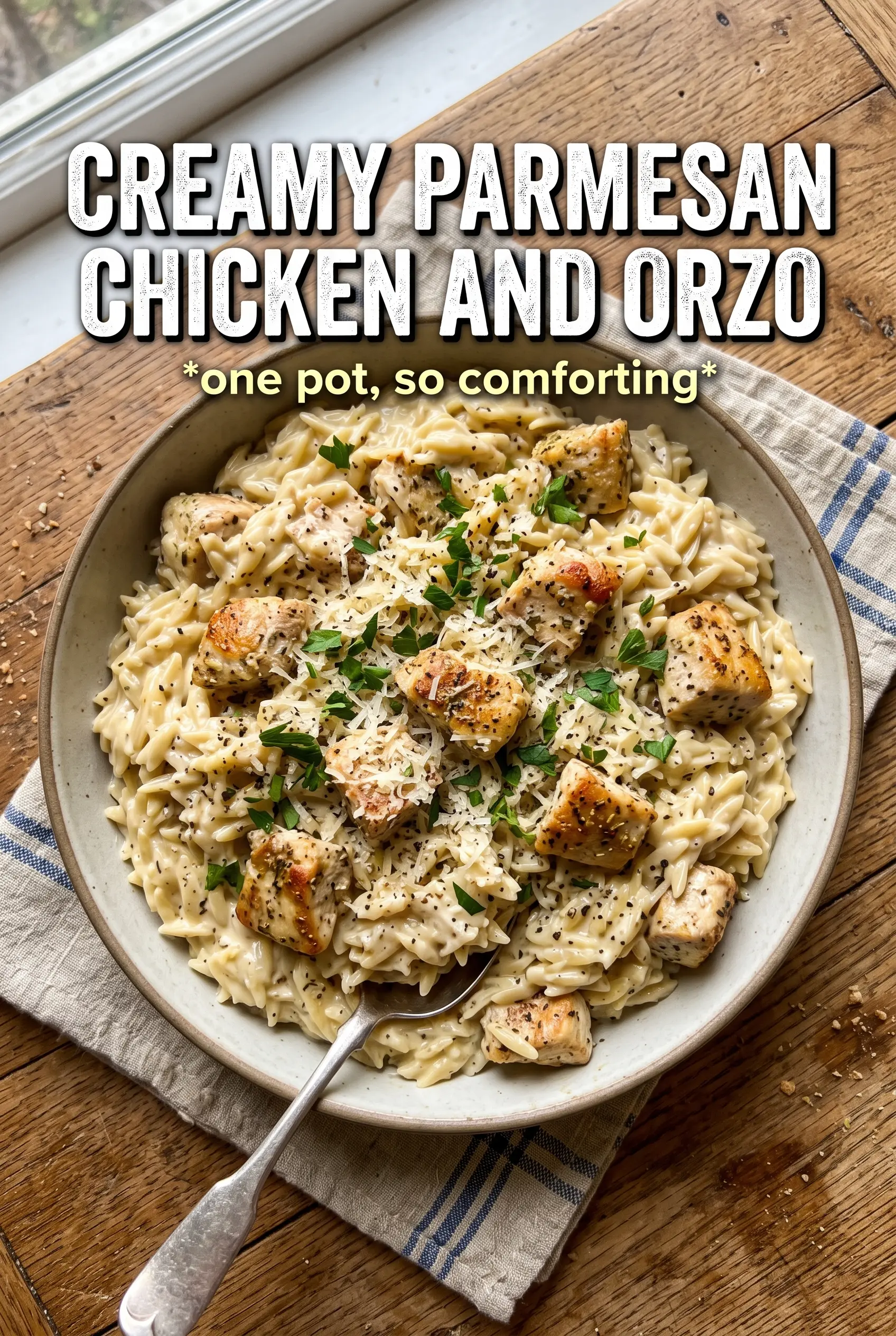
Creamy Parmesan Chicken and Orzo
Ingredients
Equipment
Method
- Season the boneless skinless chicken thighs with salt, pepper, garlic powder, Italian seasoning, and smoked paprika to taste. Heat the olive oil in a large skillet over medium-high heat and sear the chicken until golden and cooked through, 4-5 minutes per side; remove to a plate (keep any juices in the skillet).
- In the same skillet, cook the minced garlic for 30 seconds. Add the uncooked orzo and toast for 1 minute, stirring to coat so it starts to smell fragrant.
- Pour in the chicken broth and heavy cream, then bring to a simmer over medium-high heat. Cook uncovered for 10-12 minutes, stirring often, until the orzo is tender and the sauce is creamy.
- Stir in the grated Parmesan cheese, baby spinach, and sun-dried tomatoes. Cook until the spinach wilts, then keep the sauce simmering gently.
- Nestle the chicken thighs back into the orzo and heat through for 2 minutes. Garnish with fresh basil and serve.