Golden chicken breasts tucked into a silky lemon Parmesan sauce earn their place in the rotation fast. The chicken stays juicy from a hard sear and a short simmer, while the sauce lands in that sweet spot between rich and bright — creamy enough to coat a spoon, sharp enough from the lemon to keep every bite awake.
The trick here is balance. Parmesan thickens the cream without turning the sauce heavy, and the lemon goes in at the end so it tastes fresh instead of cooked flat. A splash of white wine adds depth, but chicken broth works well if that’s what’s in the fridge. The pan does most of the work; once the chicken is out, those browned bits become the backbone of the sauce.
Below you’ll find the timing that keeps the cream from breaking, the ingredient swaps that still hold the sauce together, and the small finish that makes the whole skillet look and taste restaurant-worthy.
The sauce thickened up perfectly and the lemon stayed bright instead of turning bitter. I served it over pasta and my husband went back for seconds before I even sat down.
Creamy Parmesan Lemon Chicken with that bright, silky skillet sauce is worth pinning for your next fast dinner.
The Reason the Sauce Stays Silky Instead of Turning Grainy
The sauce only works if the heat stays controlled once the dairy goes in. Parmesan can get sandy and cream can split when the pan is too hot, especially after deglazing, so the simmer needs to be gentle, with just small bubbles around the edge. That’s why the chicken comes out first; it gives you room to build the sauce without rushing it.
Another thing that helps is using freshly grated Parmesan. Pre-shredded cheese often has anti-caking starches that can make the sauce dull or slightly clumpy. You’ll also want the lemon juice measured and ready before the cream goes in so you can stir it in at the end, after the sauce has already thickened a bit.
What Each Ingredient Is Doing in the Skillet
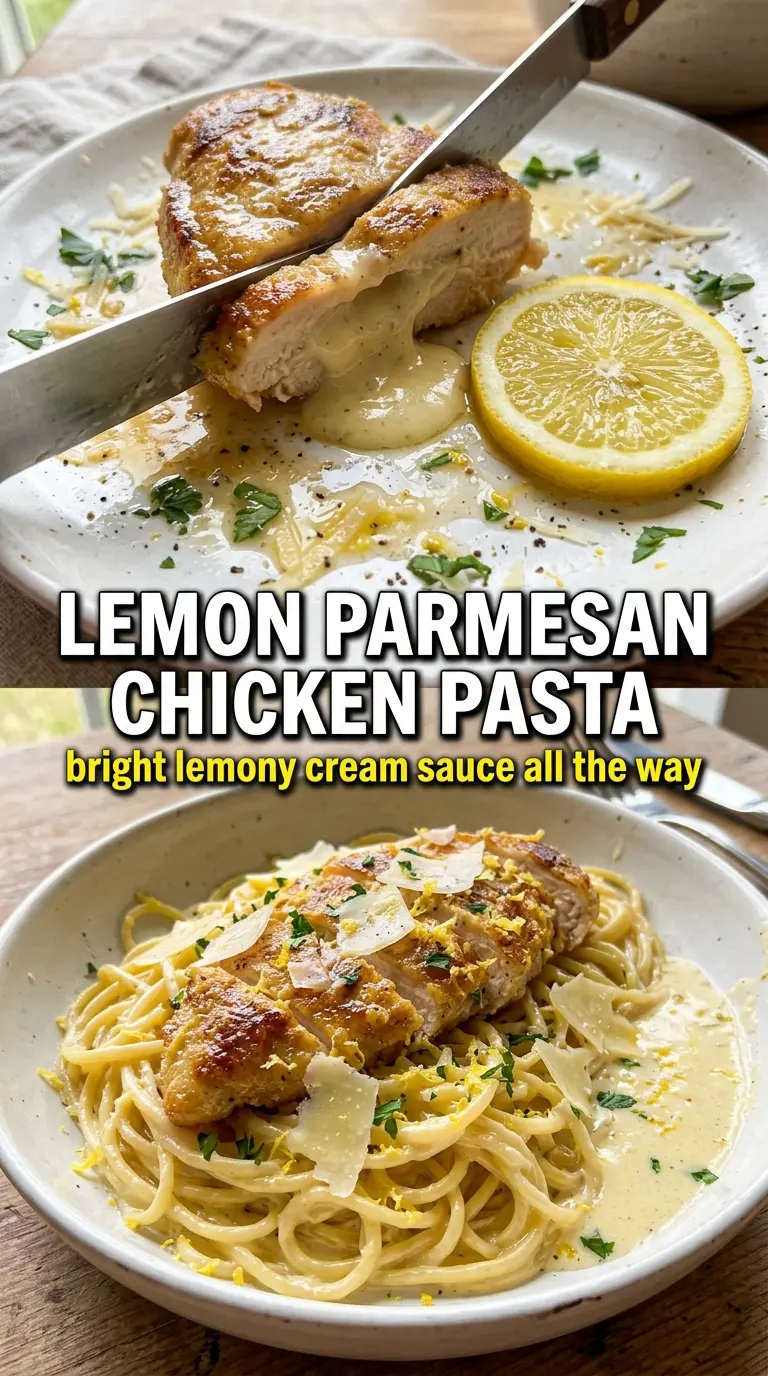
- Chicken breasts — Use even-sized breasts so they finish at the same time. If one is much thicker, pound it lightly or slice it horizontally; otherwise the outside overcooks before the center gets to 165°F.
- Dry white wine or chicken broth — Wine adds a little acidity and depth, but broth still gives you the deglazing action you need. If you skip the wine, use broth and let it simmer a minute longer so the sharp edge cooks off.
- Heavy cream — This gives the sauce its body and keeps it stable under gentle heat. Half-and-half can work in a pinch, but it won’t thicken the same way and is more likely to look thin.
- Freshly grated Parmesan — This is the ingredient that makes the sauce taste rounded and savory instead of just creamy. Grate it finely so it melts in smoothly instead of sitting in little soft flecks.
- Lemon juice and zest — Juice brings the brightness, zest brings the aroma. Use both; juice alone can taste flat, and zest alone can’t cut through the richness.
- Butter — Swirled in at the end, it gives the sauce a glossy finish and softens the sharper lemon edges. Don’t boil after adding it or the sheen can break.
Building the Chicken and Sauce in the Right Order
Searing the Chicken for Color and Flavor
Season the chicken generously on both sides, then lay it in the hot olive oil and leave it alone until the first side releases cleanly. You want a deep golden crust, not pale steaming spots, so don’t crowd the pan. If the chicken is browning too fast before it cooks through, lower the heat slightly after the first couple of minutes and let it finish more evenly.
Using the Fond to Start the Sauce
Once the chicken comes out, add the garlic and stir just until it smells sweet and fragrant, about 30 seconds. Pour in the wine or broth while the pan is still hot and scrape up every browned bit from the bottom; that’s the flavor base of the sauce. If the liquid reduces too aggressively, turn the heat down before the garlic takes on any color.
Thickening Without Breaking the Cream
Stir in the cream, Parmesan, lemon juice, and zest, then keep the sauce at a steady simmer, not a boil. You’re looking for the sauce to coat a spoon and leave a clear path when you drag a finger through it. If it turns grainy, the heat was too high; pull the pan off the burner for a minute and stir gently until it smooths back out.
Finishing the Skillet
Return the chicken to the pan and spoon the sauce over the top so it warms through without cooking hard. The butter goes in last, off the hottest part of the heat, and that final swirl is what gives the sauce its glossy finish. Add parsley and lemon slices at the end so the dish looks fresh and the lemon scent hits as soon as it reaches the table.
How to Adapt This Skillet for Different Nights
Dairy-Free Version
Use unsweetened coconut cream or a thick oat-based cooking cream, and skip the Parmesan unless you’re using a dairy-free alternative that melts well. The sauce will be less sharp and a little lighter in body, so keep the lemon measured and reduce the liquid a touch longer to help it cling.
Gluten-Free and Naturally Low-Carb
This dish is already gluten-free as written if your broth is certified gluten-free. It’s also naturally low-carb, which makes it easy to serve over sautéed greens, cauliflower mash, or roasted broccoli without changing the sauce at all.
Chicken Thigh Swap
Boneless skinless thighs work well if you want a juicier, more forgiving cut. They’ll need a few extra minutes in the skillet, and the sauce will taste a little richer because thighs bring more fat to the pan.
Storage and Reheating
- Refrigerator: Store in an airtight container for up to 3 days. The sauce thickens as it chills, so expect it to look much tighter the next day.
- Freezer: The chicken freezes fine, but the cream sauce can separate after thawing. I don’t recommend freezing the finished dish if you want the sauce to stay smooth.
- Reheating: Warm it slowly in a covered skillet over low heat with a splash of broth or cream. High heat is the mistake here — it can break the sauce before the chicken is hot through.
Answers to the Questions Worth Asking
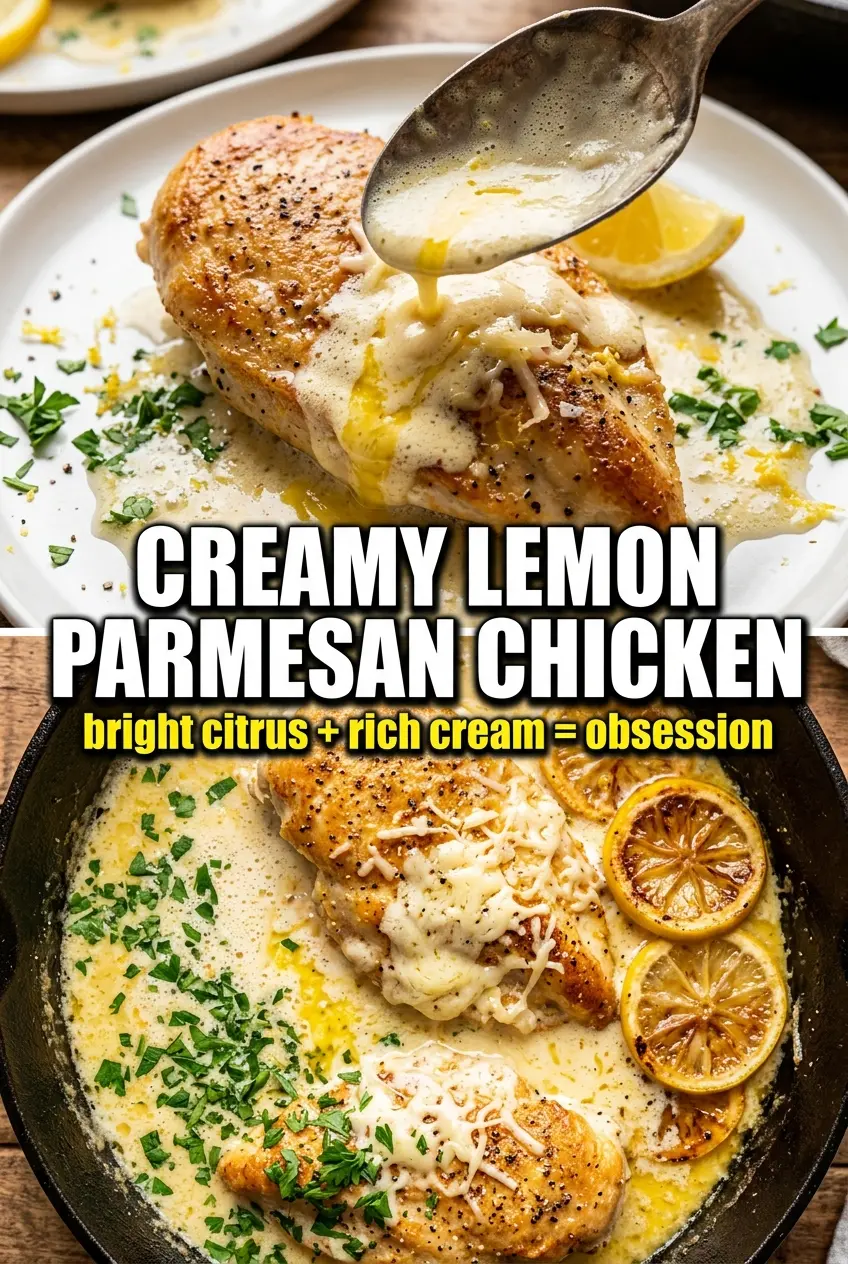
Creamy Parmesan Lemon Chicken
Ingredients
Equipment
Method
- Season chicken breasts on both sides generously with salt, pepper, garlic powder, and Italian seasoning.
- Heat olive oil in a large skillet over medium-high heat and sear chicken until golden, about 5-6 minutes per side, until internal temperature reaches 165°F; remove to a plate.
- Add minced garlic to the skillet and cook for 30 seconds, stirring until fragrant.
- Deglaze with dry white wine, then simmer for 2 minutes to reduce slightly and concentrate flavor.
- Stir in heavy cream, Parmesan cheese, fresh lemon juice, and lemon zest; simmer for 4-5 minutes until the sauce thickens and coats the back of a spoon.
- Swirl in the butter until melted and glossy, creating a smooth finish.
- Return chicken breasts to the skillet, spoon sauce over each breast, and garnish with fresh parsley and lemon slices.