Juicy chicken breasts tucked into a thick ranch cream sauce have a way of making an ordinary dinner feel handled. The chicken sears up golden first, then finishes in a sauce that clings to every slice instead of running all over the plate. The ranch seasoning brings the familiar herby tang, but the cream cheese and heavy cream turn it into something smooth, spoonable, and rich enough to want with mashed potatoes or pasta.
The part that makes this version work is the sequence. Searing the chicken first builds flavor in the pan, and the broth loosens every browned bit before the cream goes in. Cream cheese is what gives the sauce its body, but it has to melt over moderate heat or it can go grainy. A little dill sharpens the ranch flavor without making the sauce taste flat or heavy.
Below you’ll find the small details that matter most: how to keep the sauce silky, what to do if it thickens too fast, and the easiest swap if you want a lighter finish without losing that creamy ranch character.
The sauce turned out smooth and thick instead of separating, and the chicken stayed juicy even after simmering it back in for a few minutes. My husband asked if I could put this one on repeat.
Creamy Ranch Chicken is the kind of skillet dinner that turns out rich, silky, and weeknight-ready every time.
The Sauce Stays Smooth Only If You Build It in the Right Order
A creamy skillet sauce like this can split if you rush the dairy or let the pan run too hot. The chicken needs to come out first so the sauce has room to reduce without overcooking the meat, and the broth needs to hit the pan while it still has those browned bits from searing. That little deglazing step is where the flavor lives.
The other trap is adding cream cheese straight into a furious boil. It melts best over medium-low heat, where it can soften and disappear into the sauce instead of turning lumpy. If the sauce looks thin at first, give it a minute; it thickens as the cream cheese fully melts and the simmer settles down.
What Each Ingredient Is Actually Doing in the Skillet
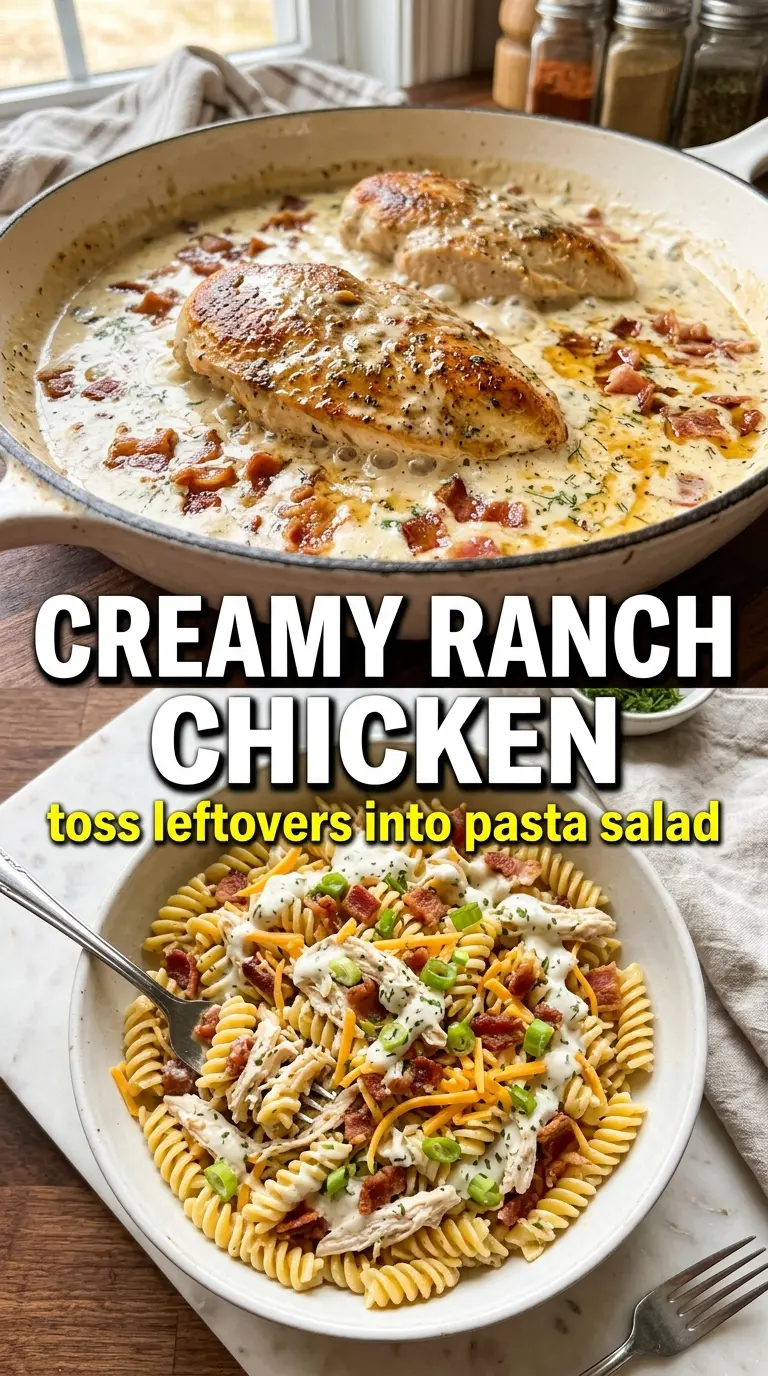
- Chicken breasts — Boneless, skinless breasts keep this fast and familiar, but they need even thickness so they sear and finish at the same rate. If one side is much thicker, pound it lightly before cooking. Thin cutlets work too and cook even faster.
- Ranch seasoning mix — This gives the sauce its signature tang and herb blend without making you measure a long spice list. A packet from the pantry works fine here because the cream cheese and broth smooth out any sharp edges. Homemade ranch seasoning works too if it’s well salted.
- Cream cheese — This is the ingredient that turns broth and cream into an actual sauce with body. Cube it first so it melts faster and more evenly. If you drop in a cold block whole, the outside softens before the center catches up and you end up stirring forever.
- Heavy cream — Heavy cream gives the sauce a plush finish that won’t break easily when it simmers. Half-and-half can work in a pinch, but the sauce will be a little thinner and less stable. If you use a lighter dairy, keep the heat lower and don’t let it boil.
- Chicken broth — The broth pulls up the browned bits from the skillet and keeps the sauce from tasting heavy. Use a broth you’d actually drink; a weak one makes the whole sauce taste flat. Low-sodium is smart because ranch seasoning brings plenty of salt already.
- Dried dill and fresh chives — Dill sharpens the ranch flavor, and chives give the finished dish a fresh onion note that keeps the sauce from tasting one-dimensional. Don’t skip the garnish if you have it. That bright finish matters against all the cream.
From Golden Sear to Silky Sauce
Building the Chicken’s First Layer of Flavor
Season the chicken well before it hits the pan so the surface tastes like more than plain meat under sauce. Heat the olive oil until it shimmers, then lay the chicken in without crowding the skillet. You want a steady sizzle and a golden crust that releases on its own; if it sticks, it needs another minute. Pull the chicken once it reaches 165°F and set it aside so it doesn’t overcook while the sauce comes together.
Pulling the Browned Bits Into the Sauce
Cook the garlic just long enough to smell it, about 30 seconds, then add the broth right away. That stops the garlic from burning and gives you a chance to scrape up the browned bits from the pan bottom. Those bits dissolve into the sauce and carry the flavor from the chicken straight through the skillet. If the pan looks dry before the broth goes in, your heat was too high; drop it slightly and keep going.
Melting the Dairy Without Breaking It
Stir in the cream and ranch seasoning, then bring the mixture to a gentle simmer, not a hard boil. Add the cream cheese cubes and keep the heat at medium-low while stirring until the sauce turns completely smooth. If it looks a little loose at first, that’s normal; the sauce tightens as the cream cheese melts fully. Once the dill goes in and the chicken returns to the skillet, spoon the sauce over the tops and let everything simmer for a few minutes so the chicken picks up the flavor again.
Three Ways to Make This Work for Your Table
Swap in chicken thighs for a richer result
Boneless thighs stay extra juicy and bring a little more flavor, especially if you like a darker, meatier bite. They may need a few extra minutes in the skillet, but the sauce process stays the same. This is the best swap if you’re nervous about chicken breasts drying out.
Make it gluten-free without changing the texture
Most ranch seasoning mixes are gluten-free, but the label is worth checking because brands vary. The sauce itself doesn’t need flour, so nothing about the texture has to change. Serve it over mashed potatoes, rice, or gluten-free pasta and it still eats like a full meal.
Use half-and-half for a lighter sauce
Half-and-half can stand in for the heavy cream if you want something a little less rich, but the sauce won’t be quite as thick or stable. Keep the heat low and don’t let it boil, or it can turn grainy. If you go this route, let the sauce reduce a little longer before adding the chicken back in.
Stretch it with mushrooms or spinach
Sliced mushrooms can go in after the garlic and before the broth, and a few handfuls of spinach can wilt in at the end. Mushrooms add a deeper savory note, while spinach makes the dish feel a little more complete without changing the sauce. Just don’t overload the pan or the sauce will thin out more than you want.
Storage and Reheating
- Refrigerator: Store leftovers in an airtight container for up to 3 days. The sauce thickens as it chills, but it loosens again when reheated.
- Freezer: This freezes, but cream sauces can separate a bit after thawing. Freeze in a tightly sealed container for up to 2 months if you don’t mind whisking it back together after reheating.
- Reheating: Warm gently on the stove over low heat with a splash of broth or cream. High heat is the mistake here; it can make the sauce break and dry out the chicken.
Questions I Get Asked About This Recipe

Creamy Ranch Chicken
Ingredients
Equipment
Method
- Season boneless skinless chicken breasts with salt, pepper, and garlic powder to taste, then pat lightly so the surface looks evenly coated. Heat olive oil in a large skillet over medium-high heat until shimmering.
- Sear the chicken in the hot skillet for 5-6 minutes per side, until deeply golden and the thickest part reaches 165°F. Remove to a plate as soon as it’s cooked through.
- Cook minced garlic in the same pan for 30 seconds, stirring, until fragrant and slightly softened. Keep the pan moving so the garlic doesn’t brown.
- Pour in chicken broth and deglaze, scraping up the browned bits from the pan with a flat edge. Bring the liquid to a steady simmer.
- Stir in heavy cream and ranch seasoning mix, then continue heating until the sauce reaches a simmer. Keep it bubbling gently so it thickens without boiling hard.
- Add cream cheese cubes and stir over medium-low heat until completely melted and the sauce is smooth. Watch for streaks disappearing to confirm full melting.
- Stir in dried dill and return to a simmer. The sauce should look creamy and speckled with herbs.
- Return the chicken to the skillet and spoon the sauce over each breast so it’s coated on top. Simmer for 3 minutes to heat through.
- Garnish with fresh chives and serve immediately over mashed potatoes or pasta. Let the sauce pool on the plate for the glossy ranch look.