Golden seared chicken breasts tucked into a silky tomato cream sauce are the kind of skillet dinner that earns a permanent spot in the rotation. The sauce lands right in that sweet spot between bright and rich: tomatoes keep it lively, cream rounds off the edges, and Parmesan gives it the kind of body that clings to every bite. It looks restaurant-worthy in the pan, but it eats like something you’d happily make on a Tuesday.
What makes this version work is the order of operations. The chicken gets a hard sear first, which builds flavor in the pan and keeps the meat from going bland under the sauce. Then the garlic, wine, tomatoes, and dairy go in one at a time, with enough simmering between each addition for the sauce to thicken instead of staying thin and separated. A final swirl of butter at the end gives the sauce that glossy finish you can see from across the table.
Below you’ll find the small details that matter here: how to keep the sauce creamy instead of grainy, which substitution works when you’re out of wine, and what to do if your chicken breasts are especially thick.
The sauce turned that perfect rosy color and actually coated the chicken instead of running all over the plate. I used the white wine and let it simmer the full 5 minutes, and the flavor came out balanced, not sharp at all.
Save this creamy tomato chicken for the night you want a glossy pink sauce, golden chicken, and one skillet doing all the work.
The Secret to Keeping the Tomato Cream Sauce Smooth
The sauce can split if the heat stays too high after the cream goes in. That’s the mistake that turns a pretty skillet dinner into something grainy or oily. Once the tomatoes are simmered and the liquid has reduced a bit, lower the heat before adding the cream and Parmesan. The sauce should move from thin and bright to thick and rosy without ever coming to a hard boil.
Parmesan is the other place people run into trouble. If it goes into a violently bubbling sauce, it can seize and turn stringy instead of melting in smoothly. Stir it in off the hottest part of the burner and give it a minute to settle before judging the texture. The butter at the end is there for shine, but it also helps everything emulsify into one unified sauce.
What Each Ingredient Is Actually Doing in This Skillet
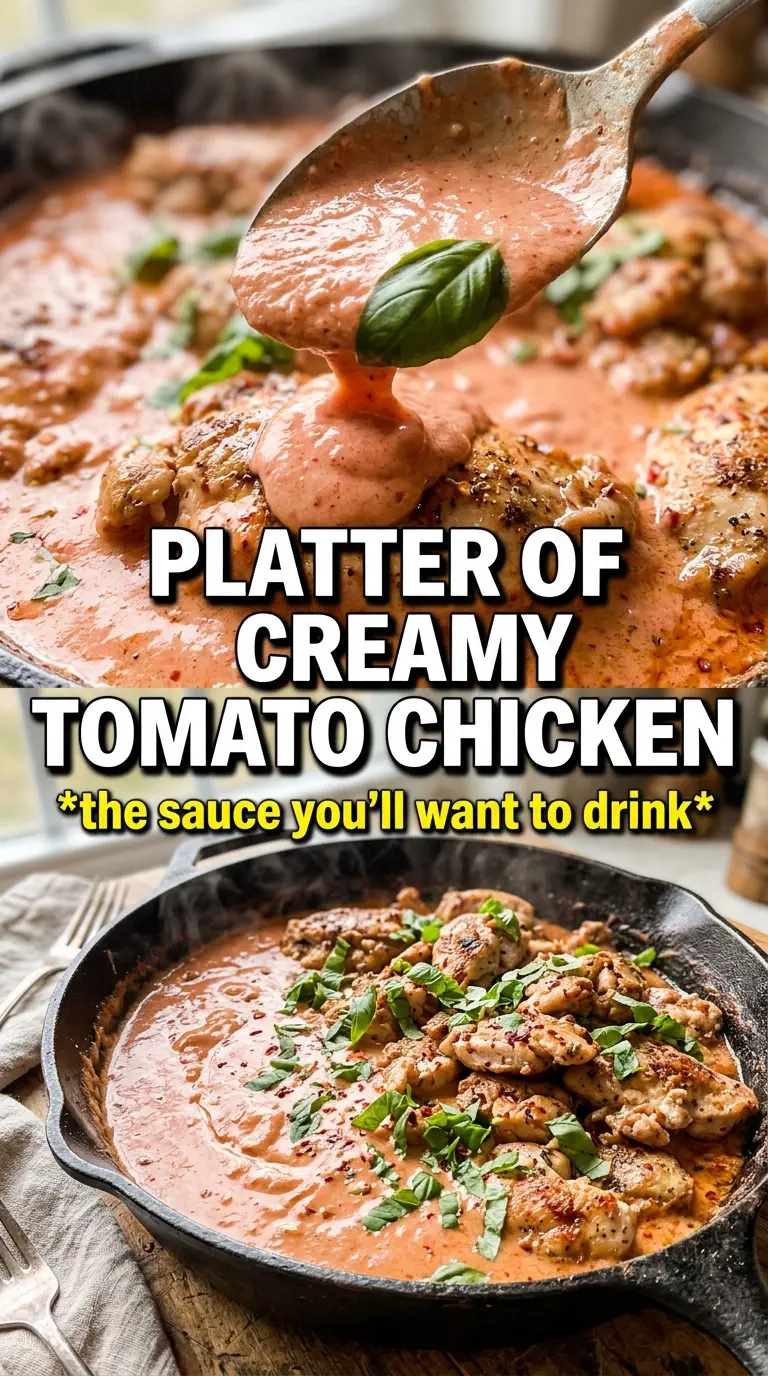
- Chicken breasts — Boneless, skinless breasts keep this fast and lean, but thickness matters more than size. If one end is much thicker than the other, pound them to an even layer so they cook at the same pace and stay juicy instead of drying out while the sauce finishes.
- Olive oil — This gives you the sear that starts the whole dish. A neutral oil also works, but olive oil fits the Italian-American profile and adds a little flavor under the browning.
- White wine or chicken broth — Wine adds acidity and depth when you deglaze the pan, but broth is a good backup if that’s what you have. Broth will be a little softer and less sharp, so if you use it, let the tomatoes simmer a minute longer to build back some brightness.
- Crushed tomatoes — This is the backbone of the sauce, and crushed tomatoes give you body without needing to cook them down forever. Use a good canned brand if you can; it pays off here because there aren’t many ingredients hiding the flavor.
- Heavy cream — This is what turns the tomato base from sharp to silky. Half-and-half can work in a pinch, but the sauce will be thinner and a little more likely to break if you boil it.
- Parmesan — It thickens and seasons at the same time, which is why the sauce tastes full without needing a long ingredient list. Grate it fresh if possible, because pre-shredded cheese doesn’t melt as cleanly.
- Butter — Stirred in at the end, it gives the sauce a glossy finish and smooths out the edges. Don’t skip it if you want that restaurant-style look in the pan.
Getting the Chicken Golden Before the Sauce Takes Over
Seasoning and Searing
Season the chicken well before it hits the pan. Salt, pepper, garlic powder, and Italian seasoning should cling to the surface, not disappear into a wet coating. Get the olive oil hot enough that the chicken sizzles immediately, then leave it alone long enough to form a deep golden crust. If you keep nudging it, it steams instead of browns, and that missing sear shows up later as a flat-tasting sauce.
Building the Tomato Base
Once the chicken comes out, the pan should still have browned bits stuck to the bottom. That’s flavor, not a mess. Add the garlic and give it just 30 seconds, only until it smells fragrant; any longer and it can turn bitter. Deglaze with the wine or broth and scrape the pan clean before adding the tomatoes and Italian seasoning so the sauce starts with all that savory fond built in.
Finishing the Cream Sauce
Let the tomatoes simmer before the cream goes in. That short reduction keeps the sauce from tasting raw or watery. After the cream, Parmesan, and red pepper flakes go in, keep the heat gentle and stir until the sauce thickens enough to coat the back of a spoon. The final butter swirl should disappear into a smooth, glossy sauce, not sit on top as grease.
Returning the Chicken
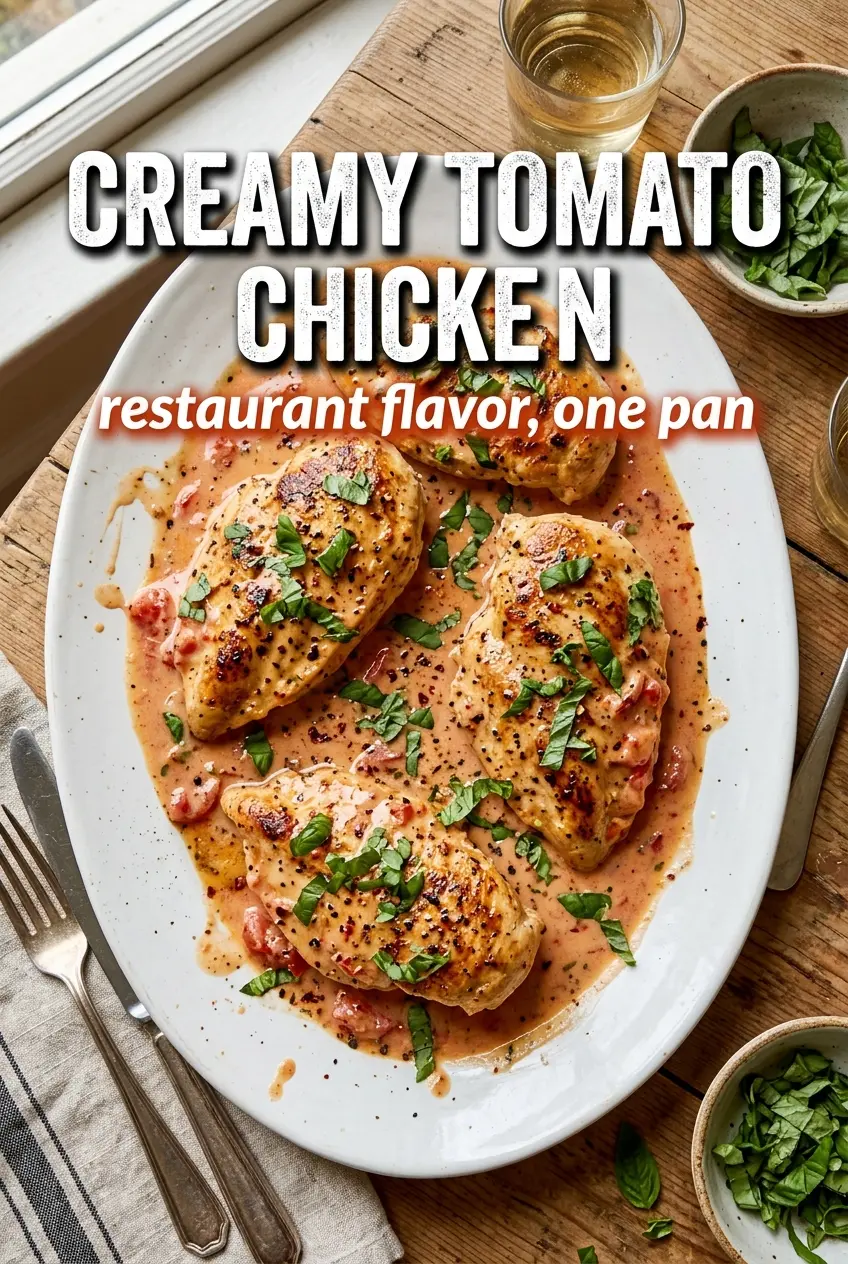
Put the chicken back into the skillet and spoon the sauce over each piece. This last warm-through only takes a few minutes, and it keeps the chicken tender. If the breasts are very thick, cover the pan briefly so the center heats without overcooking the edges. Fresh basil goes on right at the end so it stays bright instead of melting into the sauce.
How to Adapt This Creamy Tomato Chicken Without Losing the Good Part
Dairy-Free Version
Swap the cream for full-fat coconut milk and use a dairy-free Parmesan alternative or skip the cheese entirely. The sauce will be a little softer and less tangy, but it still turns silky if you keep the heat low and let it reduce gently.
Using Chicken Thighs Instead
Boneless thighs work well here and stay juicy even if they cook a little longer. They bring a richer flavor than breasts, but you’ll lose the clean, sliceable presentation; let them cook through fully before returning them to the sauce.
Make It Gluten-Free
This recipe is naturally gluten-free as written, as long as your broth and Parmesan are certified gluten-free if that matters for your kitchen. Serve it over gluten-free pasta, mashed potatoes, or roasted vegetables and the sauce still does all the heavy lifting.
Make It Spicier or Milder
The red pepper flakes add a little warmth, not heat. If you want more kick, double them and finish with a pinch at the table; if you want a softer sauce, cut them back or leave them out and lean on basil and Parmesan for balance.
Storage and Reheating
- Refrigerator: Store leftovers in an airtight container for up to 3 days. The sauce will thicken as it chills, which is normal.
- Freezer: It freezes, but cream sauces can lose some smoothness after thawing. If you do freeze it, cool it completely first and thaw overnight in the refrigerator.
- Reheating: Warm it gently in a covered skillet over low heat with a splash of broth or water. High heat is the fastest way to make the sauce break and the chicken dry out.
Questions I Get Asked About This Recipe
Creamy Tomato Chicken
Ingredients
Equipment
Method
- Pat chicken breasts dry, then season with salt, pepper, garlic powder, and Italian seasoning to taste. Heat olive oil in a wide skillet over medium-high until shimmering.
- Sear chicken for 5-6 minutes per side, until golden and the internal temperature reaches 165°F. Remove chicken to a plate.
- Cook minced garlic in the same pan for 30 seconds, stirring, until fragrant. Deglaze with the white wine (or chicken broth), scraping up browned bits.
- Add crushed tomatoes and Italian seasoning, then bring to a simmer. Simmer for 5 minutes to thicken slightly.
- Stir in heavy cream, Parmesan cheese, and red pepper flakes, then return to a simmer. Simmer 4-5 minutes until the sauce is thick and rose-colored.
- Swirl in butter until the sauce looks glossy. Return chicken to the skillet and spoon tomato cream sauce over each breast.
- Garnish with fresh basil and serve over pasta or gnocchi.