Golden seared chicken breasts in a silky sun-dried tomato and spinach cream sauce earn a permanent spot in the dinner rotation for a reason. The sauce clings to the chicken instead of sliding off, the tomatoes bring a deep, savory sweetness, and the spinach keeps the whole skillet from feeling heavy. It tastes like something you’d order at a restaurant, but it lands on the table in the time it takes to boil water for pasta.
The key is building the sauce in the same pan you used for the chicken. Those browned bits at the bottom are where the flavor lives, and the broth loosens them without dulling the sauce. I also keep the heat low once the cream goes in, because high heat is what turns a smooth sauce grainy or makes the Parmesan seize up.
Below, I’m walking through the one mistake that ruins this dish most often, how to swap ingredients without losing the creamy texture, and how to keep the chicken juicy instead of overcooked while the sauce finishes.
The sauce thickened up beautifully and stayed silky when I added the Parmesan off the heat. My husband kept going back for “just one more bite” until the skillet was basically empty.
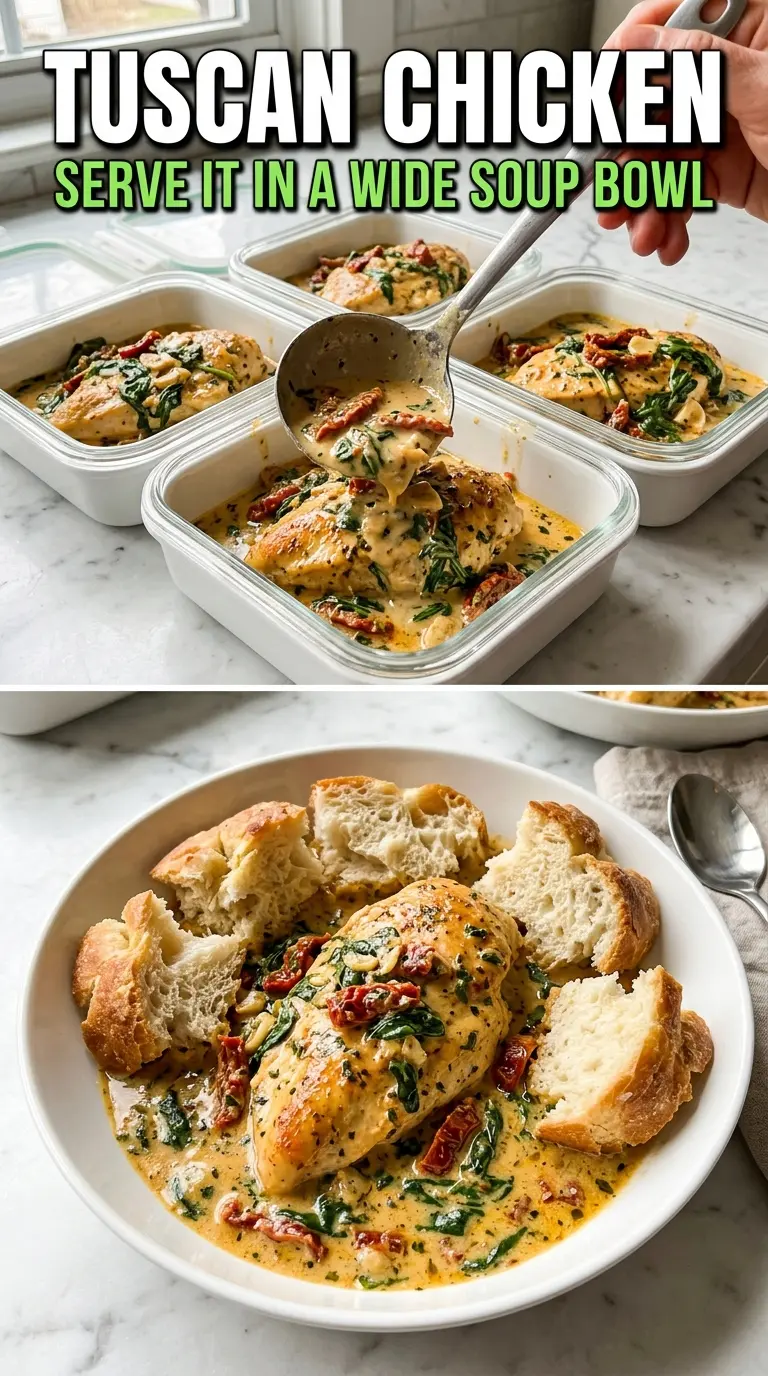
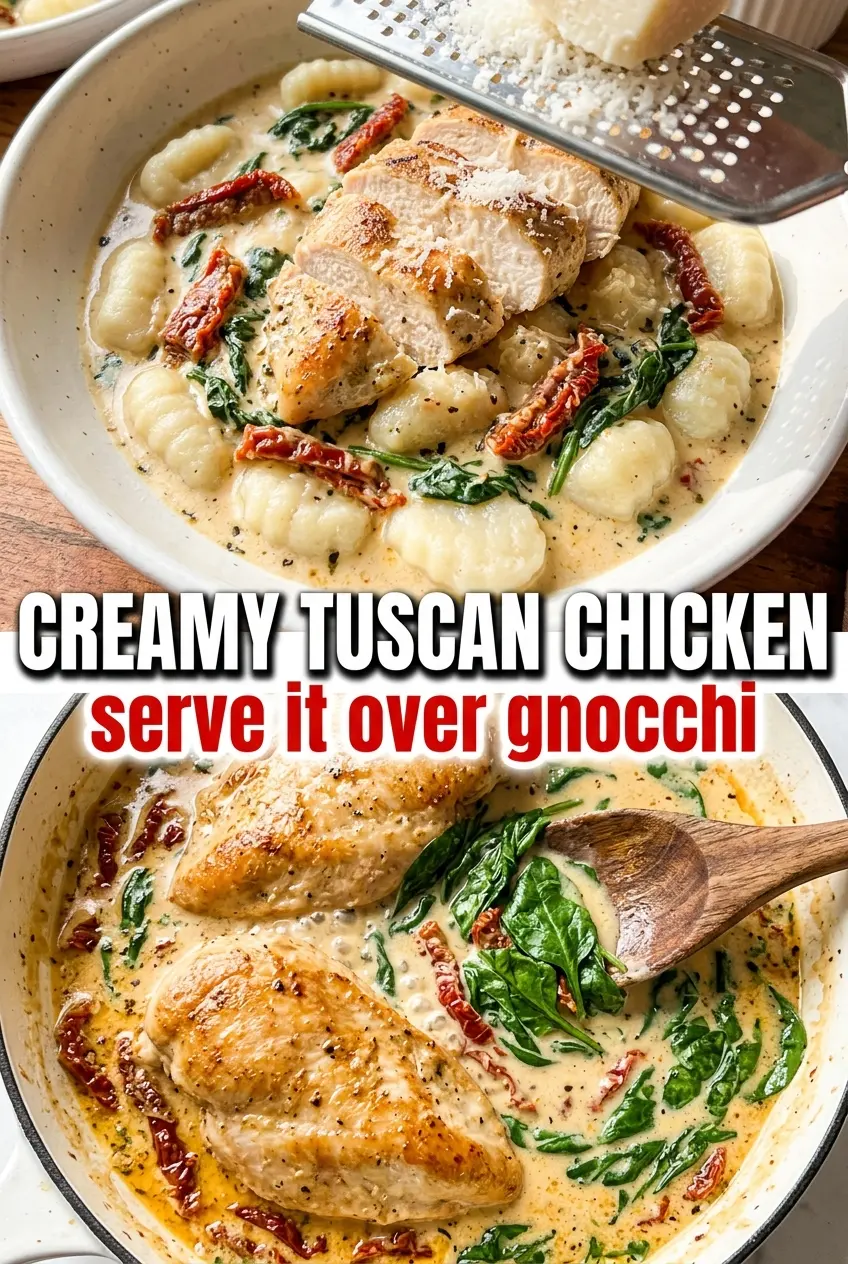
Save this Creamy Tuscan Chicken for a skillet dinner with seared chicken, sun-dried tomatoes, and a sauce that stays glossy instead of breaking.
The Trick That Keeps the Cream Sauce from Breaking
The sauce stays smooth because the pan is never pushed too hard once the dairy goes in. Cream needs gentle heat and a little time to thicken; boiling it makes the fat separate and can turn the sauce greasy or grainy. Parmesan behaves the same way. If it hits a furious simmer, it can clump instead of melting into the sauce.
The other piece that matters is deglazing. After the chicken comes out, the browned bits on the bottom look stuck, but they dissolve into the broth and become the backbone of the sauce. If the pan looks dry before the broth goes in, the finished sauce tastes flatter and less savory.
- Chicken breasts — Pound them to an even thickness so they cook at the same pace. Thin ends dry out before the center is done, and uneven chicken is the fastest way to get a skillet dinner with both undercooked and overcooked pieces.
- Sun-dried tomatoes in oil — These bring concentrated tomato flavor and a little fat, which helps the sauce taste rounder. The oil-packed kind is worth using here because the dry version needs extra rehydrating and never brings the same richness.
- Heavy cream — This is what gives the sauce body without turning it thin or chalky. Half-and-half can work in a pinch, but it won’t thicken as deeply and is more likely to split if you let it boil.
- Parmesan — Grate it yourself if you can. Pre-grated cheese often has anti-caking agents that make the sauce a little less smooth and can keep it from melting in cleanly.
- Baby spinach — Add it at the end. It only needs a minute or two to wilt, and that quick finish keeps it bright instead of drab and mushy.
What Each Ingredient Is Actually Doing in This Recipe
- Primary ingredient (the star) — Quality matters most. Choose the best you can find.
- Cooking medium (oil, butter, or broth) — This carries flavors and prevents dryness.
- Seasonings (salt, pepper, spices, herbs) — Layer flavors so nothing overpowers. Build depth gradually.
- Aromatics (garlic, onion, herbs) — Cook with fat to bloom flavors. Become the foundation.
- Supporting ingredients — Complement the main ingredient without overpowering it.
- Sauce or liquid (if applicable) — Brings flavors together. Balance richness with acid.
- Acid (lemon, vinegar, wine, or other) — Brightens and prevents flat-tasting results.
- Final finish (garnish, glaze, or sauce) — Prevents one-dimensional taste and adds visual appeal.
Building the Skillet in the Right Order
Getting the Chicken Browned Before the Sauce Starts
Season the chicken generously on both sides, then sear it in hot olive oil until you get a deep golden crust and the meat releases without sticking. If the pan isn’t hot enough, the chicken steams and stays pale instead of taking on those browned edges that give the whole dish its base flavor. Pull it out as soon as it reaches 165°F. Letting it sit in the pan while you work the sauce is how it dries out.
Using the Pan Drippings Without Burning the Garlic
Once the chicken is out, drop the heat a little and add the garlic. It only needs about 30 seconds, just until it smells fragrant. If it goes dark, it turns bitter fast, and that bitterness carries straight into the cream sauce. Stir in the sun-dried tomatoes next so they warm through and release their flavor into the fat left in the skillet.
Turning Broth, Cream, and Cheese into One Smooth Sauce
Pour in the chicken broth and scrape the bottom of the pan clean with a wooden spoon. That’s where the flavor is hiding. Then add the cream, Parmesan, Italian seasoning, and red pepper flakes, and keep the sauce at a gentle simmer until it coats the spoon. If it’s bubbling hard, lower the heat immediately. The sauce thickens as the water reduces, not because it boils aggressively.
Finishing with Spinach and Returning the Chicken
Stir in the spinach at the end and watch it wilt down in a minute or two. It should stay bright green and tender, not collapse into the sauce. Slide the chicken back into the skillet, spoon the sauce over the top, and let it warm through for a couple of minutes so the meat soaks up some of the flavor without overcooking. Fresh basil goes on right before serving for a clean, fragrant finish.
How to Adapt It Without Losing the Creamy Texture
Dairy-Free Creamy Tuscan Chicken
Use canned full-fat coconut milk instead of heavy cream and nutritional yeast or a dairy-free Parmesan substitute in place of the cheese. The sauce will still be creamy, but it picks up a slight coconut note, so keep the basil and garlic generous to balance it.
Chicken Thighs Instead of Breasts
Boneless skinless thighs work beautifully if you want richer meat and more forgiveness on the stove. They need a little longer to cook through, but they stay juicier, and the extra chicken fat makes the sauce taste even fuller.
Lower-Carb Serving Ideas
Serve it over sautéed zucchini, cauliflower rice, or steamed green beans instead of pasta. The sauce is rich enough to stand on its own, so you won’t miss the starch, and the vegetables help catch every bit of the cream sauce.
Storage and Reheating
- Refrigerator: Store leftovers in an airtight container for up to 3 days. The sauce thickens as it chills, and the spinach softens a bit, but the flavor stays strong.
- Freezer: I don’t recommend freezing this one. Cream sauces tend to separate after thawing, and the spinach turns limp.
- Reheating: Warm it gently in a skillet over low heat with a splash of chicken broth or cream. The common mistake is blasting it in the microwave until the sauce breaks and the chicken turns rubbery.
Questions I Get Asked About This Recipe
Creamy Tuscan Chicken
Ingredients
Equipment
Method
- Generously season the boneless skinless chicken breasts with salt, pepper, garlic powder, Italian seasoning, and smoked paprika, aiming for even coverage. Pat the surface so the spices cling before searing.
- Heat olive oil in a large skillet over medium-high heat until it shimmers. Sear the chicken for 5-6 minutes per side until golden brown and the internal temperature reaches 165°F.
- Remove the seared chicken from the pan and set aside while you build the sauce. Leave any browned bits in the skillet for flavor.
- Cook the minced garlic in the same pan for 30 seconds until fragrant. Keep the heat steady so it doesn’t brown.
- Add the drained, sliced sun-dried tomatoes and cook for 1 minute. Stir until glossy and warmed through.
- Pour in the chicken broth and deglaze, scraping up the browned bits from the bottom of the skillet. Stir until the liquid looks cohesive.
- Stir in the heavy cream, grated Parmesan cheese, Italian seasoning, and red pepper flakes. Bring to a simmer and cook for 4-5 minutes until thickened and silky.
- Stir in the fresh baby spinach and cook just until wilted. It should turn vivid green and fold into the sauce.
- Return the chicken breasts to the pan and spoon the sauce over each breast. Let the chicken heat through briefly while the sauce coats it.
- Garnish with fresh basil and serve immediately. Use the glossy sauce pool as the finishing touch.