Juicy, sliceable meatloaf doesn’t have to come from the oven. In the slow cooker, the loaf stays moist all the way through while the glaze on top turns dark, sticky, and just a little caramelized around the edges. You get neat slices instead of a dry, crumbly mess, and dinner is handled with almost no babysitting.
The trick is giving the loaf structure without packing it too tightly. Breadcrumbs and eggs hold everything together, but the grated onion and milk keep the texture tender. The foil sling matters more than people think, too. It lifts the meatloaf out of the slow cooker without tearing it apart and keeps it out of the liquid that collects underneath as it cooks.
Below, I’ll walk through the part that keeps this meatloaf from turning mushy, plus the glaze timing that gives you that glossy finish on top. I’ve also included a few smart swaps for making it your own without losing the texture that makes crock pot meatloaf worth making in the first place.
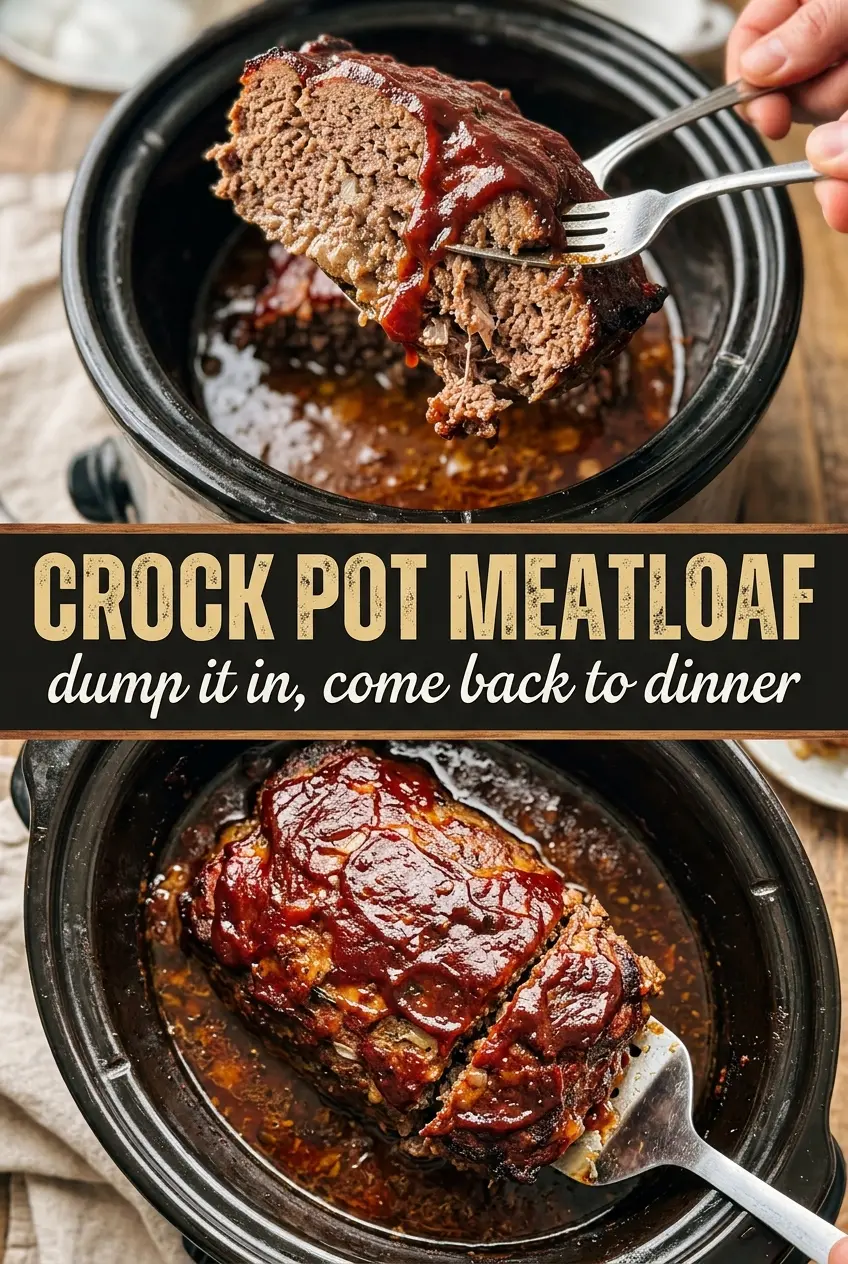
The foil sling made it so easy to lift out, and the glaze set up beautifully in the last 20 minutes. Mine sliced cleanly after resting, and the middle stayed juicy instead of dense.
Save this crock pot meatloaf for a hands-off dinner with juicy slices and a sticky ketchup-brown sugar glaze.
The Reason This Meatloaf Stays Tender Instead of Dense
Slow cookers trap moisture, which is exactly why meatloaf can go wrong if the mixture is too tight or too wet. A dense loaf turns compact and almost springy, while a loose one can slump apart when you slice it. The balance here comes from enough breadcrumb to absorb the milk and meat juices, plus grated onion for moisture that disappears into the loaf instead of leaving chunks that break up the slice.
The other thing that matters is shape. A compact oval or loaf shape cooks more evenly than a thick mound, and the foil sling keeps the bottom from sitting in a puddle of rendered fat and steam. That separation is what gives you tender meatloaf instead of something with a gray, spongy bottom.
- Breadcrumbs — They absorb liquid and keep the loaf from squeezing itself dry. Plain breadcrumbs work fine. If you use seasoned breadcrumbs, cut back on the salt a little.
- Grated onion — This melts into the mixture and seasons it from the inside. Chopped onion can work, but it leaves sharper bits and a looser texture.
- Whole milk — The fat helps keep the loaf soft. Lower-fat milk will still work, but the texture won’t be quite as plush.
- Worcestershire sauce — This adds depth that salt alone can’t give. Don’t skip it unless you need a substitute; soy sauce can stand in, but use a little less because it’s saltier.
What Each Ingredient Is Actually Doing in This Meatloaf or Meatballs

- Ground meat (the protein foundation) — Use 80/20 so it stays moist. Handle gently to keep texture tender instead of dense.
- Breadcrumbs or fillers (the binder) — These hold the meat together without making it dense. Soak in milk first so they add moisture.
- Egg (the structural binding agent) — This holds everything together during cooking. One egg per pound of meat is the right ratio.
- Onion and aromatics (the base flavor) — Mince finely so they distribute evenly. Raw onion softens as it cooks and becomes part of the texture.
- Seasonings (salt, pepper, Worcestershire, spices) — Build flavor boldly. The meat mixture carries the entire flavor profile.
- Milk or liquid (the moisture keeper) — This keeps the meatloaf tender instead of dense and dry. Don’t skip this step.
- Glaze or sauce (ketchup-based or other) — This adds sweetness, moisture, and flavor to the exterior. Apply strategically so it caramelizes.
- Resting time (the final step) — Let the meatloaf rest 10 minutes so it sets and slices cleanly. Cutting too soon makes it fall apart.
Building the Loaf and Glaze Without Ending Up With a Wet Bottom
Mix Just Until the Meat Comes Together
Combine the beef, breadcrumbs, eggs, milk, onion, garlic, Worcestershire sauce, seasoning, and salt and pepper with a light hand. Stop as soon as everything looks evenly mixed. If you work the meat like bread dough, the loaf turns tough and slices dense. The mixture should hold together when pressed, but it shouldn’t look pasted or compacted.
Shape It on the Foil Sling
Lay two sheets of foil in a cross inside the slow cooker and grease them lightly. Shape the meat mixture into a loaf and set it on the foil so the ends of the sling stay long enough to lift later. This step keeps the loaf out of the liquid that collects during cooking, which is the difference between a firm slice and a soggy bottom. The loaf should look neat and compact, not flattened into the whole base of the cooker.
Let the First Layer of Glaze Set Before the Finish
Mix the ketchup, brown sugar, and apple cider vinegar, then spread half over the top before cooking. That first layer melts into the surface and seasons the meat as it cooks. Near the end, add the remaining glaze and cook just long enough for it to thicken and darken. If you add all of it at the beginning, the sugar can thin out and lose that sticky finish on top.
Rest Before You Slice
Use the foil sling to lift the meatloaf out, then let it rest for 10 minutes before cutting. Resting lets the juices settle back into the loaf instead of spilling onto the cutting board. If you slice too soon, the center can look loose even when it’s fully cooked. A short rest gives you cleaner slices and better texture.
Make It Gluten-Free
Use certified gluten-free breadcrumbs or crushed gluten-free crackers. The texture stays close to the original as long as you use the same amount and don’t add extra liquid to compensate.
Dairy-Free Version
Swap the whole milk for unsweetened non-dairy milk, ideally oat or soy because they bring a little body. Almond milk works in a pinch, but the loaf can taste thinner and less rich.
Use Ground Turkey Instead
Ground turkey works, but it needs the moisture here even more than beef does. Keep the milk and onion, and don’t overcook it or it will dry out faster than the beef version.
Storage and Reheating
- Refrigerator: Store sliced or whole meatloaf in an airtight container for up to 4 days. It stays moist, though the glaze firms up a bit when chilled.
- Freezer: It freezes well for up to 2 months. Wrap slices tightly or freeze the whole loaf in portions so it reheats more evenly.
- Reheating: Warm covered in the oven at 300°F with a splash of broth or water in the pan, or microwave slices in short bursts. The biggest mistake is blasting it on high heat, which drives out the moisture you worked to keep in.
Questions I Get Asked About This Recipe
Crock Pot Meatloaf
Ingredients
Equipment
Method
- Create a foil sling by laying two sheets of foil in a cross pattern inside the slow cooker and grease lightly so the meatloaf lifts out cleanly.
- Mix ground beef, breadcrumbs, eggs, whole milk, onion, garlic, Worcestershire sauce, Italian seasoning, garlic powder, salt, and black pepper until combined into a cohesive mixture.
- Shape the mixture into a loaf and place it on the foil inside the slow cooker.
- Mix the ketchup, brown sugar, and apple cider vinegar, then spread half over the top of the meatloaf to start the steam-cooked glaze layer.
- Cover and cook on Low for 5–6 hours, checking for steam-soft tenderness; the glaze should look set around the edges.
- Alternatively, cook on High for 2.5–3 hours, until the internal temperature reaches 160°F in the center, indicating the interior is fully cooked.
- Spread the remaining glaze over the top, then cook on High for 20 minutes until it looks darker and sticky.
- Lift the meatloaf out using the foil sling so you can keep the glaze intact and the loaf holds its shape.
- Rest the meatloaf for 10 minutes so juices settle, then slice and serve.